Konjice Castle: A Medieval Fortress in Slovenia
Site at a Glance
- Rating
- 4.6
- Popularity
- Very Low
- Country
- Slovenia
- Primary era
- Medieval
- Eras represented
- Medieval, Early Modern
- Civilizations
- Duchy of Styria, Holy Roman Empire
- Site type
- Military
- Remains
- Castle
On this page10 sections
History
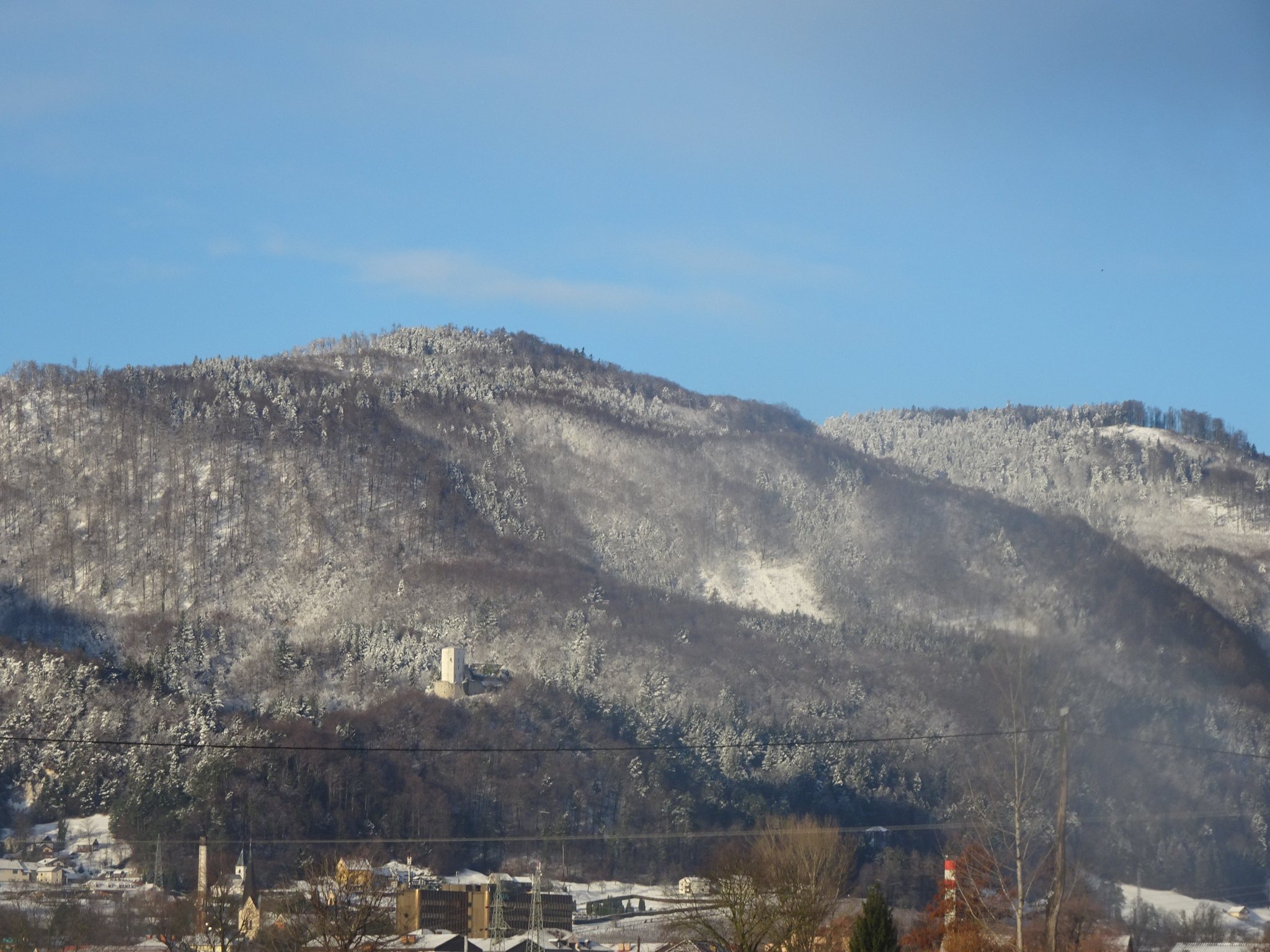
Konjice Castle is a medieval fortress in Slovenia above Slovenske Konjice, established in the twelfth century in the Romanesque period. It stood on the route across Konjiška gora, where a mountain boundary once separated the Drava and Savinja counties, and later the Drava March from Styria. Its position at the valley passage called Konjsko smrt provided the shortest crossing of the mountain and allowed the castle to protect the road toward Žiče Carthusian Monastery.
The Konjice Lords
The castle’s tower-like core, foundations, and parts of its walls belong to the twelfth century. Its earliest known owners were the old Konjice knights, who may have appeared around 1148 and are securely named in a charter of 1175. Another early reference, from 1165, names Liupold of Konjice, a ministerial, meaning a dependent noble who served a higher-ranking lord, of the Styrian margrave Otokar III. Liupold’s presumed sons Ortolf, Otokar, and Leopold soon appear in written records. Their vassals included knights from Zbelovo, Oplotnica, Koritno, and Zreče.
A charter issued by Leopold of Konjice on 24 February 1234 refers directly to the castle as castrum Gonuvviz. Later forms of its name include havs Gonewitz in 1312 and vest ze Gonwiz in 1362. The Konjice nobles held the castle until 1329, when their possessions began to fragment and they selected Jamnik Castle above Zreče as their new residence.
Changing Lords and Border Politics
From 1329 to 1385, Konjice Castle belonged to the Lords of Viltuš. The Counts of Celje held it temporarily in 1365, and an inheritance agreement in 1385 transferred it to the Lords of Devin. Their first lord of Konjice, Hugon IV, held several important offices. He was a border governor in the marches of Treviso and Pordenone, captain of Trieste, and provincial governor of Carniola.
The Lords of Walsee acquired the castle in 1406 but lost it during a conflict with Leopold IV and Duke Ernest the Iron, high-ranking Habsburg rulers. After peace was made in 1417, the Walsee family received Konjice back. When the family later died out, the castle became imperial property in 1466.
The Castle in the Late Middle Ages
On 27 May 1485, the travel writer Paolo Santonino recorded a visit by a delegation of the Patriarch of Aquileia. Bishop Pietro Carli and his entourage stopped at Konjice and were invited to lunch by the castellan Friderik Hollnecker. The prior of Žiče, Mihael, and the Carthusian procurator Klement also attended. Santonino described the castle, its owners, and the food served there.
Custodians and pledge holders included Adam Svetkovič in 1511, Janez Khisl of Fužine in 1572, and Žiga Tattenbach in 1592. Archduke Ferdinand II held the castle briefly, after which Tattenbach’s heirs possessed it from 1597 to 1671. In that year, Ivan Erazem Tattenbach was beheaded in Graz for taking part in a conspiracy against Emperor and Hungarian King Leopold I. His execution ended the Tattenbach possession of Konjice.
Carthusian Ownership and Later Ruins
The castle was sold in 1692 to the Carthusians of Žiče, a Catholic monastic order known for its strict contemplative life and secluded monasteries. It was probably abandoned during their period of ownership. The Josephine reforms, the church and monastic changes introduced under Emperor Joseph II, led to the suppression or reorganization of many religious institutions in the Habsburg lands. In 1783, a religious fund took over the property.
Prince Weriand Alois von Windischgrätz purchased the ruins in 1826. They remained in his family’s possession until the end of the Second World War. Carl Haas, then the Styrian provincial archaeologist, prepared the first plan of the castle in 1863. Later investigations were undertaken by the Austrian castle specialist Otto Piper and, at approximately the same time, by the Slovenian art historian Avguštin Stegenšek. Stegenšek also assembled detailed archival information about the castle’s former owners.
Konjice Castle is protected as a monument of local importance under the official name Konjice Castle. The designation was issued on 30 April 1996, and the site is owned by the Municipality of Slovenske Konjice.
Remains
Hilltop Layout
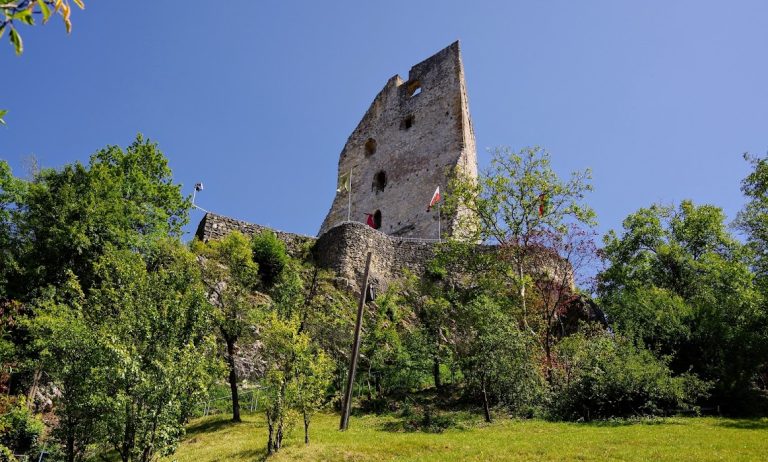
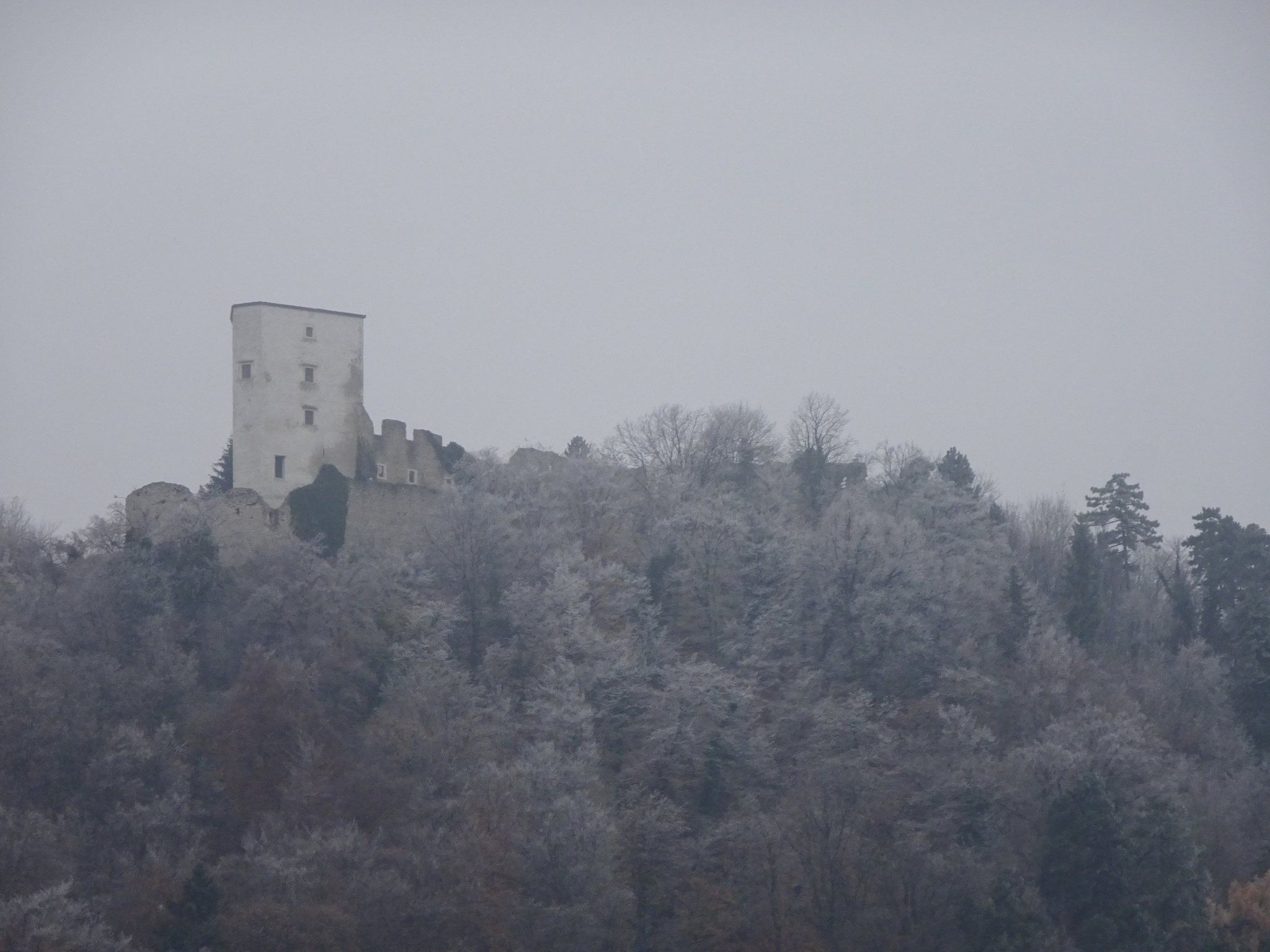
The castle forms extensive ruins on a high, rounded hill above Slovenske Konjice, above the northern foothills of Konjiška gora and the settlement of Zgornja Pristava. Its recorded area is approximately 74,084.54 square metres. The surviving complex shows the gradual expansion of a smaller Romanesque nucleus into a larger fortified residence, with later Gothic buildings and a Renaissance defensive belt surrounding the former inner courtyard.
Romanesque Core
The original Romanesque core is now only faintly recognizable. Romanesque masonry survives in the lower walls of the western part of the complex, while the small tower at the eastern end also belongs to this early phase. These remains represent the twelfth-century foundation from which the later castle developed.
Gothic Towers and Residential Buildings
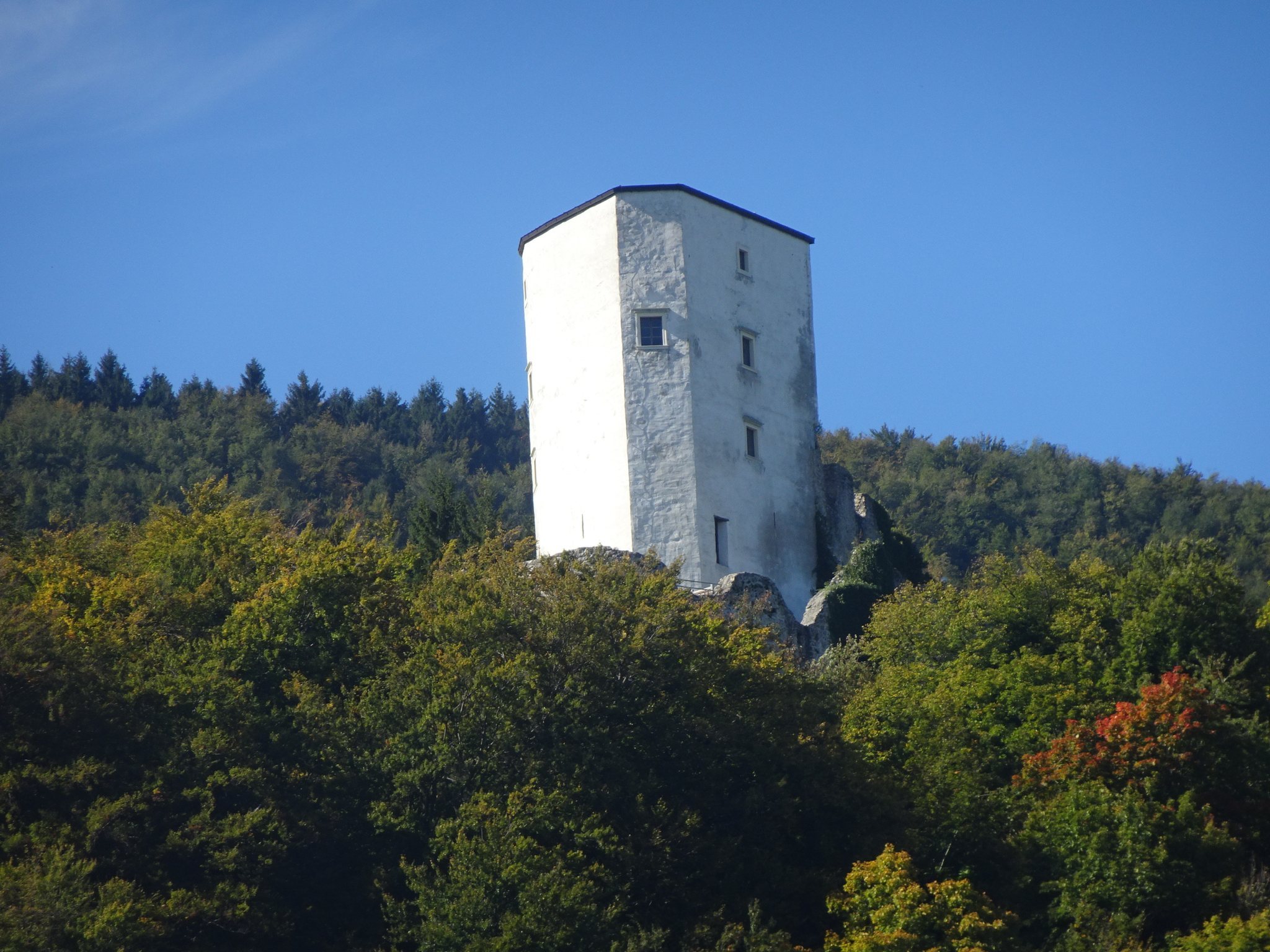
Most of the surviving masonry belongs to the Gothic period. The principal Gothic feature is a powerful pentagonal tower attached to the residential palace in the fourteenth century. The tower has been restored in modern times. The multi-storey Gothic bergfried, the castle’s main defensive tower used for defence and refuge rather than ordinary residence, remains the dominant feature of the complex.
Renaissance Defences
A massive defensive wall surrounds the former inner castle courtyard on the northern side. Residential wings were added later, and the perimeter was subsequently strengthened with Renaissance fortifications. These included a bastion, a projecting defensive platform, whose walls were nearly four metres thick. Together, the walls, residential wings, tower, and bastion preserve the successive growth of Konjice Castle from a compact medieval stronghold into an extensive fortified complex.