Gutenzell Abbey: A Cistercian Imperial Abbey in Germany
Site at a Glance
- Rating
- 4.9
- Popularity
- Very Low
- Country
- Germany
- Primary era
- Early Modern
- External website
- Open
- Eras represented
- Medieval, Early Modern
- Civilizations
- Holy Roman Empire
- Site type
- Religious
- Remains
- Monastery
On this page13 sections
History
Gutenzell Abbey in Gutenzell-Hürbel, Germany, was a Cistercian nunnery founded in the 1230s and later an imperial abbey, a monastery whose territory was held directly from the Holy Roman Empire. Its origins are uncertain, but a charter from 1237 may record a refoundation or confirmation, while a surviving record dated 29 May 1238 states that Pope Gregory IX placed Cella Dei under papal protection and formally admitted it to the Cistercian Order. The foundation may have developed from an informal community of women. A later tradition attributed it to two noble sisters associated with the Schlüsselberg family, although the founders were more probably connected with the Aichheim family, which became an important patron and established its burial place at Gutenzell.
Foundation and Cistercian supervision
The early monastery was called Cella Dei, meaning “God’s Cell.” The names Bona Cella and Guotencelle, later Gutenzell, appear from 1259. A church dedicated to Saints Cosmas and Damian may already have stood at the site and been incorporated into the new foundation. Wall remains from the twelfth century in the church area support this possibility.
Salem Abbey served as Gutenzell’s mother house. Its abbot held paternal authority, supervising visitations and elections of abbesses, representing the convent within the Cistercian Order, and appointing its confessor. A reform of Cistercian observance was pursued at Gutenzell between 1578 and 1625, involving Salem, the Cistercian general abbot at Cîteaux, the Holy See, and the nuncio at Lucerne. In 1752 or 1753, Gutenzell transferred its affiliation to Kaisheim Abbey. A settlement with Salem followed in 1768, but the Kaisheim connection continued.
Imperial status and territorial authority
Gutenzell gradually acquired the position of an imperial abbey. Emperor Sigismund granted important privileges in 1417 and 1437, including freedom from external noble bailiffs, and later confirmations followed in 1439, 1444, and 1496. Its inclusion in the Imperial Register in 1521 gave the abbey representation in the Imperial and Swabian Circle assemblies, including a curiate vote on the Swabian prelates’ bench.
The abbess governed a territory with economic, judicial, and representative rights. In 1437, Sigismund granted Gutenzell a court with twelve judges, although high justice, the authority to impose the most serious criminal penalties, initially remained with the Swabian bailiff. The abbey received high justice for its central territory and Achstetten as an Austrian fief in 1685. In 1768, after paying 9,000 gulden, it obtained the right as a sub-fief from Salem, and in 1776 it acquired high justice over Kirchberg.
The original endowment probably centered on Gutenzell itself, which became a grange, or monastic agricultural estate operated by the institution. From the fifteenth century, the abbey granted houses and farmland outside the monastery walls as fiefs, contributing to the growth of the village. Its possessions included parts of Oberholzheim, Achstetten, Kirchberg, Steinberg, Mönchhöfe, Glaserhof, and Glaserforst, along with scattered holdings elsewhere and vineyards around Lake Constance, especially at Markdorf and Kippenhausen.
Around 1800, the territory contained about 1,200 inhabitants. Around 180 subject families fell under Gutenzell’s own jurisdiction, while 20 were under outside jurisdiction. The abbey also held territorial and jurisdictional shares in several villages, including roughly one-third of Achstetten and Oberholzheim and a share of Kirchberg. Its economic establishments included three mills, a brickworks, a forge, and an inn with a brewery. The nuns specialized in textile work, producing embroidery for liturgical vestments, altar flowers, nativity-figure clothing, and ornaments for relics.
Community life and parish connections
The size of the convent changed markedly over time. In 1573, 15 nuns lived there, including four novices. After the Thirty Years’ War, a European conflict from 1618 to 1648 that brought military occupation and widespread destruction, the community had fallen to three choir nuns. It later recovered to about 25 choir nuns and 10 to 15 lay sisters. Around secularization, the community numbered between 36 and approximately 41 Cistercian women, including lay sisters.
A parish connected with the monastery is recorded in 1275, probably referring to the priest sent from Salem as confessor. A chapel beside the Twelve Apostles altar appears in 1465. In 1474, Kaplan Ströhlin endowed it with 900 gulden so that a chapel house could be built outside the monastic precinct and a chaplain could serve the laity and celebrate Mass daily. The church effectively served as the village parish church, although the parish and chaplaincy were not formally united until 1767.
Fires, war, and eighteenth-century rebuilding
Lightning caused a fire on Palm Sunday in 1369, destroying the monastery. Reconstruction was completed around 1390. A further fire damaged the convent buildings in 1522, and insurgent peasants looted the monastery in 1525 during the German Peasants’ War, an uprising by peasants and townspeople against elements of the existing social and political order.
In 1632, during the Thirty Years’ War, the abbess and convent fled the advancing Swedish troops. The monastery was devastated and burned. During another Swedish invasion in 1646 or 1647, the church was destroyed by fire. Reconstruction continued for decades, created heavy debt, and led to the reconsecration of the incompletely furnished church in 1665.
The abbey entered a final period of expansion in the eighteenth century. Buildings were constructed or modernized, a new organ was installed, and the church contained nine altars. Under Abbess Maria Franziska von Gall, who governed from 1747 to 1759, the church was remodeled in 1755 and 1756 according to plans attributed to Dominikus Zimmermann, an architect and stucco artist associated with southern German late-Baroque and Rococo architecture. The catacomb saints Justina and Christina, whose attributed remains came from Roman catacombs, were transferred to Gutenzell in 1698 and 1765. They became co-patronesses and were housed in two reliquary altars.
Secularization and later survival
Legal disputes, construction, the Napoleonic coalition wars, war contributions, and military billeting left the abbey heavily indebted. On 1 December 1802, an administrative subdelegation from Ochsenhausen took over its administration pending the Imperial Deputation settlement. This 1803 legal settlement secularized many ecclesiastical territories in the Holy Roman Empire and transferred them to secular rulers as compensation.
On 9 March 1803, Gutenzell was secularized and granted as a sovereign imperial county to Count Joseph August von Toerring, compensating him for the loss of his county of Gronsfeld west of the Rhine. The abbey’s annual income was assessed at 13,644 gulden, while its liabilities amounted to approximately 193,000 gulden. Count von Toerring installed the secular priest Augustin Rugel as confessor despite Abbess Justina’s opposition. The prior, Magdalena Klauber, and the convent recognized the count as their new lord.
Gutenzell became part of the Kingdom of Württemberg in 1806. The nuns were allowed to continue living communally as an “extinction convent,” but could not accept novices. The abbess and sisters received pensions and specified natural provisions, and the convent pharmacy continued until 1839. Abbess Justina, a trained pharmacist who had entered the convent at 19, died on 10 April 1809 after 27 years in office. The community continued afterward, and Theresia Krismar and Aloisia Hailer founded a girls’ industrial school in 1822. Eight choir nuns and six lay sisters remained in 1828; the last convent member, Violantia Miller, died in 1851.
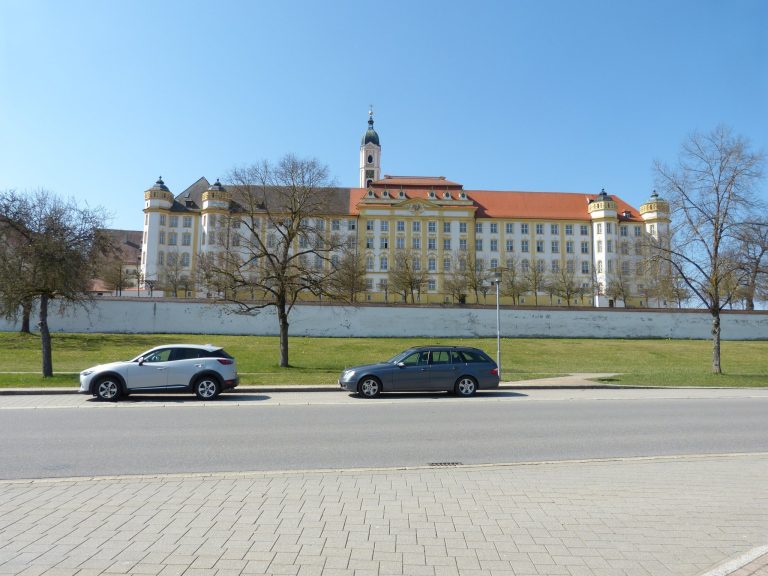
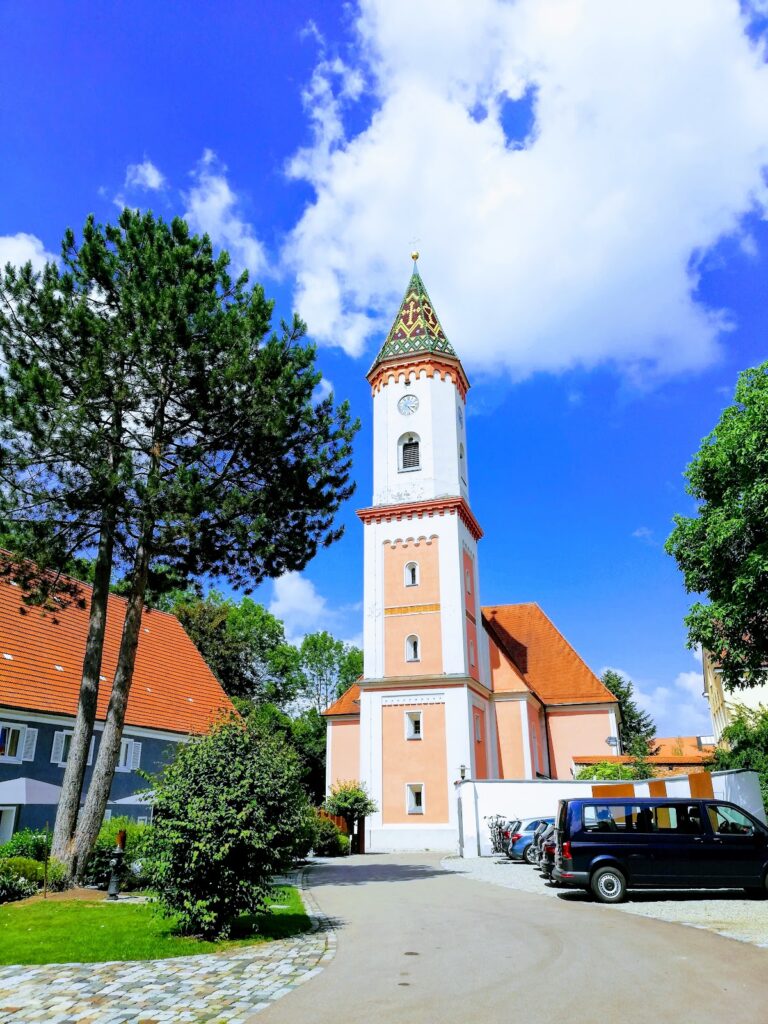
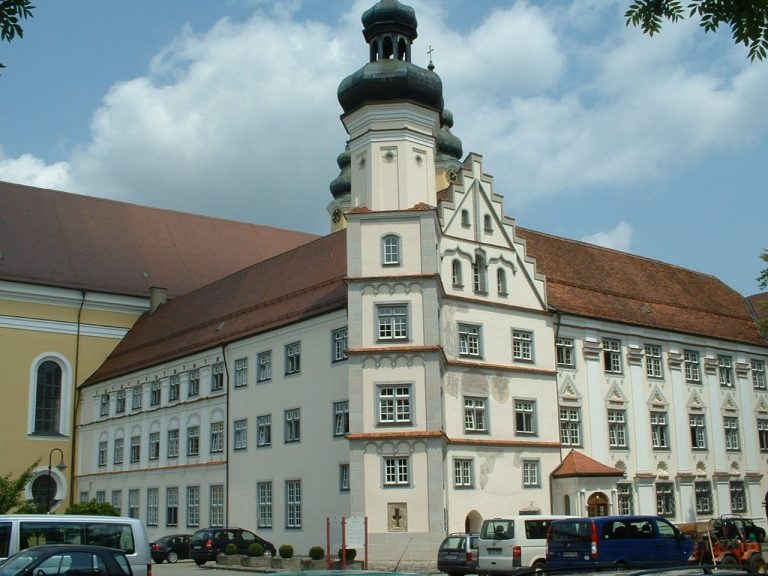
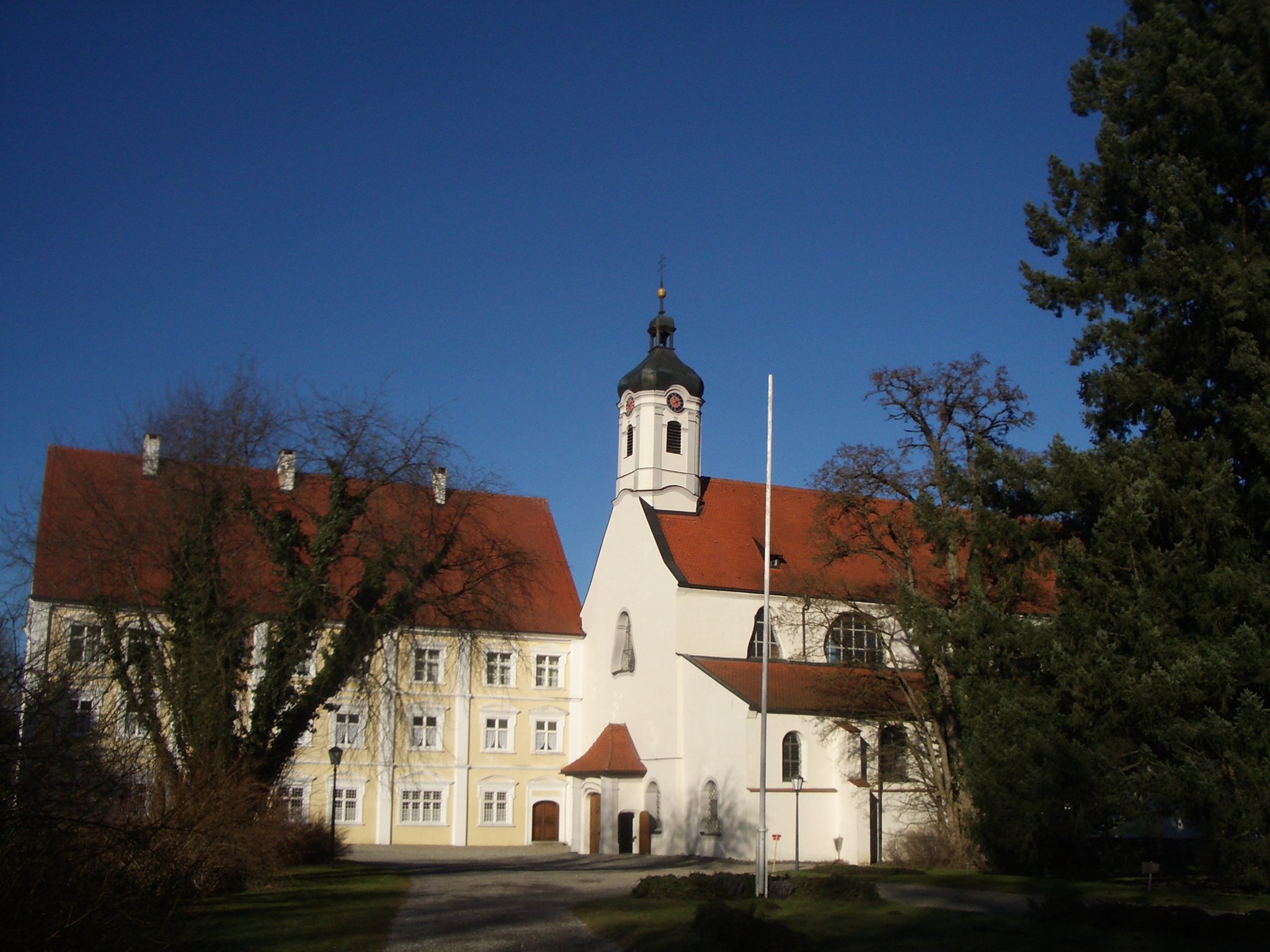
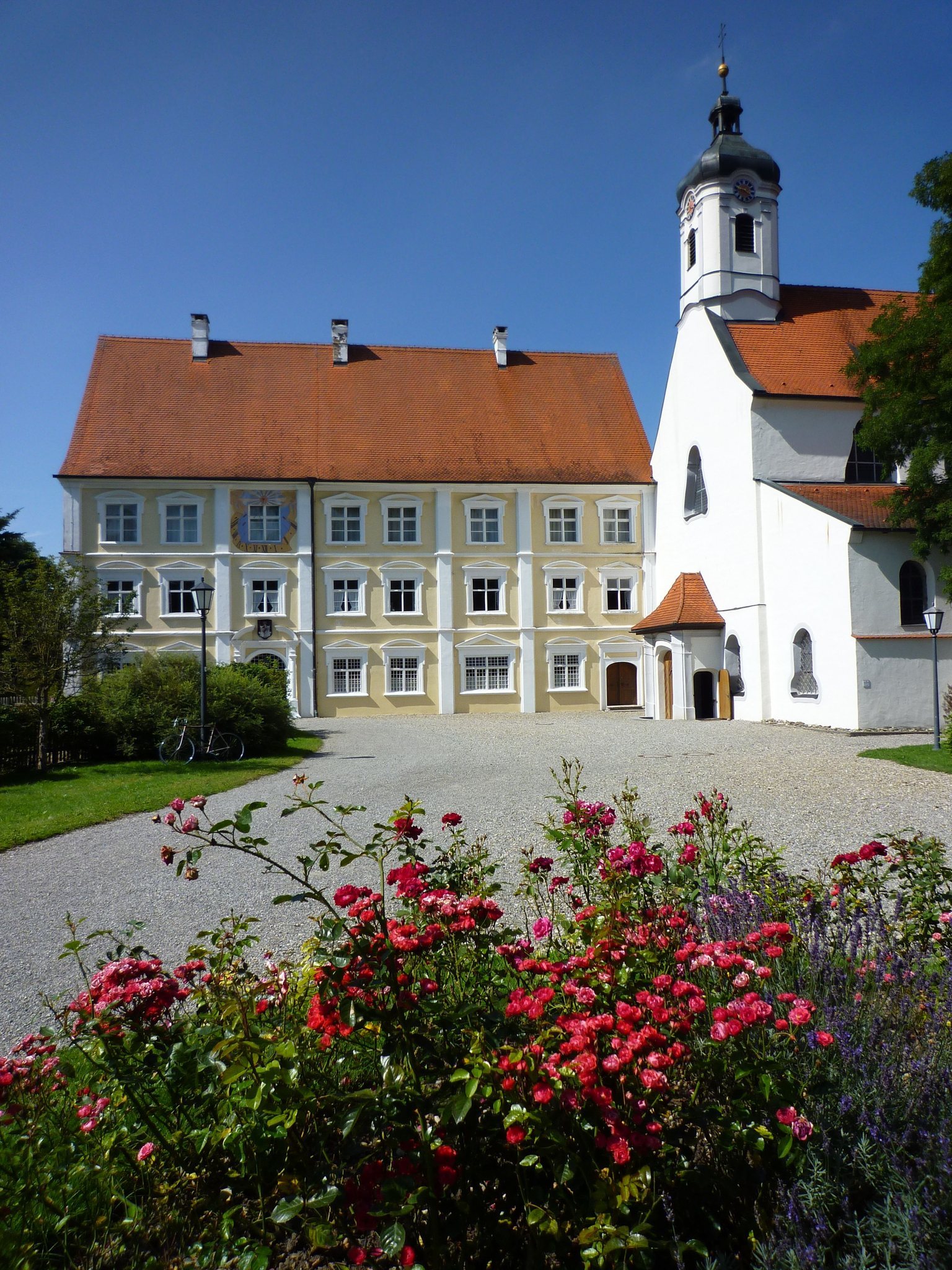
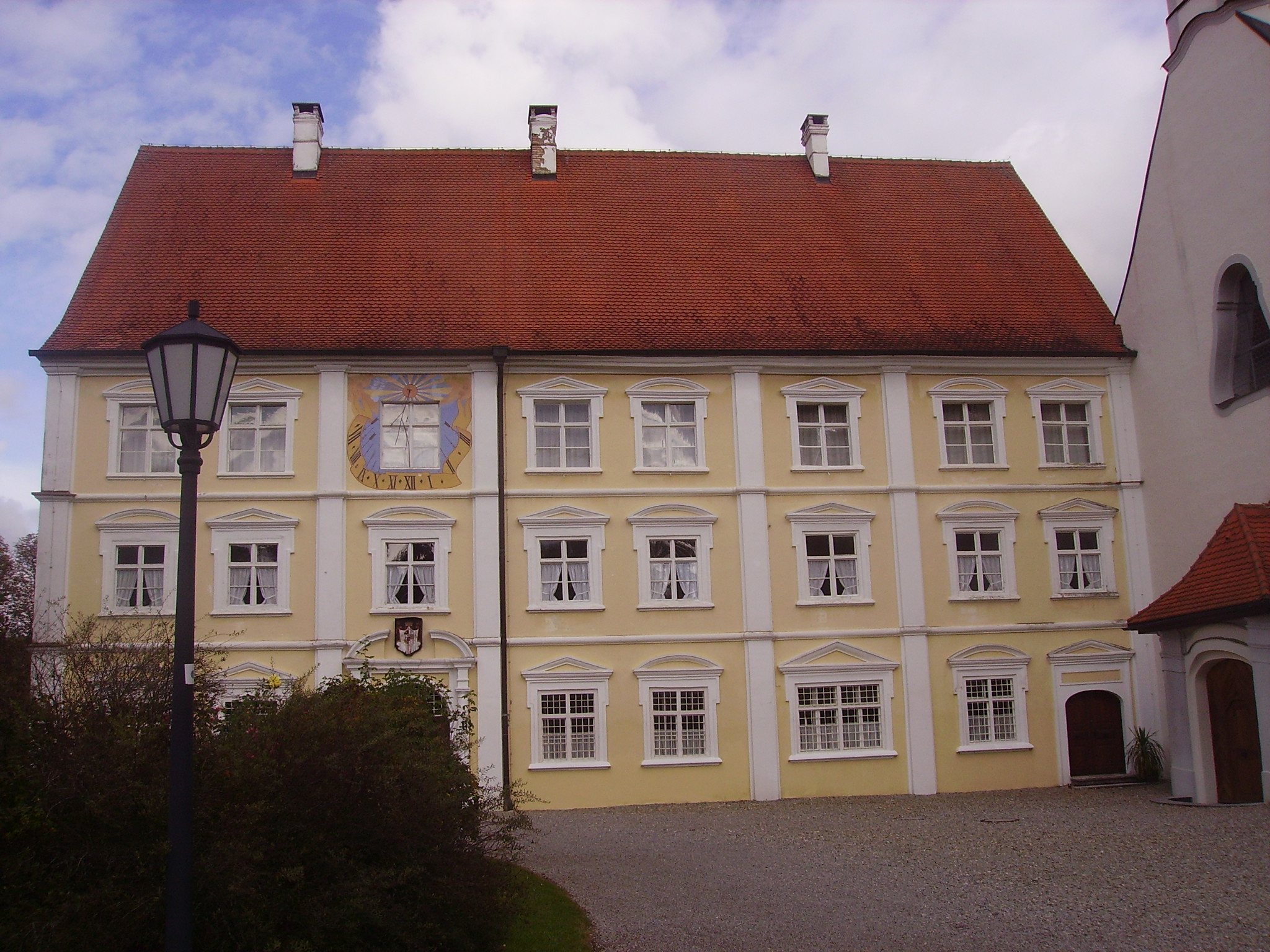
Most convent buildings were demolished in 1864. The former abbey church survived as the parish church of Saints Cosmas and Damian, while part of the east wing later served as a vicarage and forestry office. The former gatehouse also remained. The church continues to belong to the Catholic parish of Gutenzell, now within the St. Scholastika pastoral unit in the Biberach deanery of the Diocese of Rottenburg-Stuttgart. After the parish was united with neighboring parishes in the late twentieth century, the former vicarage became a community center.
Remains
Gutenzell’s surviving remains center on the former abbey church and portions of the monastic precinct. The church preserves a Gothic core reshaped in the eighteenth-century Baroque period, while the remaining convent buildings and gatehouse show the organization of the former enclosure around a cloister on the church’s south side.
Abbey church
Gothic structure and later alterations
The former church of Saints Cosmas and Damian is approximately 60 metres long and 23 metres wide across the aisles. The Gothic building completed around 1390 was a pillar basilica without a transept, with a recessed choir ending in a straight wall. Its oldest surviving architectural elements date from the fourteenth century. In 1518, the sanctuary was remodeled as a polygonal choir with a three-eighths termination, meaning an angled end formed by three sides of an implied octagon. A Sacred Heart Chapel was added on the north side in 1714.
The remodeling of 1755 and 1756 retained the Gothic core while giving the interior its Baroque character. The existing pillars were encased, new vaults were inserted into the nave, and the clerestory windows, the upper windows above the aisle roofs, were modified. Dominikus Zimmermann is associated with the plans. His daughter, Maria Alexandra Zimmermann, entered Gutenzell as a nun and later became abbess, serving from 1759 to 1776.
Stucco, frescoes, and altars
Franz Xaver Feuchtmayer directed the stucco work, while Johann Georg Dieffenbrunner painted the ceiling frescoes. Scenes from the Old and New Testaments cover the nave vaults, the walls show the Twelve Apostles, and the choir fresco includes Saints Cosmas and Damian. A nineteenth-century description recorded a principal altar and five secondary altars in side chapels. During the eighteenth-century revival, the church contained nine altars.
Two reliquary altars held the relics of the catacomb saints Justina and Christina. Reliquaries remain in the church, preserving the connection between the eighteenth-century interior and the abbey’s veneration of its co-patronesses. A large Baroque nativity scene with more than 100 figures is also preserved there and is traditionally displayed from Christmas until Candlemas on 2 February.
Convent precinct
Cloister wings
The convent buildings were arranged around a cloister adjoining the south side of the church. The west wing contained the gate, kitchen, and storage rooms on its ground floor. The south wing held the refectory, the communal dining hall, and the pharmacy, while the east wing contained the chapter house, where the community met for governance and the reading of its rules, together with the lay sisters’ dormitory. The upper floor contained the abbess’s rooms and individual rooms for the choir nuns.
Guesthouse and gatehouse
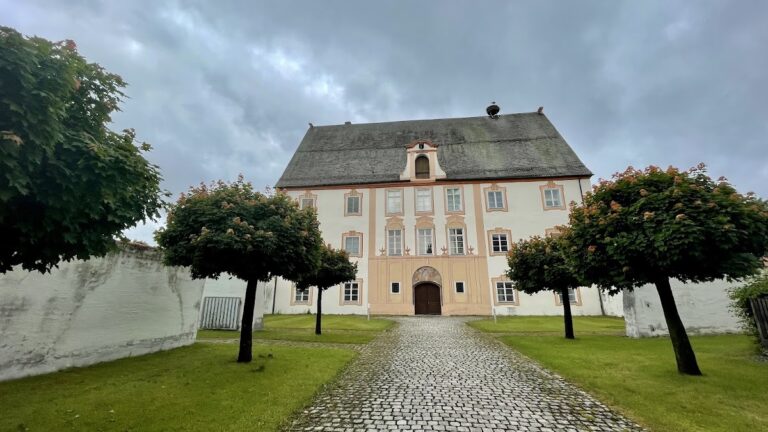
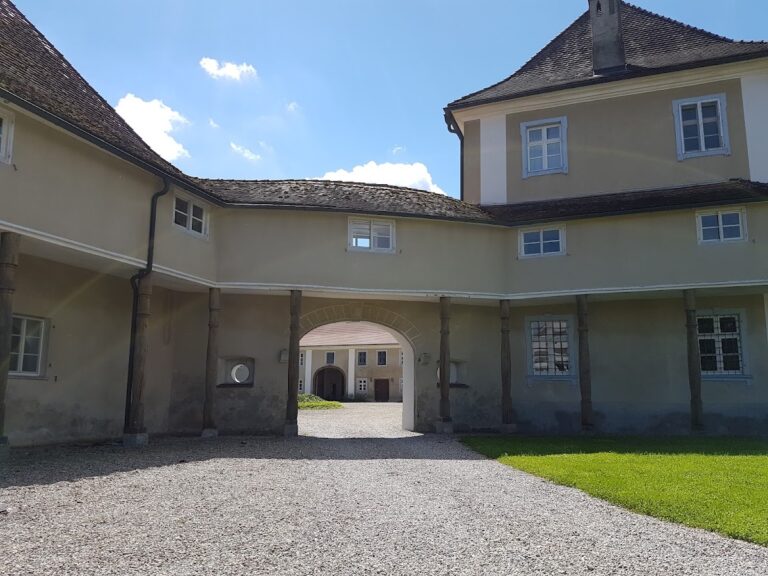
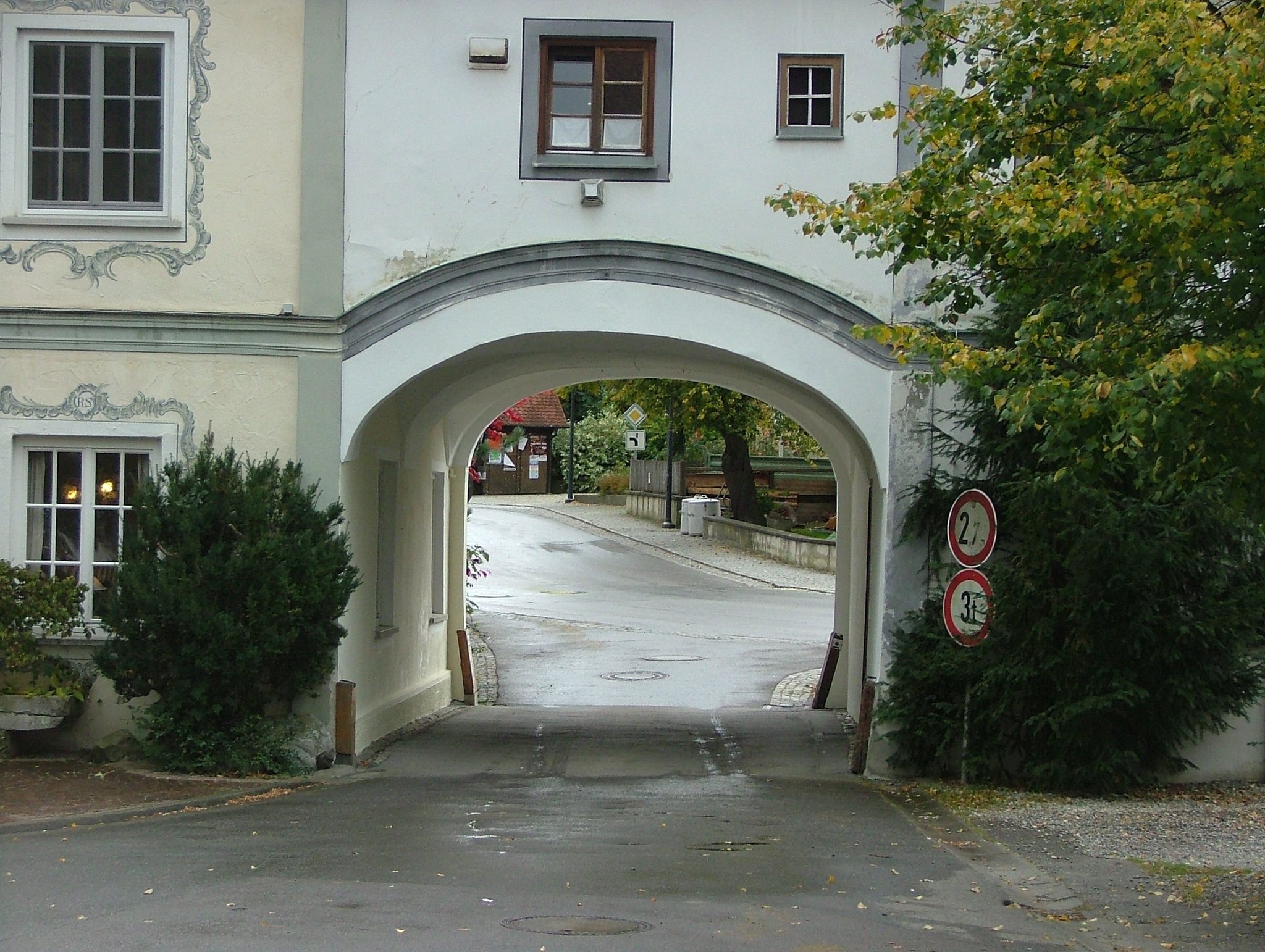
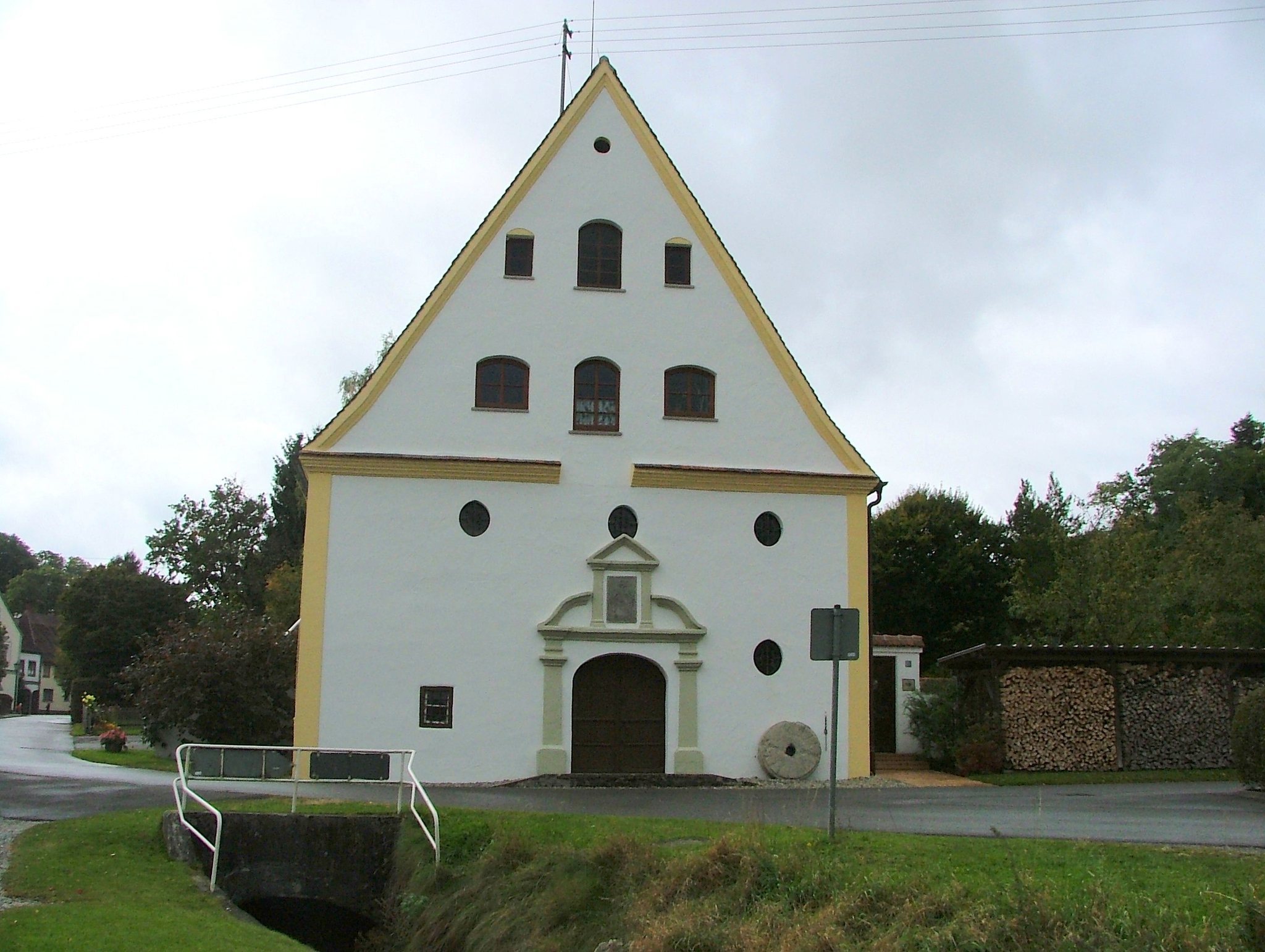
A guesthouse built outside the main quadrangle around 1700 survived the demolition of 1864 and became the Toerring family’s castle. Part of the east wing also survived and later served as a vicarage and forestry office. The former gatehouse on the south side of the monastic precinct dates from the Baroque period and remains one of the surviving elements of the former enclosure.