Frýdek Castle: A Gothic Fortress and Museum in Czechia
Site at a Glance
- Rating
- 4.6
- Popularity
- Low
- Country
- Czechia
- Primary era
- Early Modern
- External website
- Open
- Eras represented
- Medieval, Early Modern, Modern
- Civilizations
- Austria-Hungary, Habsburg, Holy Roman Empire, Kingdom of Bohemia
- Site type
- Domestic
- Remains
- Castle
On this page13 sections
History
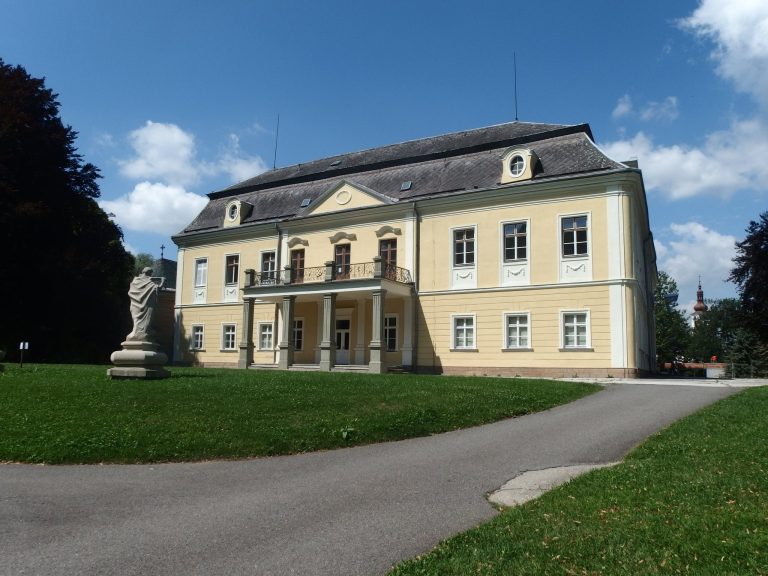
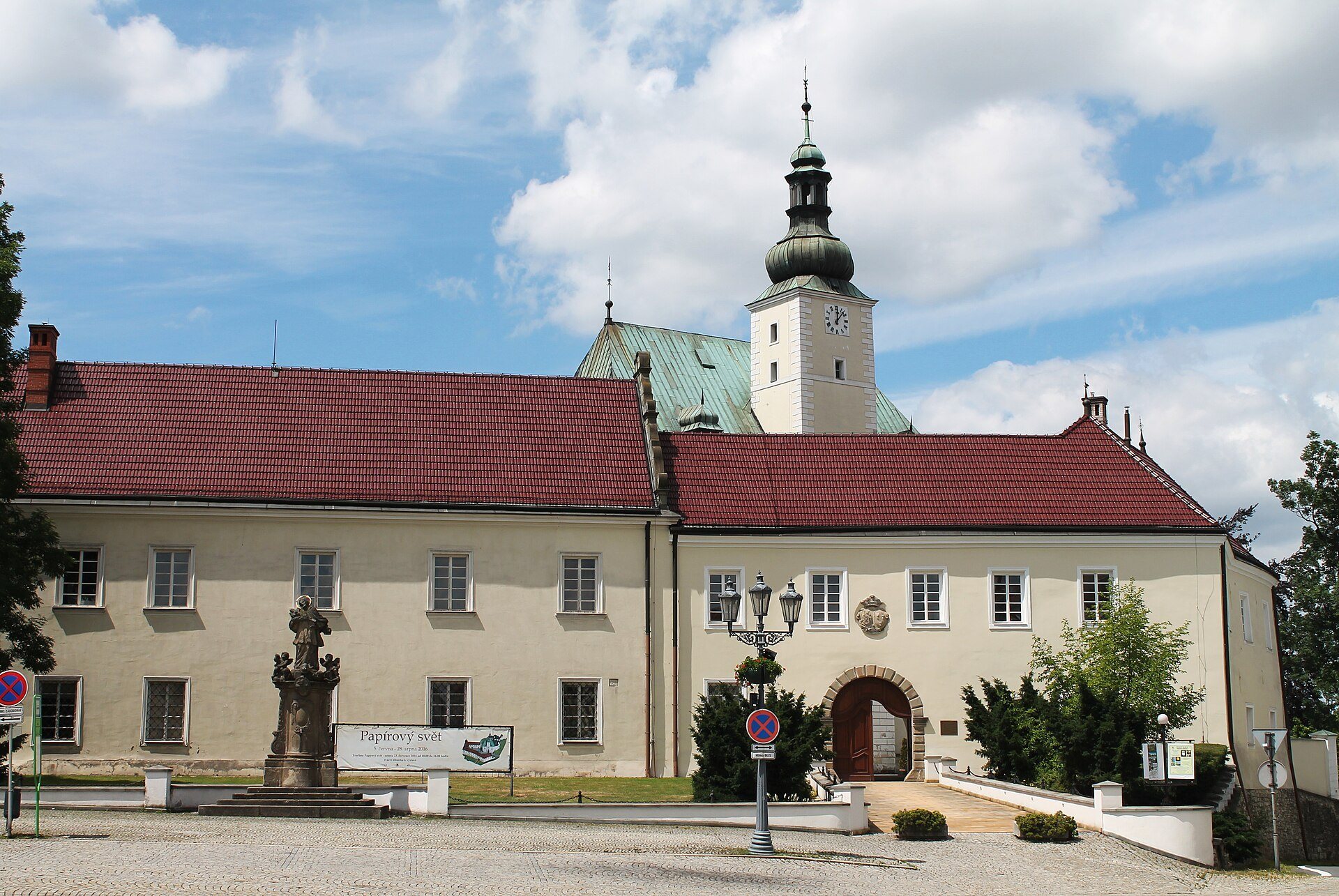
Frýdek Castle in Czechia is a Gothic castle in Frýdek-Místek, built beside the Ostravice River during the second half of the thirteenth century. Its construction is associated with Kazimír I, Duke of Teschen of the Piast dynasty, whose first recorded order concerning the castle dates from 1327. The river marked the territorial boundary between Moravia and Silesia, so the castle guarded the frontier and protected the newly founded town of Frýdek. The names of both castle and town derive from Old High German terms connected with fortification and a projecting spur.
Medieval fortress and Silesian estate
Until 1571, Frýdek belonged to the rulers of Silesia and was held by several dukes of Teschen. During the Hussite Wars, the fifteenth-century religious and political conflicts associated with Jan Hus and his followers, Duke Wenceslas I pledged the estate in 1434 because of his debts. Several pledge holders controlled Frýdek during the fifteenth and sixteenth centuries. Direct possession later returned to Dukes Boleslav II and Kazimír II.
Alterations under these two dukes in the second half of the fifteenth century strengthened the castle’s defensive purpose. In 1545, Jan of Pernštejn, known as “the Rich,” became its pledge holder, and his sons later held the same position. During this period, the medieval fortress probably began to change into a Renaissance residence.
Aristocratic residences and decline
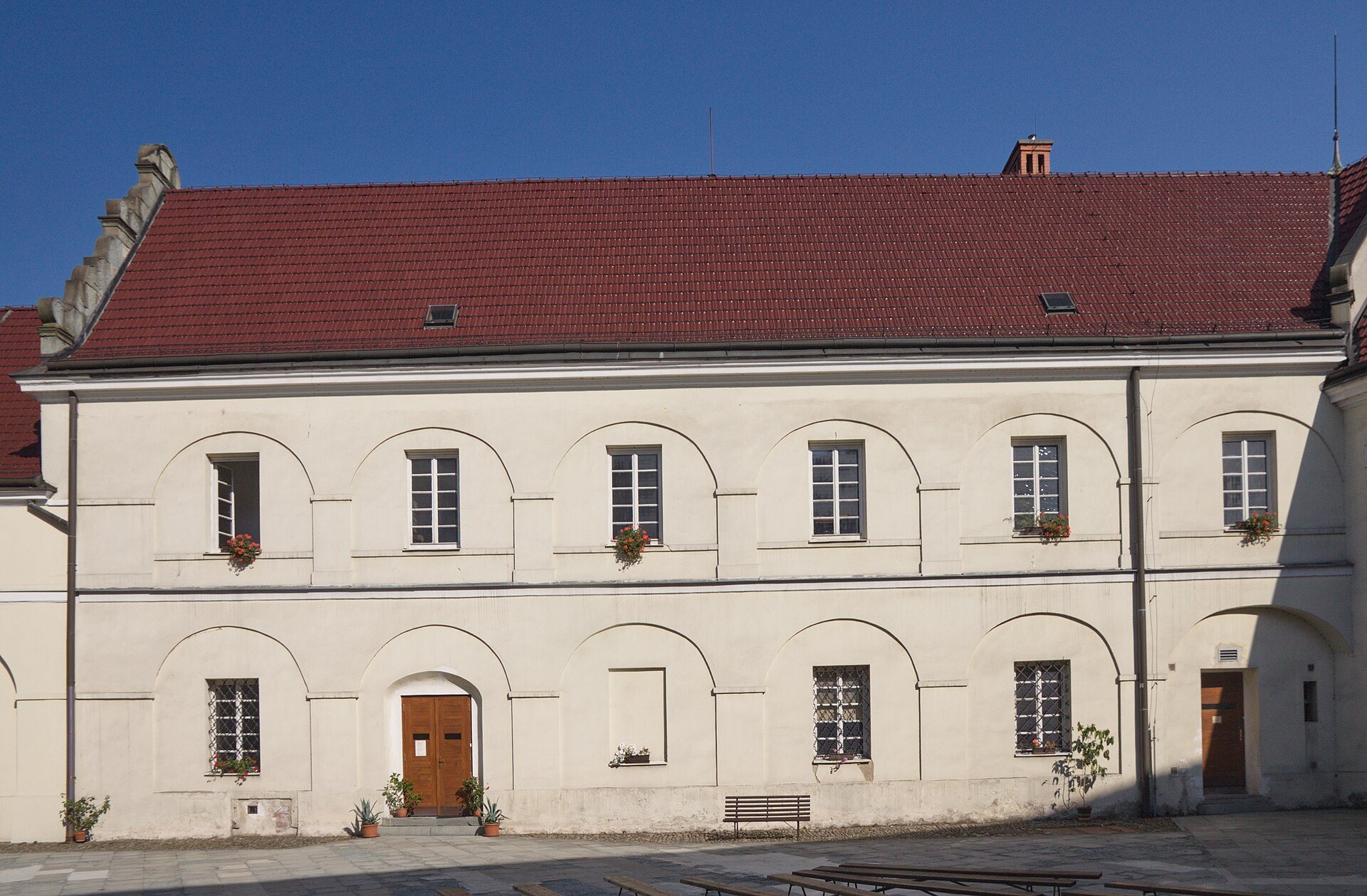
Bishop Stanislav Pavlovský of Olomouc purchased the estate in 1580 and incorporated Frýdek and neighboring Místek into the episcopal domain of Hukvaldy. He sold Frýdek to the Bruntál family of Vrbno in 1584 after finding that its expected revenues did not meet his expectations. Under the Bruntáls, the castle again served as an aristocratic residence. At the turn of the seventeenth century, older buildings were joined by arcaded corridors, creating a more unified complex. These works took place under Bartoloměj Bruntál of Vrbno, an officeholder in the administration of the Principality of Opava.
Bartoloměj’s heirs did not live at Frýdek, and the castle deteriorated. The town fire of 1607 and the incursion of Mansfeld’s troops in 1626 made its condition worse. In 1636, Count Jiří of Oppersdorf acquired the estate as a creditor of the Bruntál family. He supported re-Catholicization, the policy of restoring Roman Catholic allegiance in territories affected by the Reformation.
Jiří’s son Matyáš Rudolf inherited Frýdek but died unexpectedly in Paris soon after reaching adulthood. The estate then passed to his older half-brother, František Eusebius of Oppersdorf. The Oppersdorfs carried out extensive improvements, including the construction of the Chapel of St. Barbara and the establishment of a park. A major rebuilding followed the town fire of 1688, when the principal castle tower was constructed and the Knights’ Hall was enlarged.
The Pražma period
After František Eusebius died, Frýdek passed to his widow Anna Zuzana, née Bees, and then to their daughter Marie Ludovika. Her marriage brought the estate into the Pražma family of Bílkova. From 1708, her son Count František Vilém Pražma of Bílkova held Frýdek. He completed repairs to the fire-damaged Chapel of St. Barbara and began assembling coats of arms belonging to Silesian noble families in the Knights’ Hall.
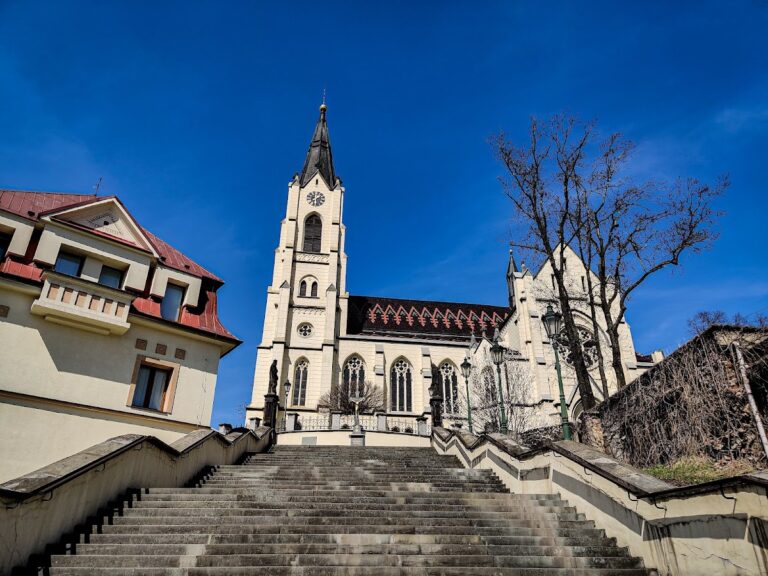
From 1731, Frýdek belonged to František Vilém’s son Jan Nepomuk Pražma of Bílkova, although he took effective control only in 1746. During his tenure, the castle became a center of social life with its own musical ensemble. The Pražma family also contributed heavily to the pilgrimage church of the Visitation of the Virgin Mary, built between 1740 and 1759 with a family crypt. Jan Nepomuk’s construction projects and expensive lifestyle left him deeply indebted. Because he concentrated on preserving the family’s principal estate at Falkenberg, Frýdek was sold in 1797.
Habsburg ownership and state administration
Archduchess Marie Christine, daughter of Maria Theresa and wife of Albert Casimir, Duke of Teschen, purchased the estate in 1797. Frýdek became part of the Teschen Chamber, the organization that administered the Habsburgs’ estates in the Duchy of Teschen, and remained in Habsburg ownership until 1918. From 1822, the estate was held by Archduke Charles, a commander in the Napoleonic Wars, and later by his son Archduke Albert. Forestry administration operated at the castle from the early nineteenth century, while members of the Habsburg family visited only occasionally.
The last private owner was Archduke Frederick of Austria-Teschen, an Austro-Hungarian field marshal and inspector general of the army. Frýdek was a peripheral property within his extensive holdings, although its representative rooms remained prepared for possible family visits. After Czechoslovakia was established, the castle was nationalized and became state property in 1918. In 1923, the Ministry of Agriculture took control of the former archducal property and located the state forest and estate administration there.
The Knights’ Hall housed an ethnographic and regional museum from 1923 to 1934 before being used for the archive of the Teschen Chamber estates. Other parts of the castle were adapted for forestry offices and apartments. The castle inventory was sold through a bazaar in 1952. In 1960, the local national committee, a municipal administrative body used in communist-era Czechoslovakia, took over the castle and established a museum.
Museum and modern preservation
Since 1998, the museum has been called the Beskydy Museum of Frýdek-Místek, and since 2003 it has operated as a contributory organization of the Moravian-Silesian Region. The castle park deteriorated severely during the second half of the twentieth century. Part of it passed to the statutory city of Frýdek-Místek in 2006, and the castle complex became city property in 2007. Restoration and revitalization in 2010 and 2011 renewed the park and its historical circulation network.
The castle is associated with a local tradition about a siege in which defenders disguised their last goat as a deer and threw it from the castle. The besiegers supposedly concluded that a secret passage must exist. According to the tradition, this story developed into an annual practice of throwing a goat from the castle and distributing its meat among poor residents.
The Beskydy Museum’s permanent regional exhibition presents the history, ethnography, and natural environment of the Beskydy area through more than 2,000 objects in thirteen rooms. A second exhibition presents Frýdek-Místek as a Marian pilgrimage center and includes material connected with the town’s pilgrimage tradition since the eighteenth century.
Remains
The castle’s original arrangement is uncertain because repeated rebuilding altered the medieval structure. It probably began as a single-storey building with a high tower. From the town square, access led through an entrance gate over a moat. The original palace was later incorporated into the southern wing. Subsequent additions, arcaded connections, raised forecourt buildings, and interior remodeling produced the complex that survives today.
Castle buildings and interiors
Castle wings and tower
The late fifteenth-century works reinforced the defensive character of the castle before its later conversion into a Renaissance residence. At the turn of the seventeenth century, arcaded corridors connected older buildings. The buildings surrounding the first courtyard were later raised by one storey, and many interiors were altered. Rebuilding after the 1688 fire produced the principal castle tower. Some sections were remodeled in a historicist style during the 1870s, while further internal adaptations in the early twentieth century created offices and apartments for the state forestry administration.
Knights’ Hall
The Knights’ Hall was enlarged after the 1688 fire and later received a collection of coats of arms belonging to Silesian noble families. It forms part of the museum route through the castle, which also includes several other halls and a viewing tower. The representative first-floor rooms, including the hall, continued to be maintained during the Habsburg period.
Chapel of St. Barbara
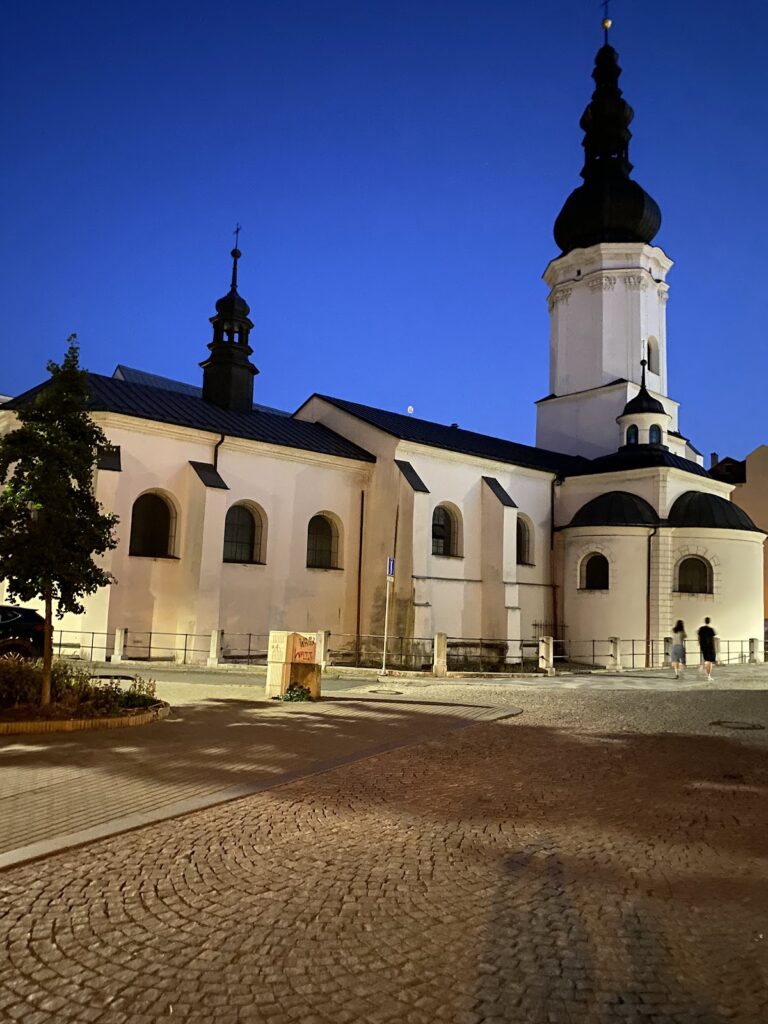
The Chapel of St. Barbara stands beside the eastern wing and was built after 1636. A small ornamental viewing pavilion, known as a gloriette, was created nearby and connected to the castle by a wooden corridor. The chapel was damaged in the 1688 fire and repaired afterward. Its sacristy now contains an exhibition about Frýdek-Místek as a Marian pilgrimage place. The display includes sculptures of the Sacred Heart of Jesus and the Immaculate Heart of the Virgin Mary, transferred from the pilgrimage church of the Visitation of the Virgin Mary, now a minor basilica, a Catholic church with a special honorary title granted by the pope.
Museum displays
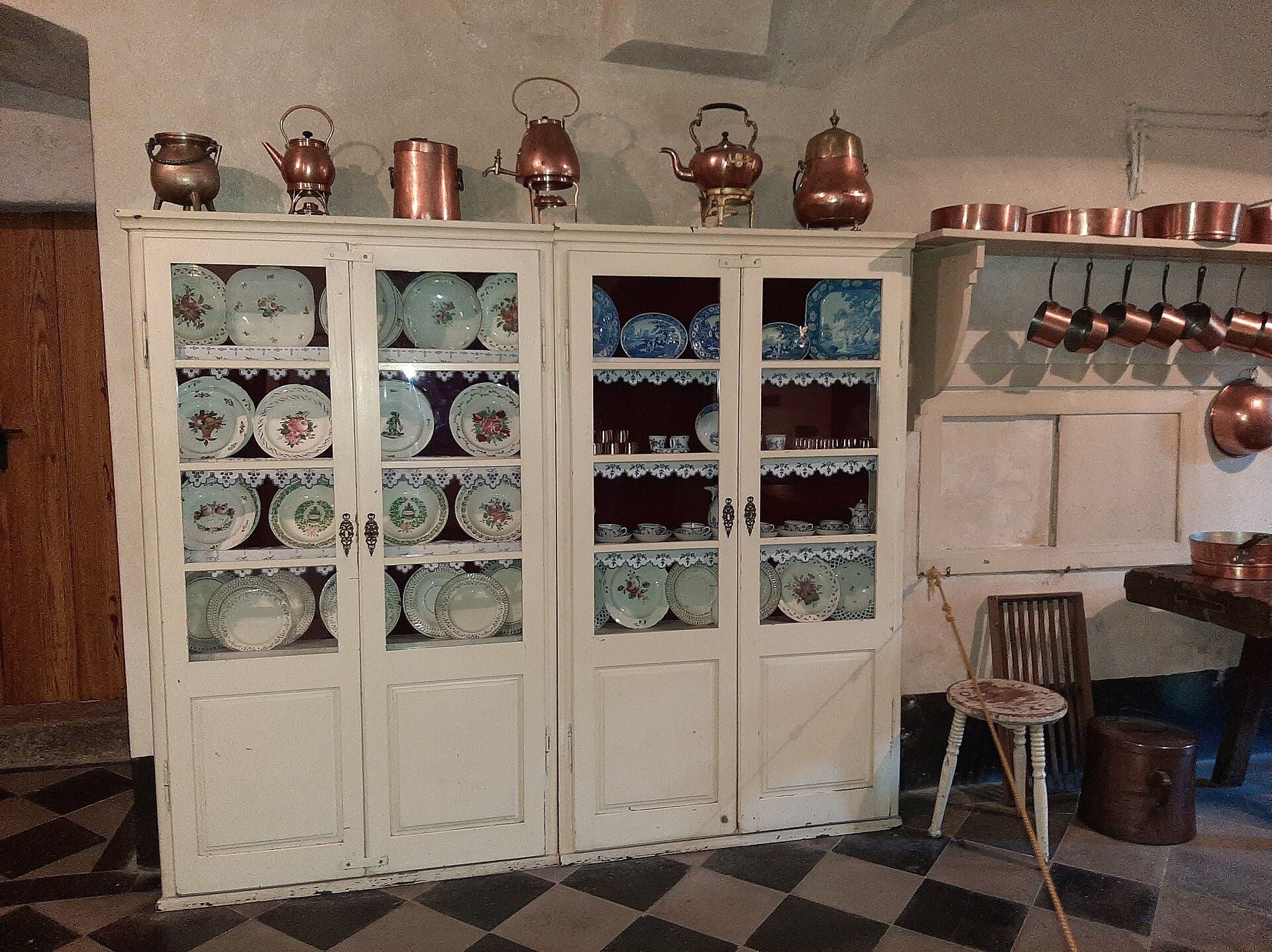
The regional exhibition occupies thirteen rooms within the castle. Its displays include local crafts, a shoemaking workshop, a tailoring workshop, a weaving workshop, ceramics from a workshop in Tošanovice, and the interior of a typical Beskydy cottage. Collections of birds, mammals, and fish present the natural environment of the region. Together with the halls, viewing tower, and chapel, these rooms form the present museum use of the historic complex.
Castle park
The park includes a level area around the castle and a natural slope below it. During the eighteenth century, the garden was maintained as a symmetrical formal design. In the nineteenth century, the smaller garden became an extensive landscape park, a garden designed to frame natural scenery rather than follow a strict geometric plan. The restored path network follows the arrangement known for the earlier gardens, and the paths were made barrier-free.
The park contains a viewpoint overlooking the Místek part of the city and the Beskydy Mountains, together with a roofed arbor on the site of an earlier resting place. An edible chestnut and a large European ash stand near the main gate. The ash is described as the thickest tree in Frýdek-Místek and probably one of the city’s oldest, with an estimated age of about 200 years.