Motoinari Kofun: An Early Kofun-Period Burial Mound in Japan
Site at a Glance
- Rating
- 3.5
- Popularity
- Very Low
- Country
- Japan
- Primary era
- Classical
- Eras represented
- Classical
- Civilizations
- Unclassified
- Site type
- Burial
- Remains
- Burial Mound
On this page7 sections
History
Construction in the Early Kofun Period
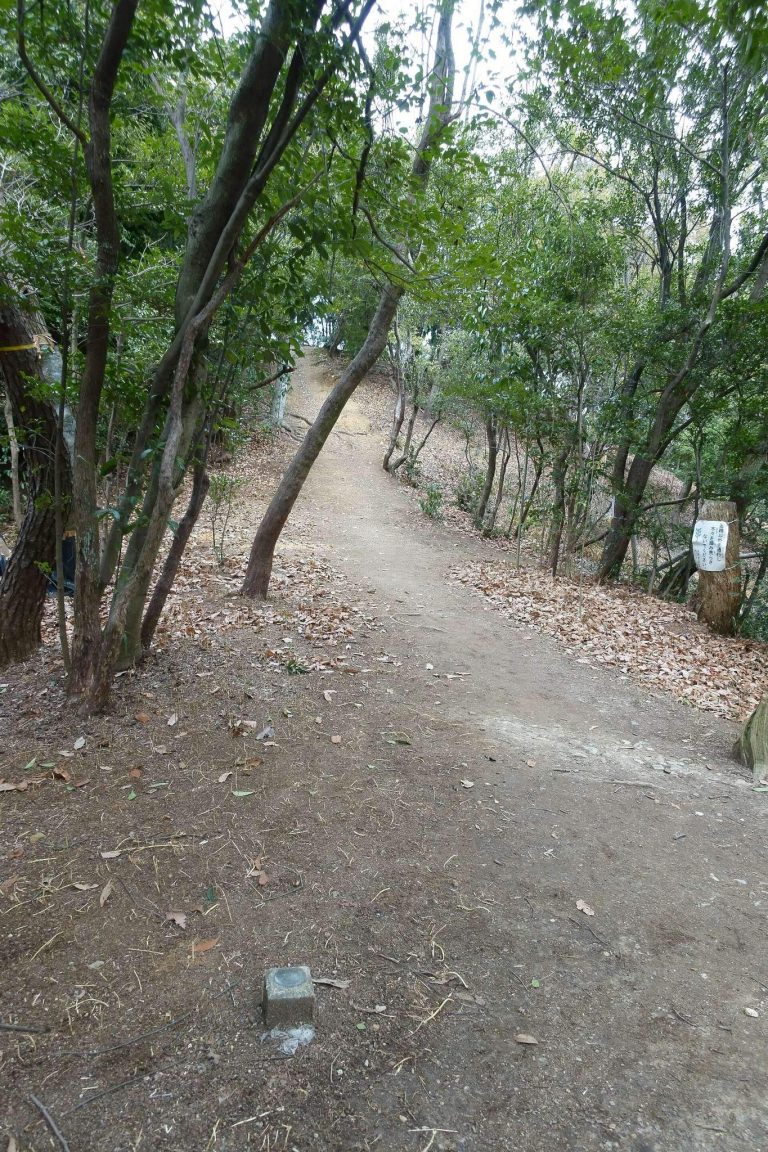
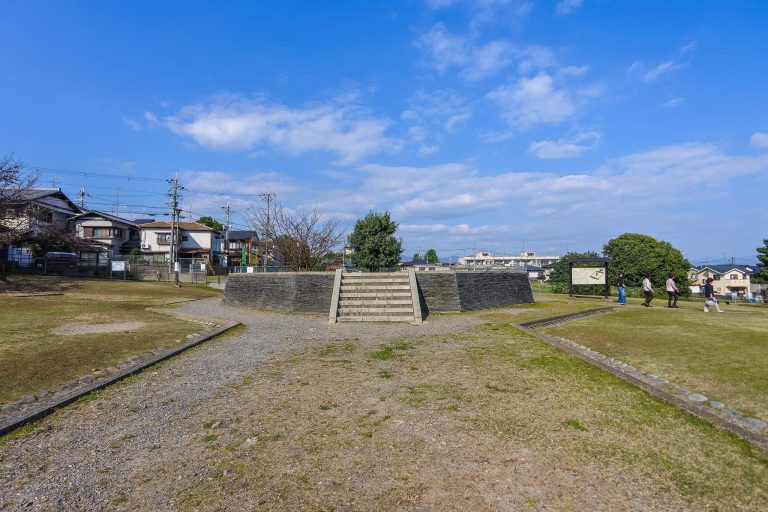
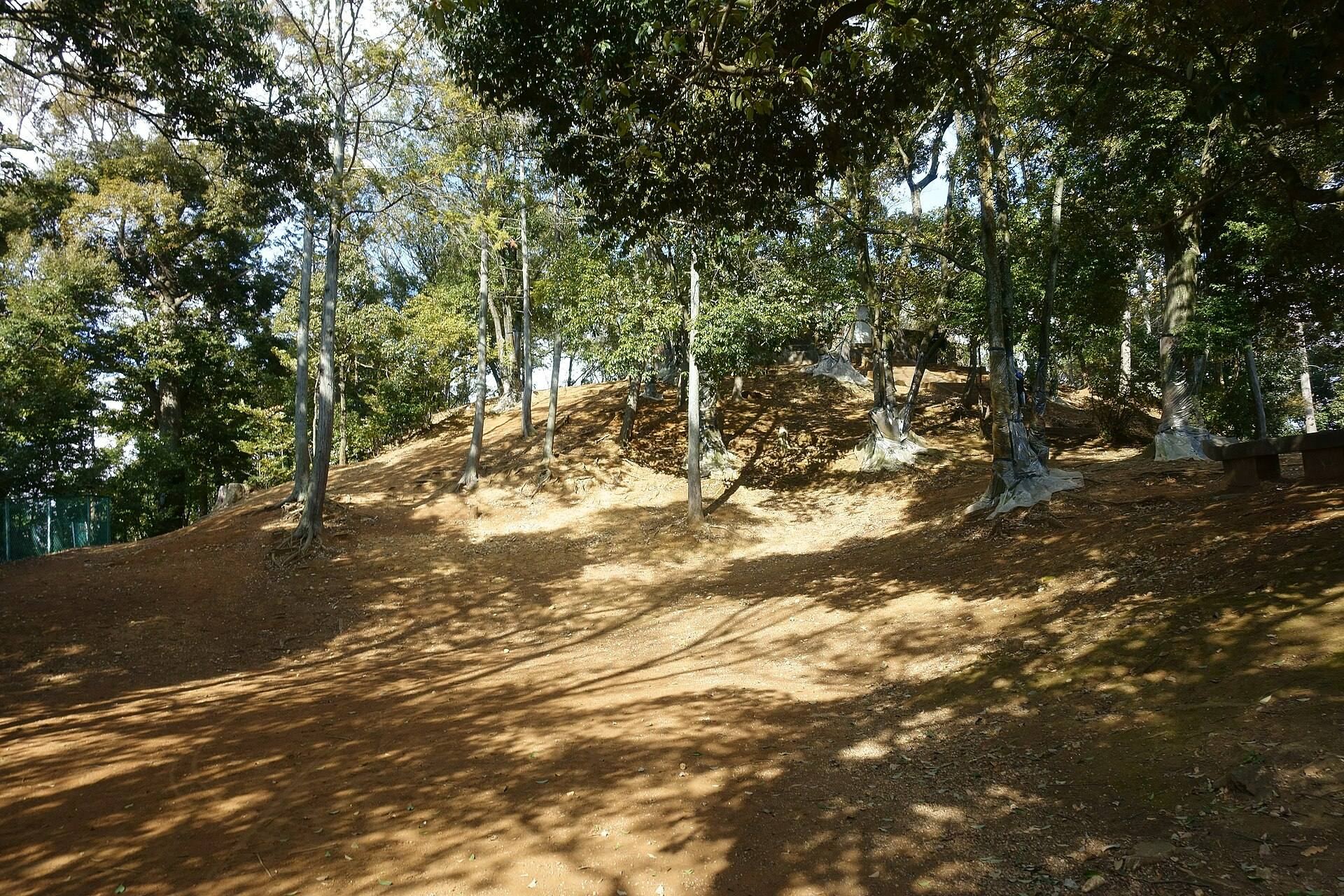
Motoinari Kofun is a large burial mound in Muko, Kyoto, Japan, built during the latter half of the third century in the early Kofun period. The Kofun period was an ancient era associated with large elite tombs and the growth of powerful regional and central authorities. The mound stands at the southern end of the Muko Hills Kofun Cluster, on the southwestern edge of the Kyoto Basin and the right bank of the Katsura River.
Within the group of chiefly burial mounds in the Muko Hills, Motoinari Kofun was built after an earlier large keyhole-shaped mound. Unlike that predecessor, it has a front-square, rear-square plan, with two rectangular sections joined together. Its form has been understood as resembling contemporary royal burial mounds connected with the Yamato kingship, the early royal authority centered in the Yamato region. At the same time, its design has been interpreted as expressing a relatively high degree of autonomy from that political power.
The name Motoinari comes from an Inari shrine that once stood on the summit of the mound’s rear section. Inari is a Shinto deity associated especially with rice, food, agriculture, and prosperity. The mound borders the grounds of Muko Shrine, another Shinto shrine.
Looting, Investigation, and Protection
Most of the burial goods were dispersed during large-scale grave robbery in the Edo period. A field survey in 1919 nevertheless identified the mound, which was initially thought to be keyhole-shaped. The first excavation, in March 1960, examined the mound and its rear section, including the burial facility, and established that its plan was front-square and rear-square. A second excavation investigated the front section in July 1970.
Eight further excavations were carried out between fiscal years 2006 and 2012 by the Muko City Buried Cultural Properties Center. Together with the earlier work, these brought the total number of excavations to ten and clarified additional parts of the mound while recovering surviving burial goods and ceramic fragments. On March 1, 2016, Motoinari Kofun became part of the Otokuni Kofun Cluster, a designation grouping ancient burial mounds in the Otokuni area. The group then included eight newly designated mounds alongside three sites already protected as National Historic Sites.
Remains
Mound Form and Surface
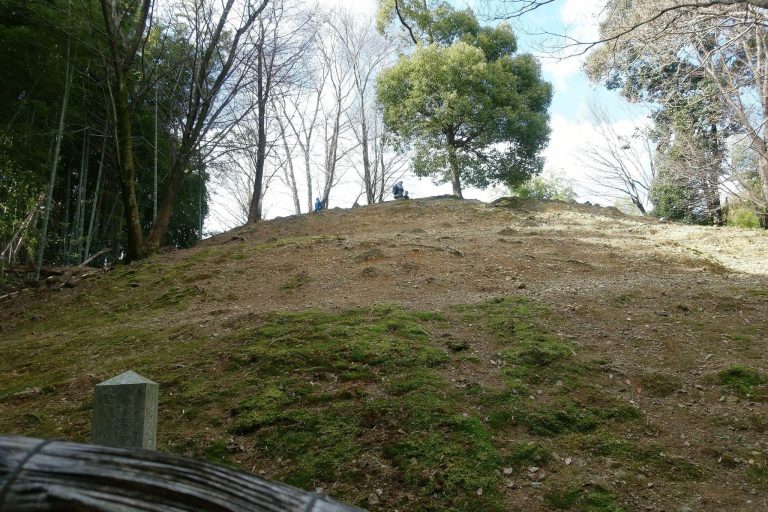
Motoinari Kofun extends for approximately 94 meters along a north-south axis. The rectangular front section faces south, while the rectangular rear section lies to the north. The rear section was constructed in three tiers and the front section in two. Fukiishi, stones laid over the exterior of a burial mound, covered parts of the surface. No row of haniwa has been identified, although haniwa fragments were recovered from the front section. Haniwa were clay funerary objects that could be placed on or around a mound, and their presence in fragmentary form helps illuminate the site’s funerary context.
Stone Burial Chamber
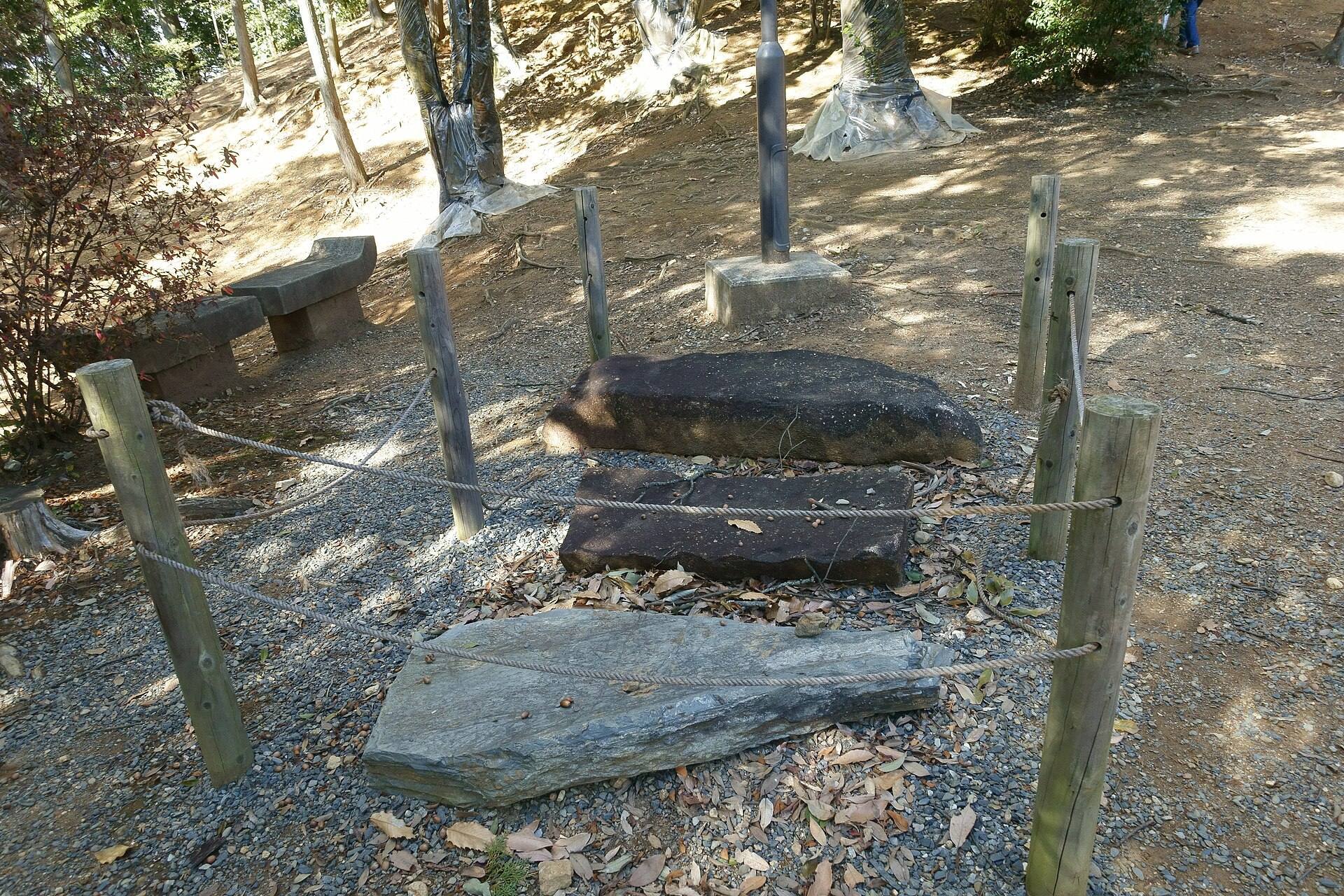
A pit-type stone burial chamber occupies the center of the rear section. This kind of chamber is built within a shaft or pit and lined with stone slabs. Its main axis follows the mound from north to south. The chamber measures 5.56 meters in length, 1.32 meters in width at the northern end, 1.02 meters at the southern end, and 1.9 meters in height at the southern end. Its base stands at the same elevation as the top of the front section.
The chamber floor consists of a rectangular platform covered first with a layer of red-painted clay and then with stone slabs. Slabs form the walls, whose upper courses project inward in a corbelled, house-shaped form. This distinctive arrangement creates a gable-like roof profile, and eleven ceiling stones were laid across the walls. The chamber was looted, but excavations recovered a bronze arrowhead, seven iron arrowheads, three fragments of an iron sword, three spear fragments, an iron axe, and a sherd of Haji ware, an ancient generally unglazed earthenware pottery.
Front Section Finds
A concentration of haniwa fragments and jar-shaped pottery fragments was found in the center of the front section. Excavations also recovered fragments of special pedestal-shaped haniwa. These pieces are preserved and displayed at the Kyoto University Museum.