Schloss Ulbersdorf: A Historic Manor Estate in Saxony, Germany
Site at a Glance
- Rating
- 4.3
- Popularity
- Very Low
- Country
- Germany
- Primary era
- Early Modern
- Eras represented
- Early Modern, Modern
- Civilizations
- Electorate of Saxony, German, Holy Roman Empire, Kingdom of Saxony
- Site type
- Domestic
- Remains
- Manor House
On this page13 sections
History
Schloss Ulbersdorf is a historic manor estate in Germany, in the Ulbersdorf district of Hohnstein, Saxony. The estate was established by the local lower nobility and is first known from the years around 1433 or 1443. Its principal residence, a manor house rather than necessarily a princely castle, probably originated during the sixteenth century and developed as a Baroque estate complex.
The Hermsdorf Estate
For almost two centuries, Schloss Ulbersdorf remained largely in the possession of the established von Hermsdorf family. Wolf von Hermsdorf owned the estate in 1534, followed by Hans von Hermsdorf in 1560. After Haugk von Hermsdorf died, his heirs divided the property in 1609 into Oberulbersdorf and Unterulbersdorf, also known as Niederulbersdorf.
The original house at Oberulbersdorf was catastrophically damaged by fire in 1611 and rebuilt on its cellar remains. The same year, Heinrich von Hermsdorf left a lasting inscription on the courtyard barn at Unterulbersdorf. His name, the name of his wife Elisabeth, and the date 1611 were placed on the building.
Changes of Ownership and Reunion
Caspar von Hermsdorf sold Oberulbersdorf to Christoph von der Sahla in 1622. The von der Sahla family retained the estate until 1647, when it passed to Hans von Liebenau. Siegfried von Lüttichau acquired it in 1659, beginning more than two centuries of von Lüttichau ownership.
Siegfried’s son Hannibal von Lüttichau later acquired Niederulbersdorf as well. This reunited the two portions of the former estate under one owner after more than eighty years of division. Between 1716 and 1748, Hannibal also supported the local community. He donated a silver chalice and a container for consecrated hosts to the church in 1716, then established several financial endowments from 1739 for sermons and assistance to poor people.
The Lüttichau Period
The estate underwent major architectural alterations in 1820. During the first half of the nineteenth century, it belonged to Privy Councillor Wolf Adolf August von Lüttichau, director-general of the Royal Court Theatre in Dresden, and his wife Ida von Lüttichau. They used Ulbersdorf as a retreat.
Ida von Lüttichau was an important figure in Dresden’s cultural life during the Vormärz, the period of political and cultural tension in the German states before the revolutions of 1848. She maintained close contacts with Richard Wagner, the German composer, and Ludwig Tieck, a writer associated with German Romanticism. Romanticism was a cultural movement that emphasized emotion, imagination, history, and nature.
From the Late Nineteenth Century to 1945
The Ulbersdorf branch of the von Lüttichau family ended in 1889 or 1890 because it had no descendants. Alexander von Gontard received the estate in 1893, and an octagonal tower was added to the manor house in 1896. Fritz Heller bought the property in 1900 and later leased it.
After the National Socialists persecuted and expropriated Heller, the Gontard family held the estate from 1930 to 1945. The Saxon Peasant Settlement Company bought the property in 1939, although it initially remained unused. Near the end of the Second World War, the Sarrasani circus, a company founded in Dresden, considered using the estate for secure storage. Immediately after the war, between 1945 and 1946, companies including Siemens used the manor house for relocated business operations.
Postwar Uses and Restoration
The von Gontard family was expropriated during the land reform in the Soviet occupation zone. Part of the estate’s agricultural buildings was demolished. During the East German period, the manor house was retained but adapted to several new purposes. It contained rental housing, while the municipal administration, a school kitchen, and a gymnasium occupied other parts of the building. Rooms were also used by tenants and holiday guests.
The historic park was divided into private allotment gardens, and rustic alterations progressively damaged the interior’s historic character. The building eventually stood empty and deteriorated. Extensive renovation took place from 1991 to 1993, followed by restoration of the historic park. In 2000, the substantial stone courtyard barn from 1611 was extensively restored.
A further redesign of the manor house and estate park began in 2020, creating exhibition rooms and a sculpture park. The site now particularly commemorates Ida von Lüttichau and the work of the sculptor Horst Weiße. Schloss Ulbersdorf is owned by the town of Hohnstein and protected as an immovable cultural monument. The manor house serves as a multipurpose municipal building with a daycare center, apartments, municipal offices, and facilities for cultural and social events.
Remains
Manor House
Main Building
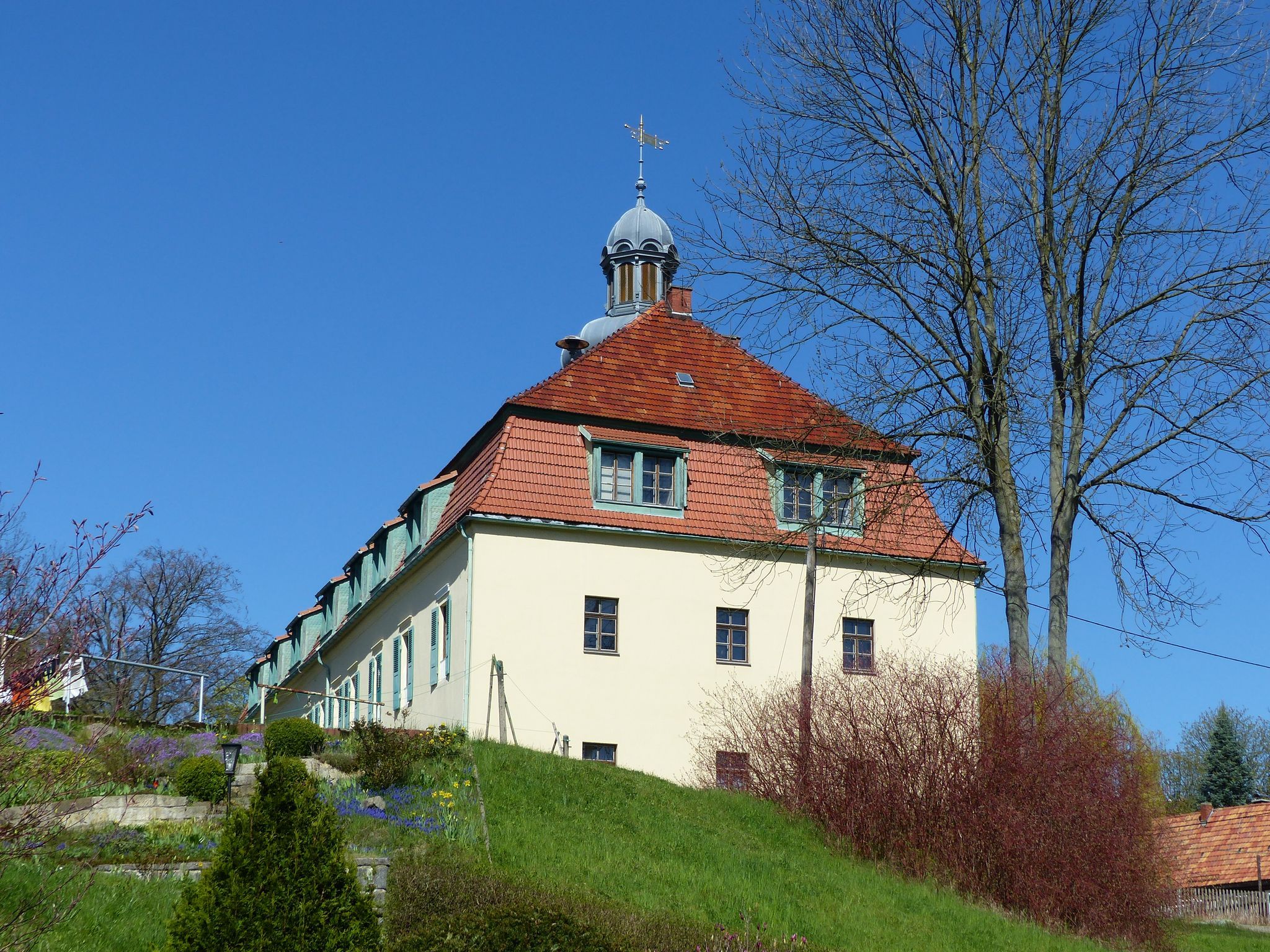
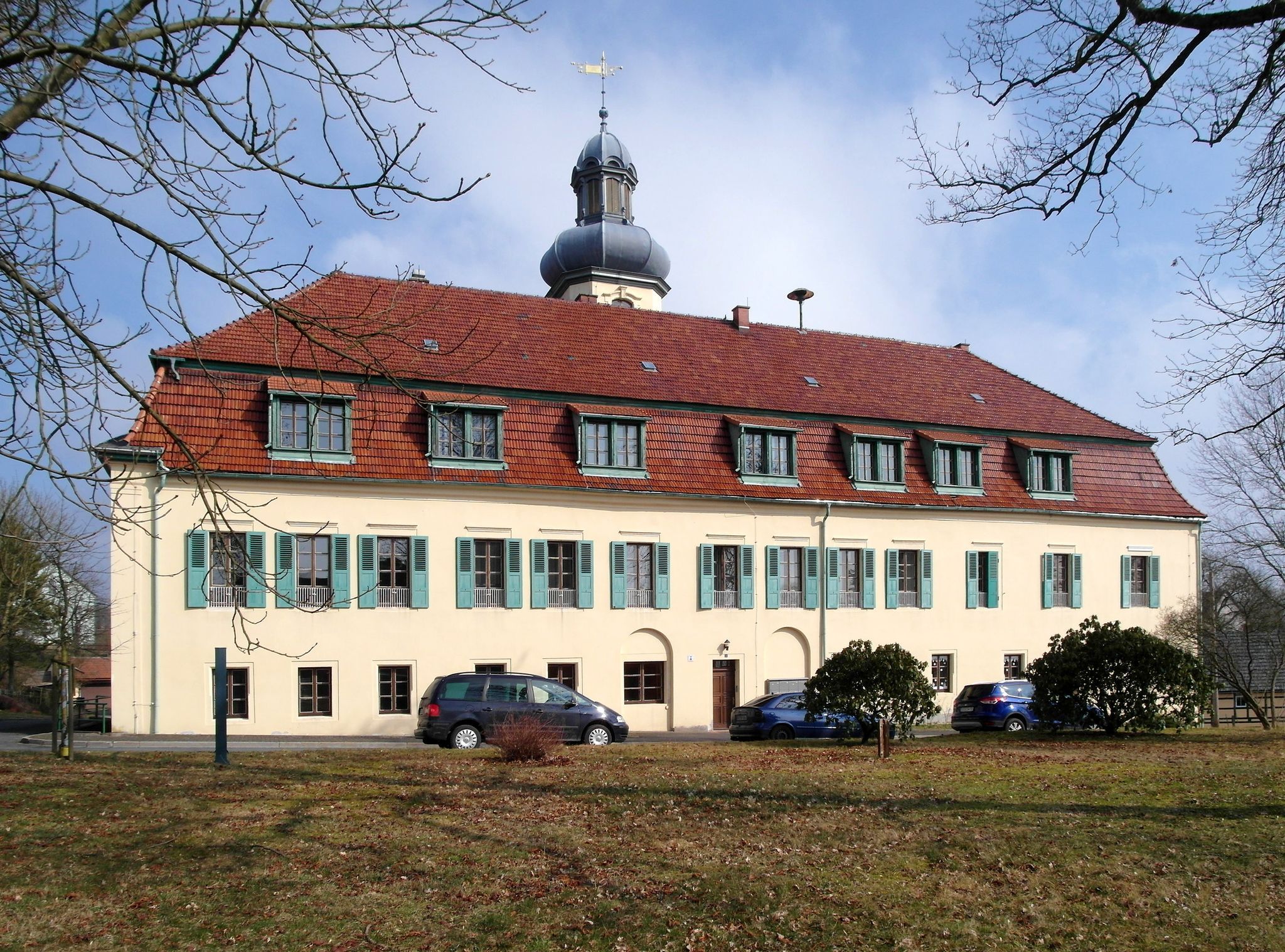
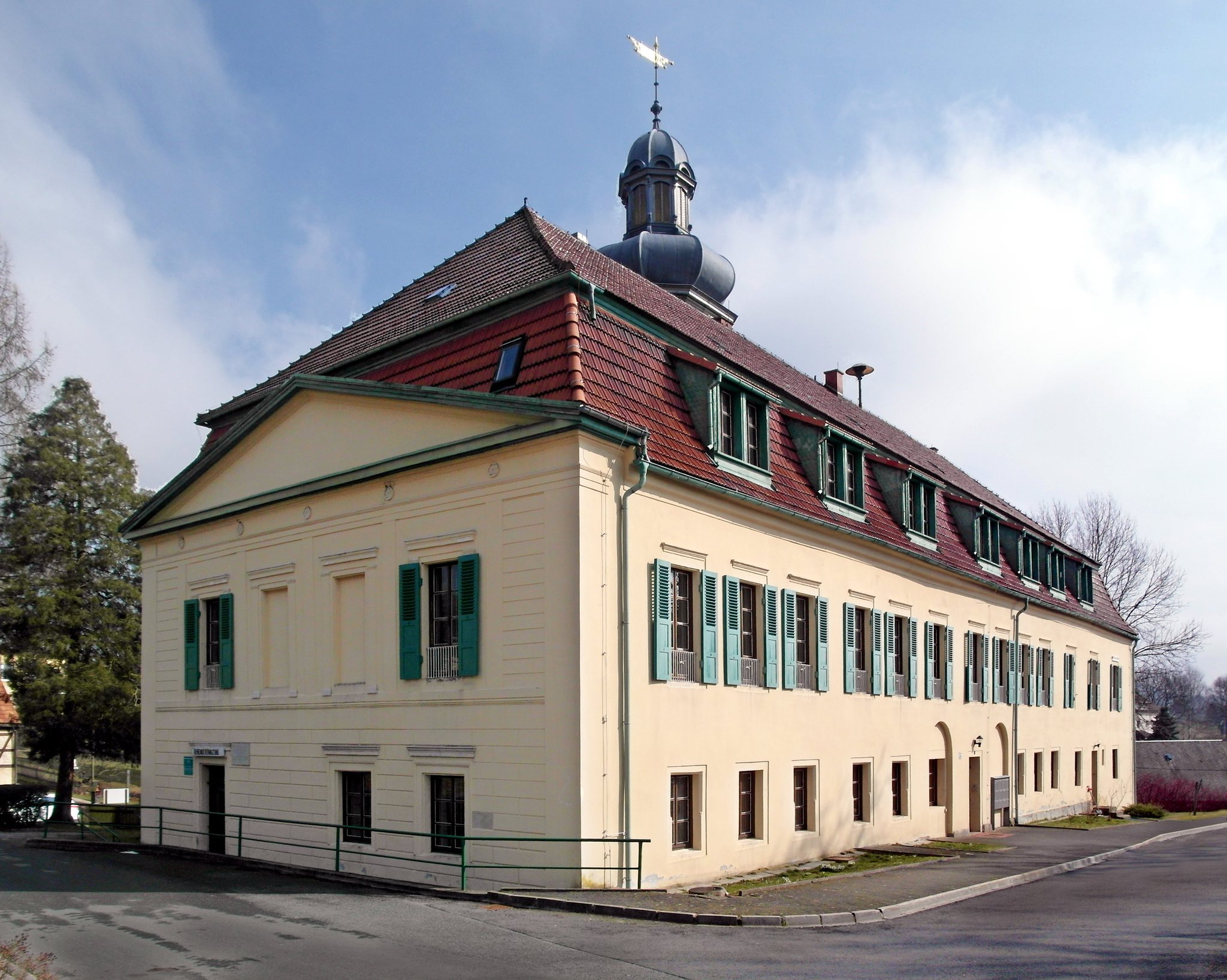
The principal building is a two-storey Baroque manor house with a habitable attic. Baroque architecture is an early modern style known for formal composition, expressive massing, and elaborate decorative effects. The rectangular building is constructed of stone and brick and has rectangular windows fitted with shutters.
South Tower and West Facade
The west facade was altered in the Neoclassical manner, which revived restrained forms and proportions associated with classical antiquity. A later octagonal tower projects from the center of the south wall. Added in 1896, it rises above the roof with a lantern, a small roofed structure above a tower or dome, and an onion dome, a bulbous domed roof.
The manor house has a mansard roof covered with fired clay tiles. A mansard roof has two slopes on each side, with the lower slope steeper than the upper one, creating additional attic space. The interior has been modernized. A commemorative plaque on the west wall gives Ida von Lüttichau’s dates as 1798–1856, recalls her particular fondness for staying at the manor, and describes her as one of the most important women of German Romanticism.
Park and Courtyard Barn
Historic Park
The adjoining park contains many old trees, especially lime trees, as well as numerous cultivars of European beech, horse chestnuts, hornbeams, and rhododendrons. Its historic layout was restored after the grounds had been divided into private allotment gardens during the East German period. The redesign begun in 2020 added exhibition spaces and a sculpture park to the estate grounds.
1611 Courtyard Barn
The courtyard barn is a substantial stone building dating from 1611. It is the last surviving structure of the former Niederulbersdorf estate and was extensively restored in 2000. The exterior bears the names of Heinrich von Hermsdorf and his wife Elisabeth together with the date 1611. The building is now owned by a construction company.