Raigad Fort: Capital and Stronghold of the Maratha State
Site at a Glance
- Rating
- 4.8
- Popularity
- Very High
- Country
- India
- Primary era
- Early Modern
- Eras represented
- Medieval, Early Modern
- Civilizations
- Unclassified
- Site type
- Military
- Remains
- Castle
On this page14 sections
History
Origins and Maratha development
Raigad Fort is a hill fort in India, near Mahad in Maharashtra, developed as a major stronghold of the Maratha state between 1656 and 1674. Historically known as Rairee or Rairy Fort, its early origins remain uncertain. They have been traced to the thirteenth century, while an earlier fort is also dated to 1030 and attributed to Raja Chandrarao More, a ruler of the More dynasty.
In 1656, Shivaji captured Rairy from the More ruler. Shivaji, the founder of the Maratha state, repaired and enlarged the fort and gave it the name Raigad. Development continued under his direction and that of his chief engineer, Sardar Hiroji Indulkar, until 1674. The work transformed the earlier stronghold into a fortified capital with administrative, residential, and military functions.
Capital of the Maratha state
After his coronation in 1674, Shivaji chose Raigad as the capital of his Maratha state. The fort became a center for government and military operations and housed about 1,550 residents. Shivaji was crowned there on 6 June 1674. His son Sambhaji, who succeeded him as ruler, was crowned at Raigad on 16 January 1681, and Shivaji’s younger son Rajaram was crowned there on 11 March 1689.
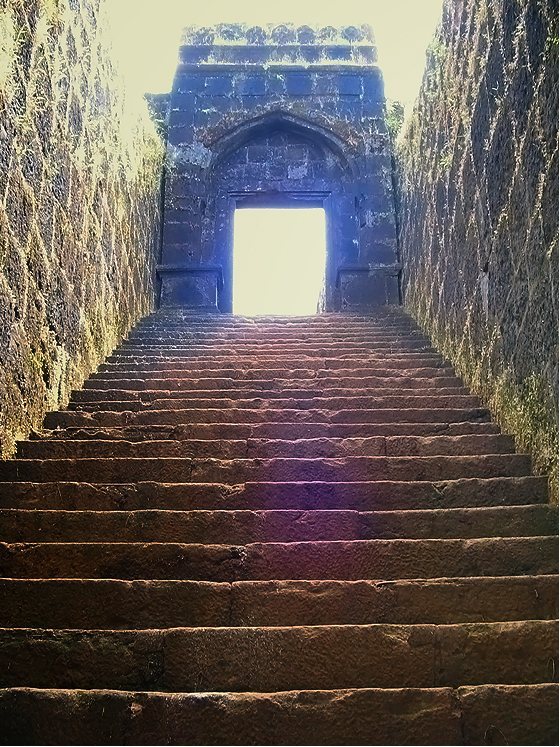
Henry Oxenden, an English East India Company official and writer, stayed at Raigad from 13 May to 13 June 1674. He described the mountain as naturally fortified, with steep slopes on most sides and a single difficult approach protected by two narrow gates. He also mentioned the king’s court and approximately 300 houses for state ministers.
Imperial conflict and later control
Raigad remained under Maratha control until Mughal forces captured it in 1689 during the reign of the emperor Aurangzeb. The Mughal Empire was the imperial power that then opposed the Maratha state. The Marathas recovered the fort in 1739, but it passed to the British East India Company in 1818 after the Third Anglo-Maratha War, a conflict that ended Maratha political power in the region. British forces besieged Raigad and damaged it with artillery that year.
The fort was controlled by the Shirke family before 1656, by the Maratha Empire from 1656 to 1689 and from 1739 to 1818, by the Mughal Empire from 1689 to 1739, and by the East India Company from 1818 to 1858. The Government of India has held it since 1947.
Memory and heritage
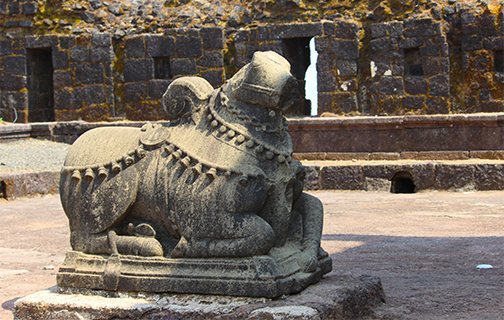
Raigad’s modern archaeological and commemorative landscape includes memorials associated with Shivaji, Hiroji Indulkar, Rajmata Jijabai, and Shivaji’s dog Waghya. Rajmata Jijabai was Shivaji’s mother and an important influence during his upbringing and early political formation. A statue of Waghya was removed in July 2012 by alleged members of the Sambhaji Brigade and was later reinstated through the efforts of the Shivaji Raigad Smarak Samiti, the Archaeological Survey of India, sculptor Rambhau Parkhi, and the district administration.
Raigad forms part of the serial UNESCO World Heritage property Maratha Military Landscapes of India, inscribed in 2025 under cultural criteria iv and vi. The property brings together Maratha military sites distributed across varied geographic settings.
Remains
Summit and royal precinct
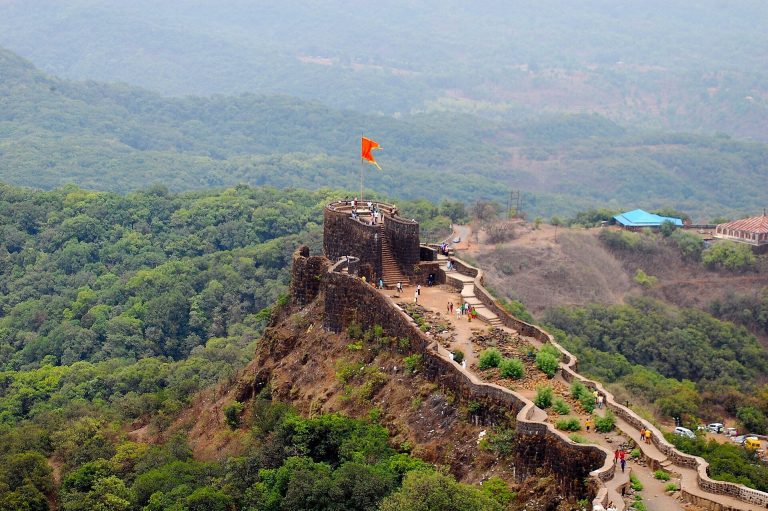
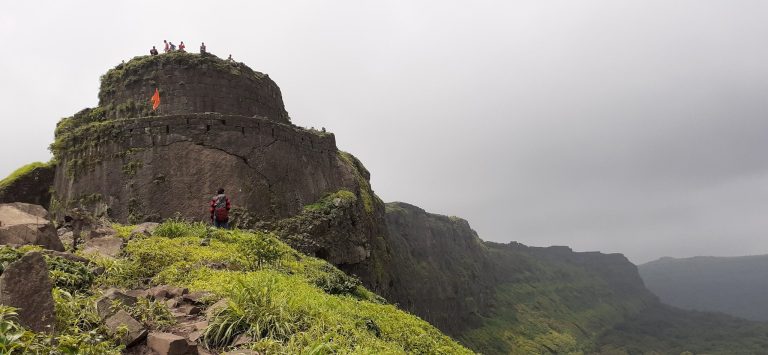
Raigad stands at about 820 metres above sea level in the Sahyadri mountain range. Its largely level rocky summit is naturally precipitous on three sides. The fort was built principally from basalt, granite, and lime mortar, and its surviving remains include walls, ruined towers, gates, palace foundations, lakes, and other fort installations.
Palace and queen’s quarters
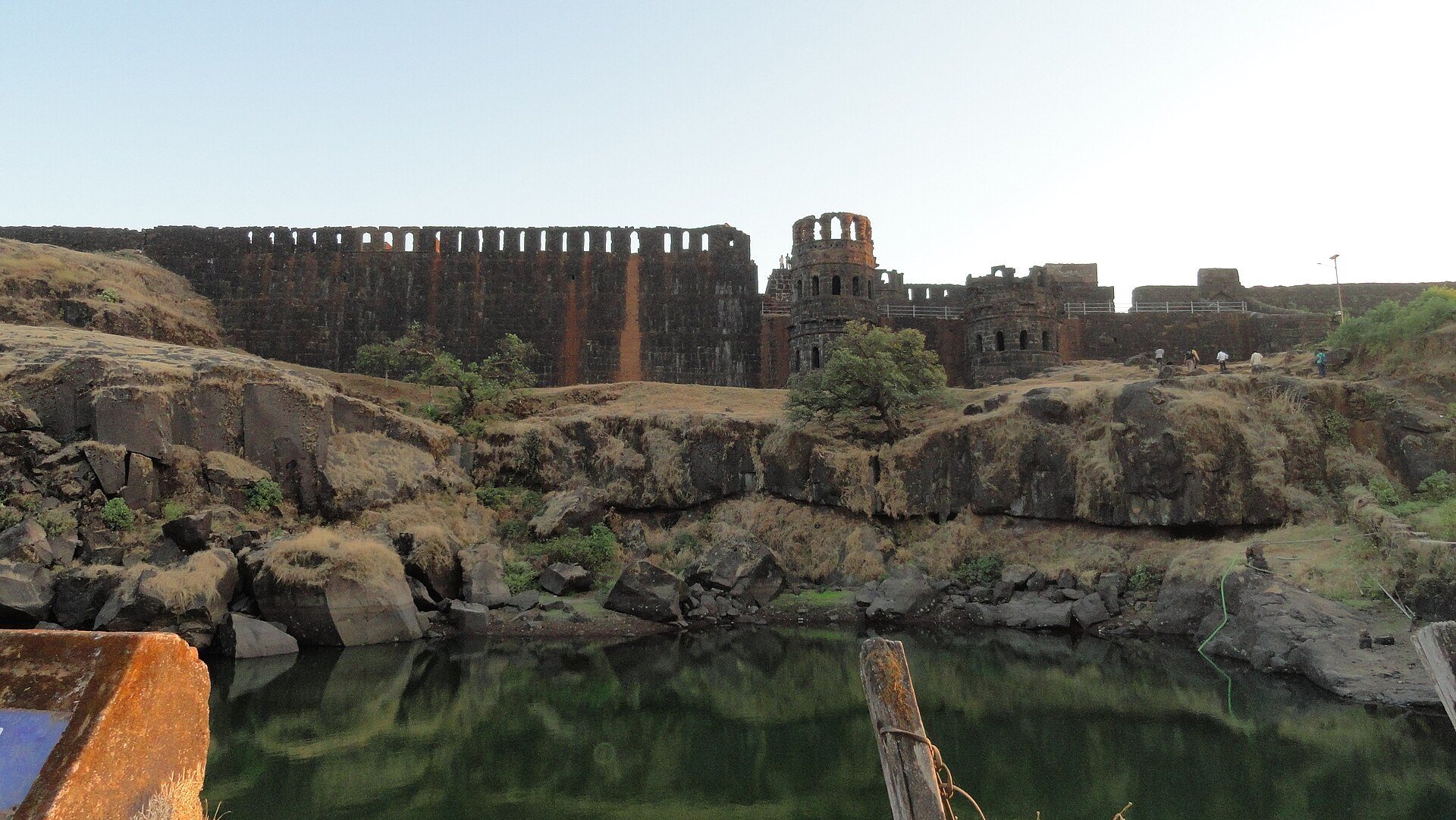
The main palace was constructed of wood, so its surviving remains consist chiefly of the bases of its pillars. The palace complex included the queen’s quarters, which contained six chambers, each with a private restroom. The chambers have no windows. Three watchtowers once stood in front of the palace grounds; two survive, while the third was destroyed by bombardment. The palace area overlooks the artificial Ganga Sagar Lake.
Gates and king’s court
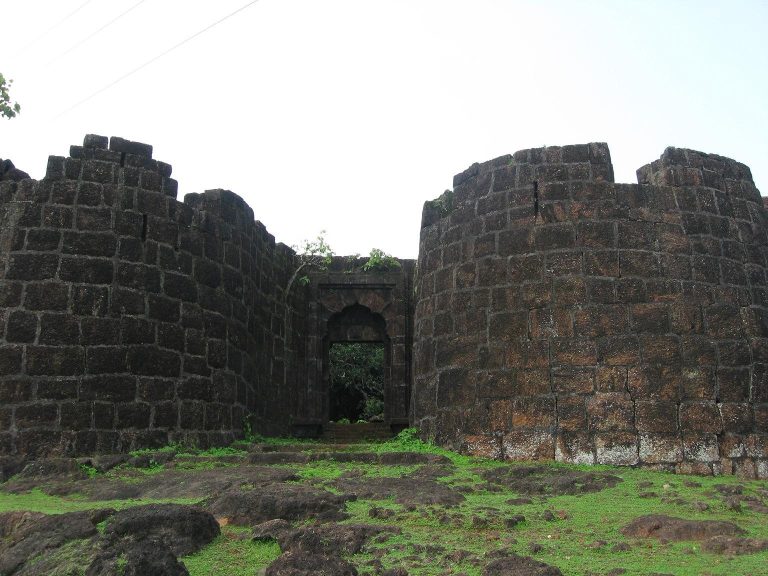
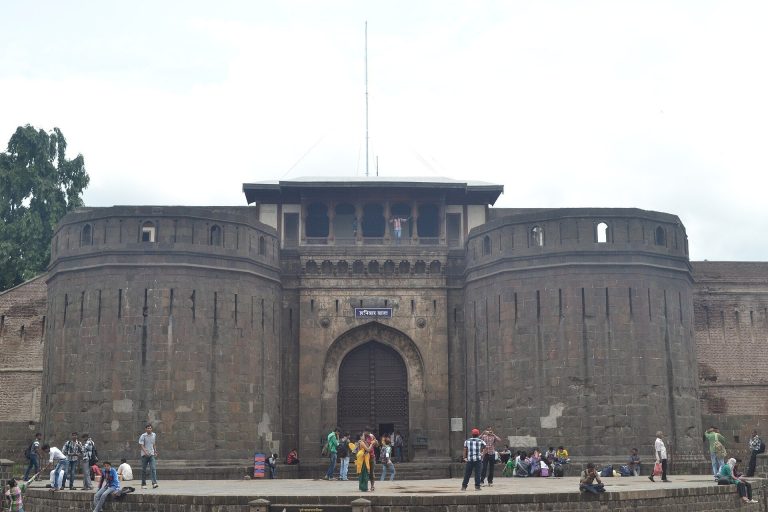
The principal approach reaches the Maha Darwaja, or Great Gate, which was traditionally closed at sunset. Two bastions flank the entrance, each approximately 20 to 21 metres high, while the summit rises about 180 metres above the gate. A bastion is a projecting fortified structure used to strengthen a wall and provide defensive observation or firing positions.
The Nagarkhana Darwaja opens toward the king’s court. A replica of the original throne stands in the court facing the doorway and oriented east. The court was designed so that speech delivered at the doorway could be heard from the throne. On the southern side, the Mena Darwaja probably served as a private entrance for the royal women and led toward the queen’s quarters. The northern Palkhi Darwaja was used by the king and his entourage, while three deep, dark chambers beside it are believed to have served as granaries.
Market, religious area, and memorials
Market avenue and temple approach
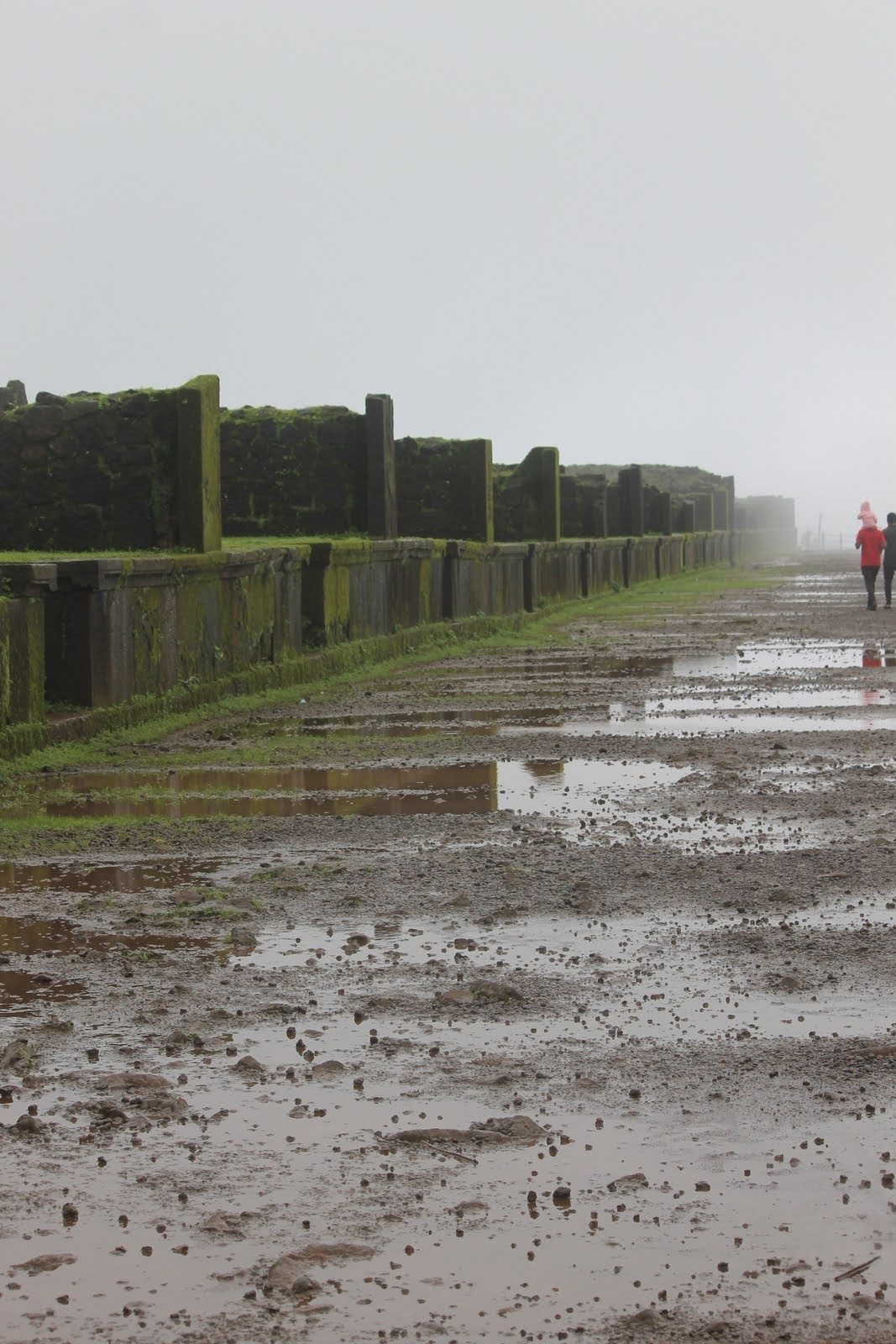
The market avenue survives in ruins opposite a statue of Shivaji and leads toward the Jagdishwar Mandir. Its arrangement allowed purchases to be made while customers remained on horseback. The first step of the approach to the temple bears Hiroji Indulkar’s name.
Memorial shrines
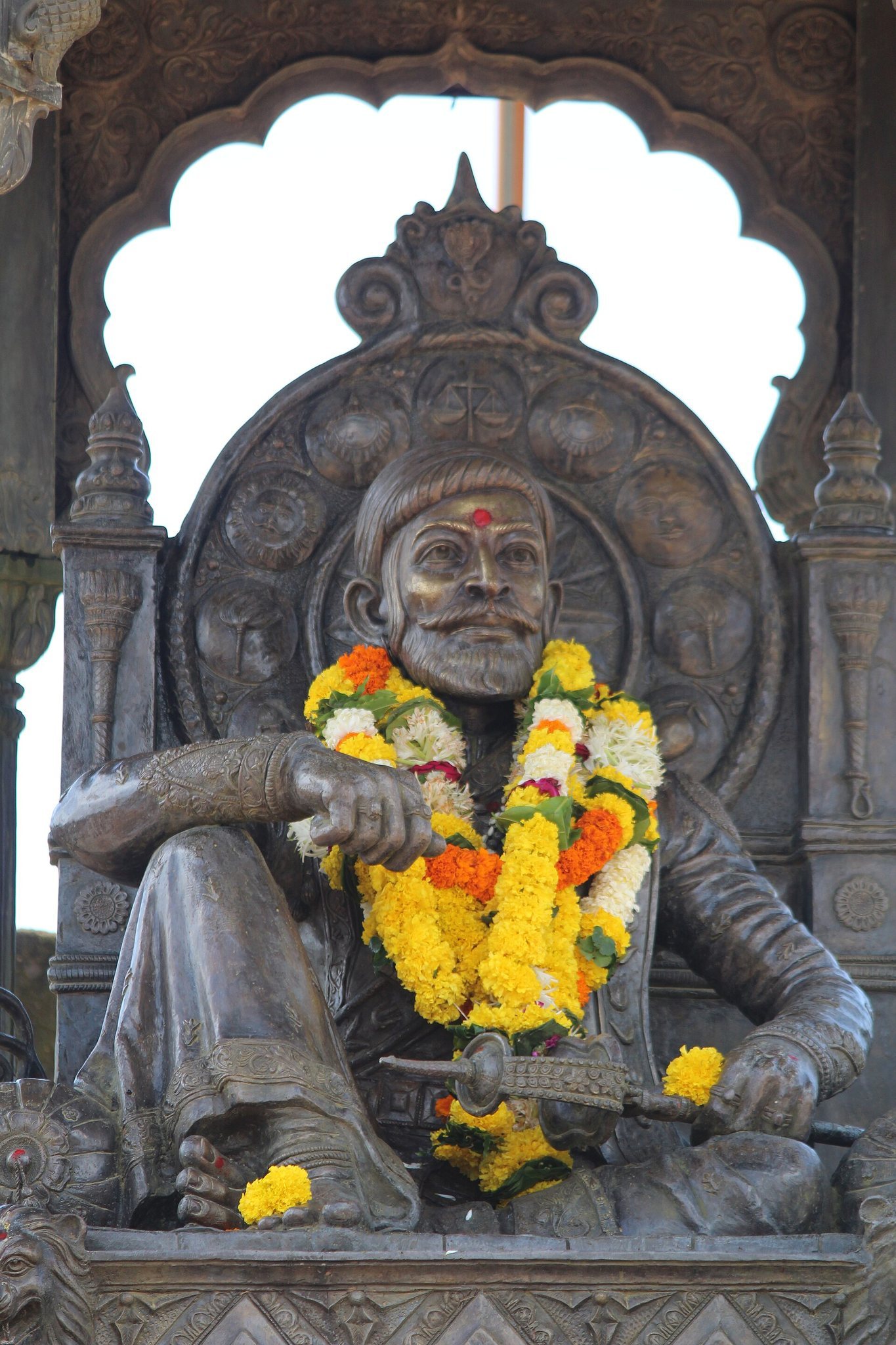
Hiroji Indulkar’s samadhi, a memorial shrine or tomb, stands within the fort beside the samadhi of his dog, Waghya. Rajmata Jijabai’s samadhi is at the base village of Pachad. The fort also contains a statue of Shivaji.
Defensive features and landscape
Cliffs and bastions
Takmak Tok is a cliff overlooking the surrounding landscape that served as an execution site, where condemned prisoners were thrown. The area is now fenced. Other named defensive and water features include Khubladha Buruj, Nane Darwaja, and Hatti Talav, or Elephant Lake.
Hirakani Buruj stands above a steep cliff. Its associated legend tells of Hirakani, a milkmaid who descended the cliff at night after being trapped inside the fort when the gates closed. She had heard her infant son in the village below. After she demonstrated the descent to Shivaji, he rewarded her and built the bastion above the cliff as a defensive response to the potential breach.
The listed Raigad property covers 161.31 hectares, with a stated buffer zone of 98,896.01 hectares. The main palace and several associated structures survive chiefly as ruins, while the walls, gates, towers, court, market remains, lakes, and other installations preserve the layout of the former fortified capital.