Pratapgad: A Maratha Mountain Fort in India
Site at a Glance
- Rating
- 4.6
- Popularity
- Very High
- Country
- India
- Primary era
- Early Modern
- Eras represented
- Early Modern, Modern
- Civilizations
- Unclassified
- Site type
- Military
- Remains
- Fort
On this page9 sections
History
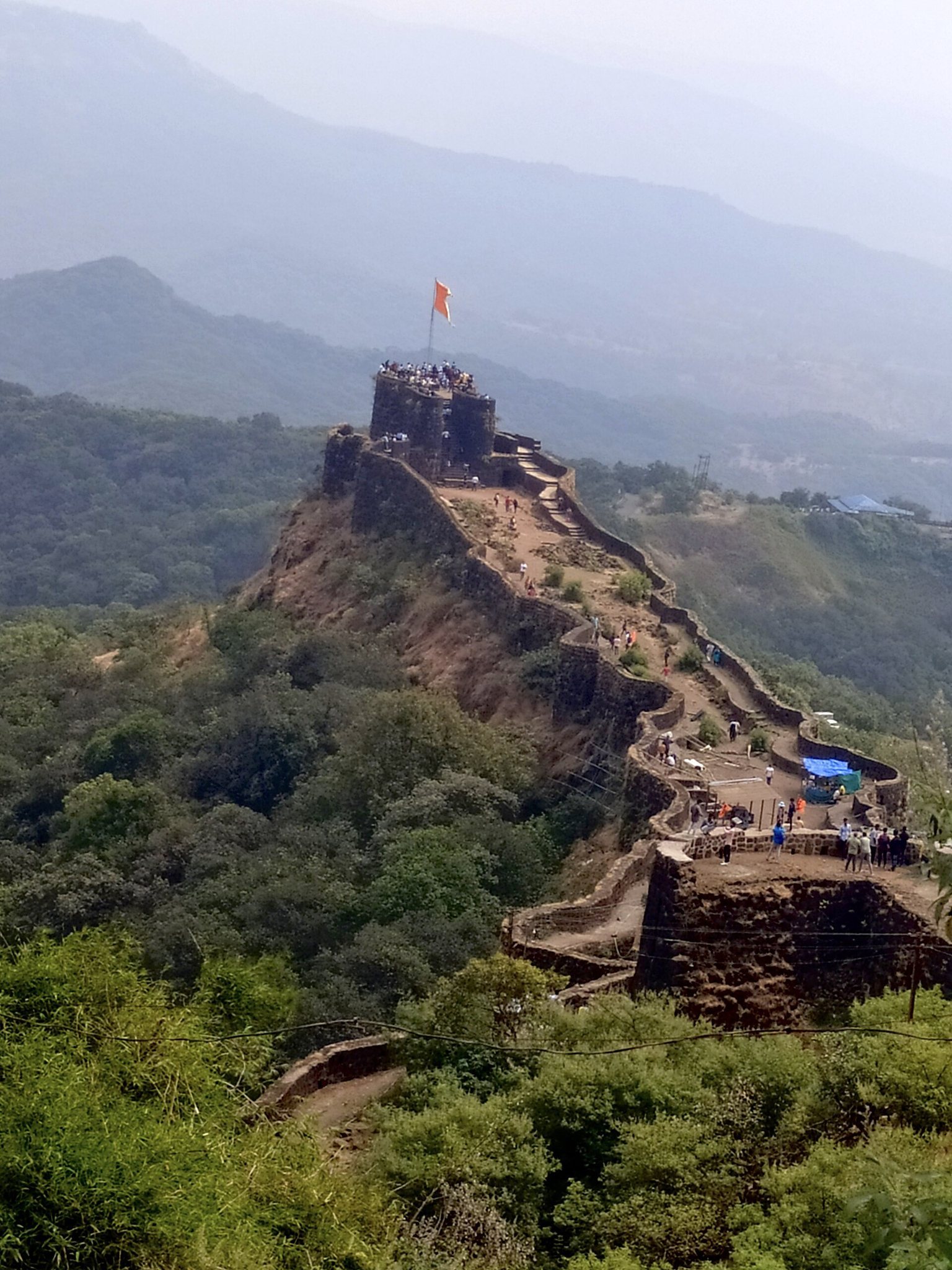
Pratapgad is a mountain fort in India, located at Mahabaleshwar in Maharashtra and built under the orders of the Maratha ruler Chhatrapati Shivaji Maharaj in 1656. Its position protected the Par Pass and helped defend the banks of the Nira and Koyna rivers. The Maratha Empire was the early-modern Indian polity associated with Shivaji and his successors. Shivaji appointed his prime minister, Moropant Trimbak Pingle, to supervise the construction. The fort is also attributed to the architect Hiroji Indulkar, although that attribution remains uncertain.
The fort and the Battle of Pratapgad
Pratapgad became the setting for a decisive conflict on 10 November 1659, when Shivaji faced Afzal Khan, a general of the Bijapur Sultanate and a member of the Adil Shahi dynasty. The Adil Shahi dynasty was the ruling house of Bijapur, a major power in the Deccan. Fighting took place below the fort’s ramparts, and Shivaji killed Afzal Khan during the battle. The victory was the first major test of the young kingdom’s army and helped establish the Maratha Empire.
Political use and later control
The fort continued to play a part in regional politics. In 1778, Sakharam Bapu Bokil, a minister from Pune, was confined at Pratapgad by his political rival Nana Phadnis. Bokil was later moved between forts and died at Raigad. In 1796, Nana Phadnis gathered a strong garrison at Pratapgad while fleeing the political intrigues of Daulat Rao Shinde and his minister Baloba, before continuing to Mahad.
After the Maratha defeat in the Third Anglo-Maratha War, Pratapgad was surrendered to the British East India Company in 1818. The Maratha Empire controlled it from 1656 to 1818, followed by the East India Company from 1818 to 1857, India from 1857 to 1947, and independent India from 1947 onward. In 2025, Pratapgad became part of the serial UNESCO World Heritage property Maratha Military Landscapes of India. A serial property brings related sites together under one inscription. The property was inscribed under cultural criteria (iv), concerning an important historical type of building or landscape, and (vi), concerning direct associations with significant events, traditions, ideas, or works. The designated site covers 8.34 hectares, with a buffer zone of 33,670.97 hectares.
Remains
Fortified layout
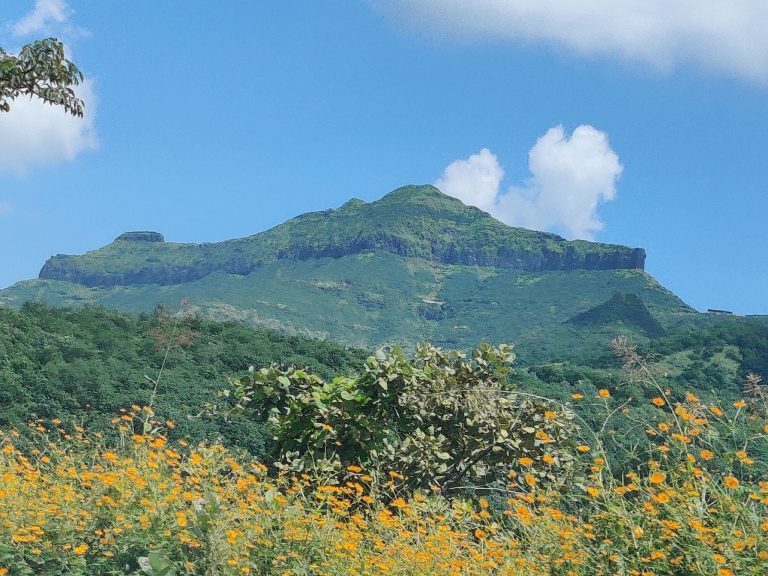
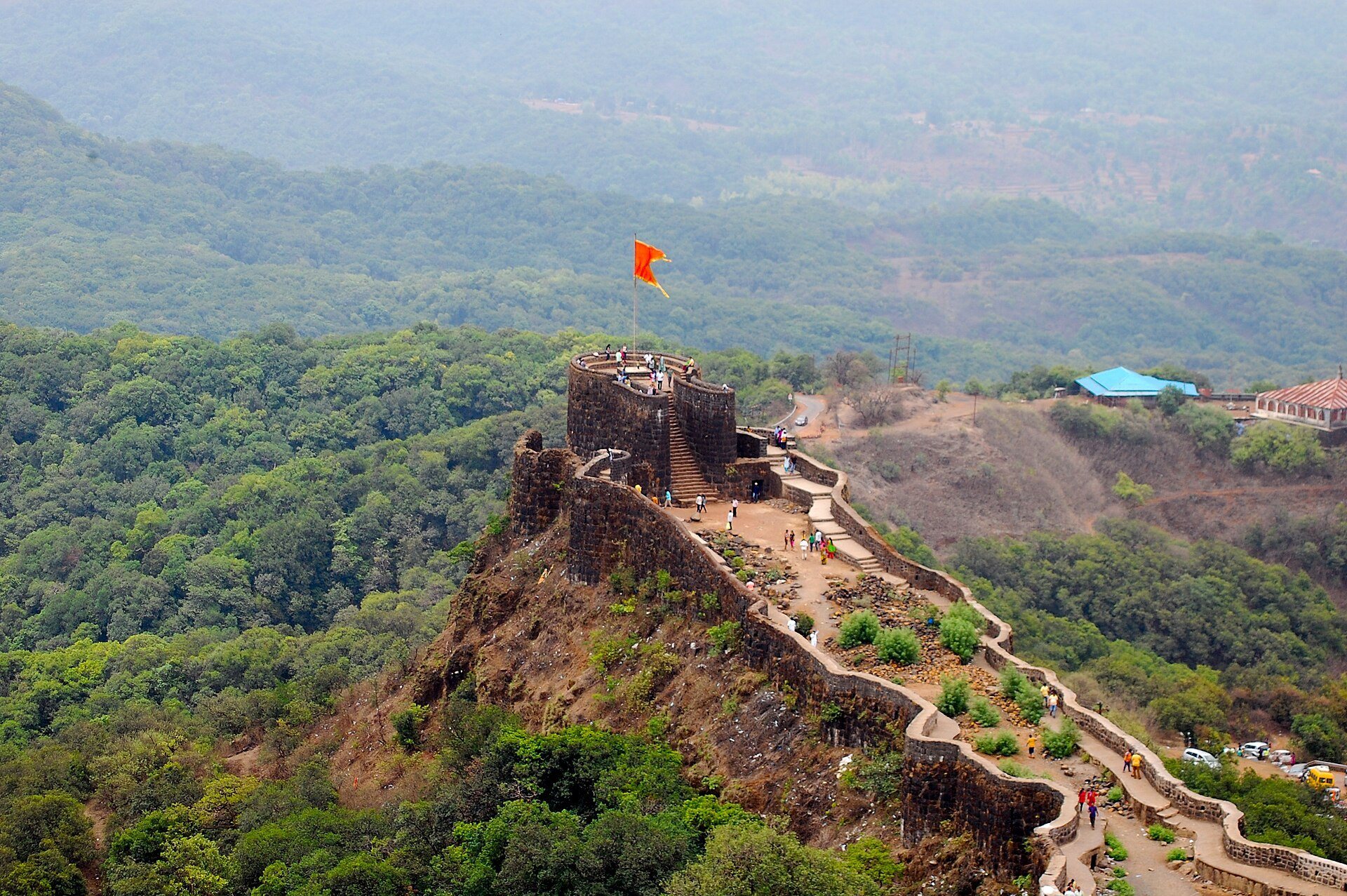
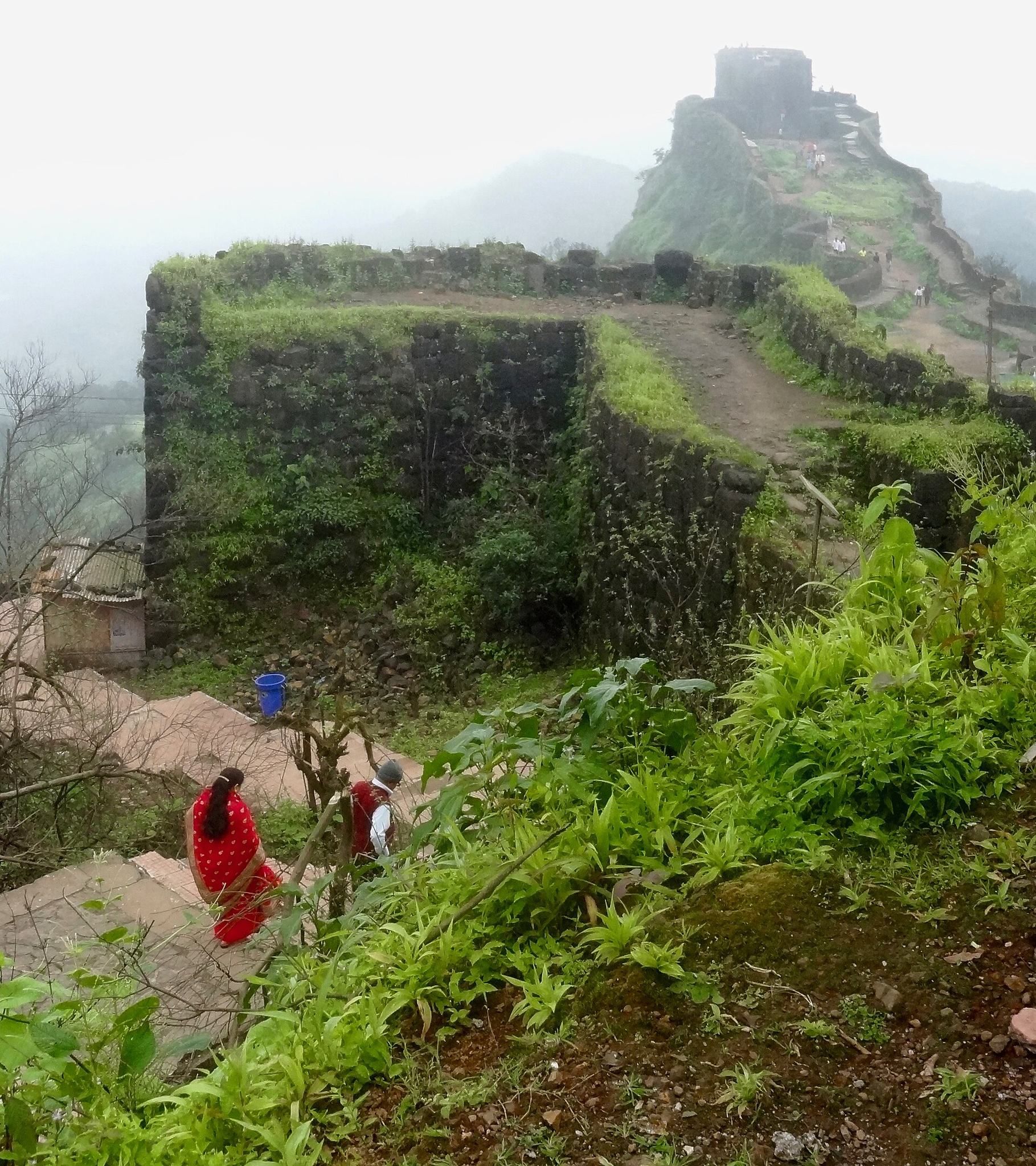
Pratapgad stands at approximately 1,080 metres above sea level on a hill spur overlooking the road between Par and Kinesvar. The fort is divided into an upper fort and a lower fort. Its lower section contains the principal entrance, while the upper section contains temples, buildings, and a citadel, a fortified inner stronghold used for defence and administrative control. Water reservoirs supported the fort, and the citadel included royal and administrative buildings.
Entrances and defenses
Two main entrances serve the fort. High walls protect the gates, while watchtowers and bastions form part of the wider fortifications. These defensive elements gave Pratapgad strategic military advantages during its period of use. The elevated position also provides views over the surrounding landscape.
Religious and commemorative features
Tulja Bhawani Temple
The Tulja Bhawani Temple dates from Shivaji’s period. It contains a sacred image of the goddess Bhawani with eight arms, and soldiers’ weapons are displayed beside the temple.
Statue of Shivaji
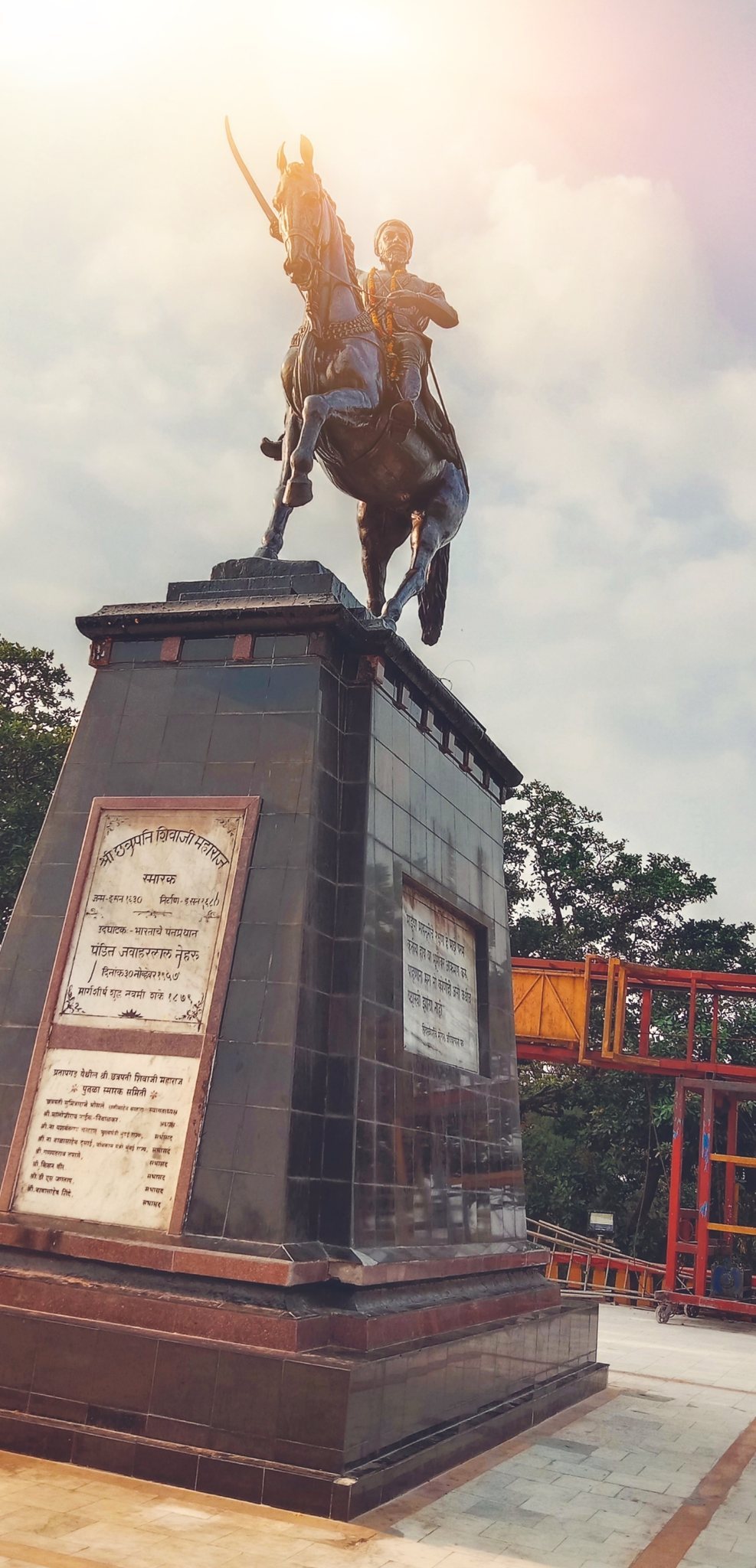
A large bronze equestrian statue of Shivaji stands within the fort. Jawaharlal Nehru, then Prime Minister of India, inaugurated it on 30 November 1957.