Fortified Church in Bărcuț, Brașov: A Transylvanian Saxon Lutheran Church
Site at a Glance
- Rating
- 4.6
- Popularity
- Very Low
- Country
- Romania
- Primary era
- Modern
- External website
- Open
- Eras represented
- Medieval, Early Modern, Modern
- Civilizations
- Austrian Empire, Habsburg, Hungarian
- Site type
- Religious
- Remains
- Fortified Church
On this page9 sections
History
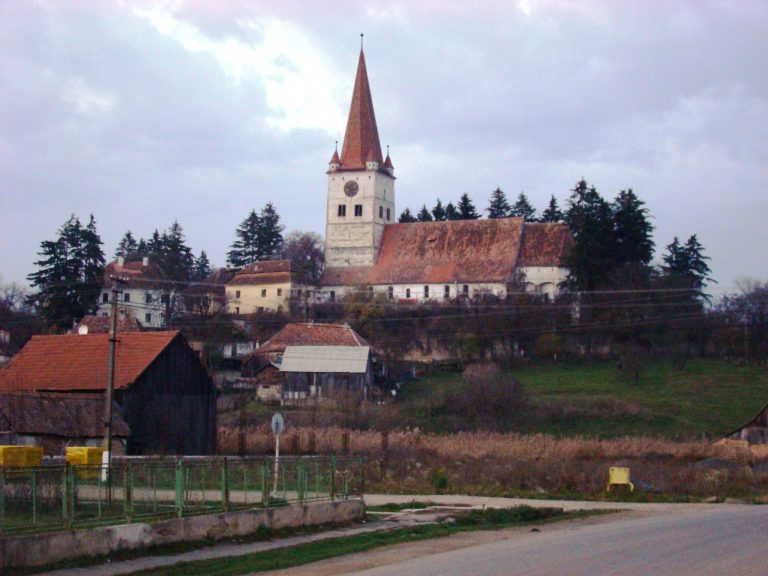
The fortified church in Bărcuț, Romania, was established by the village’s Transylvanian Saxon community, a German-speaking medieval settler population, in the former Schenker Seat, a historical administrative district of Transylvania. A Catholic parish church probably existed here by the thirteenth century and is first mentioned in 1309. In the second half of the fifteenth century, a new church was built west of the earlier one and surrounded by defensive walls, probably in response to the Ottoman threat. In 1493, Sibiu supplied money and materials for the construction.
Medieval parish and fortified enclosure
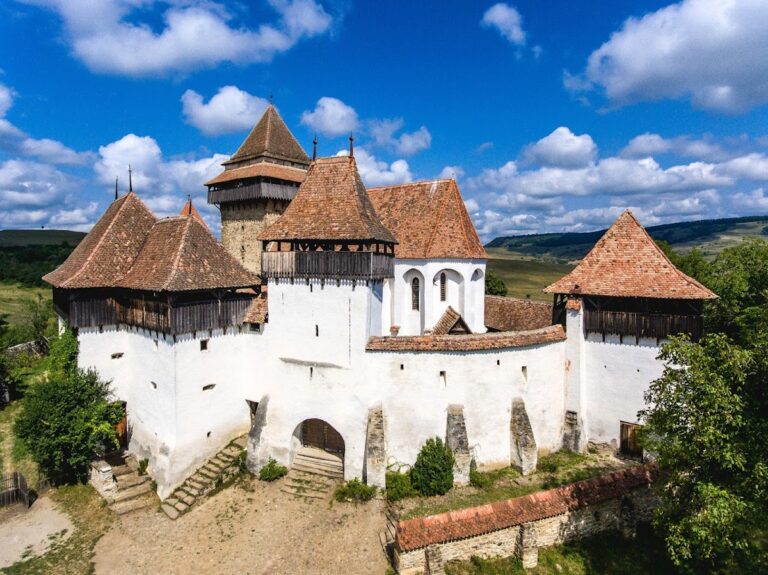
The fortifications formed part of a wider defensive tradition in which Transylvanian Saxon villages adapted their churches to shelter local inhabitants during military raids. They did not prevent Ottoman forces from plundering the church in 1547. During the sixteenth century, both the village population and the church adopted Lutheranism, the Protestant tradition associated with the Reformation and the teachings of Martin Luther.
Rebuilding after the fires
Major fires in 1772 and 1810 damaged the village and its church. The medieval church was later dismantled, and a replacement was built in 1845–1846 under the direction of Johann Frank, a Saxon master from Mergeln. The new building was consecrated in 1847. Because it was longer than its predecessor, the eastern part of the enclosing wall was demolished.
The new church’s furnishings were made in 1846 by Michael Krieger, a carpenter and organist. Several older furnishings were retained, including the eighteenth-century altar and pulpit from the earlier church. The older organ was sold to the fortified church at Seligstadt in 1866, when a new instrument by Samuel Binder of Schäßburg was installed.
Congregational change and modern protection
Emigration by the Transylvanian Saxons caused the number of worshippers to decline. In 1973, the Bărcuț congregation was merged with that of Seligstadt, and in 1989 it was joined with three other village congregations. By the beginning of the twenty-first century, Bărcuț had lost its German population, although the church continued to be maintained. The parsonage and former Saxon school were renovated and converted into accommodation for young people.
Repairs were carried out toward the end of the twentieth century. The church is protected under Romania’s national historic-monuments register as BV-II-a-B-11603. It belongs to the Lutheran Church of the Augsburg Confession in Romania, within the Brașov ecclesiastical district, and is administered through the parish serving the Rupea area.
Remains
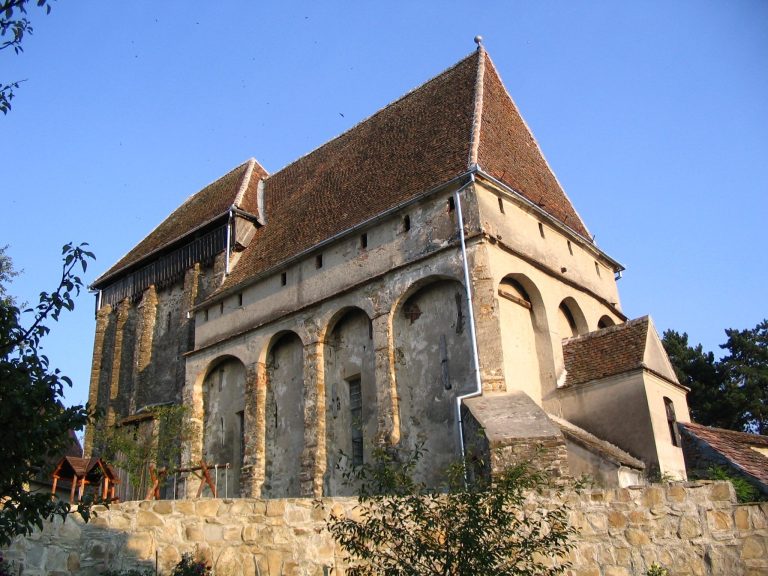
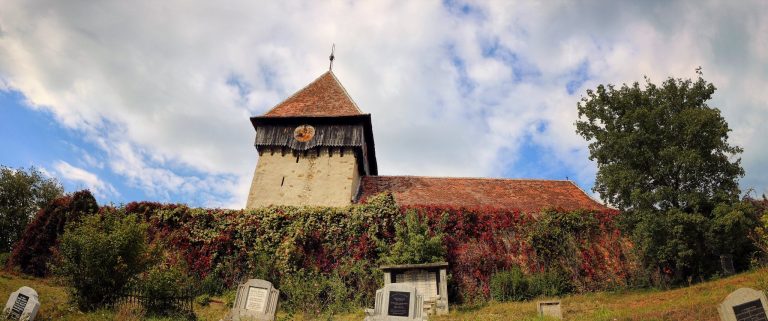
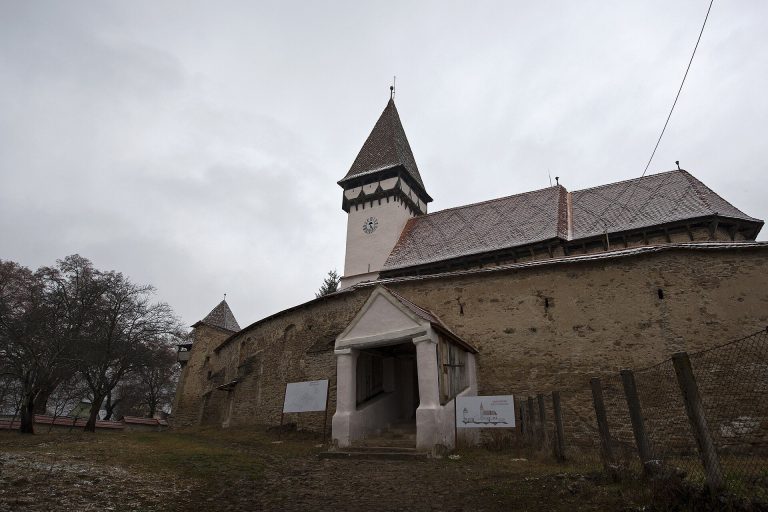
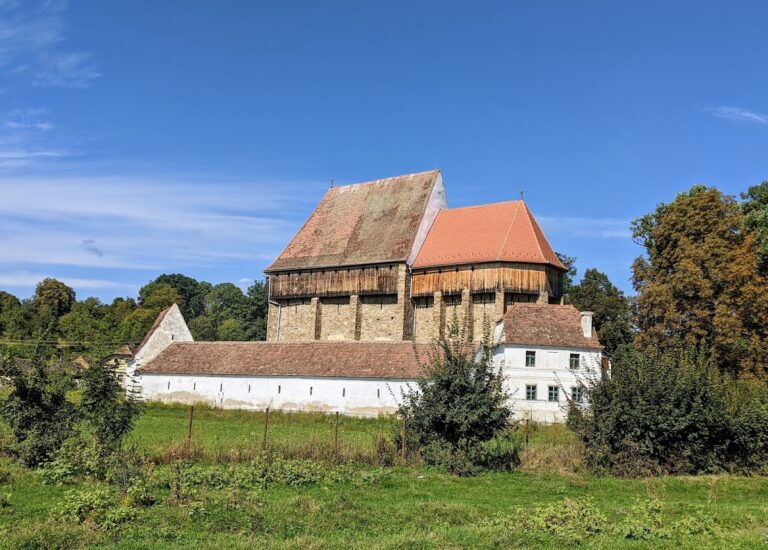
The surviving complex combines a fifteenth-century square bell tower and sections of the medieval defensive enclosure with the east-facing church built in 1845–1846. The present church is an aisleless hall church, meaning that its interior forms one main space without lower side aisles. Its design combines Baroque and Neoclassical elements, while the tower and surviving wall preserve the earlier fortified character of the site.
Bell tower
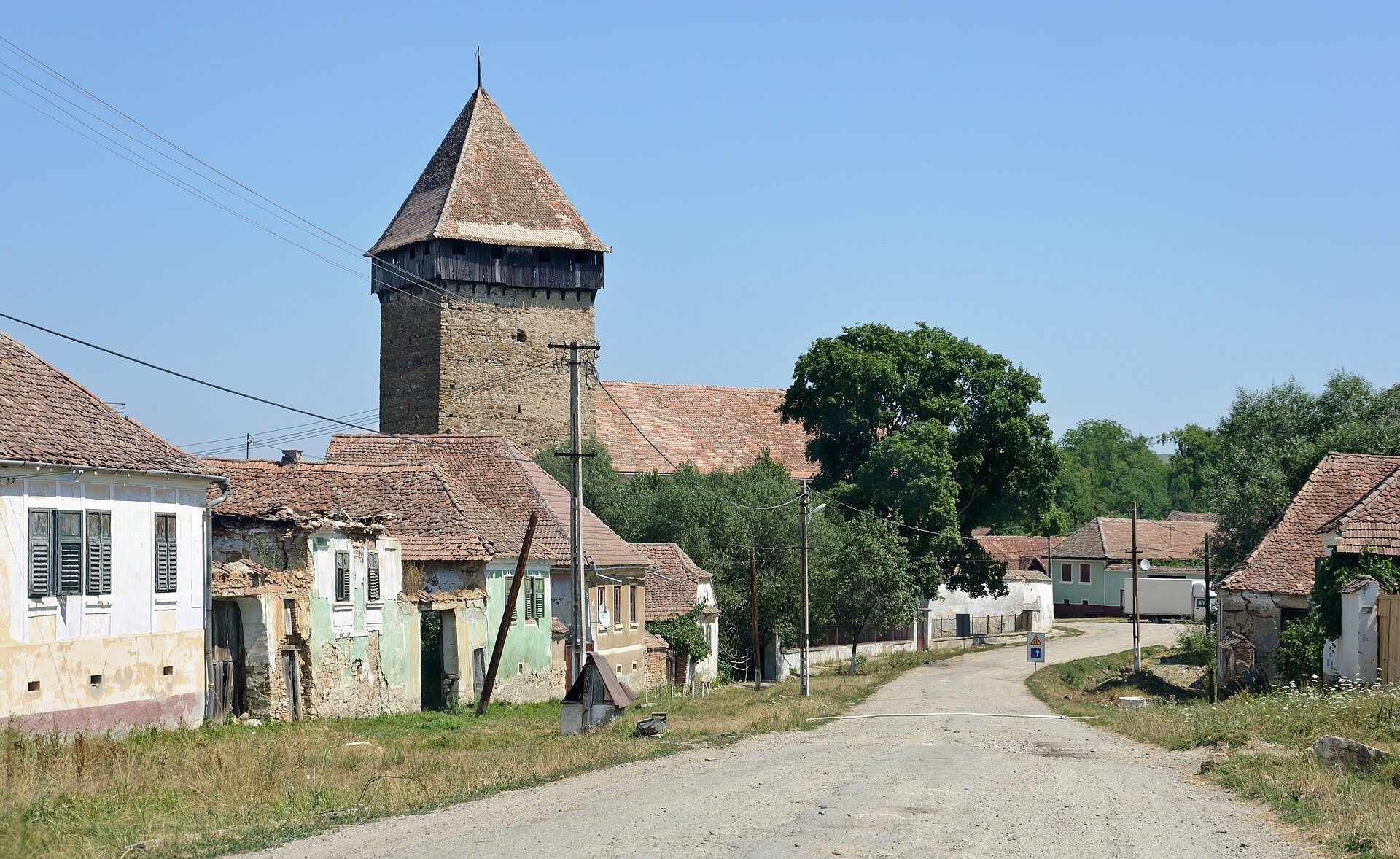
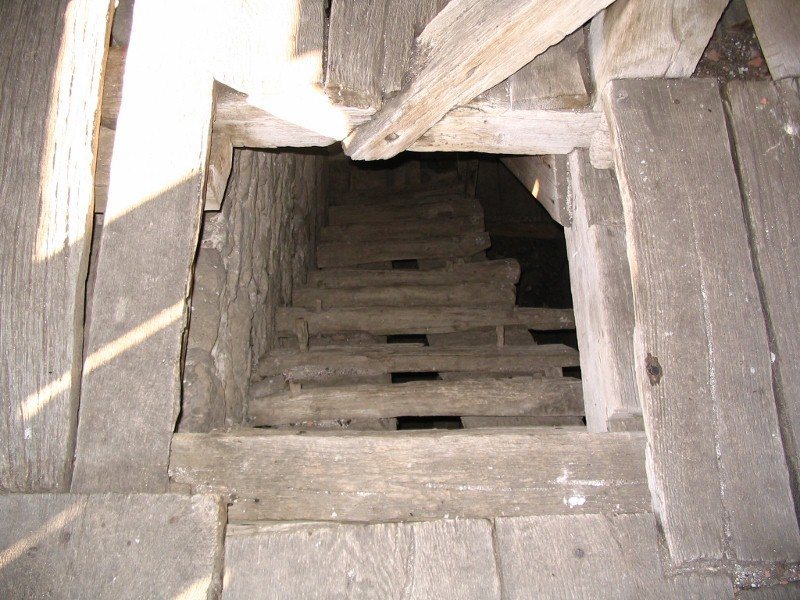
The fifteenth-century bell tower is square, approximately 36 metres high, and about 12 metres long on each side. Its ground-floor walls are roughly 3 metres thick. A stairway built within the thickness of the walls leads to the two lower levels. At approximately 60 to 70 centimetres wide, the passage is narrow enough to be defended by one person. The uppermost level has a wooden gallery around it.
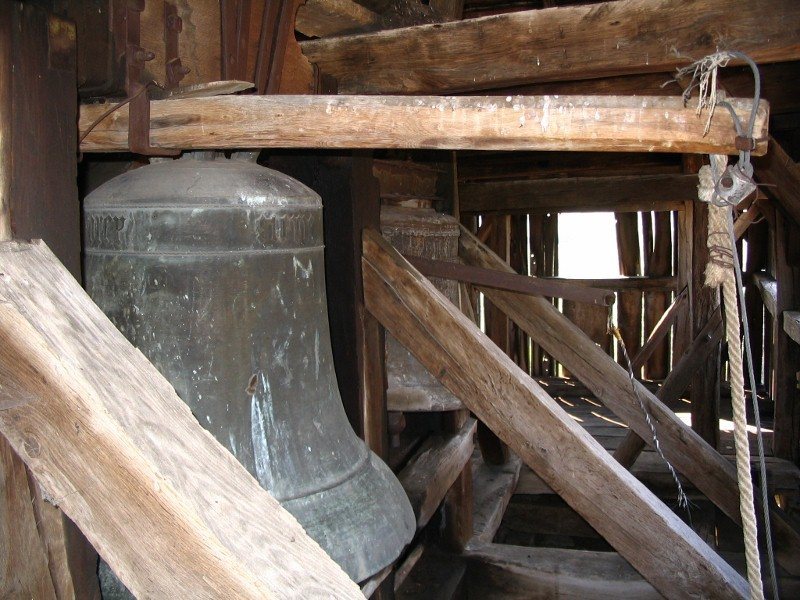
The tower contains inward-expanding arrow-slit niches covered by round-arched vaults. Its bell chamber occupies the fifth level. The bell frame rests on corbels, projecting stone supports, and is enclosed with boards. The oldest bell dates from the middle of the fifteenth century and was cast in Sighișoara. It is 83 centimetres high, measures 50 centimetres across at the shoulder and 90 centimetres across at the lower part, and carries the inscription “o rex glorie veni cum.”
Church interior
The present church has a barrel vault, a continuous curved ceiling formed by extending an arch along the length of the building. Four transverse arches divide it into five bays. The Baroque altar was made in 1766–1767 by the Sighișoara master Johann Folbarth and carries a Latin inscription recording its creation. Folbarth also made the pulpit in 1792. Its painted sounding board is crowned by a wooden figure of the Good Shepherd, a Christian image of Jesus caring for his flock.
A stone baptismal font dates from 1846–1847, while the rest of the principal furnishings were made in 1846. The church organ has two manuals, or hand-operated keyboards, pedals, and 22 registers, which are sets of pipes with related tonal characteristics. An earlier positive organ, a small organ intended for fixed indoor use, was purchased from the Hermannstadt organ builder Martinus Hammer in 1719 and renovated in 1741. Johann Raab of Brașov built another organ in 1765–1766. It was first placed above the altar and moved to the western gallery during the 1846 rebuilding. The present instrument replaced it in 1866 and was made by Samuel Binder of Sighișoara. A tower clock was installed in 1791.
Defensive enclosure
Sections of the medieval enclosing wall survive to approximately 4 metres high. Along the southern side, the foundations or remains of two towers can still be seen, together with supports for the former defensive walkway. A round-arched entrance remains recognizable in the southwest part of the present wall.
A well inside the enclosure supplied water to people sheltering there during a siege. The church flag depicts the former village coat of arms, showing a lamb drinking from a well. A building within the enclosure probably served as a storeroom or granary before it was demolished.
Commemorative feature
A commemorative tablet for soldiers from Bărcuț who died in the First World War was installed after the conflict.