Karasis Fortress: A Seleucid Stronghold in Cilicia
Site at a Glance
- Rating
- 4.8
- Popularity
- Very Low
- Country
- Turkey
- Primary era
- Classical
- External website
- Open
- Eras represented
- Classical
- Civilizations
- Seleucid
- Site type
- Military
- Remains
- Fort
On this page13 sections
History
Karasis Fortress is a high-Hellenistic fortress in Turkey, near Kozan in Adana Province, built around 200 BC by the Macedonian Seleucids. The complex occupies an isolated ridge in the eastern Taurus foothills and appears to have been planned as a palace-like royal residence and secure way station within the Seleucid Empire. Its original name and intended purpose remain uncertain, but its scale and unfinished central buildings reveal an ambitious project on the northern edge of Cilicia.
Seleucid Foundation
The Seleucids were a Hellenistic royal dynasty founded by Seleucus I Nicator after the division of Alexander the Great’s empire. Their territories extended across much of the Near East, including parts of Anatolia and Syria. At Karasis, the elephant relief carved on an artillery tower points toward Seleucid authorship. The proposed commissioner is Antiochus III, also known as Antiochus the Great, who ruled from 222 to 187 BC and sought to restore and expand Seleucid power in Anatolia and the eastern Mediterranean.
Karasis may have been intended to connect the western and eastern parts of the Seleucid realm through a region that was still only lightly Hellenized. Its upper fortress follows a building pattern associated with Hellenistic town houses and palatial complexes, while the lower and middle areas provided a protected forefield. The residence in the upper fortress was largely erected in a single campaign, yet the final architectural development of the complex was never completed.
Abandonment and Later Reuse
The final development of Karasis may have been interrupted after the Battle of Magnesia in 190 or 189 BC. In this decisive conflict, Antiochus III was defeated by Rome and its allies. The Peace of Apamea, concluded in 188 BC, imposed territorial and military restrictions on the Seleucid kingdom, including withdrawal behind the Taurus. Karasis then stood near the edge of the reduced Seleucid sphere, making a royal way station in this location less necessary.
Ancient texts mention a Taurus mountain treasure fortress called Kyinda, but Karasis is later in date and cannot be identified with it. The complex was probably left unfinished and unused for its original purpose before a much later occupation. Around the turn of the millennium, the site received numerous technically inferior installations. This later phase is probably connected with the Tarkondimotids, a local dynasty that ruled parts of Cilicia in the late Hellenistic and early Roman periods and was also associated with regional piracy.
Survey and Interpretation
Epigraphist Mustafa Hamdi Sayar identified the ruins in 1994 after local villagers led him to substantial remains on the summit. From 2003 to 2005, the German Archaeological Institute in Istanbul carried out architectural and building surveys without excavating the inaccessible fortress. Geodetic measurements and examination of the surrounding area identified several nearby Hellenistic settlements. The later occupation material came mainly from the ruin field, while the architectural evidence indicates that the principal first-phase buildings belonged to a single, unfinished plan.
Remains
Mountain Setting and Overall Layout
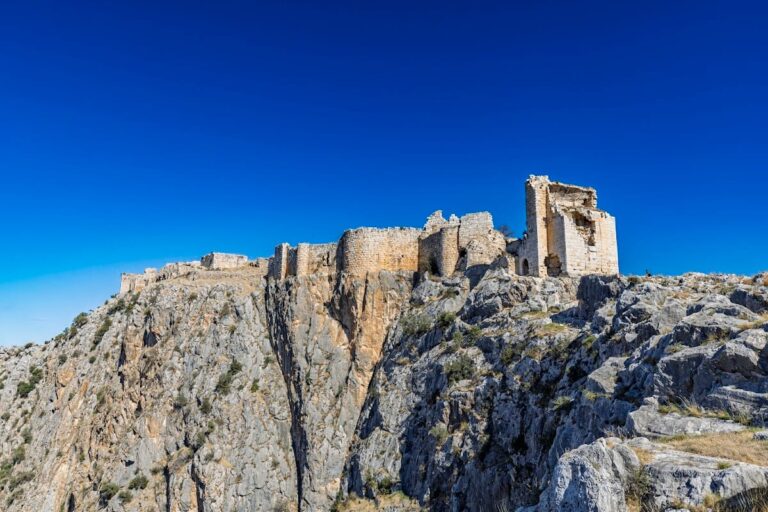
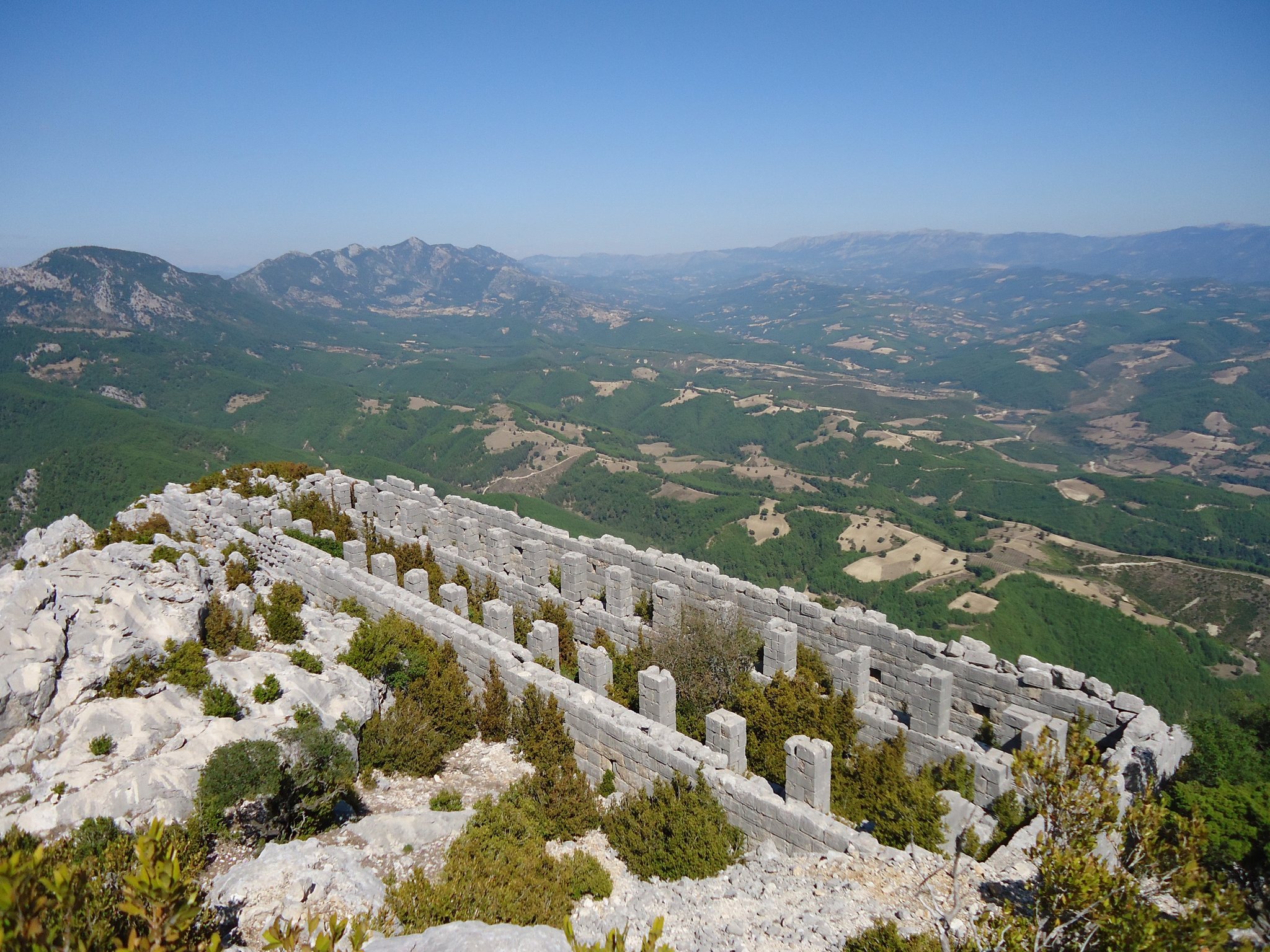
Karasis Fortress stands on the isolated ridge of Mount Karasis, which rises to just over 1,000 metres in the eastern Taurus foothills at the northern edge of the Çukurova plain. The complex is arranged in three connected areas: the densely built upper fortress on the summit ridge, the largely unbuilt middle fortress extending east and south, and the densely built lower fortress on a rocky southern spur.
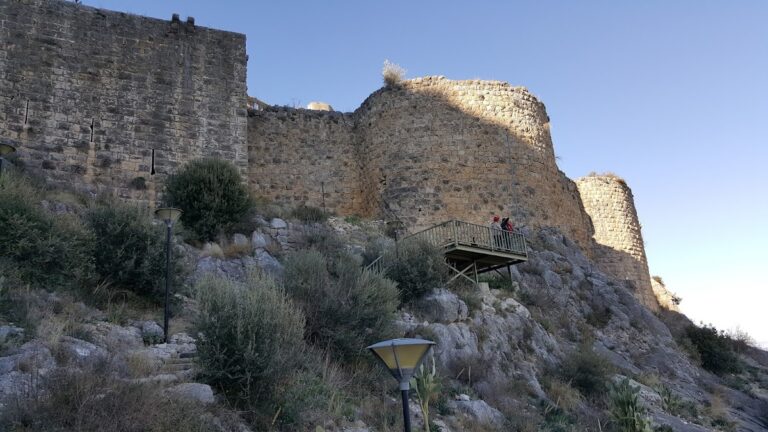
A defensive wall approximately 2.5 kilometres long enclosed the installation. It is particularly well preserved around the lower fortress. The lower and middle areas primarily formed a protected forefield for the upper complex, while the summit ridge held the central buildings. Nine cisterns supplied water across the fortress, most of them located in the upper area. A cistern is an enclosed reservoir used to collect and store water.
Upper Fortress
Palace-like Residence
The upper fortress formed the central core of Karasis. Its buildings resemble representative Hellenistic town houses and palatial complexes, supporting the interpretation of the area as a palace-like ensemble. The main residence was largely constructed but remained unfinished, leaving its final architectural development incomplete.
Storage Building
At the northern end of the summit ridge stood a storage building approximately 60 metres long. It was designed to hold large quantities of food under dry conditions, adding an important supply function to the upper fortress.
Lower and Middle Fortresses
Lower Fortress Barracks
The lower fortress occupied the mountain’s southern rocky spur and was densely built. Its buildings can be interpreted as barracks capable of accommodating approximately 270 soldiers. Together with the middle fortress, this area protected the approach to the upper complex.
Artillery Towers
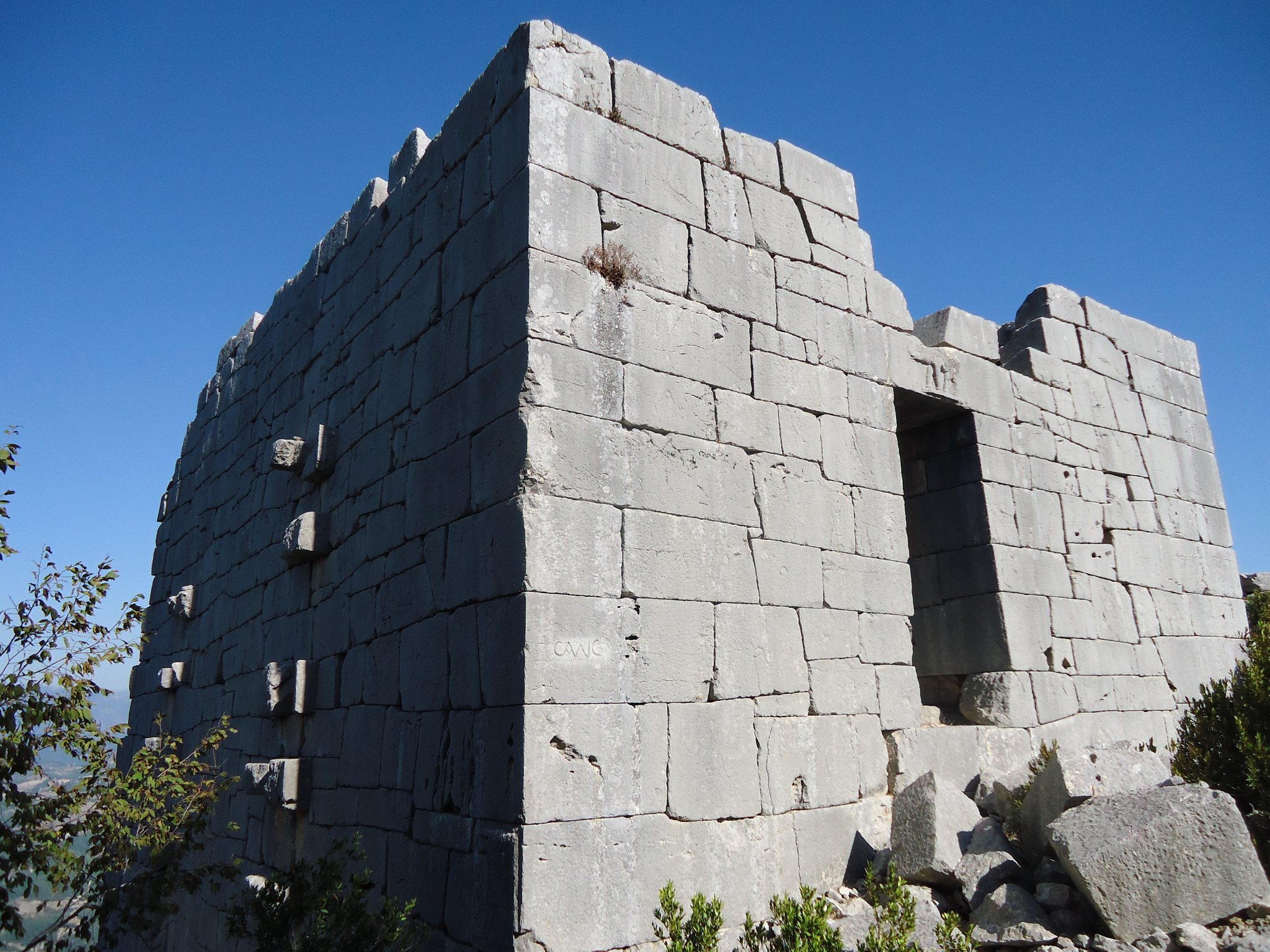
Three well-preserved artillery towers were incorporated into the defensive wall around the lower fortress. They faced the only area considered suitable for an attack by large forces. Two additional artillery towers, preserved less completely, stood at the southern end of the upper fortress and were directed toward the ramp leading to the summit.
One lower-fortress tower carries a relief of an elephant. The image provides an indication of the complex’s Seleucid association and links the defensive architecture with the wider military culture of the Hellenistic kingdom.
Later Installations
The later occupation altered the ruin field with numerous installations of inferior construction quality. These additions belong to the phase around the turn of the millennium and reflect reuse of the earlier fortress after its principal Seleucid building program had ended.