Feke Castle: A Byzantine and Armenian Stronghold in Türkiye


Site at a Glance
- Rating
- 4.5
- Popularity
- Very Low
- Country
- Turkey
- Primary era
- Medieval
- Eras represented
- Medieval
- Civilizations
- Armenian, Byzantine
- Site type
- Military
- Remains
- Castle
On this page7 sections
History
Feke Castle is a fortress in Türkiye that served as a Byzantine military stronghold by the seventh and eighth centuries, guarding Cilicia against the Arab Caliphate. Its construction date is uncertain. Rising above the upper Saros River, the fortress later became one of the first and most important strongholds of the Rubenids, an Armenian ruling dynasty that established power in Cilicia and eventually ruled the Armenian Kingdom of Cilicia.
Byzantine Frontier Stronghold
Historically called Vahka, the fortress stands on the right bank of the upper Saros River, near other fortresses and approximately 50 kilometres northwest of Sis. Its position formed part of the Byzantine frontier system in Cilicia, where imperial strongholds guarded territory against the Arab Caliphate.
Rubenid Capital
In 1080, the Rubenid princes established themselves in Cilicia. Constantine I liberated Vahka from Byzantine control in 1097 and made it the capital of his principality. Some historians regard the fortress as the cradle of the Armenian Kingdom of Cilicia, since the Rubenids expanded their authority from this base across the Cilician valley.
Thoros I, who ruled from 1100 to 1129, strengthened Vahka’s defenses and created a castle complex with palaces and other buildings. In 1137, the Byzantine emperor John Komnenos besieged the fortress with a large army. The Armenian garrison and inhabitants, commanded by Constantine, resisted fiercely, but the fortress was captured. Among those taken prisoner were Grand Prince Leon I and his sons Ruben and Thoros.
Thoros II escaped captivity and recovered Vahka in 1145. His brother and successor, Mleh, moved the capital and seat of government from Vahka to Sis in 1173. A seat of government was the place from which a ruler and court exercised political authority. After the transfer, Vahka served as a detention site for rebellious princes and court officials.
Later History and Armenian Cultural Memory
Following the fall of the Armenian state of Cilicia in 1375, Vahka remained in the possession of the Ajapahyan family until the nineteenth century. During that century, Vahka was a town and district administrative center with approximately 800 Armenian inhabitants. In 1915, Armenians in Vahka were forcibly deported during the Armenian genocide. Many died during the deportations, while the few survivors found refuge in different countries.
The nearby monastery of Drazark was one of Cilicia’s prominent monasteries and an early Armenian cultural center. Its oldest surviving dated Cilician manuscripts date to 1113 and contain illustrated miniatures. The Armenian scholar, monk, and miniaturist Etienne of Vahka worked at the fortress during the thirteenth century, and Isabella of Antioch, who died in 1206, was buried there. A nineteenth-century French traveler, Leon Paul, described the fortress builders as people who firmly defended their independence.
Remains
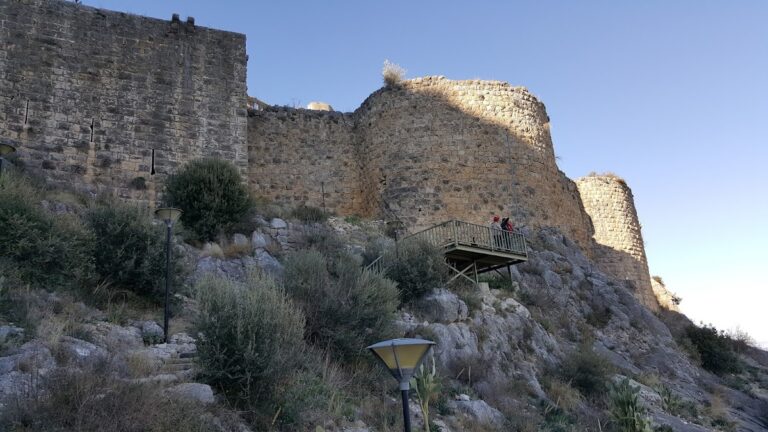
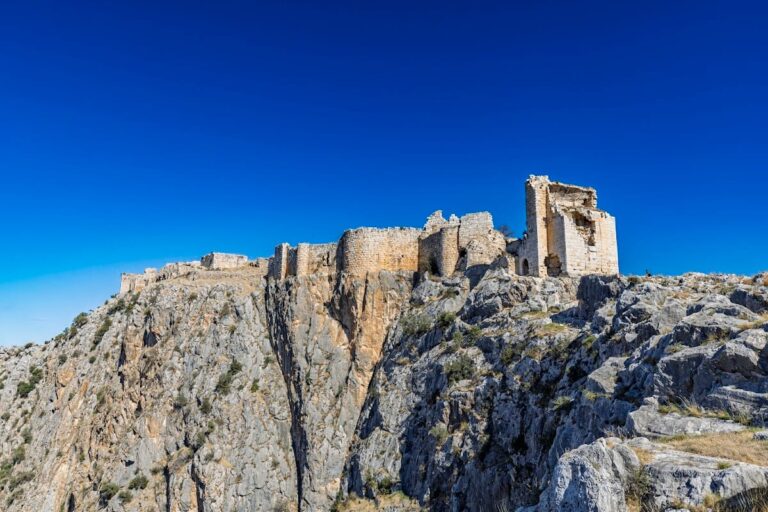
Feke Castle occupies the summit of a high mountain and extends from north to south. The fortified area measures approximately 180 metres in length and about 25 metres across at its middle. Its high walls are built from roughly dressed basalt blocks, while steep natural cliffs reinforce the western side.
Mountain Fortifications
The northern and eastern sections are reinforced by semicircular hollow and solid towers. On the western side, vertical cliffs descend for approximately 30 metres and form an inaccessible natural defense in place of walls. Together, the basalt masonry and mountain terrain created a strongly protected position above the middle course of the Saros River.
Lower and Upper Fortifications
The fortress is divided into a lower fortification and a principal upper fortification. The entrance passes through the eastern tower of the lower section. From the gate, a multi-level passage follows the walls toward the upper fortification. Its arrangement allowed movement along the approach to be watched and gave defenders the opportunity to attack an enemy who had entered the fortress.
The upper fortification contains the ruins of palace buildings, a reservoir, arsenals, and other structures. The reservoir stored water, while the arsenals held weapons and military equipment. These surviving elements preserve the organization of Vahka as both a residence for its rulers and a military center.