Imaichi Dainenji Kofun: A Late Kofun-Period Burial Mound in Japan
Site at a Glance
- Rating
- 4
- Popularity
- Very Low
- Country
- Japan
- Primary era
- Classical
- External website
- Open
- Eras represented
- Classical
- Civilizations
- Yamato
- Site type
- Burial
- Remains
- Burial Mound
On this page10 sections
History
Late Kofun-period construction
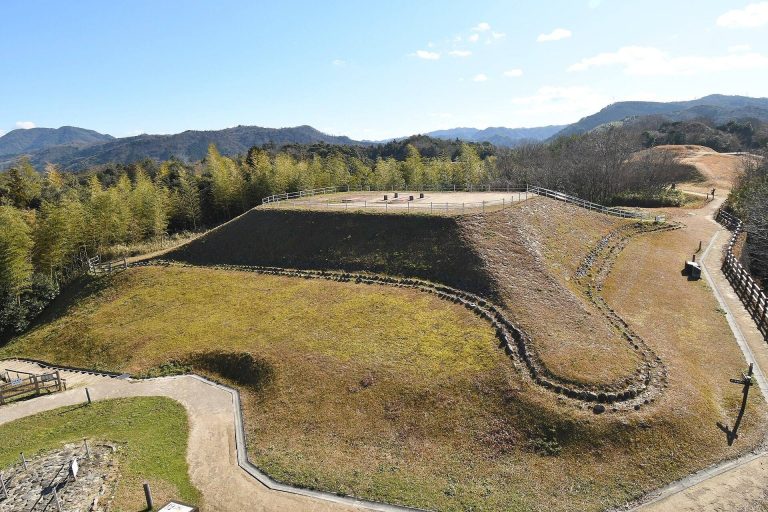
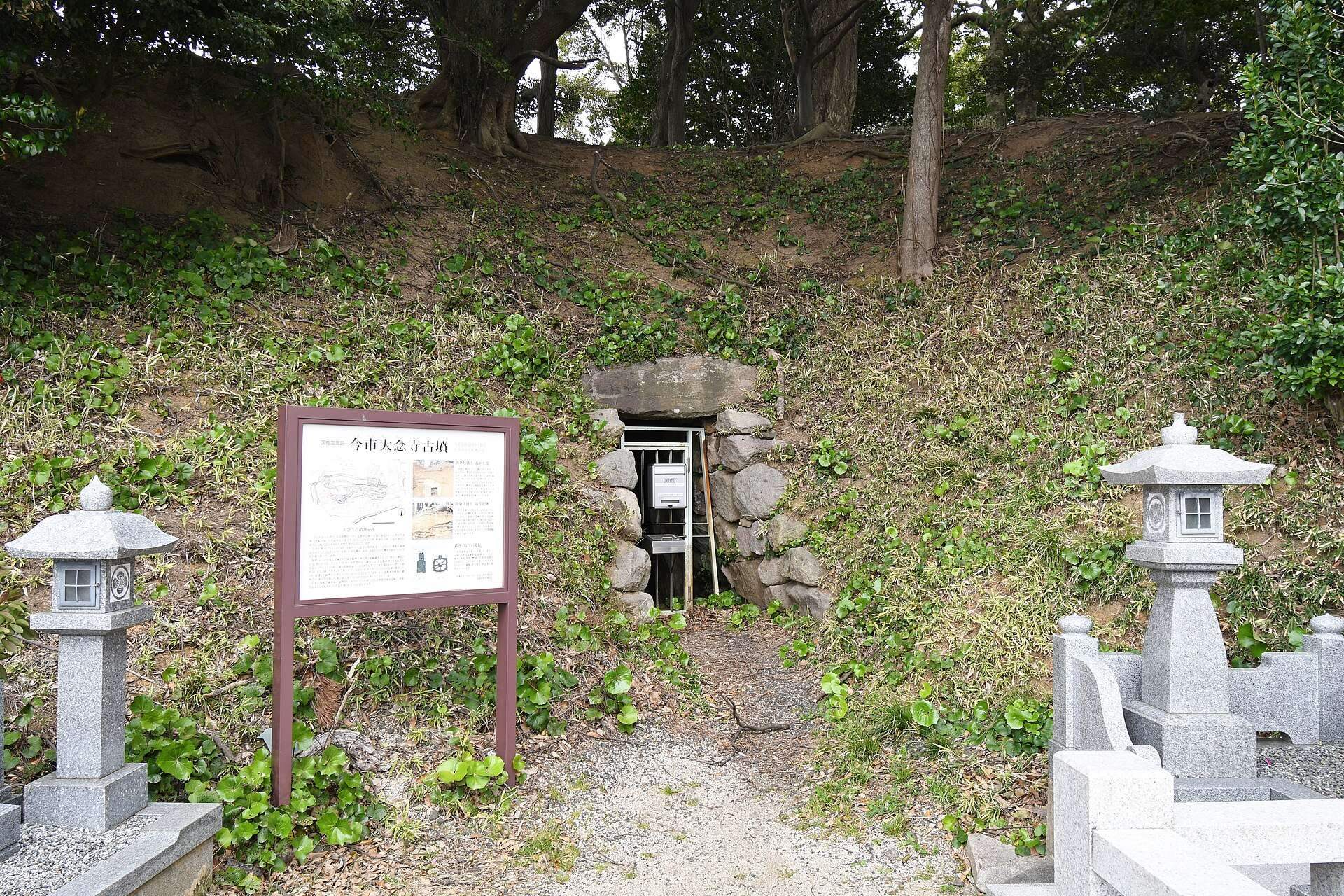
Imaichi Dainenji Kofun is a large burial mound in Japan, built in the latter half of the sixth century during the late Kofun period. It stands on the edge of a hill overlooking the central Izumo Plain and is the largest keyhole-shaped mound in the Izumo region, with a present length of approximately 92 meters. Its advanced rammed-earth construction, formed by compacting successive layers of soil, points to the high status of the person buried there and to the developed character of the Izumo region.
The mound’s construction has been associated with the Hioki, a clan of immigrant origin mentioned in the Izumo no Kuni Fudoki, an eighth-century geographical and cultural record about Izumo Province. The political power represented by Imaichi Dainenji Kofun is also thought to have been followed by that associated with Kamienyatsukiyama Kofun and Kamienyajizoyama Kofun.
Temple association and modern preservation
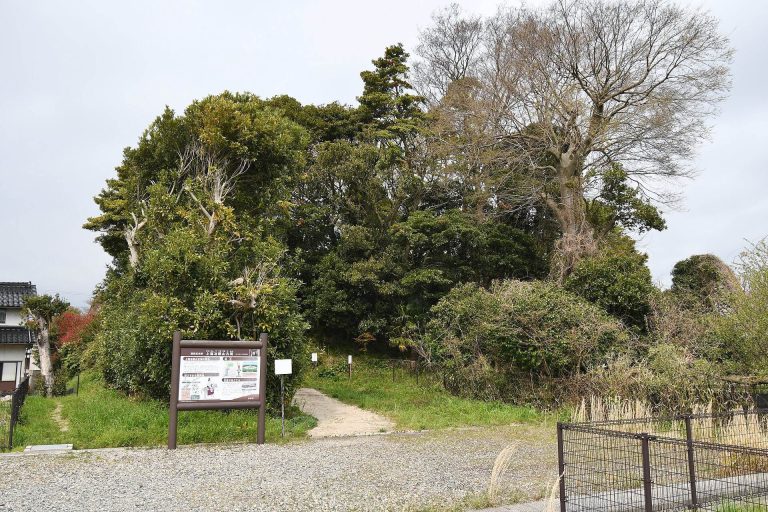
The Buddhist temple Dainenji stands beside the mound. Temple tradition places its foundation in 1452. In 1826, expansion of the temple grounds led to the opening of the burial chamber, and numerous grave goods were apparently recovered. Most of these objects were later dispersed or lost, while some remained at Dainenji.
The northern side of the mound was severely damaged by construction connected with the temple and by natural disasters. After the passageway collapsed in October 1980, archaeological investigations took place from 1981 to 1983 as part of preservation and repair work. Imaichi Dainenji Kofun became a National Historic Site on December 9, 1924. Grave goods associated with the mound were designated Izumo City Tangible Cultural Properties in 1960, with Dainenji identified as their owner.
Remains
Keyhole mound
Imaichi Dainenji Kofun is a zenpō-kōen-fun, a keyhole-shaped burial mound whose square front section faces east and whose circular rear section lies to the west. The mound is approximately 92 meters long. Its rear circular section measures about 45 meters across and rises approximately seven meters. Rammed earth forms the mound, and fragments of cylindrical haniwa, clay funerary objects placed on or around burial mounds, have been found on its surface.
Stone burial chamber
Chamber and passageway
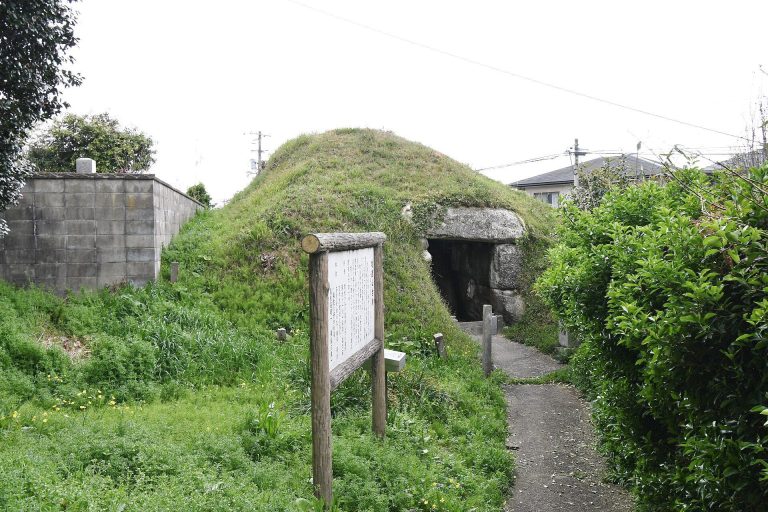
A large horizontal stone chamber, a passage-accessed burial chamber built into a mound, opens from the rear circular section toward the west-southwest. The structure is approximately 12.8 meters long and includes a rear chamber, a front chamber, and a passageway. Projecting stone sections extend on both sides of the entrance. The rear chamber is about 5.8 meters long, 2.9 meters wide, and 3.3 meters high. The front chamber measures approximately 3.1 meters by 2.4 meters and is 2.0 meters high, while the passageway is about 2.5 meters long, 1.6 meters wide, and 1.8 meters high.
Rear-chamber sarcophagus
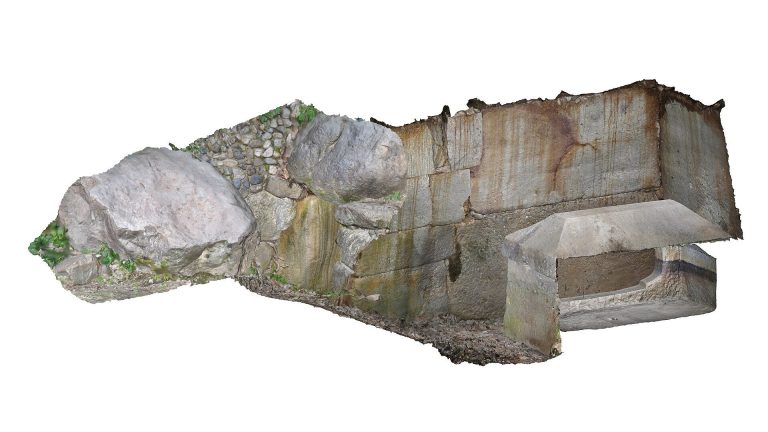
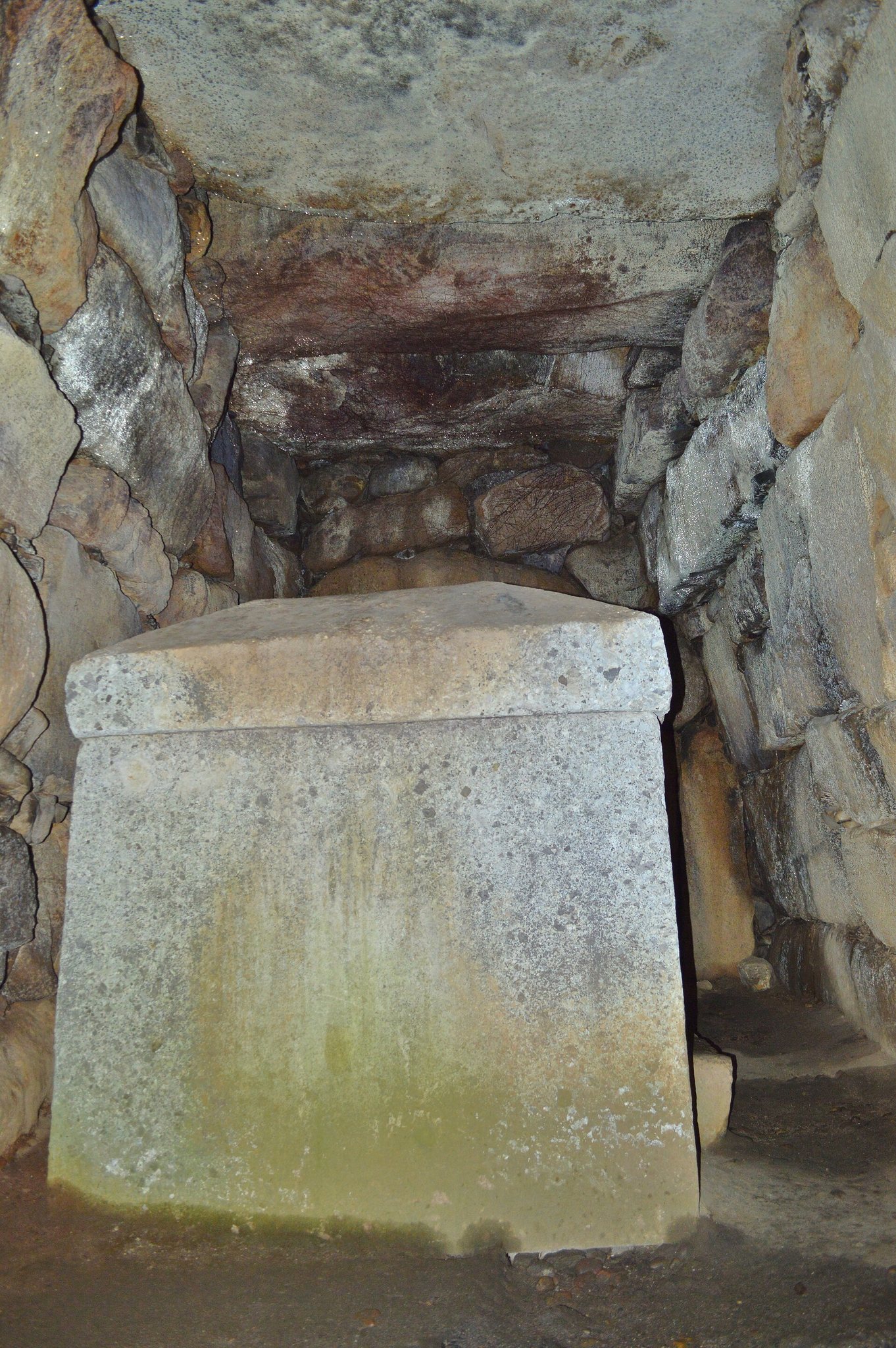
The rear chamber contains a large house-shaped stone sarcophagus carved from tuff. Its roof-like lid and coffin body are modeled on a house, and a side opening makes it a lateral-opening sarcophagus. The coffin measures approximately 3.3 meters long, 1.7 meters wide, and 1.89 meters high, placing it among the largest examples of its type in Japan. Six knobs for fastening ropes are set into the lid, and the side of the coffin body has a square opening.
Front-chamber sarcophagus
A smaller assembled house-shaped stone sarcophagus was placed in the front chamber. Only its basal portion survives. Its recorded dimensions are approximately 1.81 meters long, 1.08 meters wide, and 0.82 meters high, with the length and height derived from Edo-period records. Like the larger coffin, it is thought to have been opened from the side.
Burial goods
The grave goods associated with the chamber included gilt-bronze footwear, iron swords, spearheads and axes, horse harness fittings, harness cheek pieces, Sue ware vessels, and other weapons and equipment. Sue ware was a high-fired ceramic tradition produced in Japan during and after the Kofun period. Objects preserved at Dainenji include a horse-harness fitting, fragments of a straight sword, and lids from Sue ware vessels. These surviving items are designated Izumo City archaeological Tangible Cultural Properties.