Nishidani Tumulus Cluster: A Multi-Period Burial Complex in Japan
Site at a Glance
- Rating
- 4.2
- Popularity
- Low
- Country
- Japan
- Primary era
- Classical
- External website
- Open
- Eras represented
- Classical
- Civilizations
- Unclassified
- Site type
- Burial
- Remains
- Necropolis
On this page13 sections
History
The Nishidani Tumulus Cluster is a burial complex in Japan, located in Izumo, Shimane Prefecture, whose burials span the late Yayoi period, the Kofun period, and the Nara period. Set on the Nishidani Hills beside the Hii River, it preserves evidence of changing funerary practices and of contacts between the Izumo area and other parts of western Japan.
Discovery and Archaeological Investigation
The site was first recognized in 1953, when students from Izumo City Daiichi Junior High School found scattered Yayoi pottery on a hillside. The findspot was later identified as Tomb No. 4. It was reported in 1956 as pottery from the Shimokurihara Nishidani Hills and became known as the Nishidani Hills archaeological site.
A preliminary survey in 1971, carried out before the relocation of Shimane Prefectural Izumo Commercial High School, confirmed Tombs Nos. 1, 4, and 5. An emergency excavation of Tomb No. 1 in 1972 established its form as a four-cornered projecting mound, while Tomb No. 8 was destroyed before it could be examined. Investigations by the Shimane Prefectural Board of Education and the Izumo Archaeological Research Society had identified 17 burial mounds by 1980.
The complex had previously been called the Kairahara or Nishidani Kofun cluster. The name Nishidani Tumulus Cluster was proposed in a 1980 publication and subsequently became established. Excavations led mainly by the archaeology laboratory of Shimane University from 1983 to 1992, especially at Tomb No. 3, uncovered pottery, mercury vermilion, postholes, and other evidence of funerary activity. Tombs Nos. 15 and 16 were found and excavated in 1991 and 1992 during a farm-road construction project, with their remains recorded for preservation.
Regional Burial Traditions
Tombs Nos. 3 and 9 are particularly large and are considered to have been the burials of regional kings during the late Yayoi period. Pottery from Tombs Nos. 3 and 4 includes a distinctive trapezoidal form associated with the Kibi region, broadly corresponding to present-day Okayama Prefecture and eastern Hiroshima Prefecture. The pottery indicates cultural or commercial connections between the Izumo area and the San’yō region across western Japan.
The Yayoi period was Japan’s later prehistoric era, associated with wet-rice agriculture, metallurgy, increasingly stratified communities, and varied regional burial customs. It was followed by the Kofun period, named for the large mound tombs built for powerful elites. A cremation burial from the Nara period, an eighth-century era of Japan’s early centralized state, adds a later phase to the complex’s long funerary history.
Protection and Interpretation
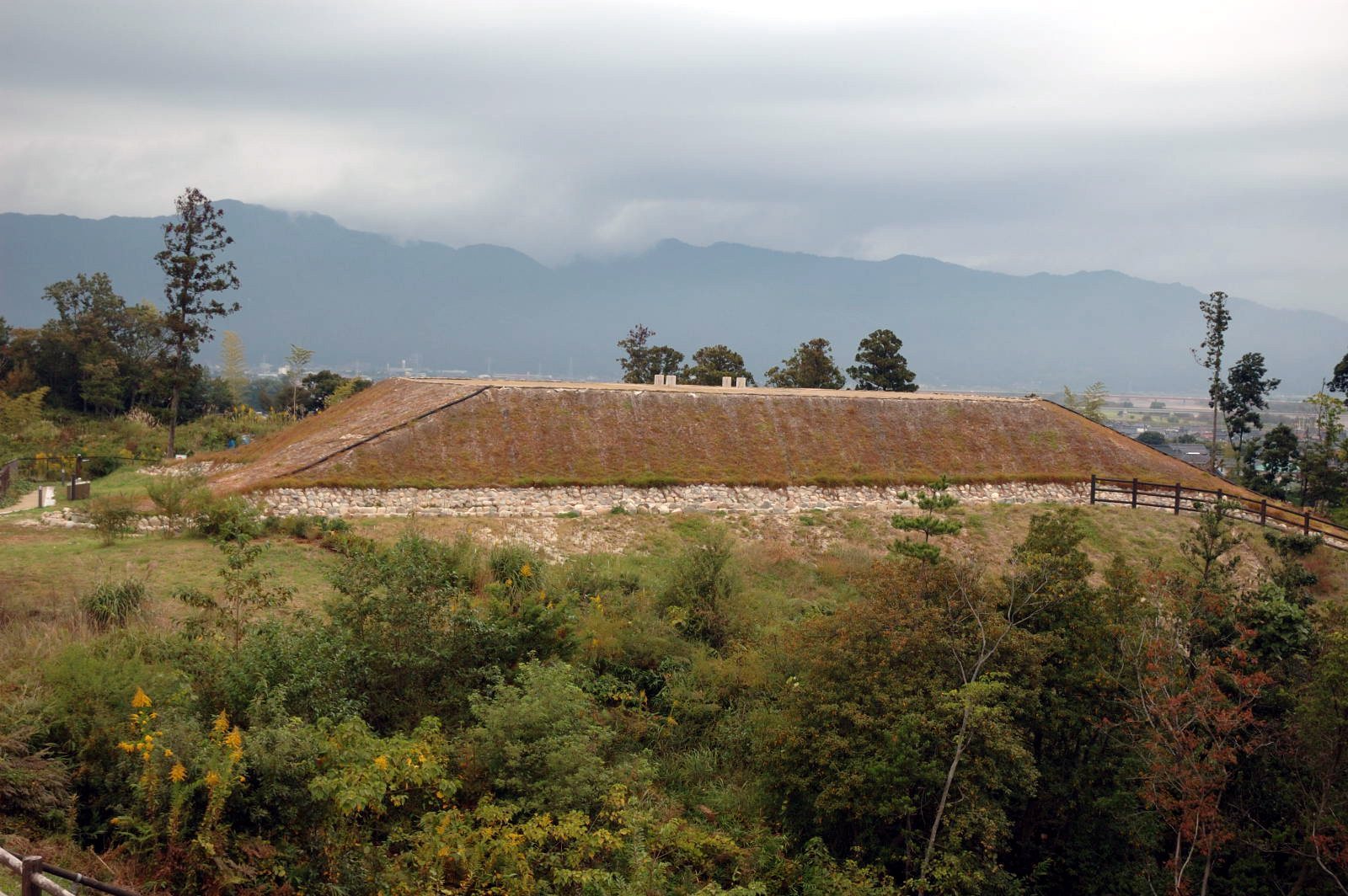
The Nishidani Tumulus Cluster was designated a National Historic Site of Japan on March 30, 2000. Part of the complex became the Nishidani Tumulus Cluster Historical Site Park, Izumo Yayoi no Mori. The park opened provisionally in 2004 and received its full presentation after mound restoration was completed by 2010.
The Izumo Yayoi no Mori Museum opened in 2010 within the park as an archaeological museum and as Izumo’s center for buried cultural properties. Its work combines exhibitions, research, excavation, and conservation. The museum displays finds from the cluster, a large diorama of Tomb No. 3, and archaeological materials from elsewhere in Izumo.
Remains
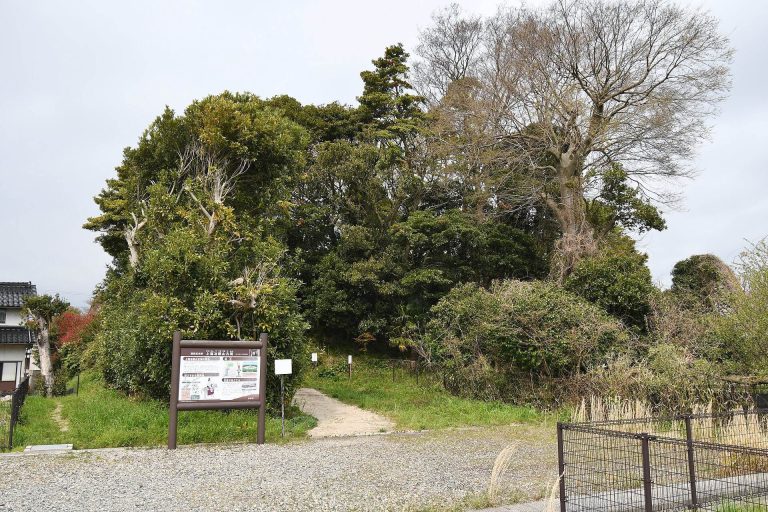
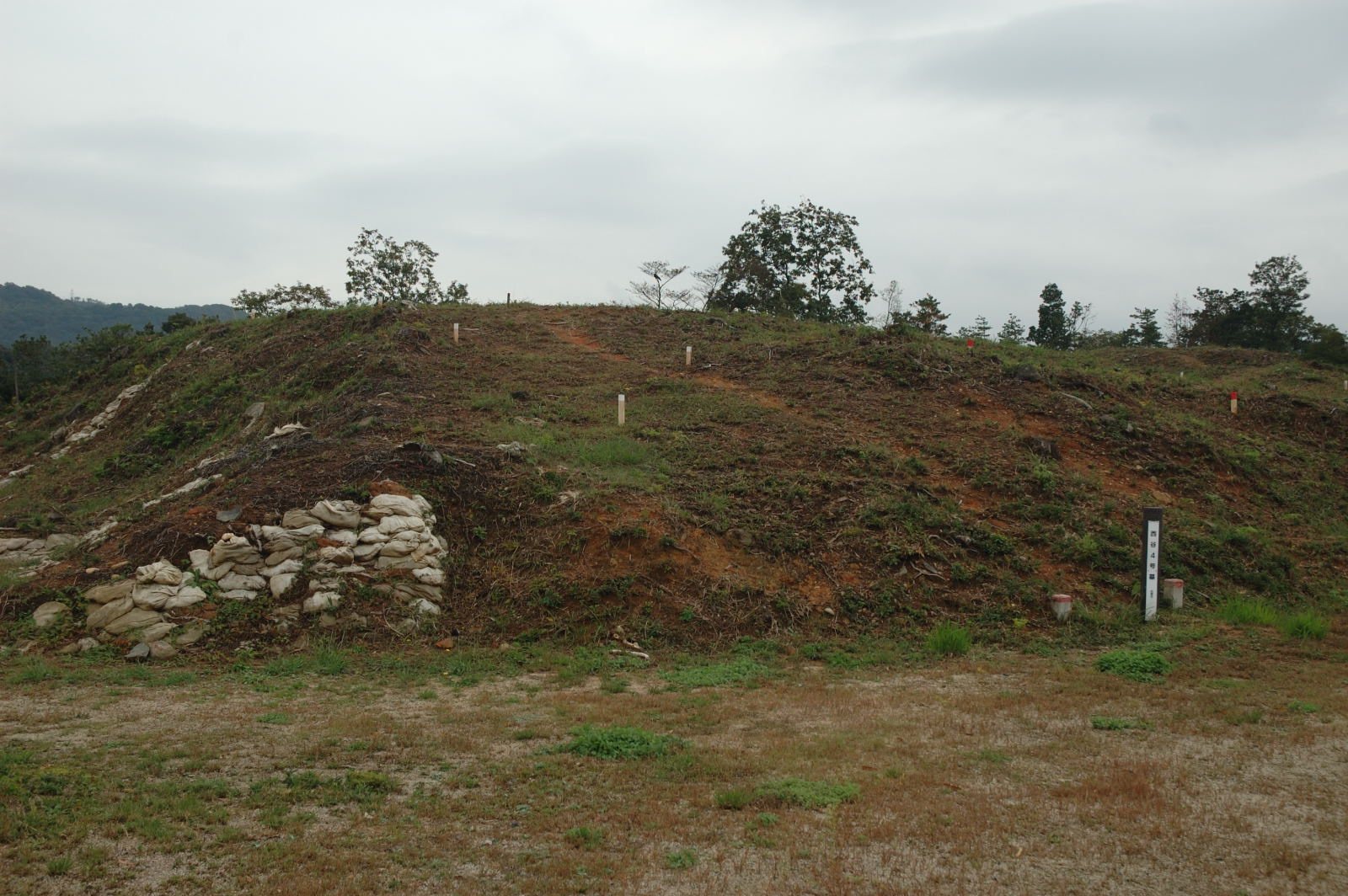
The Nishidani Hills form a low ridge about 40 metres high in southeastern Izumo. Burial mounds extend across the western and northern slopes, with the wider complex beside the Hii River. By 2018, the site contained 27 identified burial mounds, together with stone-coffin burials, earthen-pit burials, groups of horizontal cave tombs, and a cremation burial. The preserved area and the Historical Site Park present part of this funerary landscape through exposed remains and restored mound forms.
Four-Cornered Projecting Mounds
Tomb No. 3
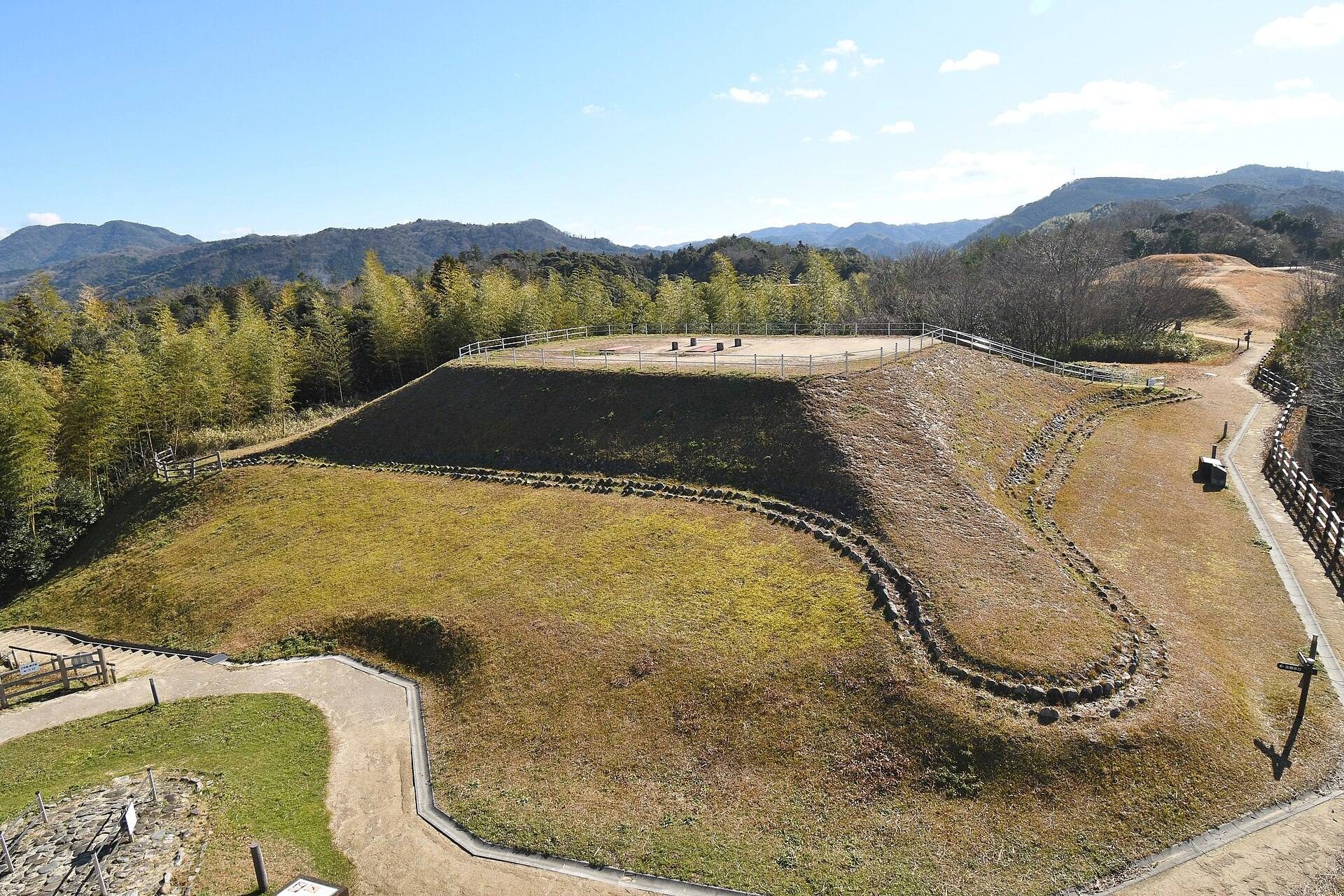
Tombs Nos. 1–4, 6, and 9 are four-cornered projecting mounds, burial mounds with projecting sections at each corner. This form is especially characteristic of the Sanin region, including the area around Izumo. Tomb No. 3 measures about 50 metres across when its projecting corners are included and has stone arrangements on the mound slopes.
Two burial chambers lay within Tomb No. 3, each containing a double-layered wooden coffin. Mercury vermilion, a vivid red pigment made from the mercury sulfide mineral cinnabar, was used in association with the coffins. Grave goods included magatama beads, cylindrical and spherical beads, and iron swords.
The tomb also preserves traces of a burial pit being filled in and of four enormous pillars having been erected. Large quantities of earthenware found with these remains indicate that funerary rites took place on or around the mound.
Other Projecting Mounds
Tomb No. 9 is another large four-cornered projecting mound, measuring approximately 50 metres across including its corner projections. Along with Tomb No. 3, it is regarded as a burial associated with a regional king in the late Yayoi period. The cluster also contains 17 square tombs and four circular tombs, in addition to six four-cornered projecting mounds. Stones laid along the mound slopes are a shared feature of the projecting-mound group.
Other Funerary Remains
Stone-Coffin and Earthen-Pit Burials
In addition to the mounds, the complex includes three stone-coffin burials and three earthen-pit burials. These remains belong to the wider sequence of funerary practices represented across the Nishidani Hills and form part of the burial evidence identified by 2018.
Horizontal Cave Tombs
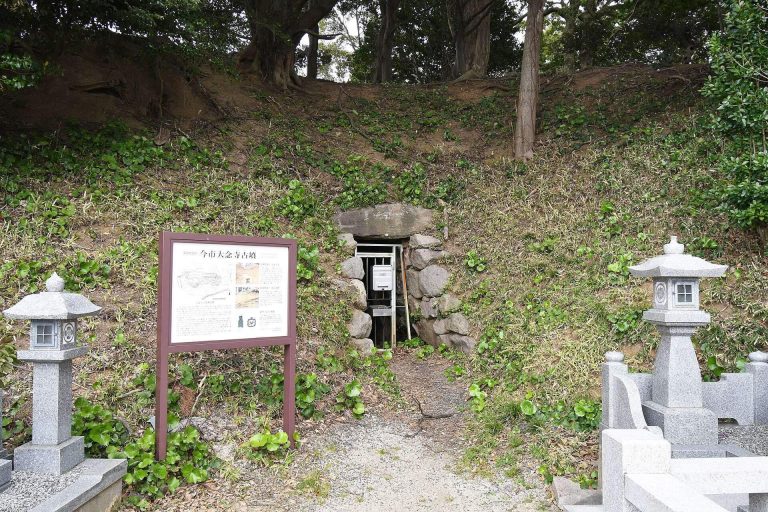
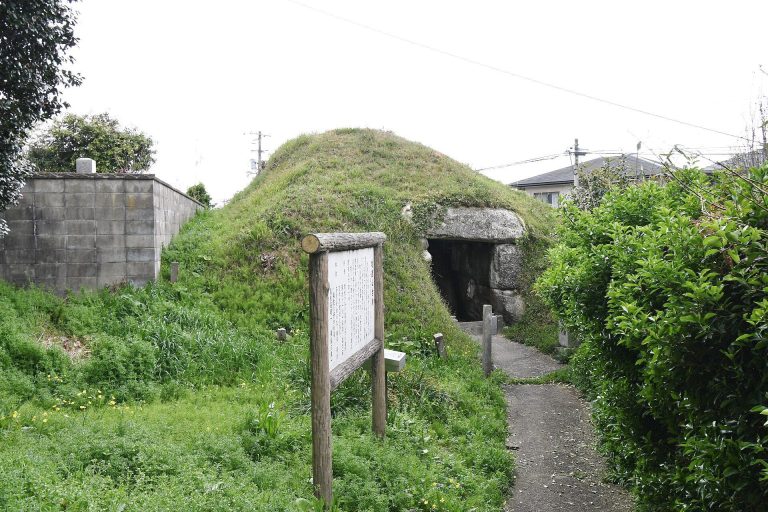
Three groups of horizontal cave tombs contain 21 cavities. A horizontal cave tomb is a burial chamber cut into a slope or other earth or rock face rather than constructed as a freestanding mound. Their grouped arrangement adds a distinct form of burial space to the mound-dominated complex.
Cremation Burial
A cremation burial dating to the Nara period is also associated with the site. Its exact location is unknown, but it extends the chronological use of the burial landscape into the eighth century.
Presentation of the Site
The Historical Site Park exposes and presents part of the burial complex, including restored mound forms. Within the park, the Izumo Yayoi no Mori Museum contains a large-scale diorama reconstructing Tomb No. 3 and displays excavated materials from the Nishidani Tumulus Cluster.