Kannonzuka Kofun: A Keyhole-Shaped Burial Mound in Japan


Site at a Glance
- Rating
- 4
- Popularity
- Very Low
- Country
- Japan
- Primary era
- Medieval
- External website
- Open
- Eras represented
- Medieval
- Civilizations
- Yamato
- Site type
- Burial
- Remains
- Burial Mound
On this page6 sections
History
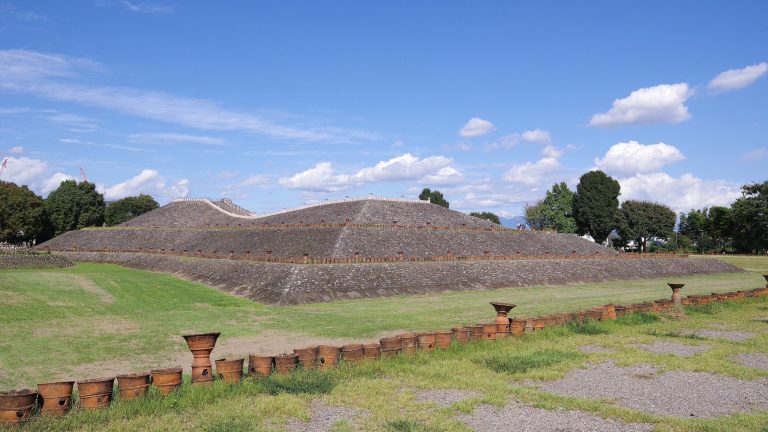
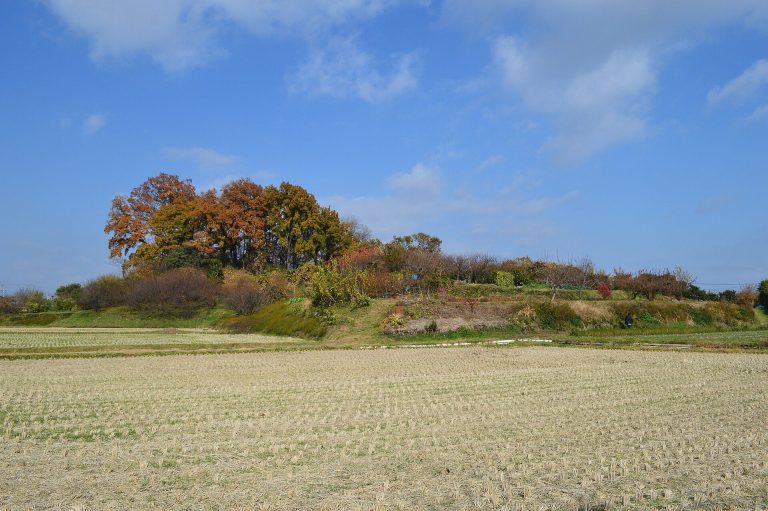
Kannonzuka Kofun is a Kofun-period burial mound in Japan, near Takasaki in Gunma Prefecture, built between the late sixth century and the beginning of the seventh century AD. The Kofun period, which lasted broadly from the third to the seventh century, was marked by the construction of monumental burial mounds. Kannonzuka is a keyhole-shaped mound and may have been one of the last large examples of this form built in Gunma.
The Hachiman Kofun Group
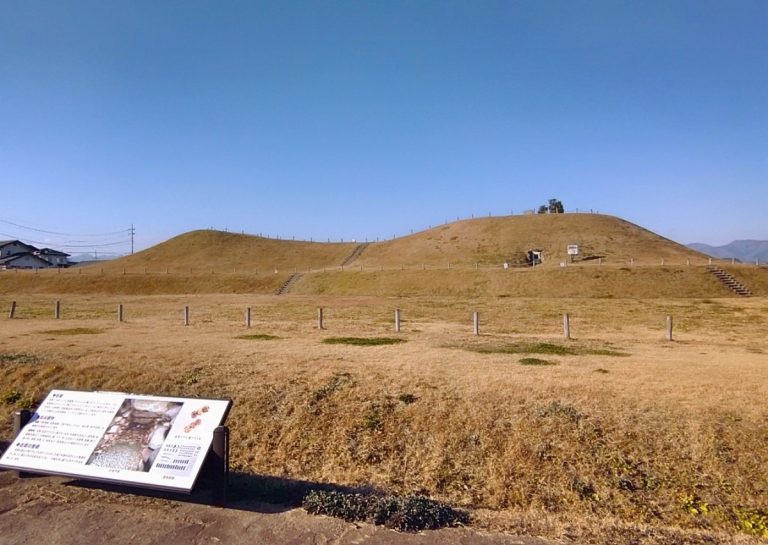
The mound stands on a plateau between the Karasugawa and Usui rivers. Together with nearby burial mounds, it forms the Hachiman Kofun Group. Its keyhole plan combines a rectangular front section with a circular rear section, a form known in Japanese as a zenpo-koen-fun. Kannonzuka belonged to a late phase of this monumental burial tradition.
Discovery and protection
In March 1945, local residents discovered the stone burial chamber while digging an air-raid shelter. The chamber had remained intact, and the excavation produced approximately 300 grave goods representing about 30 types. Japan designated Kannonzuka Kofun a National Historic Site in 1948. In 1961, the excavated objects received collective designation as Important Cultural Properties under the title “Excavated Objects from Kannonzuka Kofun in Kozuke Province.” The artifacts are housed and displayed at the nearby Kannonzuka Archaeological Museum.
Remains
Kannonzuka Kofun is approximately 105 meters long and 14 meters high. Its rectangular front is unusually wider than its circular rear, and the mound was at least partly enclosed by a moat. The front section has four tiers, while the rear section has three. The mound and burial chamber are considered to follow the Koryo measurement scale, an ancient linear system associated with the Korean peninsula, with dimensions arranged in multiples of 35.
Mound and burial chamber
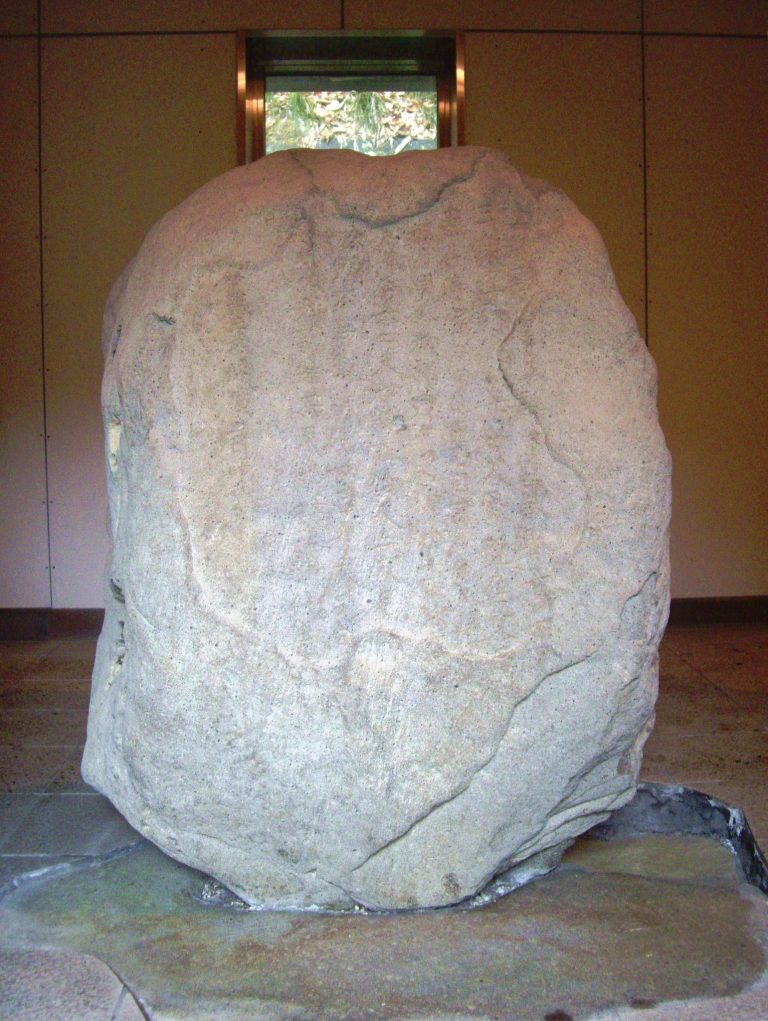
The burial facility is a large horizontal stone chamber, entered through a side passage rather than from above. Its double-sided sleeve arrangement places projecting stone structures on both sides of the entrance passage. The chamber measures 15.8 meters in length and faces southwest. It was built with megaliths, including stones at least 4.5 by 3.4 meters in size and weighing approximately 50 tons. The scale of its masonry is unusual, and the chamber has been compared with Ishibutai Kofun in Asuka, Nara Prefecture, which is known for the massive stones of its exposed chamber.
Grave goods
The excavation yielded four bronze mirrors, ornaments of gold, silver, and glass, swords, spearheads, armor fragments, and horse equipment including harnesses, saddles, and stirrups. Other finds included bronze bowls, iron tools, Sue ware, Haji ware, and additional earthenware and metal containers. Sue ware was a high-fired gray ceramic tradition, while Haji ware was made from lower-fired earthenware. The objects were recovered in good condition. Some bronze mirrors from Kannonzuka were made from the same mold as mirrors excavated from Inariyama Kofun in Saitama Prefecture.