Ōyamato Shrine: A Historic Shinto Sanctuary in Tenri, Japan


Site at a Glance
- Rating
- 4.4
- Popularity
- Low
- Country
- Japan
- Primary era
- Modern
- External website
- Open
- Eras represented
- Modern
- Civilizations
- Japanese
- Site type
- Religious
- Remains
- Sanctuary
On this page13 sections
History
Ōyamato Shrine is a Shinto shrine in Tenri, Japan, traditionally dedicated to Yamato Okunitama, Yachihoko, and Toshigami. Shinto is Japan’s indigenous religious tradition, centered on reverence for kami, sacred beings or powers associated with deities, ancestors, places, and natural phenomena. The identities of Yachihoko and Toshigami vary in historical traditions, where they have also been associated with Ōkuninushi, Amaterasu, or a deity connected with rice and granaries.
Foundation tradition
The shrine’s origin is preserved in the Nihon Shoki, an early eighth-century chronicle containing mythological and historical accounts of Japan’s imperial and religious beginnings. It states that Yamato Okunitama and Amaterasu were originally worshipped together in the great hall of the imperial palace from the time of Emperor Kōshō. During the reign of Emperor Sujin, disorder, rebellion, and plague were attributed to the power of the gods. Amaterasu was moved to Kasanuhi, while Yamato Okunitama was removed from the palace.
Princess Nunaki-iri-hime was first appointed to conduct the rites for Yamato Okunitama. She became emaciated and lost her hair, however, and could no longer continue. After a series of dreams, Ichishi no Nagaochi took over the ritual office. He was regarded as a descendant of the imperial official Shiine-tsu-hiko and an ancestor of the Yamato clan. A sacred precinct was established in the eleventh month of Emperor Sujin’s seventh year, and this act forms the shrine’s traditional foundation, associated with the sixth and seventh years of his reign.
This tradition distinguishes Amaterasu as a heavenly deity and Yamato Okunitama as an earthly deity. It also identifies Ōmononushi, the deity of Mount Miwa, as the cause of the epidemic. After proper worship was offered, the pestilence ceased. The shrine consequently became closely associated with the Yamato clan, whose descendants were traditionally believed to have continued serving as its priests.
Relocation and imperial recognition
The original sanctuary is thought to have stood at Nagaoka-zaki in Oichi, east of the present shrine, near the modern areas of Anashi and Hashinaka in Sakurai. It was later moved to its current location, although the date of that relocation is uncertain. One tradition places the earlier sanctuary near the present site of Chōgaku-ji, while another understands Nagaoka-zaki as a reference to the nearby hills.
Ōyamato Shrine received imperial attention at an early date. In 692, Empress Jitō made ritual offerings and sought divine guidance during the construction of Fujiwara-kyō, together with the shrines of Ise, Sumiyoshi, and Kii. In 897, the shrine received the rank of shōichi, the highest rank in the system of court recognition.
The tenth-century Engishiki, a compilation of court regulations and ritual procedures, lists the shrine as three deity enshrinements in Yamato Province’s Yamabe District. It classifies Ōyamato as a major Myojin-taisha, meaning a shrine whose deity was regarded as especially powerful or eminent. The shrine received offerings for monthly rites, the annual tasting-offering rite, and the first-fruits harvest rite. It later became one of the sixteen imperial shrines and, during the reign of Emperor Shirakawa, one of the Twenty-Two Shrines, a group that received particularly high imperial recognition and offerings.
Prosperity, decline, and rebuilding
By the early Heian period, Ōyamato Shrine possessed 327 shrine households assigned to provide revenue. Its domain was second in extent only to that of Ise Grand Shrine, giving it strong imperial patronage and considerable prosperity. Its fortunes declined after the capital moved to Heian-kyō and the Fujiwara family rose in power. A fire in 1118 further damaged the shrine.
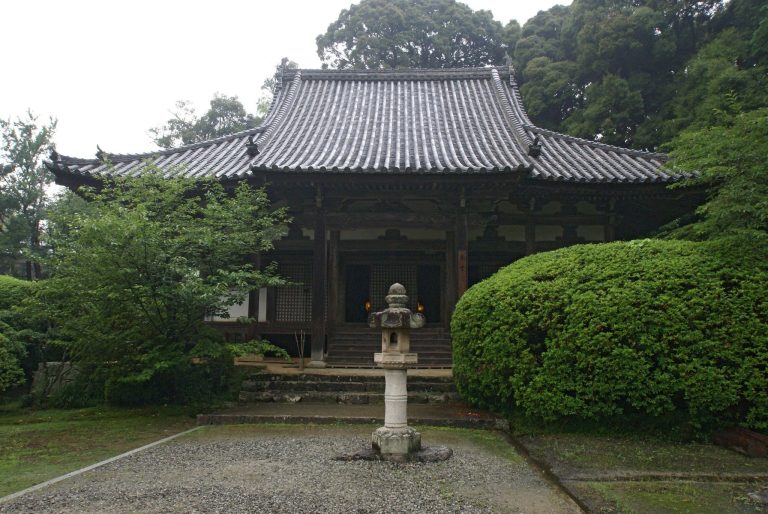
Another fire in 1583 destroyed the documents concerning the shrine’s estates. During the medieval period, Ōyamato lost its entire estate. Its buildings were later remodeled in a temple-like manner during the Edo period. When the shrine was designated a government-supported Kanpei-taisha in 1871, new shrine buildings were constructed. The shrine was added to the Association of Shinto Shrines’ Beppyo list in 1948.
Annual rites and local traditions
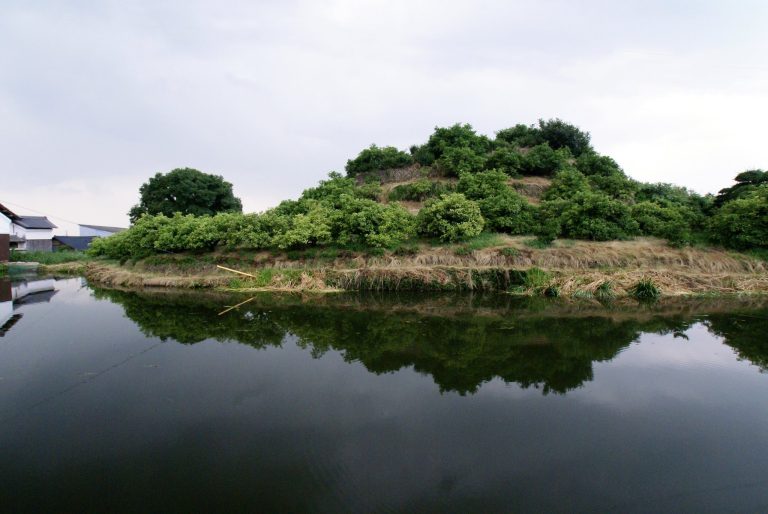
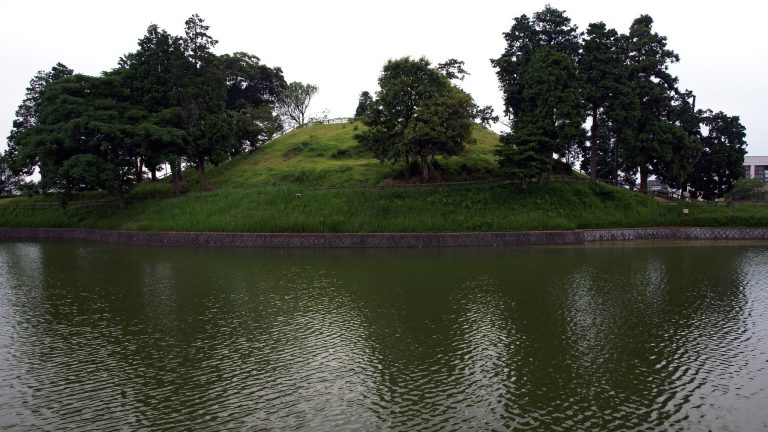
The shrine’s calendar includes the Bow-Beginning Ceremony on January 4. This rite uses the Ogasawara school’s Momote-shiki, an archery ritual. On April 1, the Chanchan Festival procession leaves the shrine, pauses at a stone seat at Kishida Market, follows the former boundary between Yamabe and Shikishima districts, and continues to a temporary sanctuary near Nakayama Otsuka Kofun.
The Chanchan Festival became an intangible folk cultural property of Nara Prefecture in 2018. The Yamato-go Shide Dance, also called the Red Shide Dance, received the same type of designation from Tenri in 1997. The summer purification rite takes place on June 30 and involves passing through a ring made of reeds.
The shrine and the battleship Yamato
The shrine’s modern connection with the Imperial Japanese Navy battleship Yamato comes from the vessel’s name, which was taken from Yamato Province. A divided spirit of the shrine’s deities was enshrined aboard the ship. After Yamato sank off Okinawa in the Battle of the East China Sea on April 7, 1945, 2,736 dead, including Vice Admiral Itō Seiichi, commander of the Second Fleet, were enshrined at the shrine’s Soreisha subsidiary shrine.
On September 24, 1972, the shrine also enshrined 985 dead from the light cruiser Yahagi and eight destroyers. The total number commemorated from the battle thereby reached 3,721.
Remains
Ōyamato Shrine is organized around a sacred precinct containing a worship hall, the principal sanctuary, the restricted courtyard between them, and memorial structures associated with the naval dead. The principal sanctuary follows the Kasuga-zukuri style, characterized by a compact building with a steeply pitched gabled roof and a projecting front veranda or entrance roof.
Main sacred precinct
Worship hall and principal sanctuary
The haiden, or worship hall, is a major component of the precinct. Beyond it stands the principal sanctuary in Kasuga-zukuri form. The space between the two buildings is the Yuniwa, a restricted sacred courtyard. During the New Year opening from January 1 to 3, 2026, the courtyard was made accessible to the public for the first time in 154 years, allowing worship directly before the principal sanctuary.
Victory monument
Beside the first torii, the gate marking entry into a Shinto sacred precinct, stands the Stone Monument Commemorating Victory in the Sino-Japanese War. Erected on January 30, 1896, it records in classical Chinese the names of 54 men from the local Ōyamato community who went to war. Shigeru Furusawa composed the inscription. He had been a samurai of the Tosa domain, a member of the Tosa Loyalist Party, and later governor of Nara Prefecture.
After the end of the Second World War in 1945, the monument was laid on its side and covered with earth. Allied occupation authorities had ordered the removal or destruction of monuments celebrating victory and the war dead. The monument was later returned to its original position, and an explanatory sign was installed.
Naval memorial structures
Soreisha
The Soreisha is a subsidiary shrine within the precinct. It enshrines the war dead associated with the battleship Yamato, the light cruiser Yahagi, and eight destroyers who are commemorated in connection with the Battle of the East China Sea. The total represented there is 3,721, including the 2,736 dead enshrined after the sinking of Yamato and the 985 added in 1972.
Battleship Yamato Memorial Tower
A Battleship Yamato Memorial Tower was erected within the shrine precinct in 1969. Together with the Soreisha, it forms part of the site’s physical commemoration of the naval dead and its twentieth-century association with the vessel named after the ancient Yamato region.