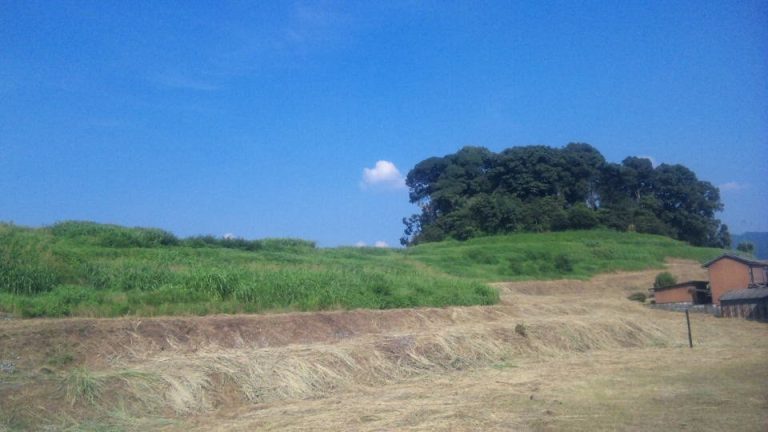
Noguchi Royal Tomb: The Joint Mausoleum of Emperor Tenmu and Empress Jito


Site at a Glance
- Rating
- 4.1
- Popularity
- Low
- Country
- Japan
- Primary era
- Medieval
- External website
- Open
- Eras represented
- Medieval
- Civilizations
- Yamato
- Site type
- Burial
- Remains
- Tomb
On this page8 sections
History
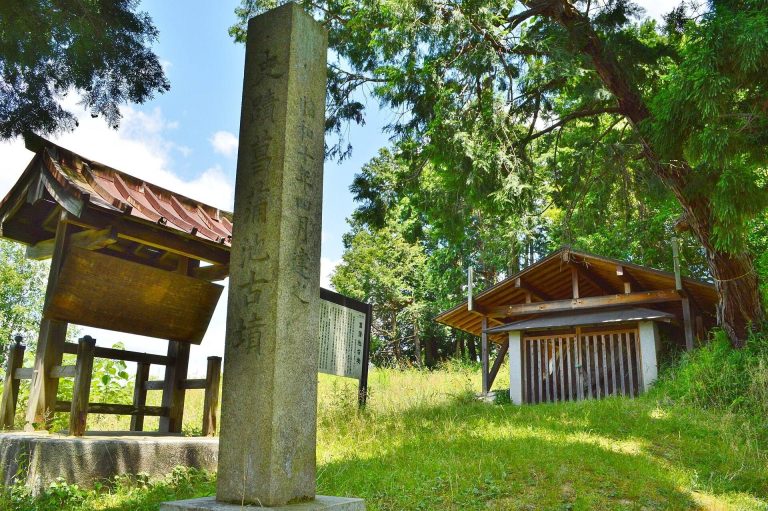
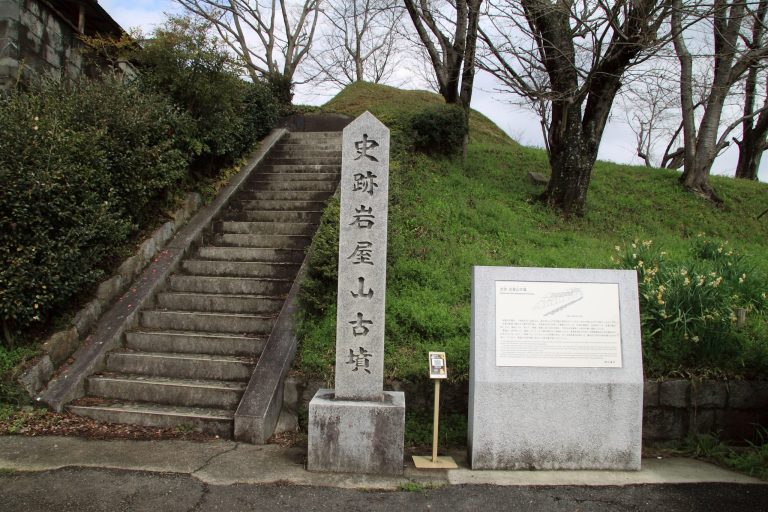
Noguchi Royal Tomb is a late Kofun-period burial mound in Asuka, Japan, identified as the Hinokuma Ouchi Imperial Mausoleum, the joint mausoleum of Emperor Tenmu and Empress Jito. Built for seventh-century sovereigns during the transition toward Japan’s centralized imperial state, it is regarded as one of the few ancient imperial mausolea whose identification is considered reliable.
Construction and Imperial Burials
The Nihon Shoki, an early eighth-century chronicle of imperial lineage and major events, states that construction of the Ouchi Mausoleum began in 687, the first year of Jito’s reign. Funeral rites for Tenmu ended in November 688, when he was buried there. Tenmu had ruled from the Asuka Kiyomihara Palace, while Jito, his consort and successor, later ruled from the Fujiwara Palace.
Jito died in 702. She was cremated at Asuka Hill in 703, and her remains were subsequently placed in the Ouchi Mausoleum with Tenmu. The Engishiki, a tenth-century compilation of court regulations and religious rites, also names Tenmu and Jito as the occupants of the mausoleum. Their identification with the tomb is generally accepted as secure.
The 1235 Robbery
The burial chamber was violently disturbed on the nights of March 20 and 21, 1235. Thieves opened Tenmu’s coffin and removed his body. His bones and white hair were reportedly left scattered within the stone chamber. Jito had been cremated, and her remains were kept in a silver bone container. The container was stolen, while the cremated bones were reportedly abandoned nearby. Most of the grave goods were taken.
After the robbery, the Afuki Imperial Mausoleum Record was produced as a description of the tomb chamber. It stated that the chamber was made with agate and described Tenmu’s coffin as dry lacquer. A dry-lacquer coffin was formed from layers of lacquered fabric or similar material rather than carved from a single block of wood or stone. The record later became central to the identification of the tomb.
Declining Management and Identification Disputes
Management of the mausoleum appears to have weakened from the Muromachi period into the early Edo period. An illustrated guide from 1791 describes travelers climbing onto the mound and entering the stone chamber freely. Repairs completed by 1699 had treated Noguchi as the joint mausoleum of Tenmu and Jito, but this interpretation did not remain uncontested.
In 1734, the Yamato-shi identified Maruyama Kofun at Mise as the tomb of Tenmu and Jito. Later works continued the disagreement. A study completed in 1848 assigned Noguchi to Emperor Monmu and Maruyama to Tenmu and Jito, while a publication of 1854 also favored Maruyama and recorded the earlier Noguchi identification.
Beginning in 1862, repairs associated with the Bunkyu mausoleum works provisionally treated Noguchi as the mausoleum of Monmu. The provisional designation reflected the continuing uncertainty. The scholar Tanomori Yoshitomi argued against Maruyama as a joint mausoleum because Jito had been cremated. In his view, such a burial should contain only one stone coffin, whereas Maruyama was believed to have two.
Between the Bunkyu repairs and 1871, the official identification temporarily shifted back from Maruyama to Noguchi. In 1871 it changed again, and Noguchi was no longer designated as the mausoleum of Tenmu and Jito.
Rediscovery and Official Confirmation
The Afuki Imperial Mausoleum Record was rediscovered in 1880 at Kozanji Temple in Kyoto. Afterward, Osawa Sugaomi and Ohashi Nagaoki of the Ministry of the Imperial Household prepared a study supporting Noguchi as the Ouchi Mausoleum. They pointed to the record’s reference to a mausoleum in the village of Noguchi and to a 1200 reference to Tenmu’s mausoleum at Aoki. They also adopted Tanomori’s reasoning against the identification of Maruyama.
The Interior Division of the Daijokan, the central administrative council of Japan’s premodern imperial government, approved the proposal in January 1881. It was formally sanctioned on February 1, and Noguchi Royal Tomb was officially designated as the joint mausoleum of Tenmu and Jito. That identification has remained unchanged. Maruyama subsequently became a mausoleum reference site associated with an earlier tradition rather than the official joint mausoleum.
The tomb belongs to the UNESCO World Heritage property of the Asuka-Fujiwara capital sites. In 2015, it was also designated a component cultural property of the Japan Heritage entry registered as the Tenmu and Jito Imperial Mausoleum, or Hinokuma Ouchi Imperial Mausoleum.
Remains
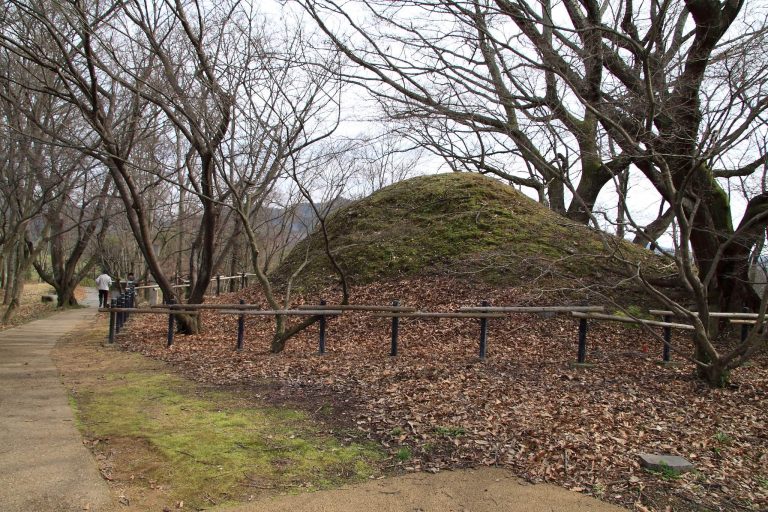
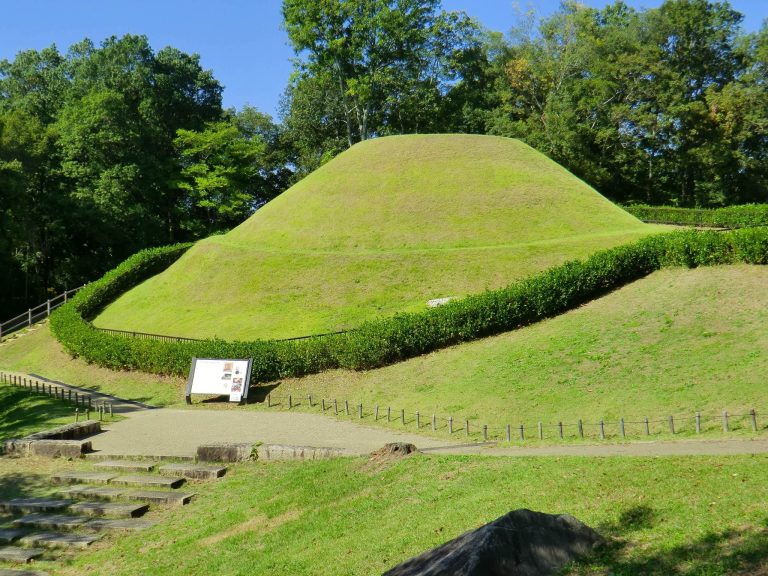
Noguchi Royal Tomb is an octagonal tumulus, meaning that its mound was laid out around an eight-sided plan. The surviving mound has a roughly circular appearance and measures about 58 metres from east to west, 45 metres from north to south, and 9 metres in height. Its form belongs to the continued construction of elite burial mounds after the 646 Edict on Restricting Burials, which limited mound building for lower officials and commoners while allowing it for some members of the ruling class.
The Octagonal Mound
The original mound is understood to have had five tiers encircled by stone steps. A documentary description calls the tomb octagonal and states that it had one circuit of stone platforms, a circumference of approximately one cho, and five levels. The surviving earthwork’s rounded appearance therefore reflects the condition of the mound today rather than the full geometry attributed to its original construction.
The Burial Chamber
Inside the mound is a two-chambered burial structure built from cut stone. It was associated with Tenmu’s dry-lacquer coffin and Jito’s gilt-bronze container for cremated remains. These objects are described as having been deposited in the chamber, while the 1235 robbery removed or disrupted the burial furnishings and the remains held there.
The southern entrance was described in the Afuki Imperial Mausoleum Record as a stone gate with a stone bridge in front of it. The record’s description of the chamber, together with its account of the burial arrangements, provides the principal surviving explanation of the monument’s internal structure and the treatment of the two occupants.