Hakusan Shrine: A Shinto Shrine in Tokyo’s Bunkyo City


Site at a Glance
- Rating
- 4
- Popularity
- Medium
- Country
- Japan
- Primary era
- Early Modern
- External website
- Open
- Eras represented
- Early Modern
- Civilizations
- Tokugawa
- Site type
- Religious
- Remains
- Sanctuary
On this page11 sections
History
Hakusan Shrine is a Shinto shrine in Tokyo, Japan, founded in 948 after its enshrined deity was transferred from Hakusan Hime Shrine in Kaga Province. Shinto is Japan’s indigenous religious tradition, centered on reverence for kami, sacred beings or powers associated with nature, places, ancestors, and particular traditions. Formerly known as Hakusan Gongen Shrine, it is regarded as the origin of the local place-name Hakusan.
Foundation and relocation
The shrine was first established in Hongo Motomachi, in the Toshima District of Musashi Province. During the Genna era, from 1615 to 1624, Shogun Tokugawa Hidetada ordered its transfer to Sugamo-hara. The former grounds are now within Koishikawa Botanical Garden.
In 1655, the shrine moved again, this time to its present site. Its former grounds were requisitioned for a residence for Tokugawa Tsunayoshi, then lord of Tatebayashi and later the fifth Tokugawa shogun. Tsunayoshi and his mother, Keishō-in, became important patrons and worshippers, helping the shrine prosper as a center of Hakusan faith in Edo.
Tokugawa patronage and destruction
In 1689, Hakusan Shrine was designated the childbirth-protection shrine for Tsunayoshi’s daughter, Tokugawa Tsuruhime. On March 9, 1690, the Edo shogunate granted the shrine an estate producing 30 koku of rice. A koku was a historical Japanese measure of rice yield used to express the economic value of land.
A fire that spread from neighboring residences destroyed the shrine in November 1703. In June 1704, Kato, who held the title Governor of Echū, built temporary shrine buildings and donated 500 ryō and 5,000 Japanese cypress trees. Another fire, in March 1718, destroyed the shrine’s treasures and other possessions.
Modern religious status and local life
On December 21, 1868, the shrine received designation as a quasi-imperial-ritual shrine, placing it within an official category of shrines connected with imperial religious observances. It was designated a former village shrine on June 15, 1872, and in 1907 became eligible to receive offerings of sacred food and cloth.
Hakusan Shrine’s principal deities are Kikuri-hime-no-Mikoto, Izanagi-no-Mikoto, and Izanami-no-Mikoto. Kikuri-hime-no-Mikoto is associated with reconciliation and mediation, while Izanagi and Izanami are primordial kami presented in Japanese mythology as creators of the Japanese islands and many other kami. The shrine belongs to the Tokyo Ten Shrines pilgrimage circuit, and its annual festival takes place on September 21.
The shrine’s parish has included districts such as Hakusan-maechō, Sashigaya-chō, Yanagichō, Shimotomisaka-chō, Esashichō, Omotemachi, Daimonchō, Hakusan-Gotenchō, Maruyama-Fukuyamachō, Maruyama-Shinmachi, Nishikatachō, Hongo 6-chōme, Higashitakechō, and Nishitakechō. Records give different totals for the parish households, including 1,653, 3,000, and 5,000.
Each year in mid-June, the Bunkyo Hydrangea Festival takes place at the shrine and adjacent Hakusan Park. It is one of Bunkyo’s five major flower festivals. The program includes access to the Fujizuka, a toothbrush memorial service, and a fair, while hydrangeas form part of the festival setting.
Remains
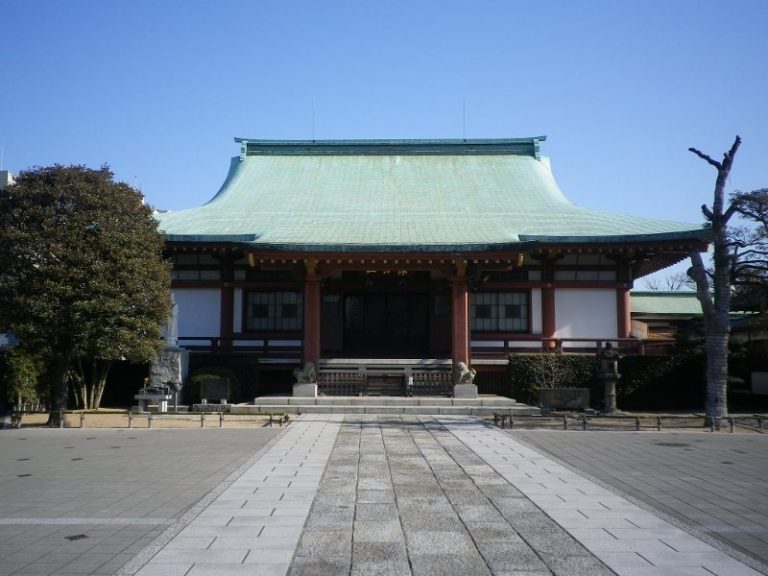
The present precinct is recorded at approximately 2,082 tsubo, or 6,882.64 square meters, although another record gives approximately 1,875 tsubo, or 6,198.35 square meters. The Edo-period precinct was recorded as approximately 4,000 tsubo, or 13,223.14 square meters. A tsubo is a traditional Japanese unit of area. Within the grounds, the principal buildings are arranged around the sanctuary, offering hall, and worship hall, while the precinct also contains a Fujizuka and commemorative features.
Shrine buildings
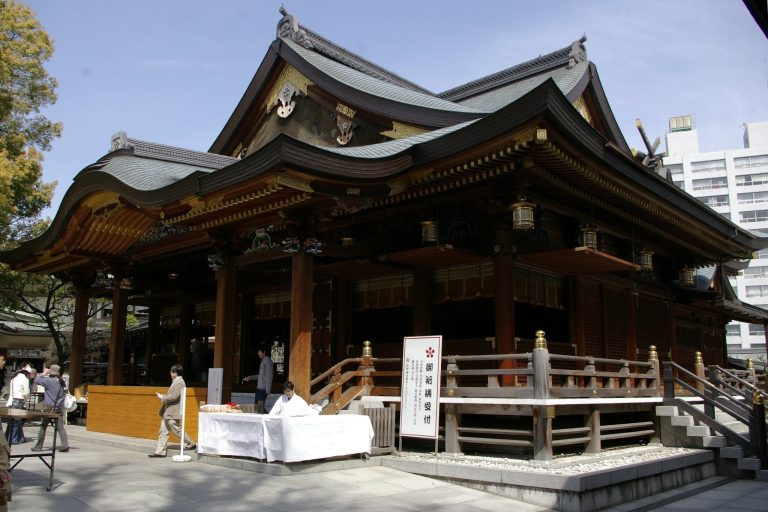
Main sanctuary
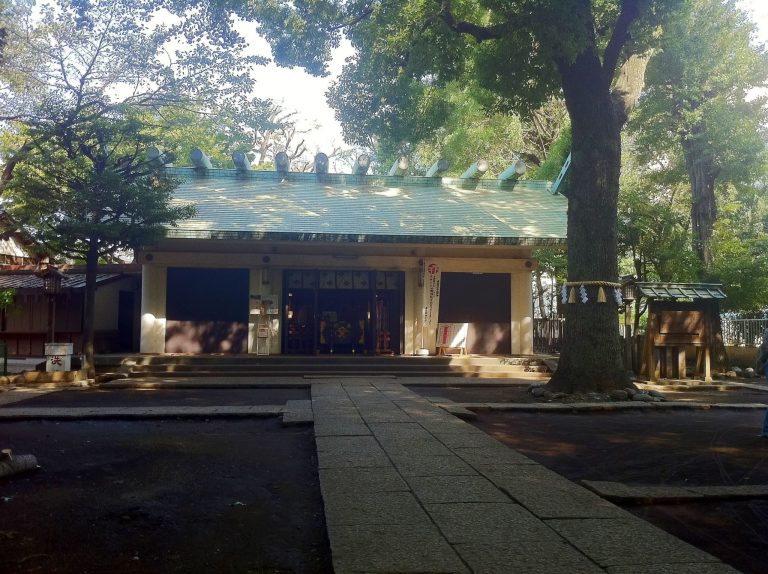
The honden, or main sanctuary, follows the Nagare-zukuri style and covers approximately 4 tsubo, or 13.22 square meters. Nagare-zukuri is characterized by a gabled roof whose front slope extends forward to shelter the entrance.
Offering and worship halls
The heiden, or offering hall, covers 28 tsubo, or 92.56 square meters. The haiden, or worship hall, covers 20 tsubo, or 66.12 square meters. Together with the main sanctuary, these buildings form the principal architectural group within the precinct.
Grounds and commemorative features
Hydrangeas and Fujizuka
Approximately 3,000 hydrangea plants grow in the shrine grounds and adjacent Hakusan Park. The precinct also contains a Fujizuka, a constructed mound associated with worship of Mount Fuji. The mound is opened during the Bunkyo Hydrangea Festival.
Sun Yat-sen and Miyazaki Toten memorial
The grounds contain a stone on which Sun Yat-sen and Miyazaki Toten sat in May 1910, together with a related commemorative monument. Sun Yat-sen was a Chinese revolutionary and political leader, while Miyazaki Toten was a Japanese activist who supported the Chinese revolutionary movement.