Komagome Tenso Shrine: A Shinto Shrine in Tokyo


Site at a Glance
- Rating
- 4.2
- Popularity
- Low
- Country
- Japan
- Primary era
- Medieval
- External website
- Open
- Eras represented
- Medieval, Modern
- Civilizations
- Japanese
- Site type
- Religious
- Remains
- Sanctuary
On this page12 sections
History
Komagome Tenso Shrine is a Shinto shrine in Japan, in Bunkyo City, Tokyo. Shinto is Japan’s indigenous religious tradition, centered on reverence for kami, sacred beings or forces associated with nature, ancestors, places, and myths. The shrine is traditionally said to have been founded in 1189, during Minamoto no Yoritomo’s campaign against Oshu, the northeastern region of Japan broadly corresponding to present-day Tohoku. Its main deity is Amaterasu Omikami, the principal Shinto sun kami and a central figure in Japan’s imperial mythology.
Foundation tradition
The shrine’s origin story centers on a dream omen received by Minamoto no Yoritomo, founder of the Kamakura shogunate and its first shogun. In the tradition, a ritual paper offering appeared hanging from a pine branch in his dream. Yoritomo sent Adachi Morinaga to investigate, and Morinaga found a large ritual wand decorated with paper streamers on a pine. Yoritomo then had a kami enshrined there. The Watarai clan, a priestly family associated with Ise, is also said to have offered prayers for Yoritomo in the late Heian period. Ise shrine estates were subsequently established in the Kanto region. A place of worship may have existed in the area earlier, although this remains uncertain.
Komagome village shrine
During the Edo period, the shrine was known as Komagome Shinmei-gu and served as the principal tutelary shrine of Komagome Village. Local people also called it “Shinmei-sama.” The shrine’s association with Amaterasu was reflected in this identity, since shrines dedicated to Amaterasu often use architectural forms connected with Ise.
A sacred tree associated with the shrine was reported to have measured more than four shaku, approximately 1.2 metres, across. It died during the Kyoho era, from 1716 to 1736. At one stage, the shrine reportedly had no resident guardian and declined into a small shrine beneath the tree. Hori Toshinao, who held the historical administrative title Tango no Kami, meaning governor of Tango Province, is said to have revived it during the Keian era, from 1648 to 1652.
The shrine festival once included a Kashima dance. A record from 1837 describes young men dressing as women and wearing women’s loincloths beneath their sashes. This ritual had ended after 1759, before the record describing its earlier practice was made.
Destruction and rebuilding
An air raid destroyed the shrine on 25 February 1945. Parishioners from the surrounding neighborhoods rebuilt it in 1954. The postwar work also improved the stone paving on the approach, erected a large torii gate, and planted trees.
Komagome Tenso Shrine remains associated with the historical religious identity of Komagome and is classified as a former village shrine. The Shinmei-kami neighborhood association, which covers the area around Miyamoto and Honkomagome 3-chome, is based near the shrine. The shrine also has concurrent priestly responsibility for the nearby Komagome Fuji Shrine. Its principal annual festival is held on 16 September, and a sacred procession takes place once every four years.
Remains
Main precinct
Main sanctuary
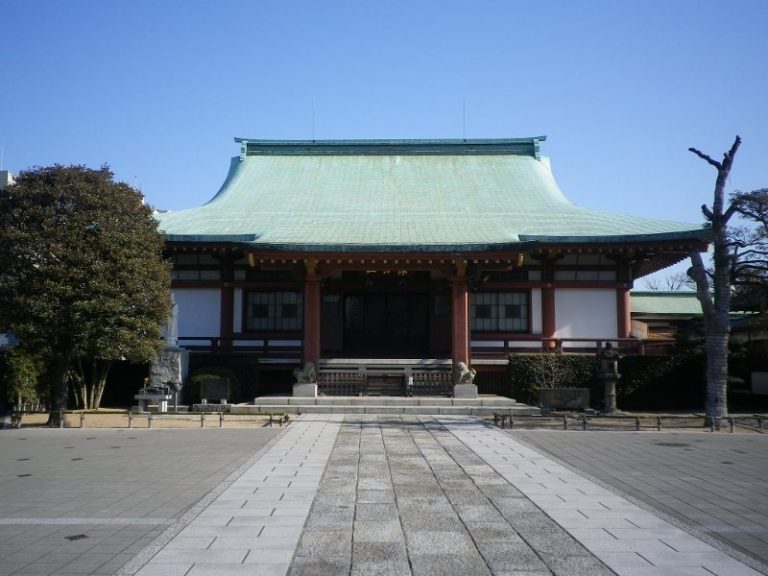
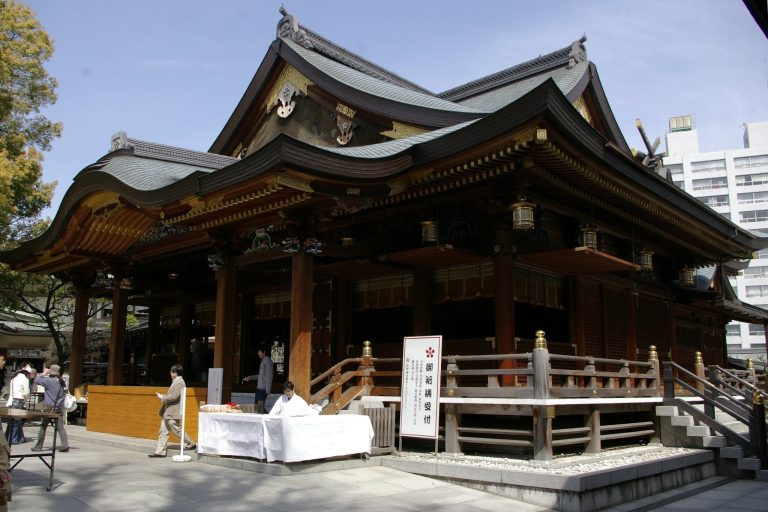
The honden, or main sanctuary, is built in shinmei-zukuri, a Shinto style characterized by a relatively simple elevated timber sanctuary, straight lines, and a strong association with the Ise Shrine tradition. This architectural form is appropriate to the shrine’s dedication to Amaterasu and its former name, Komagome Shinmei-gu.
Approach and grounds
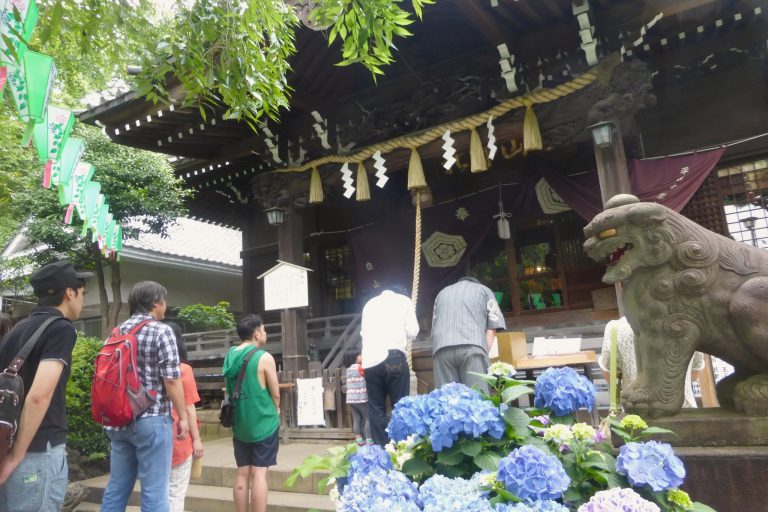
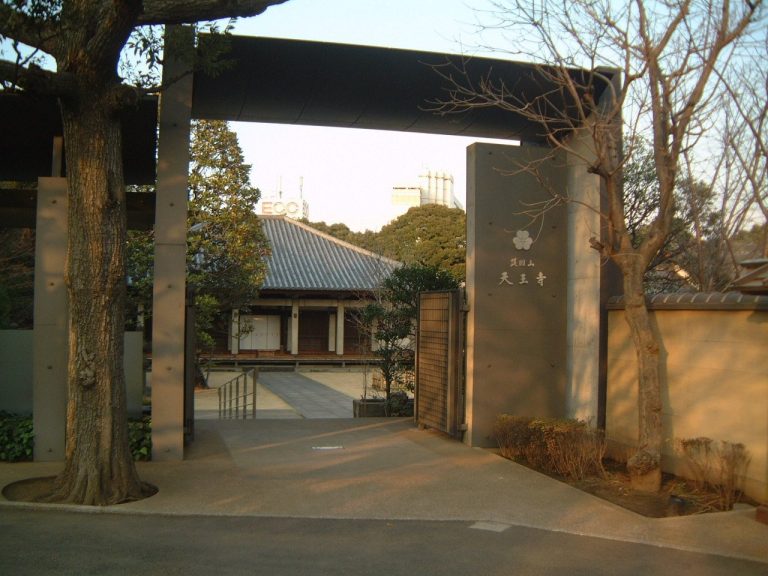
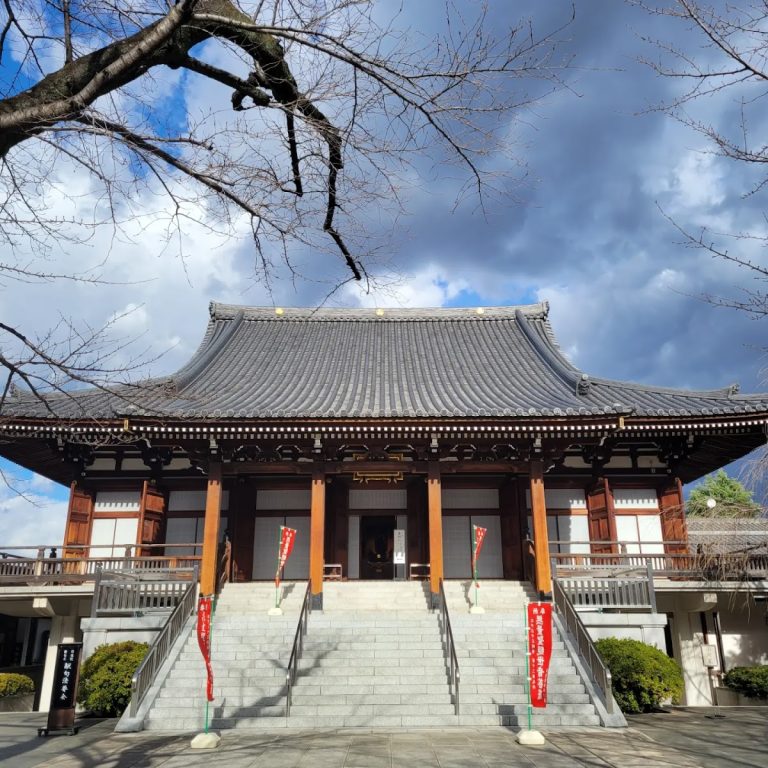
The precinct includes a worship hall, a stone-paved approach, and a large torii. Trees and planted areas form part of the grounds, which became densely green and quiet after the postwar rebuilding and landscaping. These features belong to the physical arrangement established through the reconstruction and subsequent planting.
Subsidiary shrines
Chinka Inari Shrine
Chinka Inari Shrine stands within the main precinct and enshrines Uka-no-Mitama-no-Mikoto. Inari is associated especially with rice, agriculture, food, and prosperity, while Uka-no-Mitama is connected with grain and food.
Three-Shrine Joint Sanctuary
A Three-Shrine Joint Sanctuary combines Sakaki Shrine, Suga Shrine, and Togakushi Atsuta Shrine. Sakaki Shrine is dedicated to Omodaru-no-Kami and Ayakashikone-no-Kami. Suga Shrine enshrines Susanoo-no-Mikoto, a major kami associated with storms, the sea, and heroic myths. Togakushi Atsuta Shrine is dedicated to Ame-no-Tajikarao-no-Mikoto and Yamato Takeru-no-Mikoto. Ame-no-Tajikarao is known in mythology for opening the rock cave where Amaterasu had hidden, while Yamato Takeru is a legendary heroic prince in early Japanese tradition.
Ohayashi Inari Shrine
Ohayashi Inari Shrine is a subsidiary shrine outside the main precinct. It also enshrines Uka-no-Mitama-no-Mikoto, extending the shrine’s connections with the Inari tradition beyond the central grounds.