Onrin-ji Temple: A Rinzai Zen Temple in Japan


Site at a Glance
- Rating
- 4.3
- Popularity
- Low
- Country
- Japan
- Primary era
- Unclassified
- External website
- Open
- Eras represented
- Unclassified
- Civilizations
- Unclassified
- Site type
- Religious
- Remains
- Monastery
On this page6 sections
History
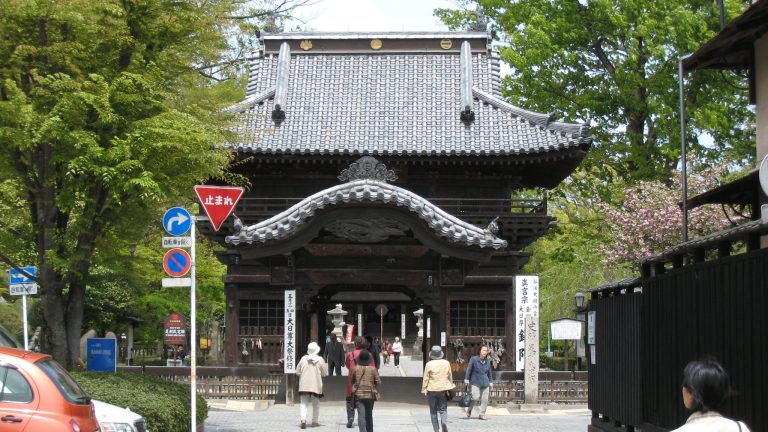
Onrin-ji Temple is a Rinzai Zen temple in Japan, founded in 1353 by a monk and affiliated with Kenchoji, the head temple of its branch in Kamakura. Rinzai is a major Zen tradition centered on disciplined meditation, religious training, and instruction between teacher and student. The temple’s mountain name is Toko-zan, and its principal image is Yakushi Rurikō Nyorai, the Medicine Buddha, a Buddhist figure associated with healing and relief from suffering.
Foundation and Revival
After its foundation, Onrin-ji ceased to function. Another monk revived the temple in 1395, establishing the later phase of its religious continuity. Its connection with the Kenchoji branch places it within the institutional structure of Rinzai Buddhism linked to Kenchoji.
The Oura Seven Lucky Gods Tradition
Onrin-ji forms part of the Oura Seven Lucky Gods pilgrimage, a devotional circuit connecting places associated with the Seven Lucky Gods, and represents Benzaiten. Benzaiten is a Buddhist and Japanese religious deity associated with music, eloquence, learning, and good fortune.
The associated Floating Island Benzaiten Shrine projects into Lake Tatara, while its Benzaiten image is normally kept at Onrin-ji. During the shrine festivals on May 5 and the first Sunday of November, the image is carried from the temple to the shrine, publicly displayed, and ritually prayed over by the temple’s abbot. The abbot identified in this tradition is the temple’s twenty-second abbot.
Remains
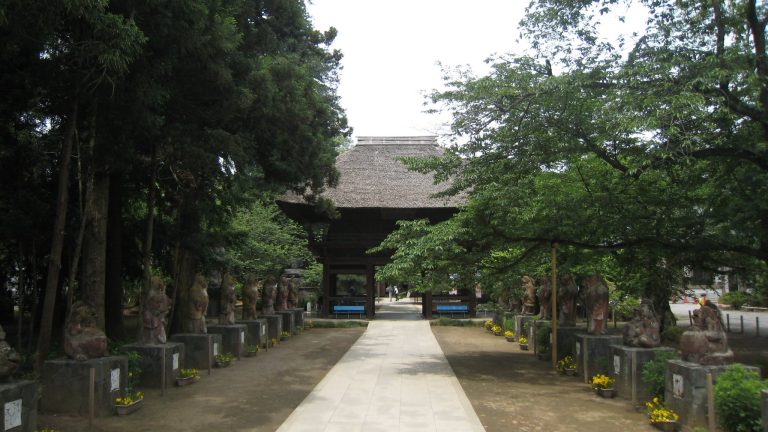
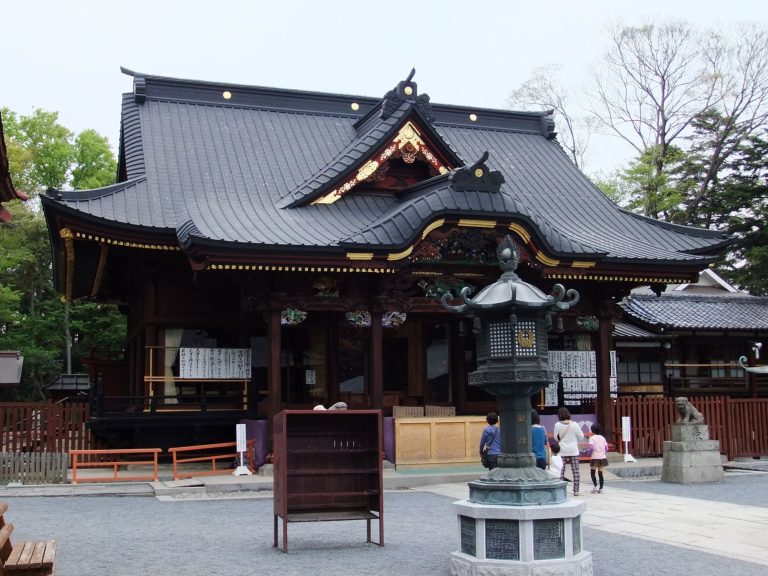
The temple grounds contain a main hall with a hojo-style plan, along with several Buddhist images and two large trees. A hojo is a formal Japanese temple-building arrangement historically associated with an abbot’s residence and later used for principal temple halls.
Main Hall and Sacred Images
As of 2016, the main hall followed a hojo-style plan. Its principal image, Yakushi Rurikō Nyorai, is a hidden sacred image kept inside a Buddhist shrine cabinet. It is publicly displayed once every 60 years. The temple crest is Mitsu-uroko, the three-scale emblem associated with the Hojo family.
Other images on the grounds include Jizo Bodhisattva, a Buddhist savior figure associated particularly with travelers, children, and the dead. The grounds also contain Mizuko Kannon, connected with memorial rites for deceased or unborn children, and the image known as the Umbilical-Cord Kannon. Kannon is the bodhisattva of compassion.
Natural Monuments
A large zelkova and a large ginkgo stand within the temple grounds. Both trees are designated as natural monuments by Oura Town.