Kanayama Castle: A Sengoku-Period Hilltop Fortress in Japan


Site at a Glance
- Rating
- 4.3
- Popularity
- Medium
- Country
- Japan
- Primary era
- Medieval
- External website
- Open
- Eras represented
- Medieval
- Civilizations
- Ashikaga shogunate
- Site type
- Military
- Remains
- Castle
On this page8 sections
History
Kanayama Castle is a Sengoku-period hilltop castle in Japan, built in 1469 by Iwamatsu Iezumi of the local Iwamatsu clan. Also known as Ōta Kanayama Castle and Nitta Kanayama Castle, it occupied Mount Kanayama and became an important fortress during the era of prolonged political fragmentation and warfare that affected Japan in the fifteenth and sixteenth centuries.
Foundation and Yura expansion
In 1528, the Iwamatsu retainer Yokose Narishige seized the castle and overthrew his overlord. His family later took the name Yura, and the Yura clan rebuilt Kanayama on a large scale while extending its influence across Kōzuke Province. The castle thus developed from a local stronghold into the principal fortified base of a powerful regional clan.
Sieges and Hōjō control
The Yura clan first allied with Uesugi Kenshin, a major warlord of the Sengoku period, but transferred its allegiance to the Hōjō clan in 1566. Kenshin ordered the Satake clan to attack Kanayama in 1574 and took part in the siege, yet the castle resisted. It also withstood attacks led by Takeda Katsuyori in 1580 and Satake Yoshishige in 1583.
In 1584, Yura Kunishige and his brother Nagao Akinaga were seized during a visit to Odawara Castle to pay their respects to the Hōjō. The Hōjō then launched a surprise attack on Kanayama. Their mother, Akai Teruko, commanded the defense at the age of 71, leading approximately 3,000 remaining soldiers for more than 15 months. She eventually surrendered on the condition that her captured sons would be returned.
Capture, abandonment, and later interpretation
The Hōjō held Kanayama for only a few years. Maeda Toshiie captured it in 1590 during Toyotomi Hideyoshi’s campaign against the Hōjō. The castle was abandoned and demolished by 1591, after which it was never used again.
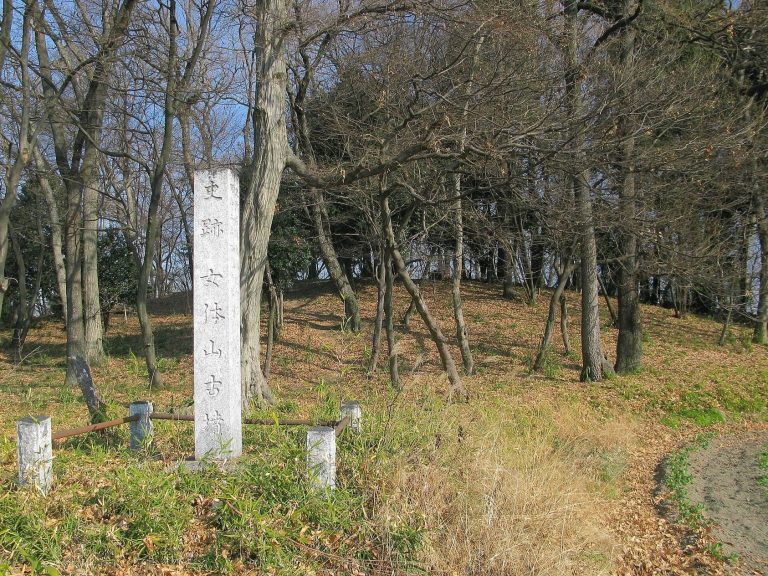
Archaeological and restoration work carried out between 1961 and 1965 overturned the long-held belief that Kanayama’s tenshu, the castle’s principal tower or keep, had been moved to Inuyama Castle by Ishikawa Mitsuyoshi in 1559. The work included dismantling Inuyama Castle’s tenshu. Kanayama Castle has been protected as a National Historic Site of Japan since 1990. It is also identified as one of the seven famous castles of the Kantō region and was included among Japan’s Top 100 Castles by the Japan Castle Foundation in 2006. That year, Ōta appointed architect Kengo Kuma to design a cultural center and museum dedicated to the castle.
Remains
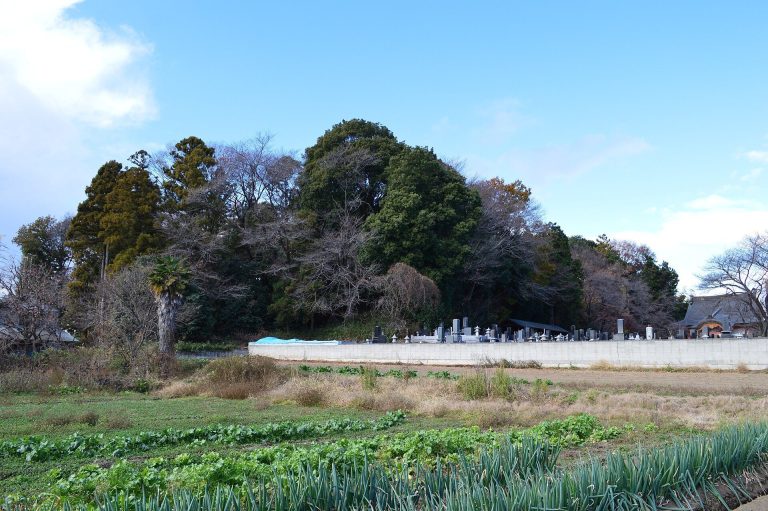
Kanayama Castle occupied the summit of Mount Kanayama, a hill north of central Ōta on the northern edge of the Kantō Plain. The hill rises to approximately 200 to 235 meters, with the Tone and Watarase rivers on either side. Its position commanded the corridor between the eastern provinces and the northwestern Kantō region. The castle spread across several hilltop enclosures, with the inner bailey, the most strongly defended central enclosure, at the highest point.
Enclosures and defensive works
Clay ramparts and dry moats, which are moats without standing water, protected the castle’s enclosures. The main area extended for roughly one kilometer, while the complete fortified area covered approximately three square kilometers. Secondary enclosures were joined by gates and stone walls, whose extensive use was unusual for a castle of this location and period. Narrow, winding approach roads made movement difficult and were arranged to confuse attackers entering the inner courts, where defenders could strike from several directions.
Main gate and water features
A small valley below the inner bailey was fortified with stone walls. This area served as the main gate zone and contained the principal residence of the Yura lords. A surviving round pond there belonged to a Japanese garden that formerly occupied the site. Two other ponds symbolized the sun and moon and supplied drinking water while also serving prayers for rain or victory in battle.
Restored remains and museum buildings
The castle survives as ruins, with portions of its remains restored. A local museum occupies the site. The cultural center and museum designed by Kengo Kuma use a stone-textured structure formed from two types of patterns, with concrete interiors.