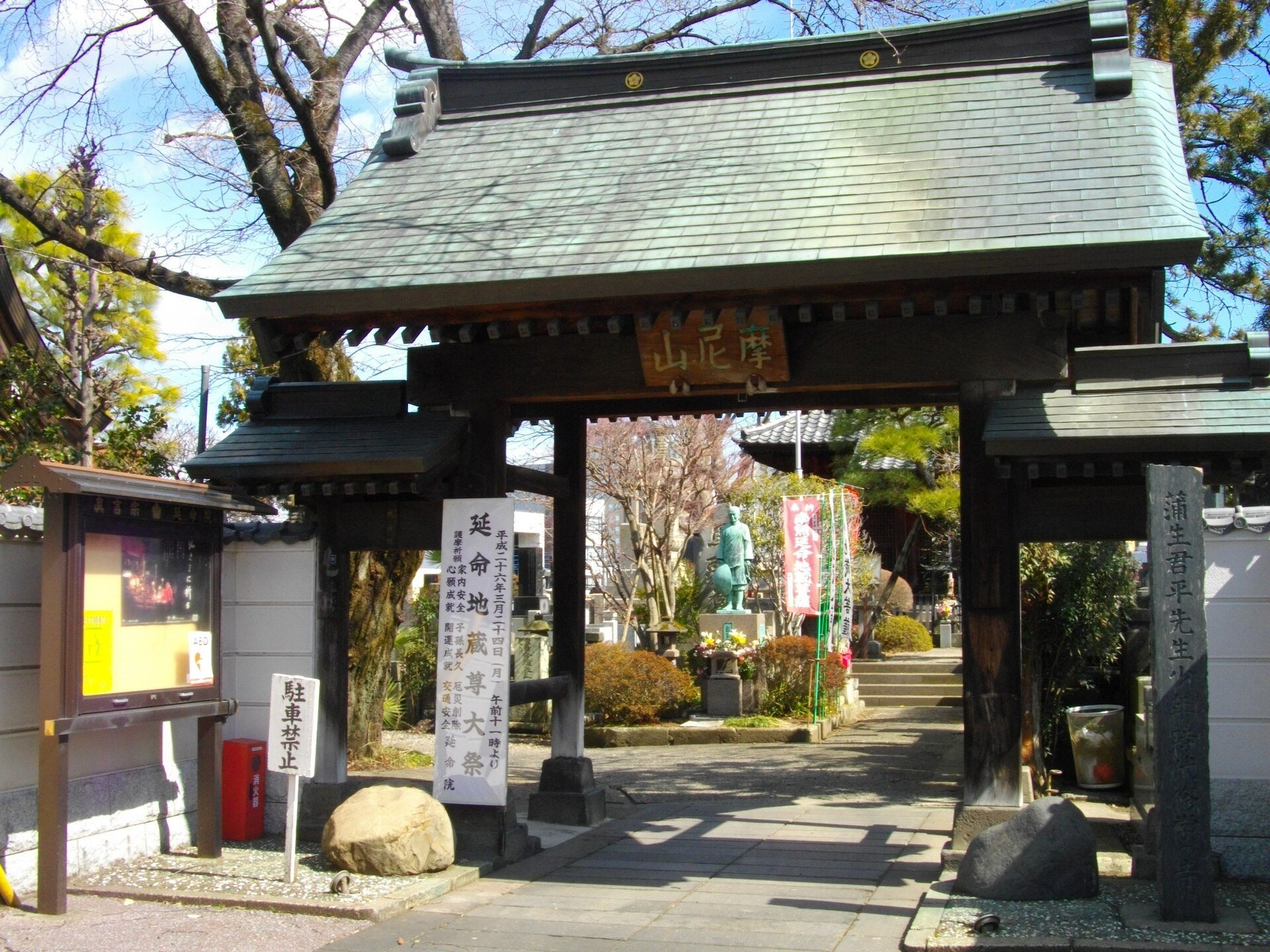
Enmei-in Temple: A Shingon Buddhist Temple in Utsunomiya, Japan
Site at a Glance
- Rating
- 4.3
- Popularity
- Very Low
- Country
- Japan
- Primary era
- Early Modern
- Eras represented
- Early Modern
- Civilizations
- Tokugawa
- Site type
- Religious
- Remains
- Temple
On this page11 sections
History
Enmei-in Temple, formally Manizan Hōshu-ji Enmei-in, is a Shingon Buddhist temple in Utsunomiya, Japan, founded according to tradition in 1063. Its principal object of worship is Jizo Bosatsu, a bodhisattva associated with protecting living beings, travelers, children, and the dead. The temple belongs to the Chizan branch of Shingon, an esoteric Buddhist tradition established in Japan by Kūkai. Its foundation is traditionally attributed to Fujiwara Sōen.
Foundation and Buddhist traditions
The foundation tradition states that Fujiwara Sōen brought a standing Enmei Jizo from Mount Hiei and established the Tendai Buddhist temple Hōshaku-ji within Utsunomiya Castle. Tendai was a major Japanese Buddhist school historically centered on Mount Hiei. The image, whose name refers to longevity or the prolongation of life, is traditionally attributed to the Heian-period sculptor Jōchō and associated with the warrior Minamoto no Yoshiie as his personal Buddhist image.
In 1504, Ryōhan, a monk from Daigoji in Yamashiro Province, passed through the area and built a temple and Jizo Hall. He converted the institution to Shingon Buddhism and gave it the name Hōshu-ji Enmei-in. In 1620, Honda Masazumi moved the temple from Utsunomiya Castle to its present site, then known as Nishihara, during renovations to the castle.
Edo-period development
The present Jizo Hall was built in 1734, during the Kyōhō period. Around it, the temple compound developed with a guest hall, priests’ quarters, a bell tower, and a Twenty-Third-Night Hall, a building associated with a Buddhist observance held on the twenty-third night of the lunar month.
A fire in Utsunomiya in 1773 destroyed some of the temple buildings. The young Gamō Kunpei, later known as an Edo-period scholar and thinker of National Learning, studied at Enmei-in in 1774. A later tradition credits the Enmei Jizo with protecting the Jizo Hall during the 1773 and 1832 fires. In this account, the deity appeared as a small monk, climbed onto the roof, and brushed falling sparks aside.
War, rebuilding, and remembrance
Fighting during the Battle of Utsunomiya Castle, part of the Boshin War from April 19 to 23, 1868, destroyed many of the temple’s buildings. The main hall and priests’ quarters were rebuilt in 1927. The protective tradition surrounding the Enmei Jizo also associates the image with the castle battle and with the Utsunomiya air raid of July 12, 1945.
Enmei-in has a connection with the printmaker Kawakami Sumio, who sometimes visited the temple and gave illustrated talks about his work to pupils of the resident priest. After his death on September 1, 1972, the temple began holding the Yōtōki memorial observance each year on that date. The standing Jizo image was repaired in 1982. The temple and its associated cultural properties include prefecturally designated works and a natural monument, while several other properties are designated by Utsunomiya City.
Remains
Enmei-in’s surviving complex includes the Jizo Hall, main hall, guest hall, priests’ quarters, bell tower, and Twenty-Third-Night Hall. The Jizo Hall is the principal surviving historic structure described at the temple. Its wooden construction, associated devotional image, festival painting, and old Japanese horse chestnut connect the physical site with its religious and cultural history.
Jizo Hall and devotional image
Jizo Hall
Built in 1734, the Jizo Hall is a single-story wooden building with three bays. Its foundations use Ōya stone. The roof was originally a double roof of the irimoya type, covered with stone, but it is now tiled. Bracket complexes and carved transoms are among its notable features. The hall is attributed to Nagano Man’emon, a temple carpenter from Tanobe Village in Haga District, an area now corresponding to Ichikai or Motegi.
Utsunomiya recognizes the Jizo Hall as probably the oldest wooden building in the city. Building records, however, place it approximately 80 to 100 years later than the gate of Hōonji. The hall therefore remains important both for its age and for the evidence it provides of the city’s historic Buddhist architecture.
Standing Jizo
A wooden standing Jizo is enshrined in the hall. The sculpture is gilt and uses yosegi-zukuri, a technique in which separately carved wooden blocks are assembled to form the figure. It is generally dated to the Muromachi period and shows the stylistic influence of Kaikei, a leading sculptor of the Kamakura period. The image was repaired in 1982 and is designated by Tochigi Prefecture.
Art and natural monument
Festival painting
The Enmei-in Jizo Festival Picture was made by Kikuchi Aizan. It depicts the festival held at the Jizo Hall on April 29, 1864, corresponding to the twenty-fourth day of the third month in the older calendar. The painting preserves details of the customs associated with the period’s festival and is designated by Utsunomiya City.
Japanese horse chestnut
The Enmei-in Japanese horse chestnut is regarded as approximately 350 years old. It stands about 18 meters high and has a trunk circumference of approximately 3.4 meters. The tree is designated a natural monument by Utsunomiya City and was selected in 1989 for the “100 Famous Trees of Tochigi” list.