Yuzuruha Shrine: A Kumano Shrine in Kobe


Site at a Glance
- Rating
- 4.2
- Popularity
- Medium
- Country
- Japan
- Primary era
- Medieval
- External website
- Open
- Eras represented
- Medieval, Modern
- Civilizations
- Unclassified
- Site type
- Religious
- Remains
- Sanctuary
On this page12 sections
History
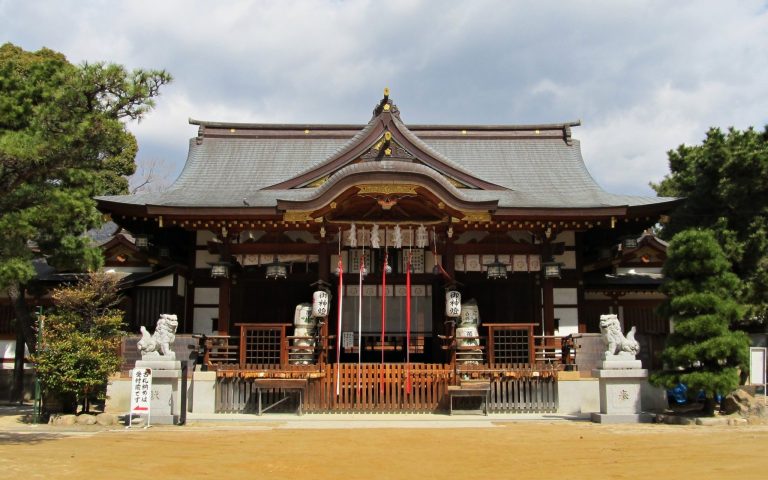
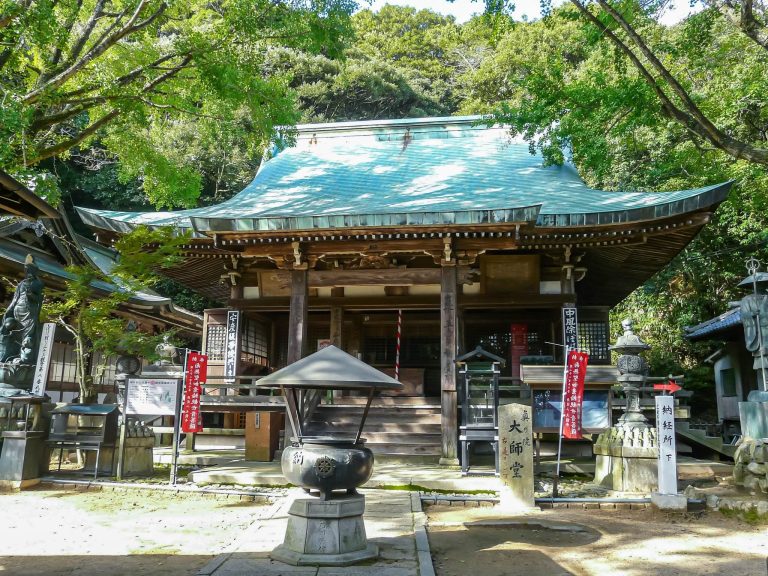
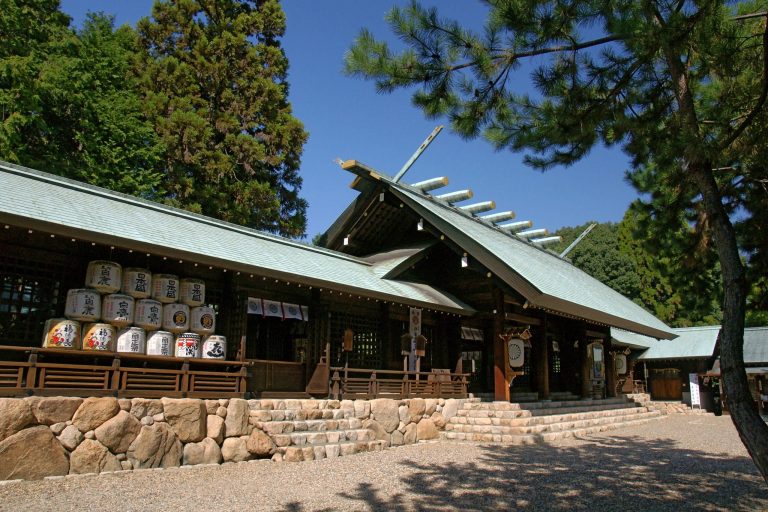
Yuzuruha Shrine is a Shinto shrine in Kobe, Japan, founded in 849 when shrine buildings were constructed and its enshrined deities were transferred to the site. Its main sanctuary follows the nagare-zukuri style, a form with a gracefully curved roof extending over the sanctuary entrance. The shrine formerly held the status of a village shrine and remains associated with the religious traditions of the Kumano region.
Origins and Kumano worship
A traditional account links the shrine to Empress Jingu, a legendary empress in early Japanese imperial tradition. During her return from a campaign in Korea, she is said to have learned that Prince Oshikuma-o had raised an army against her. According to the tradition, she deposited bows, arrows, and armor at this place before praying to the Kumano deities for victory. The mountain behind the shrine consequently became known as Mount Yuzuruha or Mount Muko, before the name Mount Rokko was later applied to it.
During the Enryaku period, from 782 to 805, the Yuzuruha Grove was designated as shrine territory. From the middle of the Heian period onward, devotion to the shrine grew as belief in the Kumano Three Mountains flourished. These sacred sites are Kumano Nachi Taisha, Kumano Hongu Taisha, and Kumano Hayatama Taisha. Yuzuruha Shrine enshrines the three principal Kumano deities, Izanami-no-Mikoto, Kotosakanowo-no-Mikoto, and Hayatama-no-Mikoto, collectively known as the Three Foundational Kumano Deities. Amaterasu-Okami and Susanoo-no-Mikoto are also enshrined as accompanying deities.
Nada brewing and community ties
From the seventeenth century, the shrine prospered as sake brewing expanded in the Nada region. Its religious community included sake brewers and shipping operators, and brewing companies have continued their association with the shrine. New Year observances include barrel sake donated by Kiku-Masamune, Hakutsuru, and Kenbishi, while rites for prayers related to brewing are also held. A subsidiary shrine dedicated to a deity from Matsuo Taisha was established within the grounds.
Earthquake, sport, and contemporary devotion
The Great Hanshin-Awaji Earthquake struck the Kobe region on January 17, 1995, causing extensive destruction and loss of life. Yuzuruha Shrine was seriously affected. Its administrative office, water-ablution pavilion, and votive-tablet hall were completely destroyed, and the capstone of a torii gate fell. Members of the shrine community were killed or injured, and a memorial monument was erected at the entrance to the approach.
In November 1995, contemporary artist Mariyo Yagi proposed Kobe Roots, a public artwork created for earthquake remembrance. About 10,000 used garments collected throughout Japan were bound into rope with the participation of approximately 500 citizens. The rope was erected before the worship hall and burned during an earthquake-reconstruction prayer ceremony on January 17, 1996, one year after the disaster. About 100 Shinto priests and approximately 2,000 worshippers attended.
The shrine’s Yatagarasu, a three-legged crow traditionally regarded as a guide or divine messenger, has contributed to its association with sport. This connection is reinforced by the nearby Mikage Normal School, where Japan’s first soccer team was organized. The women’s soccer club INAC Kobe Leonessa performs a victory prayer at the shrine before the season.
Figure skater Yuzuru Hanyu visited in July 2011 after learning of the shrine through a protective amulet given by a fan. Large numbers of votive tablets were later dedicated with prayers for his success at the Sochi Olympics. Attendance is said to have increased twentyfold immediately after he won the gold medal. The shrine subsequently became known as a sacred place for Hanyu’s supporters, and nearly 70 percent of its votive tablets were said to express support for him and prayers for victory.
Remains
Yuzuruha Shrine is organized around a main sanctuary and worship hall, with administrative and ritual buildings forming part of the wider complex. The grounds also contain a torii gate, a granite soccer ball connected with the shrine’s Yatagarasu symbolism, and memorial features associated with the 1995 earthquake.
Sanctuary and shrine grounds
Main sanctuary
The main sanctuary is built in the nagare-zukuri style. Its defining feature is a gracefully curved, extended gabled roof that projects over the entrance to the sanctuary, giving the principal sacred building its characteristic form.
Worship and supporting buildings
The complex includes a worship hall, an administrative office, a water-ablution pavilion, and a votive-tablet hall. These buildings support worship, ritual preparation, shrine administration, and the presentation of prayers on votive tablets. A torii gate marks the approach to the sacred grounds.
Granite soccer ball
A granite soccer ball stands on the grounds in connection with Yatagarasu and the shrine’s association with soccer. It gives a physical form to the sporting tradition that developed around the shrine’s symbolism and local institutional connections.
Earthquake memorials
Memorial monument
A memorial monument to victims of the 1995 earthquake stands at the entrance to the shrine approach. It commemorates members of the shrine community and others affected by the disaster.
Kobe Roots
Kobe Roots took the form of a vertically erected rope approximately 1 meter in diameter and 8 meters high, positioned in front of the worship hall. Participants made it by binding together approximately 10,000 used garments collected from throughout Japan. The work was later burned at the earthquake-reconstruction prayer ceremony held at the shrine.