Ōtaki Ontake Shrine: A Mountain-Worship Shrine on Mount Kiso Ontake


Site at a Glance
- Rating
- 4.5
- Popularity
- Low
- Country
- Japan
- Primary era
- Early Modern
- External website
- Open
- Eras represented
- Medieval, Early Modern
- Civilizations
- Ashikaga shogunate, Tokugawa
- Site type
- Religious
- Remains
- Sanctuary
On this page11 sections
History
Ōtaki Ontake Shrine is a Japanese mountain-worship shrine in Japan, extending along the Ōtaki-guchi route of Mount Kiso Ontake from a foothill sanctuary to a summit sanctuary. Its foundation tradition reaches back to 702, when a governor of Shinano established the summit sanctuary, or Okusha, on the mountain. Mount Ontake is associated with pilgrimage, ascetic practice, and the religious tradition centered on its worship.
Early foundations and imperial associations
In 774, another governor of Shinano climbed Mount Kiso Ontake on the order of Emperor Kōnin, who ruled Japan from 770 to 781, and prayed for the removal of an epidemic. In 925, a court official with the title of lesser general ascended the mountain and rebuilt the Okusha sanctuary. An envoy of Retired Emperor Go-Shirakawa, an important imperial figure of the late Heian period, climbed Ontake and worshipped there in 1161.
The foothill sanctuary, known as the Satomiya, was rebuilt in 1484 and was recorded as having been revived again in 1503. In 1664, Yamamura Yoshitoyo, the Kiso magistrate, rebuilt its shrine buildings. The shrine formerly held the rank of prefectural shrine.
Routes, ascetic practice, and Ontakekyō
The mountain’s pilgrimage tradition expanded through the opening of new routes. The ascetic Kakumei opened the Kurozawa-guchi route in 1782. In 1792, the religious ascetic Fukan opened the Ōtaki-guchi route, formed local confraternities, and encouraged ascents involving light ritual abstinence and purification. A gyōja, or ascetic, was a religious practitioner who undertook mountain journeys and ritual discipline.
These activities helped spread Ontake confraternities and mountain worship throughout Japan. Ontakekyō is a Japanese religious movement focused on worship and pilgrimage at Mount Ontake, while its confraternities organized collective religious practice and journeys. Followers of Ontakekyō continue to make pilgrimages to Ōtaki Ontake Shrine. The principal deities worshipped at both the Satomiya and the Okusha are Kunitokotachi-no-Mikoto, Ōnamuchi-no-Mikoto, and Sukunahikona-no-Mikoto, Shinto deities associated respectively with the sacred tradition of the mountain, the land and its governance, and healing and knowledge.
Remains
Shrines along the Ōtaki-guchi route
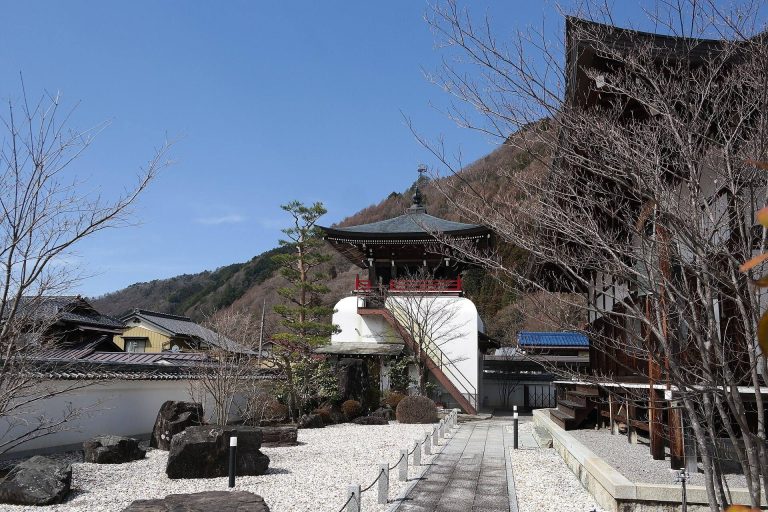
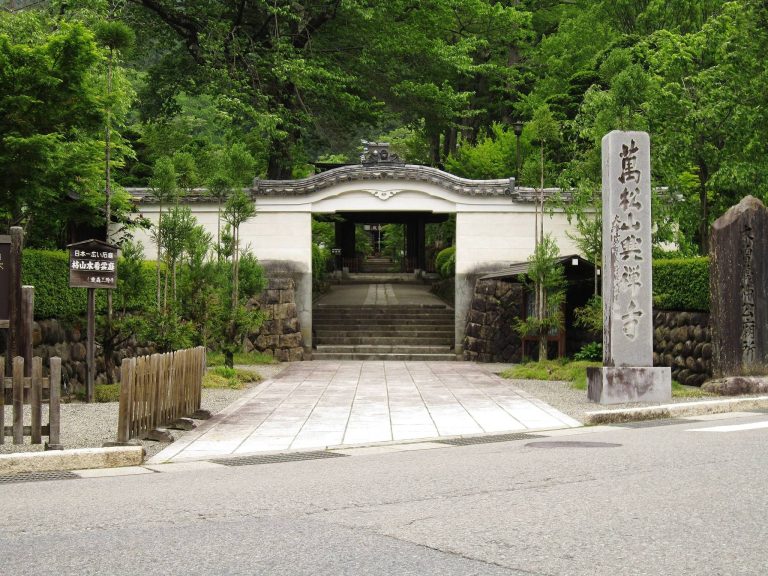
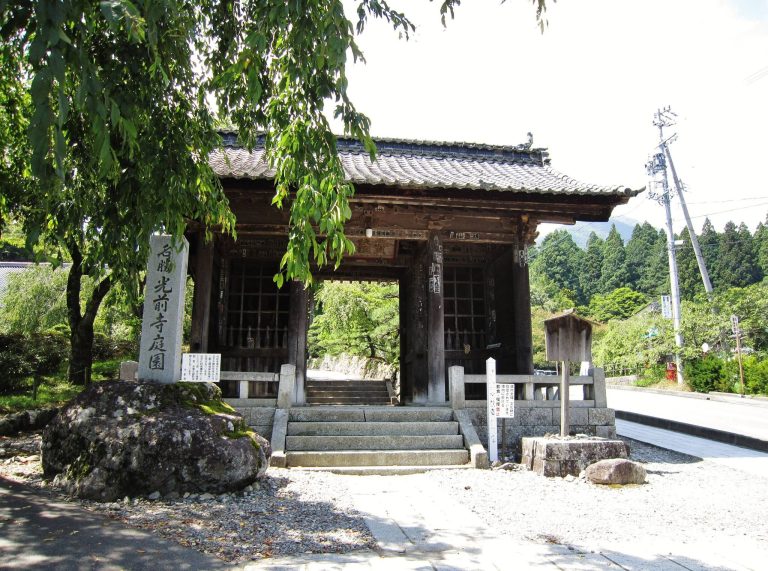
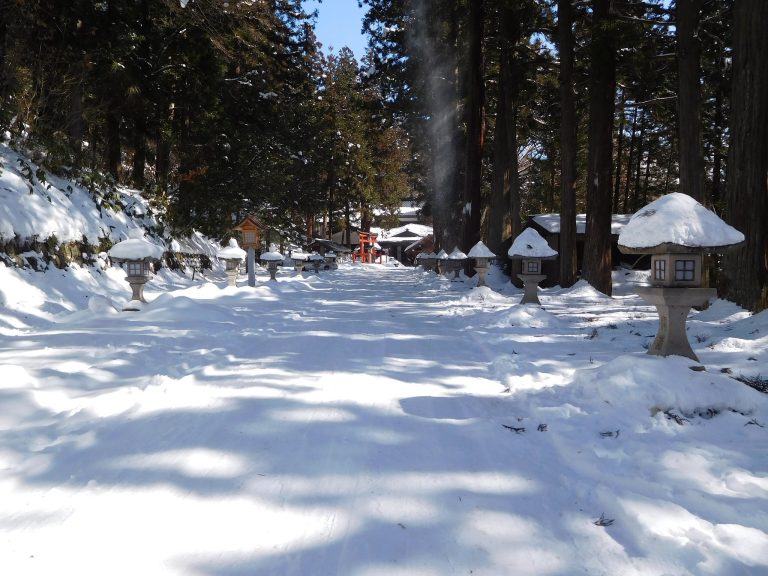
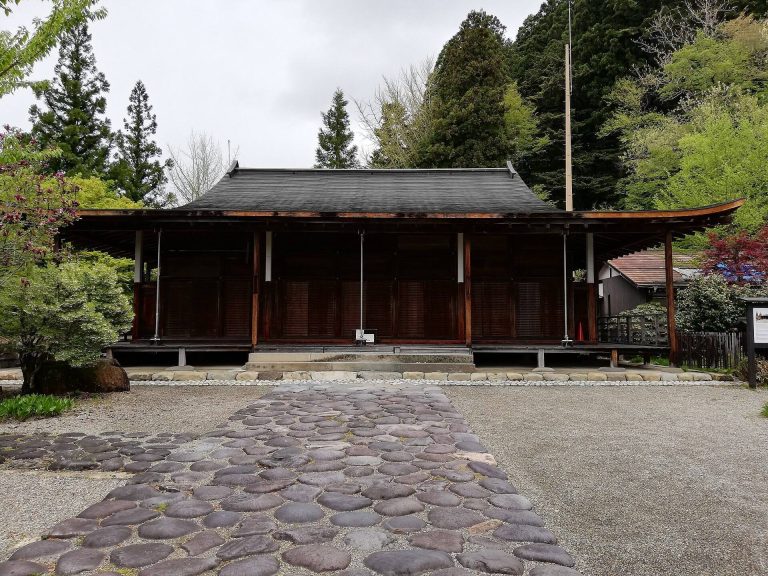
The shrine complex follows the southern Ōtaki-guchi climbing route on Mount Kiso Ontake. Its lower sanctuary, the Satomiya, stands at the mountain’s first station in Ōtaki Village, Kiso District, Nagano Prefecture. Also called the Main Shrine, Wakamiya, and Iwato Gongen, it contains a main sanctuary and a worship hall.
Jūnidaigongen Sanctuary
Below the fourth station stands the Jūnidaigongen sanctuary. It is dedicated to Konohanasakuyahime-no-Mikoto, a Shinto deity.
Hakkaisan Shrine
Hakkaisan Shrine occupies the mountain’s fifth station and is dedicated to Kunisatsuchi-no-Mikoto.
Mikasayama Shrine
Mikasayama Shrine stands at the seventh station on the summit of Mount Mikasa. Its deity is Toyokumunu-no-Mikoto.
Tanohara Daikokuten
Also located at the seventh station, Tanohara Daikokuten is dedicated to Ōkuninushi-no-Mikoto, a name also used for Ōnamuchi.
Summit sanctuary
Okusha
The Okusha stands at the summit of the Ōtaki-guchi route on Mount Kiso Ontake. It is approximately 7 kilometers from the Satomiya and is dedicated to Kunitokotachi-no-Mikoto, Ōnamuchi-no-Mikoto, and Sukunahikona-no-Mikoto. Together with the Satomiya, it forms the principal upper and lower sanctuaries of Ōtaki Ontake Shrine.