Kitaguchi Hongū Fuji Sengen Shrine: Northern Gateway to Mount Fuji Pilgrimage


Site at a Glance
- Rating
- 4.6
- Popularity
- Medium
- Country
- Japan
- Primary era
- Early Modern
- External website
- Open
- Eras represented
- Medieval, Early Modern
- Civilizations
- Takeda, Tokugawa
- Site type
- Religious
- Remains
- Sanctuary
On this page11 sections
History
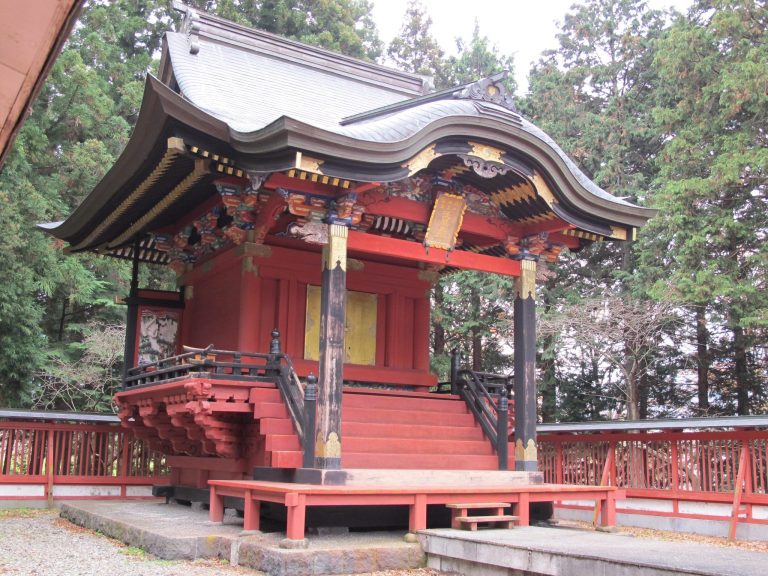
Kitaguchi Hongū Fuji Sengen Shrine is a Shinto shrine in Japan, in Fujiyoshida, whose principal main hall was built in 1615 during the early Edo period. It stands at the northern starting point of the Yoshida route to Mount Fuji and forms part of the Mount Fuji area within the UNESCO World Heritage property Fujisan, sacred place and source of artistic inspiration. The shrine is now a Beppyo Shrine, a shrine accorded special status within the Association of Shinto Shrines, and was formerly a prefectural shrine.
Origins and early development
Tradition places the shrine’s beginnings in the 40th year of Emperor Keiko’s reign, when Yamato Takeru, a legendary imperial prince associated with early military expeditions, passed through the region. He is said to have directed worshippers to approach Mount Fuji from the north and to have established a small shrine. In 788, Ki no Toyoniwa, the governor of Kai, built a sanctuary at the present location for the Asama deity, a divine tradition associated with Mount Fuji and volcanic power. Yamato Takeru’s spirit was enshrined at Otsuka Hill within the precinct.
The shrine was enlarged and rebuilt in successive stages. Its present principal main hall was constructed in 1615 with the patronage of Torii Naritsugu, lord of Tanigura Castle, and the buildings were repaired in 1688. The shrine also received protection from the Oyamada clan, the medieval lords of the Gunai region.
Suwa Shrine was originally the local ujigami shrine, meaning the shrine of a community’s tutelary deity. Its foundation date is unknown, but the ancient Suwa Grove and records concerning a Suwa shrine priest indicate that a Suwa shrine may have occupied the site before the Asama deity was enshrined there. During the Meiji Restoration, Suwa Shrine became an auxiliary shrine within Kitaguchi Hongū, a subordinate shrine in the organization of the larger shrine.
Fuji pilgrimage and religious change
The shrine became a major center of Mount Fuji pilgrimage after the spread of Fuji-ko from the middle of the Edo period. These lay pilgrimage confraternities devoted to Mount Fuji relied on guides and lodging operators to organize journeys along the Yoshida route. Kamiyoshida adopted the movement early, and almost one hundred establishments serving pilgrims once stood around the shrine. Kitaguchi Hongū thus formed the northern starting point for an established religious ascent of the mountain.
The shrine’s religious identity changed over time. From the middle of the Edo period, the names Asama Daibosatsu and Fuji Asama Myojin became more prominent than Suwa Daimyojin. The Asama deity was traditionally believed to have been invited from Komuro Asama Shrine at the second station of the Yoshida route, now called Fuji Omuro Sengen Shrine. A pilgrimage map from 1680 called the present shrine Shimo-Asama. In 1814, the terms “Upper Asama” and “Lower Asama” referred respectively to Fuji Omuro Sengen Shrine and Kitaguchi Hongū, while Fujisan Shimomiya Komuro Shrine was called Shimo-no-miya Asama.
Modern usage often calls Kitaguchi Hongū Upper Asama and Fujisan Shimomiya Komuro Shrine Lower Asama. Originally, Kitaguchi Hongū drew the pilgrimage faith of Fuji-ko guides and pilgrims, while Fujisan Shimomiya Komuro Shrine served as the local tutelary shrine of the northern foothills, with worship focused on agriculture and community life. During the Meiji period, Kitaguchi Hongū received Kamiyoshida’s former parish territory and also became its local tutelary shrine. The two shrines consequently became associated with Kamiyoshida’s Upper Asama and Shimoyoshida’s Lower Asama.
Shishino Naka, who later founded Fusokyo, served both as a priest of this shrine and as chief priest of Fujisan Hongu Sengen Taisha. An adjacent original shrine of Fusokyo remains at Kitaguchi Hongū. Fusokyo is a modern religious movement centered on Mount Fuji pilgrimage, whose traditional route ascends the Yoshida trail from Kitaguchi Hongū to the summit and descends by the Fujinomiya route to Fujisan Hongu Sengen Taisha.
Suwa traditions and recorded associations
Records from the sixteenth century connect the precinct with changing policies concerning Mount Fuji worship. In 1548, Oyamada Nobuari ordered the priest of the Yoshida Suwa shrine to report any construction of a new sanctuary associated with Fuji rites. In 1561, Takeda Shingen, the powerful warlord of Kai, prohibited the felling of trees in Yoshida’s Suwa Grove. The Kai Chronicle also states that he built a Fuji Gongen sanctuary in that year. These records have been interpreted as evidence that Shingen’s sanctuary preceded the present shrine and that the Suwa shrine may have been the only shrine on the site before then.
The Fire-Quelling Festival, known as the Yoshida Fire Festival, is the annual festival of Suwa Shrine. The precinct is also associated with Fuji no Nikki, a travel diary written by the Edo-based scholar Kamo no Suetaka during his visit to the area in 1790.
Renaming and cultural protection
During the Meiji period, the shrine was renamed Fuji-san Kitaguchi Hongu Fujidake Shrine and later also used the name Asama Shrine. It adopted the present name in 1946. The east main hall received designation as an Important Cultural Property in 1907, while the west main hall and principal main hall received the same designation in 1953. In 2017, eight further buildings and one lantern were designated nationally as Important Cultural Properties, extending formal recognition across the historic precinct.
Remains
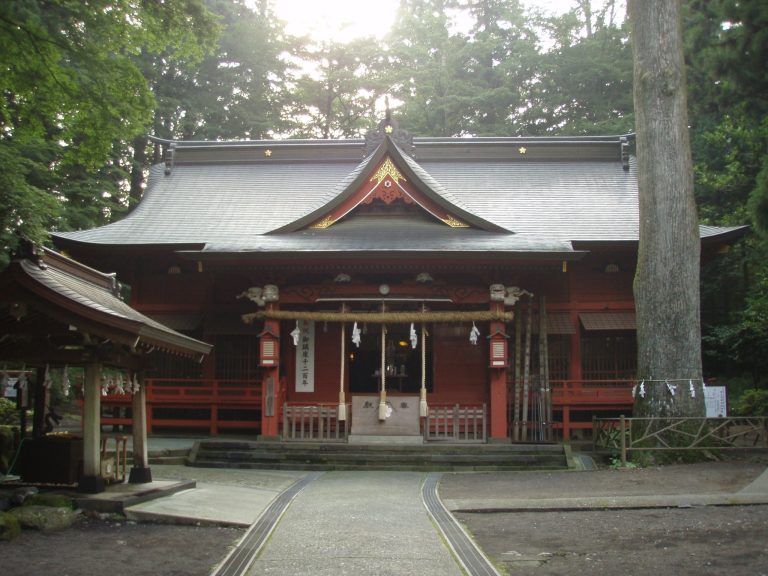
The shrine precinct occupies the northern beginning of the Yoshida route to Mount Fuji. Its surviving buildings include three main halls, worship and offering halls, a kagura hall for ritual music and dance, a purification pavilion for ceremonial cleansing, a guardian gate, subsidiary shrines, and the shrine office. Otsuka Hill lies within the precinct and is associated with the enshrinement of Yamato Takeru’s spirit.
Principal shrine buildings
Main halls and worship buildings
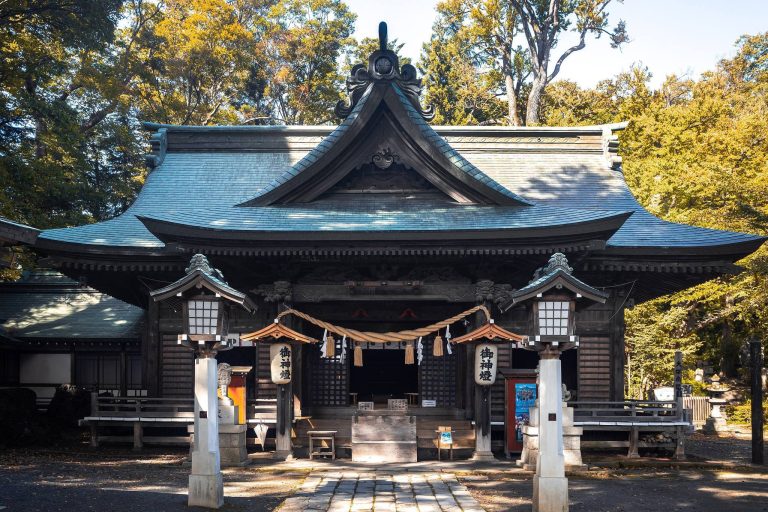
The principal main hall dates from 1615, while the east and west main halls form part of the surviving shrine complex. The worship hall and offering hall were built in 1733 through the patronage of Murakami Kosei, leader of the Murakami branch of the Edo Fuji-ko. That construction campaign also produced the kagura hall, purification pavilion, and guardian gate. It was the largest building project undertaken by the guild of carpenters serving the Gunai area, and the worship hall was the guild’s largest structure.
Subsidiary shrines and associated buildings
Other surviving structures include Ebisu Shrine with its openwork fence, Fukuji Hachiman Shrine, Suwa Shrine’s worship hall, and the shrine office. The purification pavilion preserves one ridge plaque, as does the guardian gate. Fukuji Hachiman Shrine preserves two ridge plaques, and the shrine office preserves one. A lantern is included as an attached object within the nationally designated group of buildings and objects.
Sacred trees
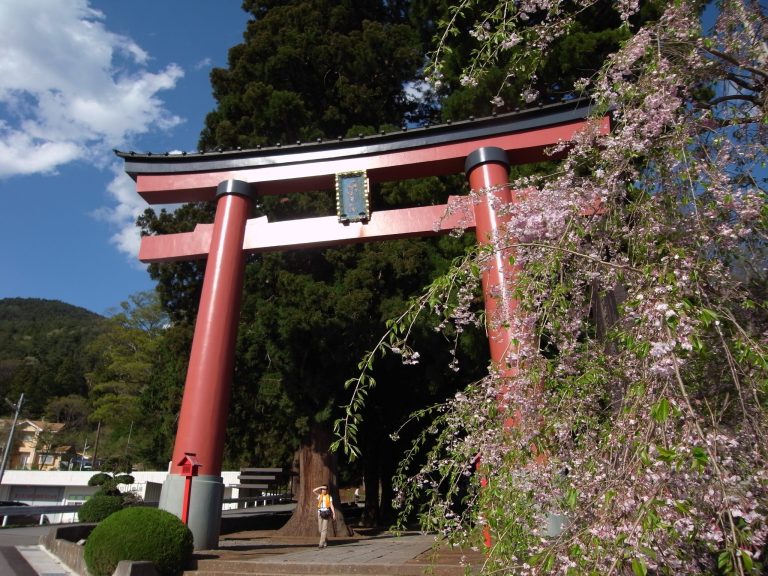
Two large sacred trees stand in front of the worship hall. On the left is Fuji Taro Cedar, estimated to be about one thousand years old. On the right is Fuji Meoto Hinoki, a Japanese cypress with two trunks. The trunks fuse at their base, divide about three metres above ground, and join again at approximately twelve metres. Behind and to the east of the worship hall stands Fuji Jiro Cedar, recognized as a locally important natural feature.
Paintings and votive objects
Five painted votive plaques are associated with the principal main hall. Two show camellias and bamboo shoots and were donated by Torii Naritsugu in 1618. Two others depict a decorated horse and pine with monkeys; Kano Tsunenobu painted them, and Akimoto Tajima-no-kami donated them in 1688. A fifth plaque shows a sacred horse against a golden background and was painted by Kano Dogen Naonobu before being donated by Toda Tadamasa in 1698. The group also includes a colored silk painting of Mount Fuji’s northern face.
Two wooden seated guardian figures date from 1520. One wears blue garments and the other red. They were made by Minbu Hokyo, a disciple of Hitachi Gobō of Gojo-Ōmiya in Kyoto, and retain their pedestals.