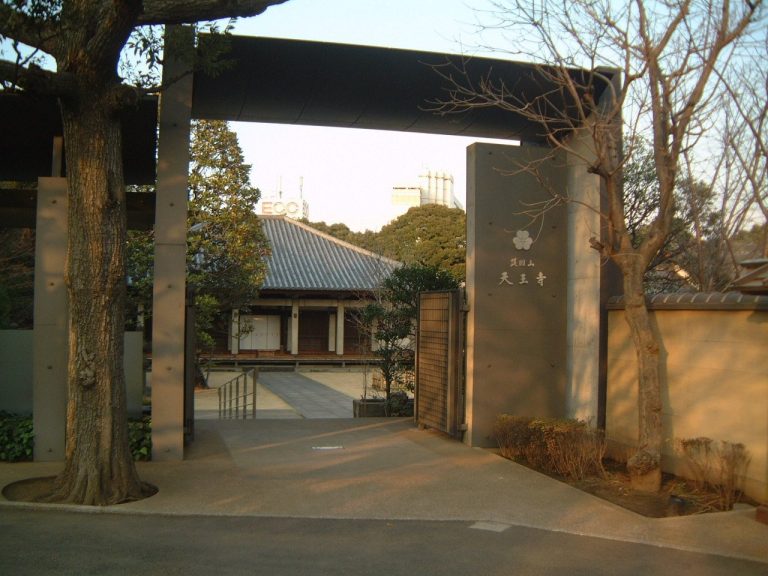
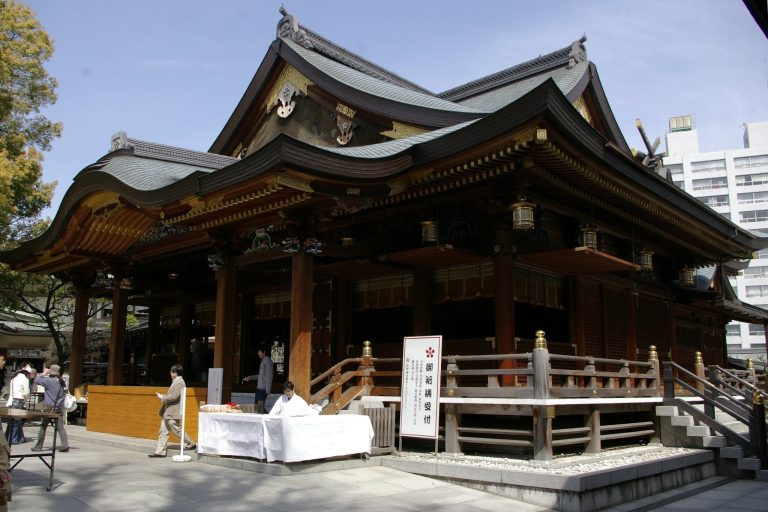
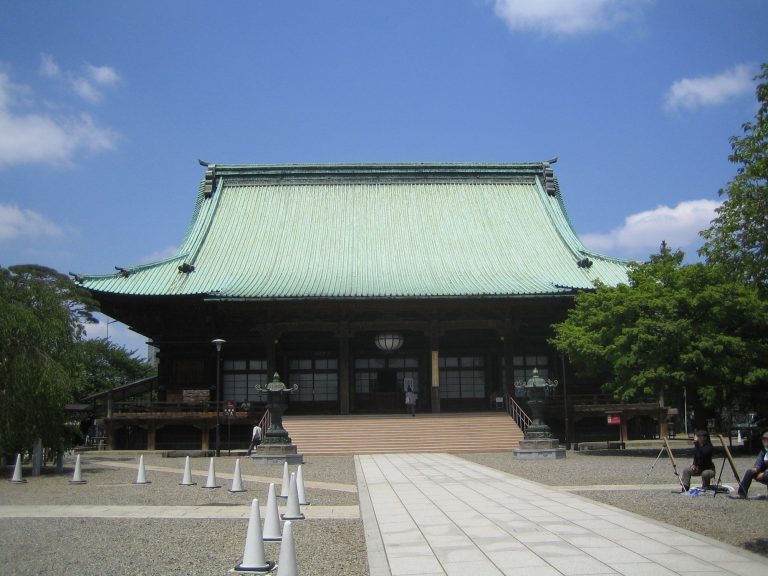
Kisshō-ji Temple: A Sōtō Buddhist Temple in Tokyo


Site at a Glance
- Rating
- 4.2
- Popularity
- Low
- Country
- Japan
- Primary era
- Early Modern
- External website
- Open
- Eras represented
- Early Modern
- Civilizations
- Tokugawa
- Site type
- Religious
- Remains
- Temple
On this page12 sections
History
Kisshō-ji Temple, formally Suwazan Kisshō-ji, is a Sōtō Buddhist temple in Tokyo, Japan, founded in 1458 during the Muromachi period by Ōta Dōkan. Dōkan, a fifteenth-century samurai, military leader, and castle builder associated with the early development of Edo Castle, invited the monk Seigan Shuyo to establish the temple within the castle’s western enclosure.
The foundation was linked to a gold seal bearing the characters “Kisshō,” reportedly discovered in a well near Wadakura. Dōkan regarded the find as an auspicious sign. The temple’s mountain name, Suwazan, recalls its earlier association with land belonging to Suwa Shrine.
From the Muromachi Period to the Edo Period
During the Sengoku period, an era of political fragmentation and warfare in Japan, the temple reportedly enshrined the mortuary tablet of Hōshun-in. She was the mother of Ashikaga Yoshiuji, the Koga kubō, an Ashikaga political leader based at Koga in the Kantō region, and the daughter of Hōjō Ujitsuna.
After Tokugawa Ieyasu entered the Kantō region, Kisshō-ji was moved to Surugadai. Ieyasu later established the Tokugawa shogunate after securing control over Japan at the end of the sixteenth century. The temple was destroyed in the Great Meireki Fire of 1657 and then relocated to its present site in Honkomagome. The name of Kichijō-ji in Musashino derives from the former temple-town, whose residents were moved along the Itsukaichi Highway after the fire.
Sendan-rin and Later Institutional History
In 1592, the temple precincts housed Sendan-rin, a Buddhist educational institution whose curriculum combined Buddhist studies with Chinese classical learning. The school expanded after its regulations were established by Manzan Dōhaku, a Sōtō monk. From the middle of the Edo period onward, Chinese learning received increasing emphasis, and Sendan-rin became a major center of Chinese studies alongside the shogunate institution Shōheikō.
Sendan-rin included many dormitories and study buildings and accommodated more than 1,000 scholar-monks at a time. Sons of hatamoto, direct retainers of the Tokugawa shogun, and temple retainers also attended its lectures. In 1905 the school was renamed Sōtō-shū University, and in 1925 it became Komazawa University.
Mortuary and Modern History
Kisshō-ji served as an Edo mortuary temple for several fudai daimyō, hereditary Tokugawa-affiliated lords, and hatamoto retainers. Some people who would ordinarily have been buried at family temples in their home domains were instead buried at Kisshō-ji for various reasons, including Matsumae Ujihiro.
Several grave areas, including that of the Shinjō family, later became unmaintained or ownerless and may be reorganized. After the Great Kantō Earthquake, many old graves of daimyō and hatamoto were discarded during cemetery reorganization. Members of a Nichiren-related religious group transported these and other old grave markers from temples around Komagome to Arigatayama in present-day Inagi, where they remain.
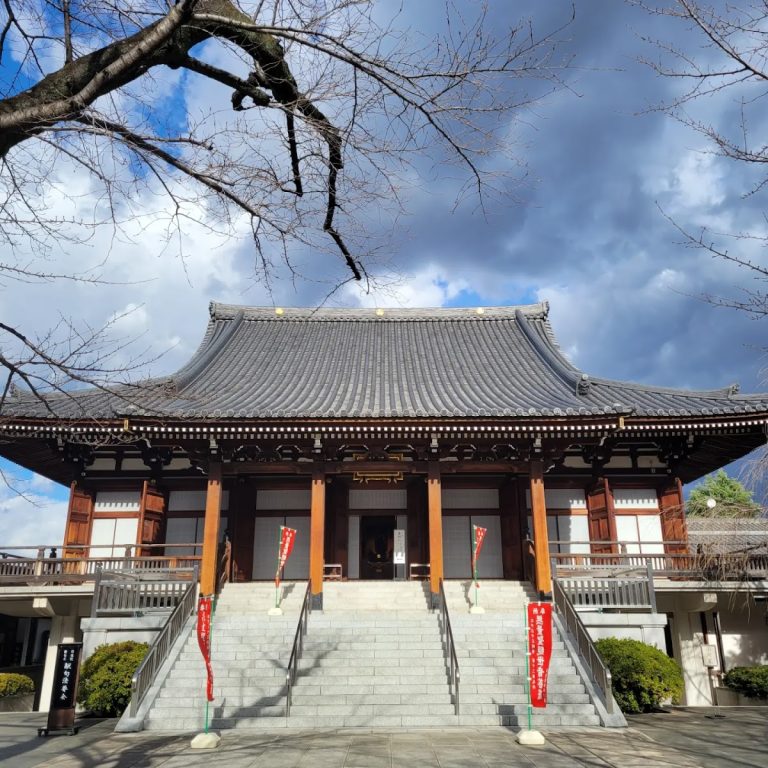
The temple buildings were destroyed in the Tokyo air raids, leaving the Sanmon gate and sutra repository. The complex was subsequently restored with a main hall, guest hall, kitchen and service building, and other structures. Kisshō-ji is affiliated with Eigen-ji in Gunma as a branch temple and with Saijō-ji in Kanagawa as a grand-branch temple in the next subordinate generation. Its principal image is Shakyamuni Buddha, the historical Buddha.
Remains
The surviving precinct combines early nineteenth-century buildings with a restored temple complex and cemetery areas. The Sanmon gate and sutra repository date from 1802 and 1804 respectively, while the rebuilt grounds contain the main hall, guest hall, kitchen and service building, together with other scattered structures.
Surviving Historic Buildings
Sanmon Gate
The Sanmon gate, the temple’s main entrance gate, was built in 1802. It survived the destruction of the wider complex during the Tokyo air raids and remains part of the present precinct.
Sutra Repository
The sutra repository was built in 1804. Like the Sanmon gate, it survived the wartime destruction that affected the other temple buildings and forms part of the historic fabric preserved at Kisshō-ji.
Restored Temple Buildings
The restored precinct includes a main hall, a guest hall, a kitchen and service building, and other buildings distributed around the grounds. These structures form the later architectural framework of the temple after the wartime destruction.
Educational and Cemetery Areas
Sendan-rin Complex
The former Sendan-rin complex occupied the temple precinct and contained numerous study dormitories and residential buildings. Dormitory heads were selected for their learning and conduct, while officers oversaw instruction and everyday life through collective deliberation. The arrangement reflected the institution’s dual role as a Buddhist school and a center for Chinese classical studies.
Cemetery Areas and Memorials
The grounds contain cemetery areas associated with fudai daimyō, hatamoto retainers, and the Shinjō family. They also include the grave of Enomoto Takeaki, who was buried at the temple in 1908 at the age of 72, a grave monument for Ninomiya Sontoku, and the grave of Kawakami Bizan. Kisshō-ji is also associated with a silk painting of green bamboo.