Edosaki Fudō-in Temple: A Tendai Buddhist Center in Japan


Site at a Glance
- Rating
- 4.1
- Popularity
- Very Low
- Country
- Japan
- Primary era
- Modern
- External website
- Open
- Eras represented
- Early Modern, Modern
- Civilizations
- Japanese, Tokugawa
- Site type
- Religious
- Remains
- Monastery
On this page11 sections
History
Edosaki Fudō-in Temple is a Tendai Buddhist temple in Edosaki, Japan, formally known as Iōzan Fudō-in Tōkōji. Its principal image is Fudō Myōō, a Buddhist wisdom king associated with protection and the destruction of spiritual obstacles. The temple’s origins belong to the medieval period, but its foundation date and founder remain uncertain. Traditions place its establishment in 848 or 836 by Ennin, the influential ninth-century Tendai monk also known as Jikaku, while another tradition attributes its foundation to the cleric Kōyō in 1470.
Medieval Revival and Regional Patronage
The temple declined before receiving protection from the Toki and Ashina families, warrior houses that held regional political and military power. These families successively ruled from Edosaki Castle. In 1591, Ashina Morishige, then lord of the castle, repaired Fudō-in and invited Tenkai, then known as Zuifū, to become its eighth abbot and undertake its restoration. Tenkai was a prominent Tendai monk trusted by Tokugawa Ieyasu, and he is said to have lived at the temple for about 17 years.
The temple also became involved in an imperial matter during the sixteenth century. In 1555, after a dispute concerning the wearing of silk robes, Emperor Go-Nara issued an imperial directive to Edosaki Fudō-in.
Tokugawa Patronage and Edo-Period Learning
In 1602, Tokugawa Ieyasu, founder of the Tokugawa shogunate, granted the temple a shogunal chartered estate assessed at 150 koku. This historical unit measured agricultural yield, especially rice, and was used to assess land and stipends. Under shogunal patronage, the estate later produced 250 koku.
During the Edo period, Fudō-in flourished as one of the Kantō Eight Danrin. A danrin was a temple serving as a center for Buddhist study and clerical training. The temple formerly contained five subtemples and controlled 114 branch temples, reflecting its extensive institutional reach within the Tendai tradition.
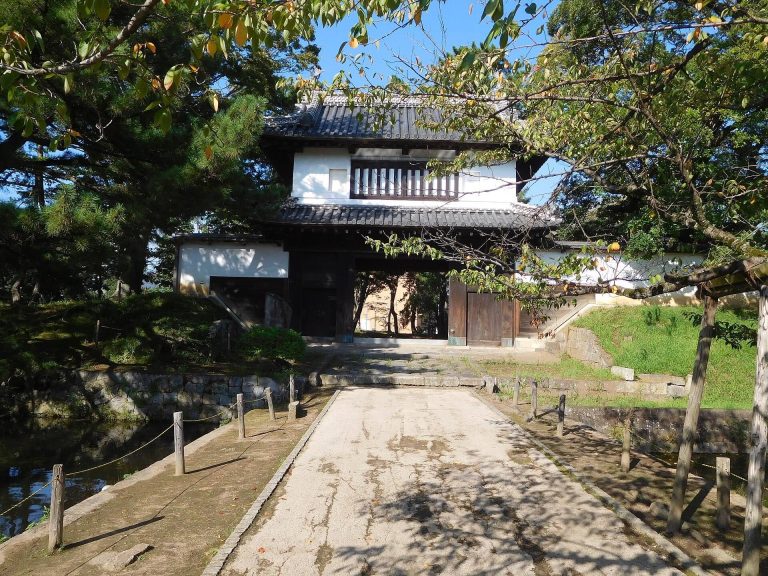
Tokugawa Ietsuna, the fourth shogun, supported the construction of the Niō Gate in 1655. A four-legged gate from the former Momijiyama Palace in Edo Castle was also transferred to the temple at that time. A Fudō Hall was built during the same period. In 1693, the guest hall, bell tower, study, storehouse, and Buddhist images were added or improved.
Fire, Rebuilding, and Later Religious Use
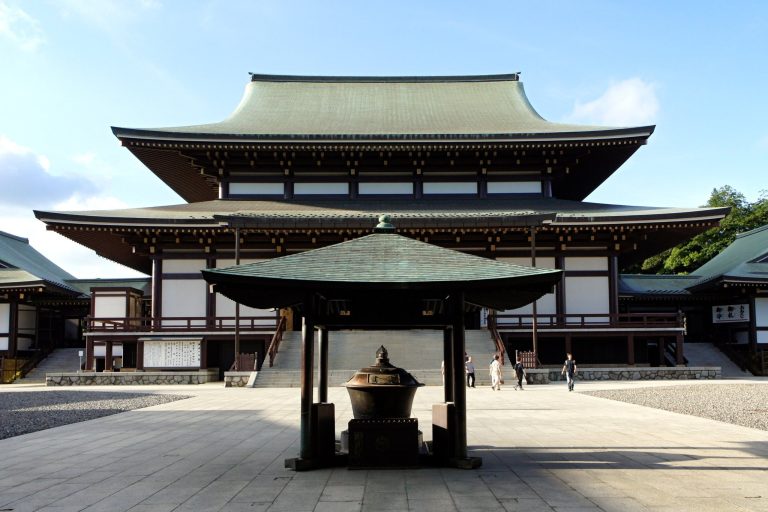
A fire in 1876 destroyed most of the temple buildings, including the main hall. The Niō Gate survived. The main hall was rebuilt in 1972, and stone steps were constructed along the temple approach in 1974. In 1975, a prayer hall, also described as a main hall, was established and the Inari Hall was completed. Priest’s quarters were added beside the prayer hall in 1976, followed by the Kaikō Hall, or Main Buddha Hall, in 1986. Major repairs to the Niō Gate took place in 1990.
Edosaki Fudō-in Temple is also number 30 on the North Kantō Thirty-Six Fudō Sacred Sites pilgrimage. The designation reflects its continuing association with the worship of Fudō Myōō.
Remains
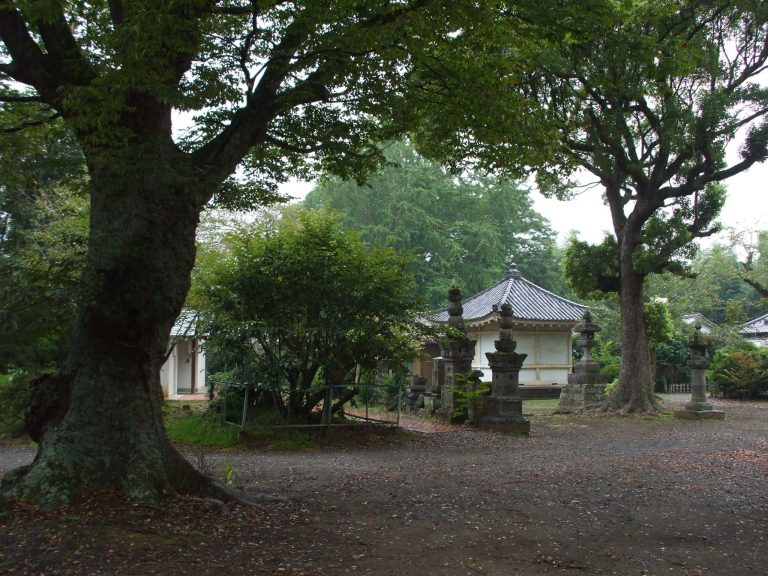
The temple stands on elevated ground near the center of Edosaki, and its grounds cover approximately 53,000 square meters. The surviving site combines the Niō Gate, rebuilt or newly established halls, religious service buildings, stone monuments, and preserved treasures associated with the temple’s long Tendai history.
Gates and Halls
Niō Gate
The Niō Gate is the principal surviving structure from the pre-fire temple. It was built in 1655 with the support of Tokugawa Ietsuna and survived the destructive fire of 1876. A Niō Gate is traditionally guarded by two fierce Buddhist guardian figures. The gate underwent major repairs in 1990.
Religious and Service Buildings
The temple grounds include the Fudō Hall, the main hall or prayer hall, the Inari Hall, priest’s quarters, and the Kaikō Hall, also called the Main Buddha Hall. The main hall belongs to the post-fire rebuilding history, with a rebuilding phase in 1972, while the prayer hall and Inari Hall were established or completed in 1975. The priest’s quarters followed in 1976, and the Kaikō Hall was built in 1986. The grounds also retain the guest hall, bell tower, study, and storehouse associated with the temple’s Edo-period expansion.
Stone Features and Preserved Treasures
Monuments and Ritual Features
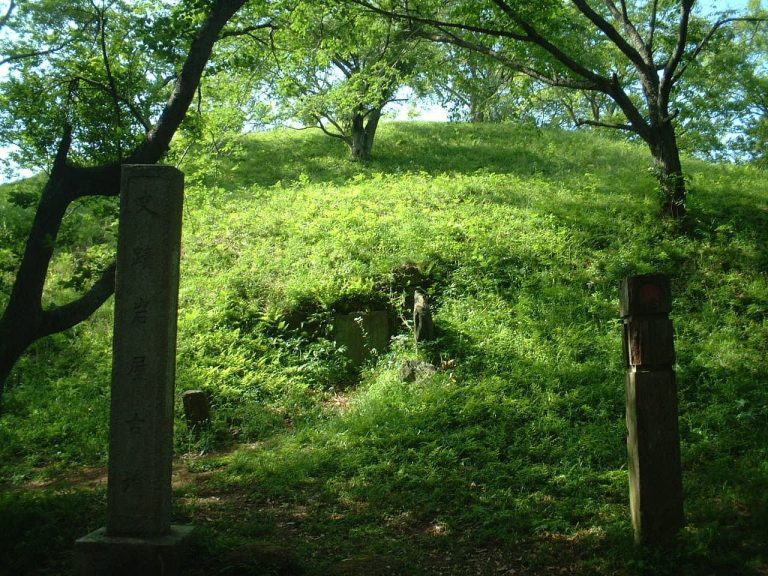
Stone features across the grounds include inscribed steles, a handwashing basin, stone lanterns, and a hōkyōintō, a Buddhist reliquary pagoda. Memorial monuments commemorate the local figures Ōtsuki Yūzō and Ōkubo Eisuke. Together, these features express the temple’s religious practice and its connections with the surrounding community.
Paintings and Images
Edosaki Fudō-in preserves several associated treasures. They include a painting by Kanō Tan’yū, a major artist of the Kanō school, the leading school of traditional Japanese painting, as well as a divine title of Tōshō Gongen, the deified religious identity of Tokugawa Ieyasu. The collection also includes a wooden image of Tenkai, the monk connected with the temple’s restoration under Ashina Morishige.