Kimpusen-ji Temple: Head Temple of Kinpusen Shugendo in Japan


Site at a Glance
- Rating
- 4.5
- Popularity
- Medium
- Country
- Japan
- Primary era
- Medieval
- External website
- Open
- Eras represented
- Medieval, Early Modern, Modern
- Civilizations
- Japanese, Toyotomi regime
- Site type
- Religious
- Remains
- Sanctuary
On this page28 sections
History
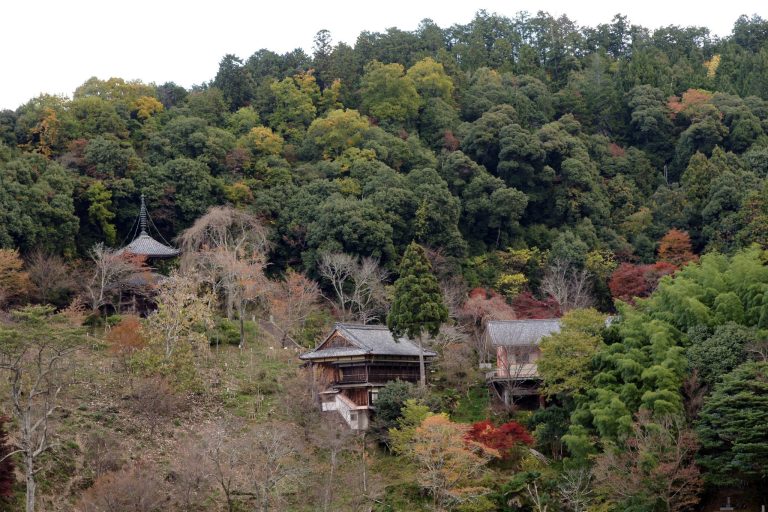
Kimpusen-ji Temple is a Buddhist temple in Japan, in the Yoshino mountains of Nara Prefecture, traditionally founded in the second half of the seventh century and associated with Shugendo, a Japanese mountain-ascetic tradition combining mountain worship with Buddhist and other religious elements. Its foundation is traditionally attributed to En no Gyōja, the seventh-century ascetic regarded as the founder of Shugendo, although the precise circumstances, date, and original form of the foundation remain uncertain. The temple is the head temple of Kinpusen Shugendo and bears the mountain name Kokujikusan.
Yoshino, Ōmine, and the early religious complex
Kimpusen-ji was once known as the “Zaō Hall below the mountain.” Together with Ōminesan-ji on Mount Sanjōgatake, it formed part of the broader religious complex called Kimpusen. This complex included the mountain, the lower and upper Zaō halls, and numerous subsidiary temples. The two principal institutions became separate temples during the modern period.
Yoshino and Ōmine were ancient centers of mountain worship. From the Heian period onward, the area became a pilgrimage center where mountain practices were combined with Esoteric Buddhism, Pure Land belief, and ideas about the Buddhist end of the age. The sacred landscape of Yoshino and Ōmine, together with Kōyasan, the Kumano Sanzan, and their pilgrimage routes, belongs to the UNESCO World Heritage property Sacred Sites and Pilgrimage Routes in the Kii Mountain Range. The Zaō Hall and Niōmon were included in that registration in 2004.
The temple’s principal worship centers on three Zaō Gongen images. Zaō Gongen is a distinctly Japanese sacred figure associated especially with Shugendo, represented in a fiercely wrathful form rather than as simply a Buddhist or Shinto being. In tradition, the images were revealed to En no Gyōja during his austerities on Mount Kimpusen. The central figure represents Shaka Nyorai and the past, the figure on the right represents Senju Kannon and the present, and the figure on the left represents Miroku Bosatsu and the future. They are normally treated as hibutsu, hidden sacred images, and are shown for worship only on special occasions.
Shōbō and the Heian pilgrimage tradition
Shōbō, a major early Heian-period Shingon monk and the founder of Daigo-ji, is regarded as the restorer of Kimpusen-ji. In 894 he is said to have revived the declining complex, improved the pilgrimage routes, built halls, and installed images of Nyoirin Kannon, Bishamonten, and Kongō Zaō Bosatsu. The mountain subsequently drew imperial and aristocratic pilgrims, including Emperor Uda in 900, Fujiwara no Michinaga in 1007, Fujiwara no Moromichi in 1088, and Emperor Shirakawa in 1092.
Fujiwara no Michinaga established the Kimpusen Sutra Mound near the upper Zaō Hall. A sutra mound is a burial deposit containing Buddhist scriptures intended to preserve the teachings for the future. The Kimpusen mound is regarded as Japan’s oldest known example of this kind. Its buried containers were excavated during the Edo period and are now preserved at Kinpusen Shrine. Kimpusen was regarded as the Pure Land of Miroku, the Buddha of the future, and many sutra mounds were built near the summit of Mount Sanjōgatake.
Medieval power, warfare, and destruction
From the late medieval period, Shugendo divided into the Honzan and Tōzan branches. Kimpusen-ji was closely connected with the Tōzan branch, a Shingon-related tradition associated with Shōbō and centered on Yoshino. Its principal institution was Sanbō-in of Daigo-ji. In the medieval period, the complex reportedly contained 36 establishments on the mountain and more than one hundred subsidiary temples below it. It also possessed a large body of warrior monks known as the Yoshino populace.
The Zaō Hall burned in 1093, 1225, and 1264, and was rebuilt after each fire. During the Genkō War, Moriyoshi, the son of Emperor Go-Daigo, allied himself with the temple’s warrior monks and fortified Yoshino as Yoshino Castle. In February 1333, an army of the Kamakura shogunate led by Nikaidō Dōun attacked. Murakami Yoshimitsu killed himself at the Nitenmon while allowing Moriyoshi to withdraw, and the gate burned while the Zaō Hall survived.
After Emperor Go-Daigo established the Southern Court at Yoshino, Kō no Moronao, a retainer of Ashikaga Takauji, attacked the mountain on 28 January 1348. The entire complex was destroyed in the resulting fire. The Zaō Hall was rebuilt later, but it burned again in 1586. Toyotomi Hideyoshi financed another reconstruction in 1590, and Toyotomi Hideyori rebuilt the Itoku Tenmangū during the Keichō era, from 1596 to 1615.
Early modern administration and religious change
In 1614, Tokugawa Ieyasu placed the temple under Tenkai, a Tendai monk, and brought Kimpusen under the protection of Nikkō and Rinnō-ji. The scholar Motoori Norinaga visited and worshipped at the temple on 8 March 1772. He wrote that he could not distinguish substantial differences among the three Zaō images and noted the remains of a finial from a former tower.
The Meiji government’s policy of separating Buddhism and Shinto, known as shinbutsu-bunri, dismantled the long-established combination of the two traditions and reorganized many Buddhist institutions as Shinto shrines. In 1868, the government ordered changes to the religious designation of Zaō Gongen and required monks to become Shinto officials. From 1871, it repeatedly ordered the mountain to be converted into a shrine precinct. Shugendo was abolished in 1872, and in 1874 Kinpusen Shrine was designated the main shrine. The lower Zaō Hall became its subsidiary “entrance shrine,” while the upper Zaō Hall became the “inner shrine.” Kimpusen-ji was thereby forced out of existence, and Yoshimizu-in was converted into Yoshimizu Shrine.
Several former temple establishments resumed Buddhist activity in 1879. Shugendo was legally permitted again in 1886 as the Tendai Shugendo branch, allowing the lower and upper Zaō halls to revive as the separate temples Kimpusen-ji and Ōminesan-ji. After the Second World War, the movement became independent from Tendai as Ōmine Shugendo in 1948. It adopted the name Kinpusen Shugendo in 1952, with Kimpusen-ji as its head temple.
Continuing religious observances
Religious observances at Kimpusen-ji include a distinctive Setsubun ceremony in which mountain ascetics proclaim “Good fortune in, demons in” while throwing beans. Other rites include the Hanaku Senpō flower offering and repentance ceremony and the Frog-Jumping rite. The latter follows a tradition that an arrogant monk was transformed into a frog and later released through the power of the monks of Yoshino.
Remains
The temple precinct rises from Kuromon, or the Black Gate, along an ascending approach that passes the Copper Torii and reaches Niōmon. The Zaō Hall stands on higher ground beyond the mountain gate. The Copper Torii marks the entrance to the sacred area and is identified as the first of four gates representing stages of religious awakening on the ascetic route from Yoshino toward Mount Sanjōgatake.
Approach and mountain gates
Copper Torii
The Copper Torii stands on lotus-shaped bases and preserves the visual evidence of an earlier combination of Buddhist and Shinto forms. Tradition connects its metal with copper left over from the casting of the Great Buddha at Tōdai-ji, although the existing gate was rebuilt during the Muromachi period.
Niōmon
Niōmon is a major mountain gate approximately 20.3 meters high and built with a layered roof form. It is traditionally dated to the Nanbokuchō period and was rebuilt in 1456. Its two guardian figures, each about five meters high, were carved by the Nanto sculptor Kōsei. The Agyō figure dates from 1339 and the Ungyō figure from 1340.
The guardian statues contain deposited ritual and textual materials, including a wooden five-element stupa, four volumes of the Great Perfection of Wisdom Sutra, numerous stamped Buddhist images, and 580 surviving wooden-strip sutras. Niōmon has undergone major repairs since 2018, during which the two guardians were temporarily moved to the Buddhist sculpture gallery of the Nara National Museum.
Nitenmon
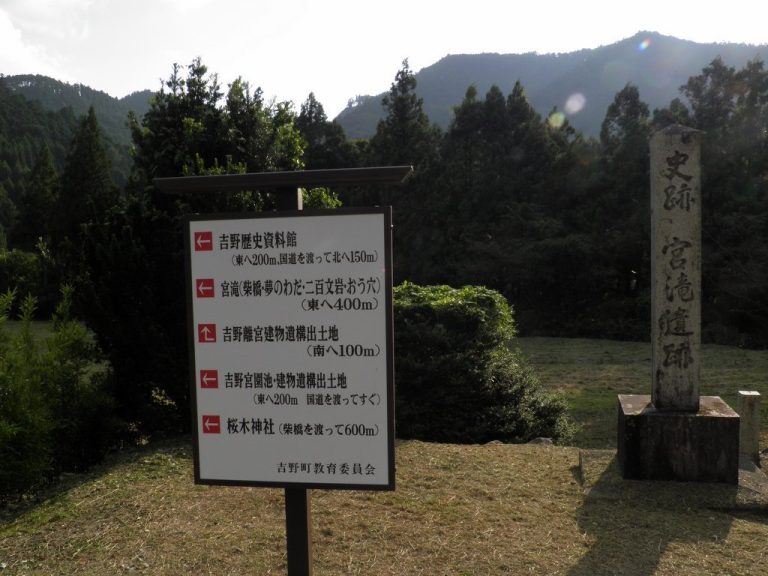
Nitenmon once stood south of the Zaō Hall, facing south, and received ascetics approaching from Mount Ōmine. The gate burned during the Nanbokuchō period and was never rebuilt. A stone monument now marks its site and commemorates Murakami Yoshimitsu’s loyal death during the attack of 1333.
Zaō Hall and sacred images
Zaō Hall
The present Zaō Hall, also called Zaō-dō, was reconstructed with Hideyoshi’s support in the late sixteenth century. Reconstruction is recorded in 1590, while the completed building is placed around 1592. It is about 34 meters high and approximately 36 meters wide and deep, making it one of Japan’s largest wooden Buddhist buildings, particularly in height.
The hall has a cypress-bark-covered irimoya roof and is structurally a single-story building with a surrounding skirt roof, although its exterior appears to have two stories. Large, almost natural tree trunks form its interior structure, retaining the curves of the original wood. The inner sanctuary contains a large shrine enclosure for the three Zaō Gongen images.
Three Zaō Gongen images
The three principal images are monumental wooden standing figures. The central image is approximately 7.28 meters high, the right image 6.15 meters, and the left image 5.92 meters. Each has a wrathful face, raised hair, glaring eyes, an open mouth, a flame halo, and one raised leg poised as though stamping on empty space. Their form is understood as a distinctly Japanese creation influenced by Esoteric Buddhist sculpture rather than a direct reproduction of Indian or Chinese models.
The images are normally concealed from public view. Inscriptions inside them state that two brothers from the Nanto Buddhist sculptors made the statues. The brothers also worked on the Great Buddha commissioned by Hideyoshi for Hōkō-ji. Seven devotional documents were placed inside the central image.
Transferred Zaō Gongen
A wooden standing Zaō Gongen from the former Anzen-ji, once located near the present Kinpusen Shrine in upper Yoshino, was transferred to Kimpusen-ji after Anzen-ji was destroyed during the Meiji separation of Buddhism and Shinto. The image is about 4.59 meters tall and is considered older than the three hidden principal images, probably dating from the later Kamakura period.
Halls and buildings around the main sanctuary
Kannon Hall
Kannon Hall is associated with an eleven-headed standing Kannon probably made during the Nanbokuchō period. The hall dates from the Nanbokuchō or Muromachi period. The image may originally have belonged to the now-lost Seison-ji, where standing images of Ananda and Mahākāshyapa were also reportedly installed.
Aizen Hall
Aizen Hall was built in 1770 as a sutra repository and later used for goma, a fire ritual in Esoteric Buddhism and related traditions. In 1983, the Aizen Myōō image formerly enshrined in the Zaō Hall was transferred there, giving the building its present name. The image had previously been housed at Anzen-ji.
Honchido
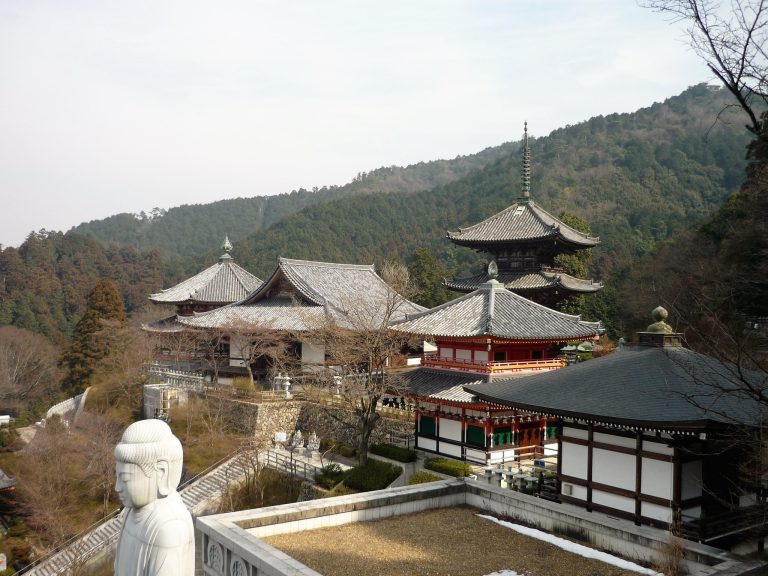
Honchido, the Hall of Original Forms, stands west of the Zaō Hall on the site of the former refectory. It was built in connection with the 1,300th anniversary of En no Gyōja. Its images include Shaka Nyorai, Senju Kannon, Miroku, En no Gyōja, and the demon couple Zenki and Goki. The hall is normally inaccessible and is used for ceremonies.
Bell tower
The bell tower west of the Zaō Hall has no known construction date. It was recorded as having burned after a lightning strike in 1264 and has been used since the Edo period for timekeeping and Buddhist services. Its large bell bears an inscription dated 1160. The bell formerly belonged to the abolished Seison-ji and remains at a bell tower on Seison-ji’s former site near Yoshino Mikumari Shrine.
Honbō
Honbō lies north of the Zaō Hall. Completed in 1923 during major Taishō-period repairs to the hall and formally inaugurated the following year, it was first called Chisen-kaku after the abbot. The complex served as the temple office until a new administrative office was built in 1983. It contains an irimoya-roofed main building, a gable-roofed annex, a carriage porch with a curved gable, a bathhouse, a front gatehouse, and storehouses. Its main gate was transferred from the former Sakuramoto-bo preaching hall.
Memorials and valley shrines
Camp of Prince Moriyoshi
Four cherry trees stand before the Zaō Hall within a stone enclosure. A monument identifies the location as the camp of Prince Moriyoshi. Tradition holds that, shortly before Yoshino fell to the Kamakura forces in 1333, Moriyoshi held a final banquet there and that the trees occupy the positions of his camp’s supporting poles. A bronze lantern dated 1471 stands within the enclosure and is associated with the four trees.
Nanchō Myōhōden
Nanchō Myōhōden is a three-story, pagoda-like building from the postwar period. It commemorates the four emperors of the Southern Court, their loyal retainers, those killed in the Second World War, and unidentified dead. Its principal image is Shaka Nyorai. The building occupies the former site of a temple where Emperor Go-Daigo is traditionally said to have resided. The wooden seated Shaka image from that temple is enshrined there, and a memorial Buddhist service for Go-Daigo is held annually.
Hall of the Sacred Buddha Relic
The Hall of the Sacred Buddha Relic was built to house a bone relic of Shaka Nyorai presented by the Indian government on 24 November 1967. It stands beyond Nanchō Myōhōden along the route toward Nōten-ōkami Ryūō-in.
En no Gyōja and the waterfall practice site
A bronze statue of En no Gyōja stands at the entrance to a former waterfall practice site in the valley west of the Zaō Hall. The site was developed after the Second World War for female ascetics, and the statue was erected in 1950. It is accompanied by figures of Zenki holding an axe and Goki holding a water jar.
Nōten-ōkami Ryūō-in
Nōten-ōkami Ryūō-in was established in 1951 by the head priest Gojō Kakuchō in a valley west of the Zaō Hall. Its foundation is connected with a tradition about a snake with a split head, regarded as a manifestation of Zaō Gongen. A sacred monument was later moved to the present site as the number of worshippers increased. The precinct also contains Hōsenbō, dedicated to Jizō for unborn or deceased children.
Objects and excavated deposits
The temple preserves a large votive painting of ships entering port, dedicated in 1661 and kept on the west side inside the Zaō Hall. Other objects include a Kamakura-period wooden standing image of Prince Shōtoku with ritual and textual deposits inside, two Kamakura-period wooden child figures traditionally identified by their traditional names, a gilt-bronze five-pronged ritual bell, a gilt-bronze-clad pilgrim’s container, and a bronze lantern dated 1471.
The wider cultural-property collection includes a silk painting of Senju Kannon, currently deposited at the Nara National Museum, and a line-engraved image of Zaō Gongen on a cast-bronze, eight-lobed mirror. Finds from the sutra mounds include gilt and silvered reliquary boxes, bronze sutra containers with stands, fragments of gold-lettered scriptures on indigo paper, and fittings from sutra scrolls. These mound finds are preserved at Kinpusen Shrine rather than within the temple precinct.