Shibuno Maruyama Kofun: A Keyhole-Shaped Burial Mound in Japan
Site at a Glance
- Rating
- 3.4
- Popularity
- Very Low
- Country
- Japan
- Primary era
- Classical
- External website
- Open
- Eras represented
- Classical
- Civilizations
- Yamato
- Site type
- Burial
- Remains
- Burial Mound
On this page7 sections
History
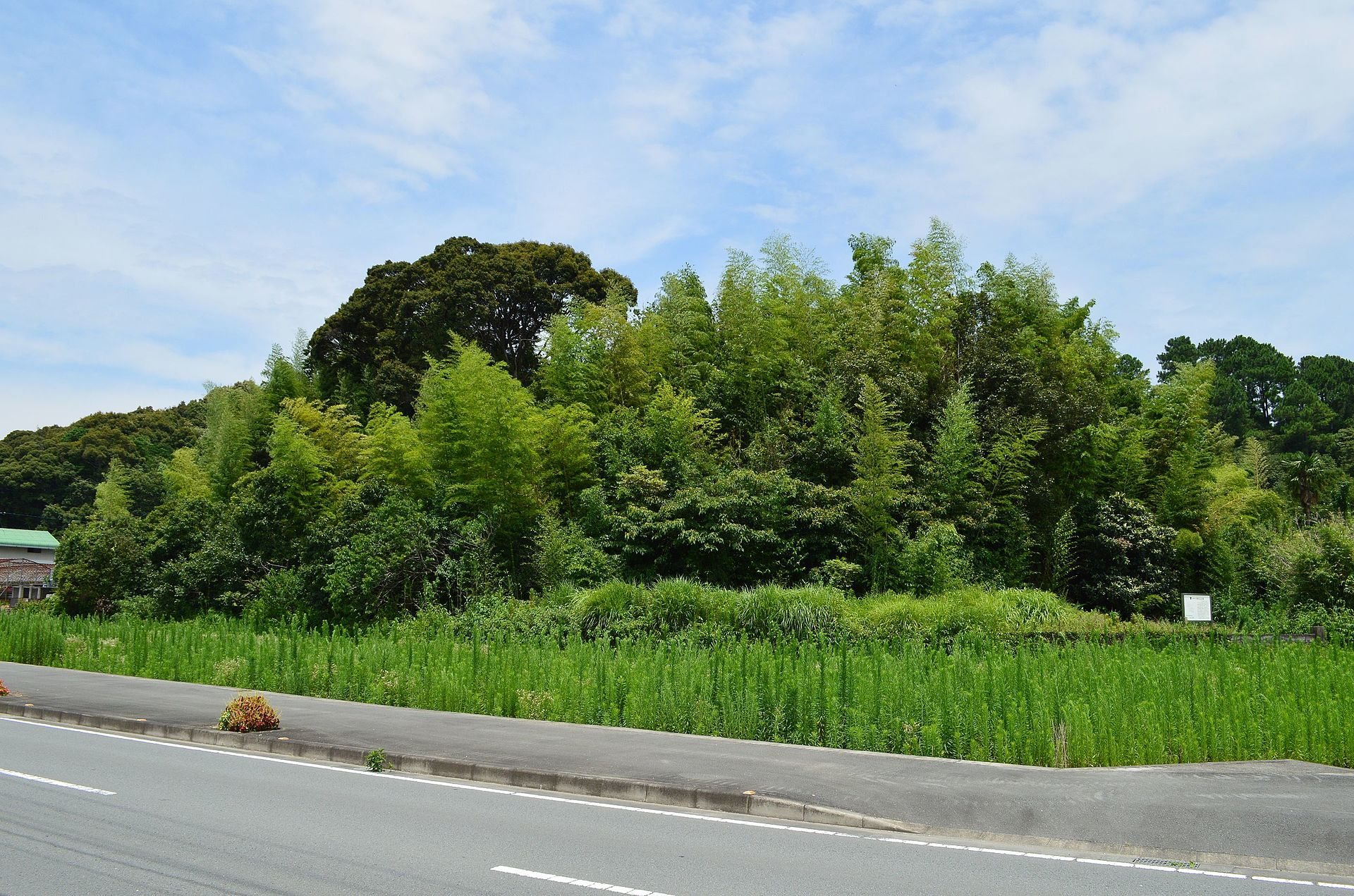
Shibuno Maruyama Kofun is a large Kofun-period burial mound in Tokushima City, Japan, built around the first half of the fifth century. The Kofun period, an era associated with monumental elite burial mounds, conventionally lasted from approximately the third to the sixth centuries. The mound was constructed in the first half of the Middle Kofun period and is regarded as the largest kofun in Tokushima Prefecture and the second largest in Shikoku, after the 139-metre Tomita Chausan Kofun in Sanuki, Kagawa.
Development in the Katsuura River region
Shibuno Maruyama Kofun stands among the tumuli of the lower Katsuura River. Burial-mound construction had already begun in this area during the latter part of the Early Kofun period, and this mound represents the final construction of a keyhole-shaped burial mound in the region. Its size and strong Kinai-style characteristics are important for understanding changes in ancient Awa and its relationship with political power in Kinai, the historical core region around present-day Nara and Osaka.
The mound was listed as a known keyhole-shaped kofun in the 1923 Katsuura District Gazetteer, which stated that it had been discovered in 1915. In 1953, it was designated a Tokushima Prefectural Historic Site together with Tennomori Kofun, Shinmiyazuka Kofun, Hanaoritsuka Kofun, and Manjozuka Kofun. The area covered by that designation was enlarged in 1990.
Investigation and protection
Tokushima City carried out an excavation in 1988 in connection with the relocation of nearby houses. Six further investigations followed between fiscal years 1999 and 2005. These included ground-penetrating radar and electrical surveys by the Nara National Research Institute for Cultural Properties in fiscal year 2002, and radar surveying by Toyama University in fiscal year 2005.
Shibuno Maruyama Kofun became a National Historic Site of Japan on February 12, 2009, and its protected area was expanded on September 19, 2012. Preservation and site-improvement excavations took place in fiscal years 2013 to 2016 and 2017 to 2019, with reports issued in 2017 and 2020.
Remains
Mound and surrounding moat
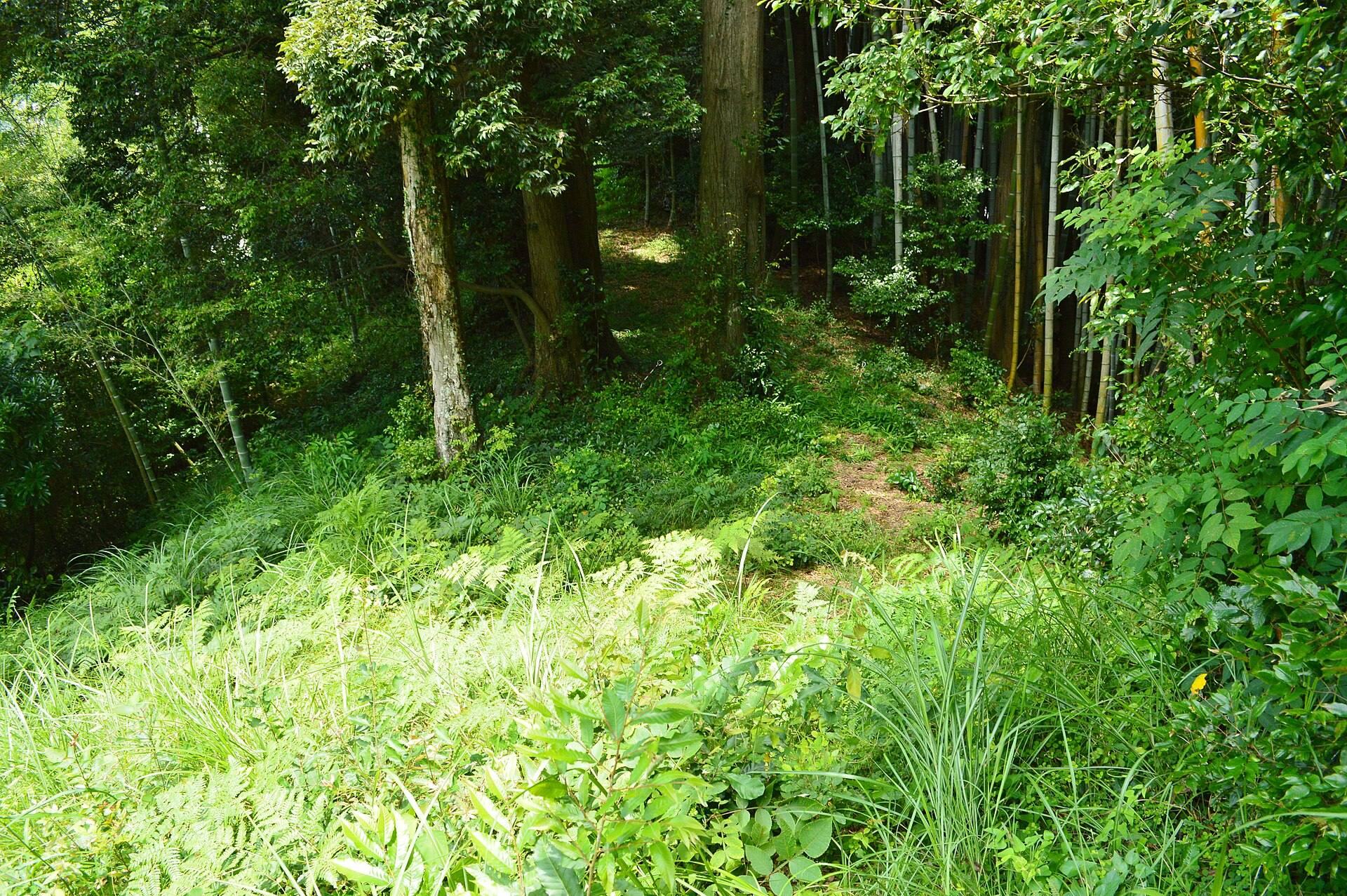
The mound is a zenpo-koen-fun, or keyhole-shaped burial mound, formed by a circular rear section joined to a square front section. It occupies a ridge in the hills on the left bank of the Tatara River, within the Katsuura River system in the southern Tokushima Plain. The ridge was cut to create the mound, whose front section faces west. The structure is 105 metres long and was built in three tiers, although the lowest tier is now completely buried. The rear section is about 69 metres in diameter and 18 metres high, while the front section is about 59 metres wide and 16 metres high. The connecting constriction measures approximately 44 metres across.
An asymmetrical moat surrounds parts of the mound. It ranges from approximately 4 to 13 metres in width, takes a shield-like form on the south side, and follows a shape similar to the mound on the north. Near the northern constriction, the natural terrain prevents it from forming a complete circuit. Parts of both the front and rear sections were cut away during later cultivation and residential development, but most of the mound remains in generally good condition.
Auxiliary platform and surface features
A tsukuridashi, or projecting auxiliary platform, extends from the south side of the mound. It is approximately 12 metres wide, 5 metres deep, and 2 metres high. Excavations near this platform recovered numerous small jars, colander-shaped earthenware vessels, and fragments of haniwa. Haniwa are clay cylinders and figures associated with burial mounds.
The mound surface preserves fukiishi, stones laid over the earth as a protective revetment, together with rows of cylindrical haniwa. Other haniwa take the forms of morning glories, houses, shields, lids, armor, and boats. Haji ware pottery has also been found on the mound. These objects and surface arrangements provide evidence of the material treatment of the burial mound and its ceremonial display.
Burial area and later traditions
The burial facility is presumed to lie within the circular rear section, but it has not been excavated, so its construction remains unknown. Local tradition says that a ceiling stone was found there. Radar surveying detected a depression interpreted as a possible robbers’ pit, along with a response measuring approximately 5 by 2.5 metres that may represent an east-west-oriented stone chamber.
A stone monument traditionally said to have been erected later on the summit of the rear section was transferred to Hase-dera in Miyamae, Shibuno. Its date is unknown. Another stone at Mitsuiwa is traditionally believed to have been removed from the burial facility as a cover stone and later reused as a bridge stone.