Minase Jingū: An Imperial Shrine in Osaka Prefecture


Site at a Glance
- Rating
- 4.2
- Popularity
- Medium
- Country
- Japan
- Primary era
- Early Modern
- External website
- Open
- Eras represented
- Early Modern, Modern
- Civilizations
- Japanese, Tokugawa, Toyotomi regime
- Site type
- Religious
- Remains
- Sanctuary
On this page20 sections
History
Minase Jingū is an imperial shrine in Japan, established in 1240 as the Minase Mikagedō on the site of the former Minase Detached Palace. The memorial hall was founded by Minase Nobushige and his son Chikanari in accordance with the testament of the retired Emperor Go-Toba, who had died in exile on Oki Island. The institution later became a shrine dedicated to Go-Toba and the two emperors associated with his exile, Tsuchimikado and Juntoku.
The Minase Palaces
The site began as the villa of Minamoto no Michichika, Minister of the Center. After visiting the villa in 1200, the retired Emperor Go-Toba acquired it and transformed it into the Minase Detached Palace, also known as the Hirose Palace. He renamed the area Hirose and established another residence near the former Kayo Detached Palace. The palace complex eventually included the Minase Lower Palace and the Minase Upper Palace.
The Minase River flooded in 1202, damaging and sweeping away parts of the palace, although repairs followed. A severe storm caused further flooding in 1216. From 1217, a new residence was built on higher ground and became the Minase Upper Palace, while the earlier residence was called the Minase Lower Palace. Both palaces declined after Go-Toba was exiled.
From Imperial Memorial Hall to Shrine
The Jōkyū Disturbance was the 1221 conflict in which Go-Toba attempted to challenge the Kamakura shogunate. Its defeat led to the exile of Go-Toba, Tsuchimikado, and Juntoku from the imperial center in Kyoto. After Go-Toba’s death, the grounds of the Minase Palace deteriorated. In 1494, Emperor Go-Tsuchimikado brought Go-Toba’s sacred spirit from Oki and granted the institution the religious name Minase-gū.
The site was first worshipped in Buddhist form. During the Meiji-period separation of Buddhism and Shinto, the Minase Mikagedō was converted into a Shinto shrine in 1873, renamed Minase-gū, and classified as a Kanpei Chūsha, the middle rank in the prewar system of government-supported Imperial shrines. The sacred spirits of Emperor Tsuchimikado and Emperor Juntoku were brought from their places of exile and enshrined with Go-Toba. In Shinto, these imperial figures are worshipped as kami, sacred or divine presences.
In 1939, the shrine received the title Jingū and was elevated to Kanpei Taisha, the highest Imperial shrine rank. It adopted the name Minase Jingū and is described as the only Jingū in Osaka Prefecture. The shrine was included among the Shinto Honchō’s Beppyo Shrines in 1948 and is also stop 62 on the Shinto and Buddhist Sacred Sites Pilgrimage, as well as stop 21 in Osaka.
Early-Modern Building Phases and Recognition
During the Azuchi-Momoyama period, Toyotomi Hideyoshi appointed Fukushima Masanori as construction overseer for the Guest Hall. During the Kan’ei period, from 1624 to 1645, the former Naishidokoro of the Kyoto Imperial Palace was relocated and remodeled as the shrine’s Main Hall. A Naishidokoro was the imperial palace sanctuary associated with the sacred mirror, one of Japan’s Three Sacred Treasures.
Historic buildings at Minase Jingū, including the Main Hall, Worship Hall, and Treasury, were registered as national Registered Tangible Cultural Properties in 2016. The shrine’s cultural-property holdings also include Important Cultural Property buildings and a National Treasure testament and portrait. Its grounds contain Rikyu no Mizu, or “Water of the Detached Palace,” which is recognized among Japan’s 100 Selected Waters and is described as the only designated water source of its kind in Osaka Prefecture.
Remains
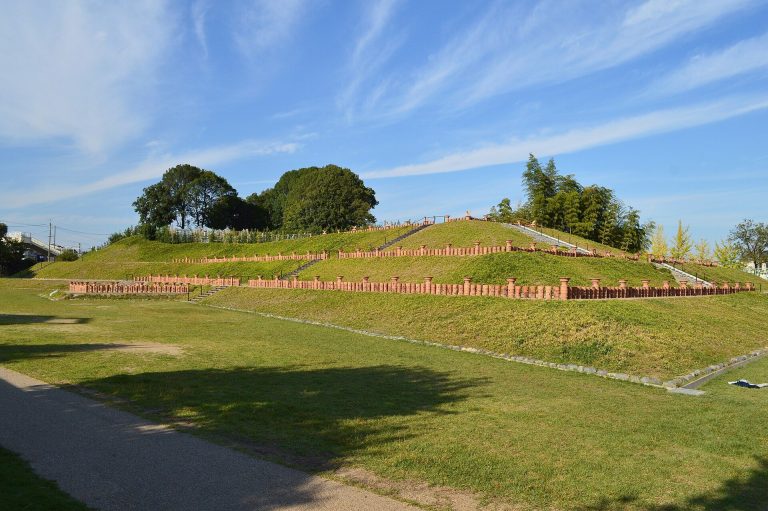
The precinct remains enclosed by a moat and earthen ramparts. Its historic fabric combines palace-derived architecture, shrine buildings, a tea house, a gate, water facilities, and associated sanctuaries. The Main Hall, Worship Hall and Heiden, Treasury, Water Ablution Pavilion, and Shrine Gate with its surrounding earthen-plastered boundary wall form the principal registered historic elements.
Palace and Shrine Buildings
Main Hall
The Main Hall is the former Naishidokoro of the Kyoto Imperial Palace. It was moved to Minase and remodeled during the Kan’ei period, between 1624 and 1645. Its earlier imperial function remains part of the building’s history within the shrine precinct.
Worship Hall and Heiden
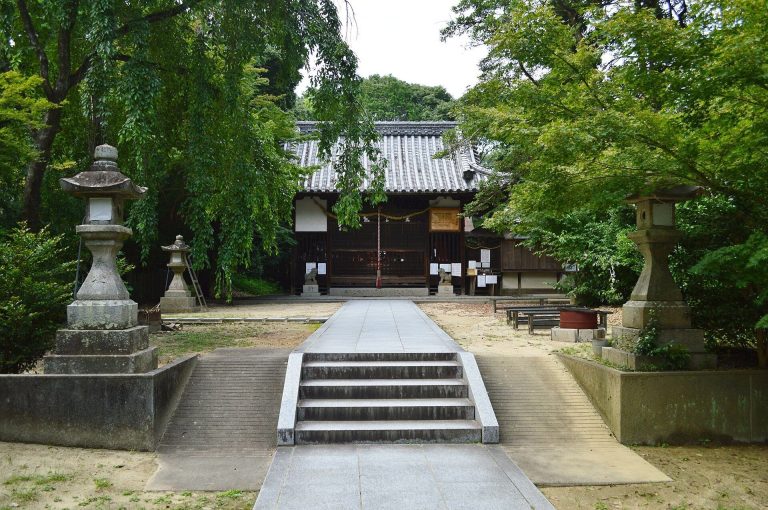
The Worship Hall and Heiden were built in 1929. The Worship Hall was rebuilt according to a design by Takashi Sunami, an engineer of the Home Ministry. Together they form part of the shrine’s registered historic fabric.
Guest Hall
The Guest Hall dates from the Azuchi-Momoyama period. It is a single-story building with a hipped-and-gabled roof covered in tiles. The structure measures approximately 11.8 metres in length and 10.9 metres in width.
Treasury and Service Buildings
The Treasury was built during the Taishō period. Other precinct components include the Connecting Corridor, the Ritual Food Preparation Hall, and the Shrine Office. These buildings form part of the wider arrangement around the principal shrine structures.
Tea House and Water Features
Tōshintei
The tea house Tōshintei, also called Tōshin-seki, is traditionally said to have been presented by Emperor Go-Mizunoo. It is an early Edo-period sukiya-style shoin, an elegant tea-house or reception-room tradition using refined materials and restrained asymmetry. The single-story building has a hipped roof with thatch, an eastern eave, and an attached section covered with shingles. It measures approximately 7.6 metres by 5.2 metres.
Inside, Tōshintei contains a three-mat daime tea-room space beside a kitchen of the same area. Its design uses varied timbers, including pine, bamboo, and plum. The building is regarded as a representative early Edo-period tea house reflecting aristocratic preferences. Before the early Shōwa period, it was known as the “Seven Herbs Room.”
Water Ablution Pavilion
The Water Ablution Pavilion dates from the Taishō period and is associated with Rikyu no Mizu, the shrine’s designated “Water of the Detached Palace.” The spring and pavilion are preserved as connected elements of the precinct’s historic water facilities.
Gate, Enclosure, and Associated Shrines
Western Shrine Gate
The western Shrine Gate is an Azuchi-Momoyama-period yakui-mon, a roofed Japanese gateway with projecting subsidiary roof structures. A handprint on the gate is traditionally attributed to the outlaw Ishikawa Goemon. According to the tradition, Goemon tried to enter the precinct to steal a famous sword enshrined there, but the shrine’s divine power prevented him from entering.
Moat, Ramparts, and Smaller Shrines
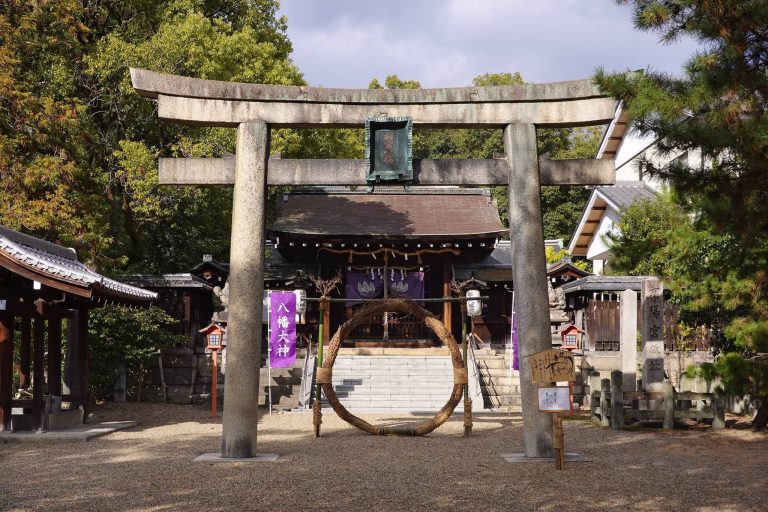
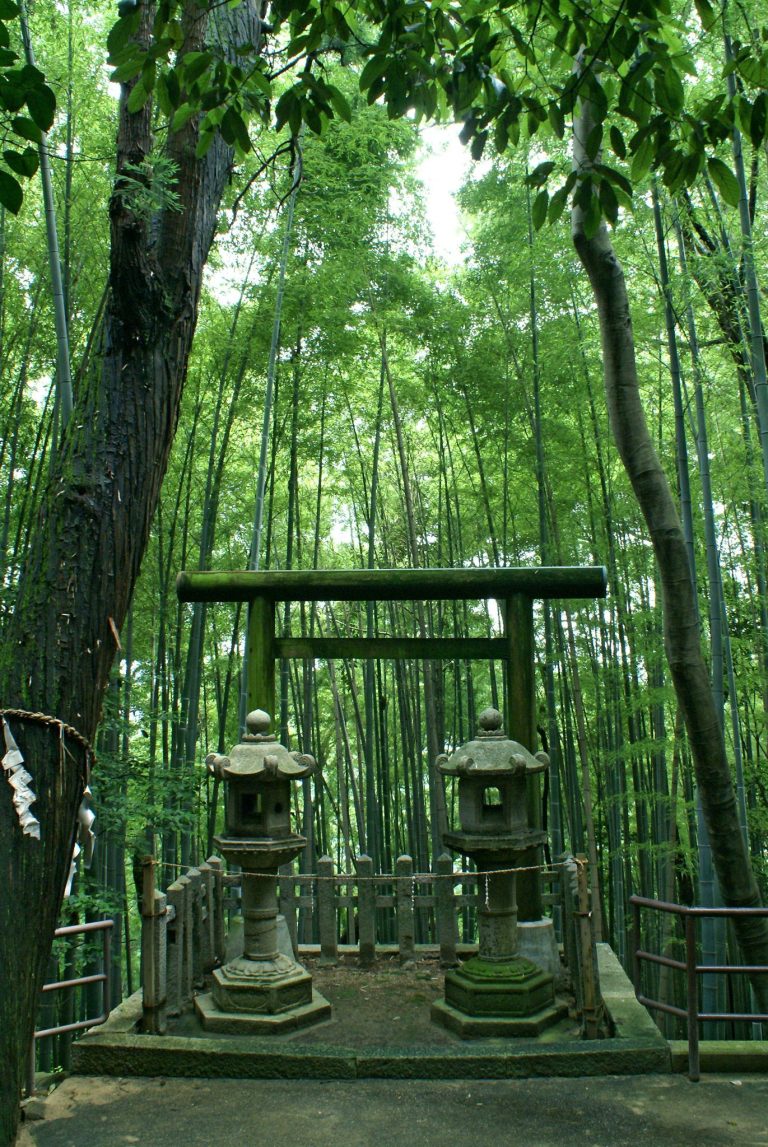
A moat and earthen ramparts continue to enclose the precinct. Kakimoto Shrine and Inari Shrine are also named features within the grounds.
National Treasure Portraits and Documents
Portrait of Emperor Go-Toba
The National Treasure portrait of Emperor Go-Toba is a Kamakura-period nise-e, a realistic Japanese portrait style associated especially with the medieval period. It is traditionally identified as the portrait Go-Toba commissioned from the painter Fujiwara Nobuzane before his exile and tonsure. The work is deposited with the Kyoto National Museum.
Handwritten Testament
The National Treasure known as the Go-Toba Emperor’s Handwritten Testament with Handprint was written in 1239, thirteen days before Go-Toba’s death in exile. It bears the retired emperor’s clearly impressed handprint and is deposited with the Kyoto National Museum. The testament provided the basis for the foundation of the Minase Mikagedō in 1240.
Memorial Poems
Associated Important Art Objects include twenty tanzaku, narrow strips of paper used for poems or calligraphy, produced for the four-hundredth memorial observance of Go-Toba’s death. They include calligraphy by Emperor Go-Mizunoo and date to 1638. The collection also includes a calligraphic paper by Go-Mizunoo containing Go-Toba’s poem “Looking out,” together with twenty-five memorial poem slips that include calligraphy by Emperor Go-Sai.