Kon’yō-ji Temple: A Historic Koyasan Shingon Buddhist Temple in Japan

Site at a Glance
- Rating
- 4
- Popularity
- Low
- Country
- Japan
- Primary era
- Unclassified
- External website
- Open
- Eras represented
- Unclassified
- Civilizations
- Unclassified
- Site type
- Religious
- Remains
- Temple
On this page8 sections
History
Kon’yō-ji Temple is a Koyasan Shingon Buddhist temple in Itami, Japan, founded by the monk Gyoki in 731 during the Nara period. It was one of 49 institutions associated with Gyoki in the Kinai region, and its principal image is Yakushi Nyorai, the Buddhist Medicine Buddha linked with healing and medicine.
Foundation and Imperial Patronage
Gyoki established the charitable facility Kon’yō Seiin in 731 beside a large reservoir built for the surrounding area. Known as a fuseya, a Buddhist relief facility for people in need, it was intended to assist the poor. The foundation connected religious activity with practical public works, reflecting Gyoki’s wider role as an eighth-century monk involved in community assistance and construction.
In 733, under Emperor Shomu, Kon’yō-ji became an imperial prayer temple. Its precinct was organized with 36 subsidiary cloisters, while nearby land was reclaimed and developed into an agricultural estate. This estate, called Koya-no-sho, helped support the institution’s expansion.
The Koya-no-sho Estate
In 1336, Ashikaga Takauji confirmed Koyasan’s An’yo-in as the owner of Koya-no-sho and recognized Kon’yō-ji’s local administrative rights. A shoen was an estate whose agricultural land and income were held under privileged ownership or administration, often by religious institutions. The reservoir associated with Gyoki’s foundation supported the reclamation and cultivation of the estate.
War, Revival, and Later History
In 1579, Kon’yō-ji was drawn into the Battle of Arioka Castle, fought between Araki Murashige, who defended the castle, and Oda Nobunaga, a leading military and political figure of Japan’s civil-war period. The temple was burned down during the conflict. It was later revived and had nine subsidiary temples during the Edo period.
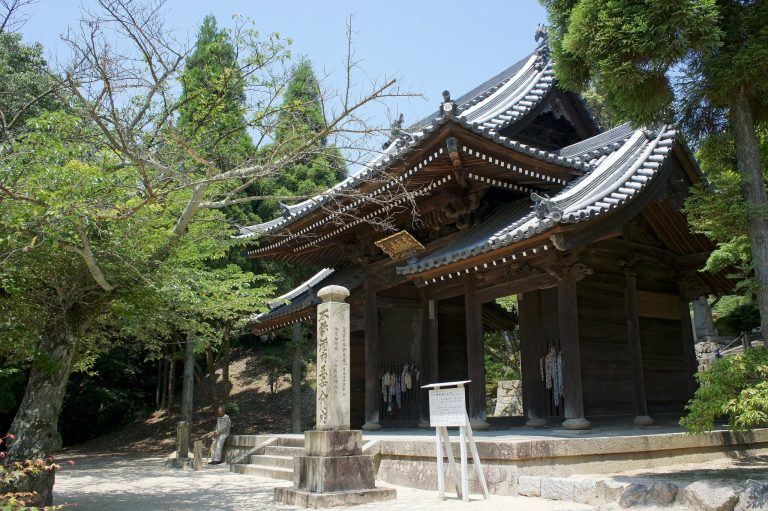
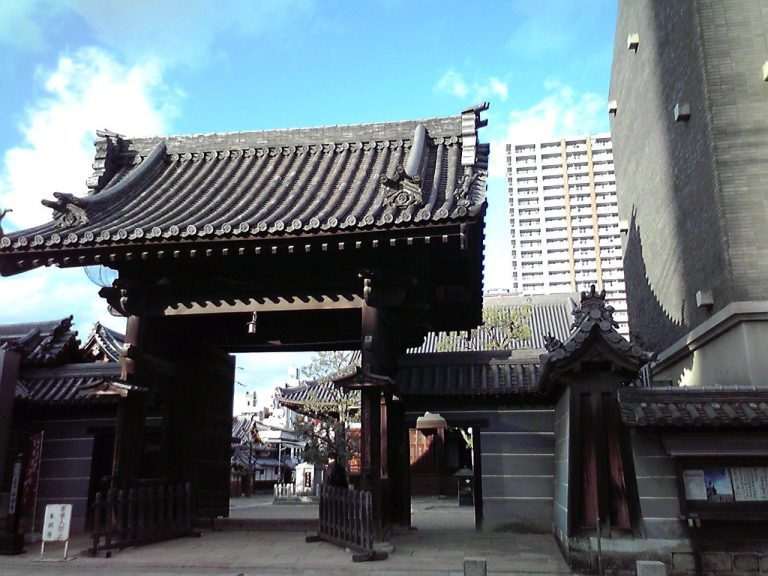
The temple was damaged in the 1995 Great Hanshin-Awaji Earthquake and was subsequently repaired. Its gate and Kannon Hall, a hall dedicated to Kannon, the bodhisattva associated with compassion, became tangible cultural properties of Hyogo Prefecture in 1969. The standing statues of the Buddhist guardians Komokuten and Tamonten received the same prefectural designation in 1998.
Religious Affiliations and Traditions
Kon’yō-ji belongs to the Koyasan Shingon tradition, a Japanese form of esoteric Buddhism. It is recognized as the nineteenth temple of the Saigoku Forty-nine Yakushi Pilgrimage, the sixty-second temple of the Settsu Eighty-eight Temple Pilgrimage, and the tenth temple of the Kawabe Saigoku Thirty-three Kannon Pilgrimage. It is also included among the Itami Seven Lucky Gods sites, where it is associated with Jurojin, the deity linked with longevity.
Tradition attributes the statue of Yakushi Nyorai to Gyoki himself. The image was treated as a hidden Buddhist image from the temple’s foundation, but it is now open for viewing.
Remains
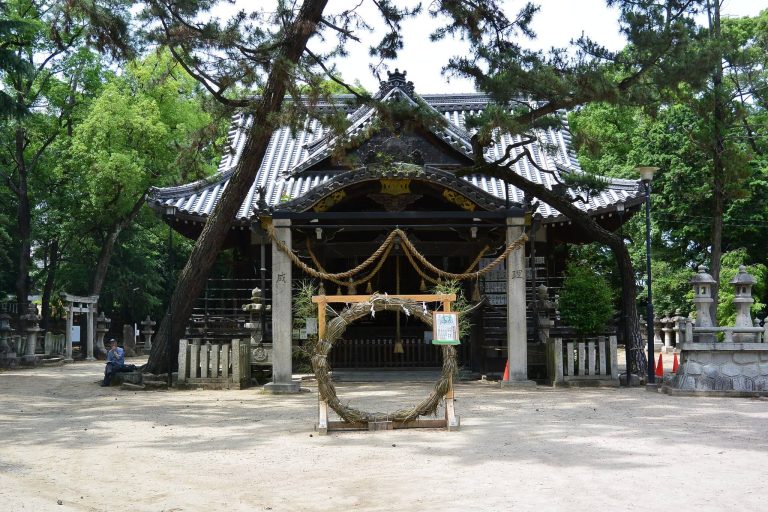
Kon’yō-ji stands along the historic Saigoku Kaido route in Teramoto, Itami, a route now followed by National Route 171. The precinct contains a main hall, a temple gate, and a Kannon Hall. The gate and Kannon Hall are surviving parts of the temple complex and are designated tangible cultural properties of Hyogo Prefecture.
Precinct and Waterworks
The temple’s physical setting is connected with the large reservoir constructed under Gyoki’s direction at the time of the foundation. The reservoir served the surrounding area and was later associated with the reclamation and cultivation of the Koya-no-sho estate. Within the precinct, the main hall, gate, and Kannon Hall form the principal named buildings described at the site.
Principal Image and Guardian Statues
The religious furnishings include a statue of Yakushi Nyorai, traditionally considered a work by Gyoki. The standing figures of Komokuten and Tamonten are Buddhist guardian statues associated with the temple and received prefectural cultural-property designation in 1998.