Goryōkaku: A European-Style Star Fortress in Hakodate, Japan


Site at a Glance
- Rating
- 4.4
- Popularity
- High
- Country
- Japan
- Primary era
- Early Modern
- External website
- Open
- Eras represented
- Early Modern, Modern
- Civilizations
- Japanese, Tokugawa
- Site type
- Military
- Remains
- Fort
On this page8 sections
History
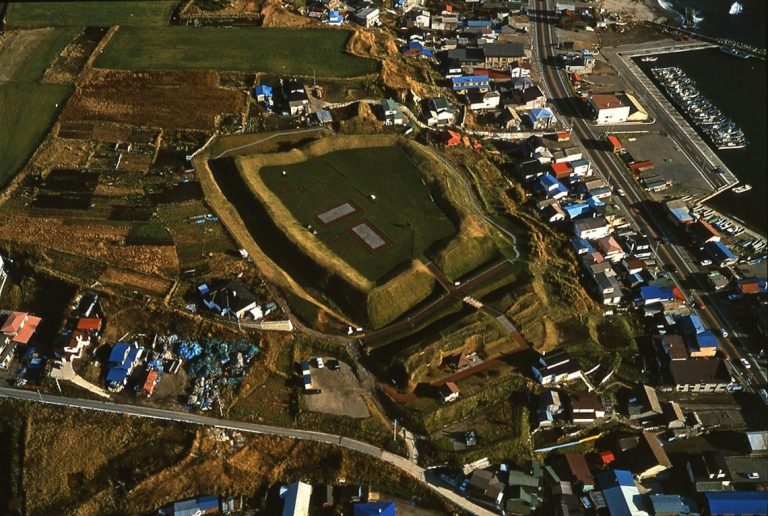
Goryōkaku is a five-pointed fortress in Hakodate, Japan, built by the Tokugawa shogunate in the European bastion tradition during the final years of its rule. Proposed in July 1854, it was intended to counter the perceived threat of Russian expansion and protect the Tsugaru Strait south of Hakodate. The fortress became Japan’s first and largest installation designed according to the European bastion system.
Tokugawa planning and construction
The Hakodate magistrate proposed Goryōkaku after the signing of the Treaty of Kanagawa. Takeda Ayasaburō, a scholar of Rangaku, the study of European science and technology through Dutch-language materials, designed the fortress in 1855. A member of the Ozu domain in Iyo Province, he used imported Dutch books to study European fortifications and drew on the work of Vauban, the seventeenth-century French military engineer whose designs employed angular bastions, moats, and outer defenses.
Construction began in 1857 and ended in 1866, two years before the fall of the Tokugawa shogunate. The completed fortress provided a new form of defense for Japan, with its projecting bastions allowing more gun positions and reducing areas that cannon fire could not reach.
Hakodate and the Republic of Ezo
In May 1868, the Imperial government established a Hakodate city court inside Goryōkaku, placing Shimizudani Kinnaru at its head. The collapse of the Tokugawa military government that year created a political crisis. Separatists led by Enomoto Takeaki then seized the fortress and made it their main headquarters and administrative center for the Republic of Ezo, a short-lived government that existed in 1869.
Goryōkaku became the setting for the final battle of the Boshin War, the civil war of 1868 and 1869 between supporters of the new Imperial government and forces aligned with the Tokugawa shogunate. Fighting lasted from 20 to 27 June 1869, when Imperial forces captured the fortress. The assault damaged most of its buildings and its tower.
Demolition, reuse, and reconstruction
After the war, nearly all of Goryōkaku’s historical buildings were demolished because of their associations with the Tokugawa shogunate and its allied rebels. The grounds were left unused for a period, while the moat was later used to collect ice during winter. Sold on Honshu as “Goryōkaku Ice,” this seasonal use became one of the fortress’s later associations.
In 1873, Goryōkaku came under the administration of the Japanese Army Ministry. It became a public park in 1914 and was designated a Special Historical Site of Japan in 1952. From the second half of the twentieth century, the former fortress grounds also operated as a branch of the Hakodate Museum before becoming part of the Hakodate city museum. Planning and archaeological investigation for a partial reconstruction of the magistrate’s office began in 1985. Work started in 2006, and the reconstructed building was completed in 2010, presenting the history of the office, the fortress, and the reconstruction project.
Remains
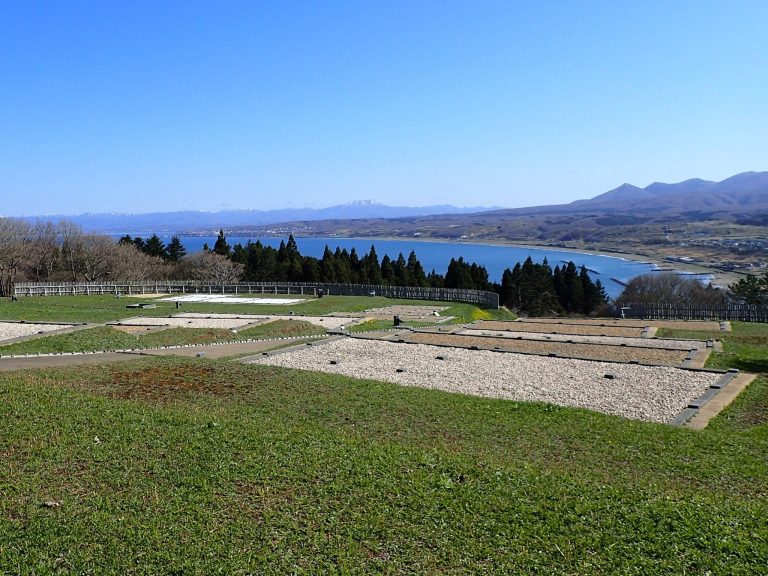
Goryōkaku’s surviving layout is preserved within the surrounding park as a five-pointed star. The fortress covered approximately 251,400 square meters, with walls about 5 meters high. The recorded construction material is wood. A water-filled moat surrounds the walls, and an embankment reinforces its defensive perimeter. Together, the angular plan, moat, and projecting defenses express the European fortification principles used in its design.
Fortress defenses
The star-shaped bastions formed the principal defensive structure. Their projecting angles created positions for additional guns and limited the ground that could not be reached by cannon fire. A ravelin, an independent triangular outwork placed outside the main wall to protect an approach or strengthen the space between bastions, stood on the southwestern side. The fortress also contained more than 30 service buildings and an observation tower, although most of these historical structures were damaged during the 1869 assault or demolished afterward.
Magistrate’s office
The magistrate’s office is the principal partial reconstruction within the former fortress. It represents the Tokugawa shogunate’s brief administrative center for Hokkaido and was rebuilt after planning and archaeological work that began in 1985. Completed in 2010, the building contains exhibitions explaining the office’s history, the development of Goryōkaku, and the process by which the reconstruction was carried out.
Observation tower and park
An observation tower and visitor center were built next to the fortress in 2006. The tower rises 60 meters and includes a historical exhibition and statues of Hijikata Toshizō, a senior commander of the Shinsengumi, the military-police force that supported the Tokugawa shogunate during the Boshin War. The park also contains numerous cherry trees while retaining the fortress’s star-shaped ground plan.