Nihonmatsu Castle: A Hilltop Castle and Domain Seat in Japan


Site at a Glance
- Rating
- 4.2
- Popularity
- Medium
- Country
- Japan
- Primary era
- Medieval
- External website
- Open
- Eras represented
- Medieval
- Civilizations
- Ashikaga shogunate, Tokugawa
- Site type
- Military
- Remains
- Castle
On this page12 sections
History
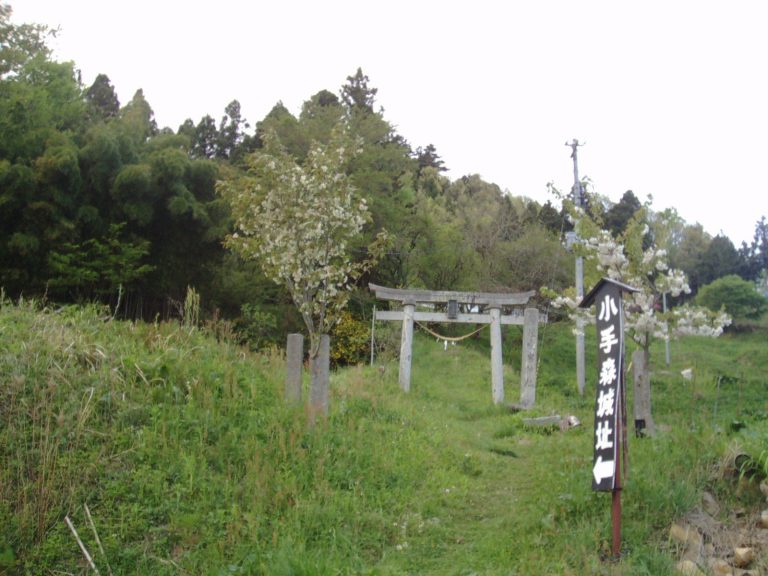
Nihonmatsu Castle, in Nihommatsu, Japan, is a Japanese hilltop castle whose principal fortification was built or rebuilt in the early fifteenth century during the Muromachi period, the era of Ashikaga shogunate rule. Also called Kasumi-ga-jo and Shirahata-jo, it developed from an earlier fortified residence established in 1341 by Hatakeyama Takakuni, who had been appointed military governor of Ōshū by the Ashikaga shogunate. Takakuni changed the place-name to Nihonmatsu, and the castle later became the centre of regional rule, military conflict, and domain administration.
From fortified residence to hilltop castle
Takakuni’s residence stood at Tonden-ga-oka, a low rise with a largely residential character. The principal castle was later established about 1.5 kilometres to the south on Shirahata Peak, where the more elevated position offered stronger natural defence. Nihonmatsu Mitsuyasu is associated with the construction or rebuilding of the hilltop fortification in the early fifteenth century. Other traditions place its construction in 1414 or between 1441 and 1443. The move to Shirahata Peak took place amid worsening regional conditions after the Kan’ō Disturbance, a conflict within the Ashikaga ruling order.
The Nihonmatsu clan controlled the castle during the Sengoku period, an age of prolonged warfare among competing regional powers. In 1585, Nihonmatsu Yoshitsugu tried to surrender to Date Terumune but instead took him hostage. Date Masamune’s forces counterattacked, and both Yoshitsugu and Terumune were killed. Masamune then attacked Nihonmatsu Castle, whose defenders, led by Yoshitsugu’s son Kuniōmaru, resisted with assistance from Satake Yoshishige, Sōma Yoshitane, and other allies during the Battle of Hitotoribashi.
Masamune renewed the assault in 1586. The castle was surrendered on July 16 after an internal defector appeared and Sōma Yoshitane mediated the settlement. This ended the Nihonmatsu clan’s rule. Masamune appointed Katakura Kagetsuna and later Date Shigezane as castellans, placing the stronghold under Date control.
Successive domain governments
In 1591, after the postwar settlement of the Kasai–Osaki uprising, Toyotomi Hideyoshi ordered Date Masamune’s transfer to Iwadeyama. Nihonmatsu then became a subsidiary castle of Gamō Ujisato’s Aizu domain. Gamō appointed Gamō Satonari and Machino Shigeyori to govern it. When Gamō Hideyuki was transferred in 1598, Uesugi Kagekatsu entered Aizu and appointed Shimojo Tadachika as governor.
Following the Battle of Sekigahara in 1600, Uesugi Kagekatsu was transferred to Yonezawa and Gamō Hideyuki returned to Aizu. Nihonmatsu was subsequently governed by Umehara Yazaemon and Kadoya Kan’emon, followed by Motoyama Buzen, Motoyama Kawachi, and later Tonoike Shinano.
In 1627, after Gamō Hideyuki’s heir died without a successor and his second son was transferred to Iyo-Matsuyama, Matsushita Shigetsuna entered Nihonmatsu from Karasuyama with a fief assessed at 50,000 koku, a historical measure of agricultural production used to express a domain’s economic scale. Shigetsuna died in 1628, and his son Nagatsuna was transferred to Miharu. Control then passed to Kato Akitoshi, the second son of Kato Yoshiakira.
In 1643, after Kato Akinari and his nephew Akitatsu were dispossessed, the Niwa clan entered Nihonmatsu from Shirakawa-Komine with a domain assessed at 100,700 koku. Niwa Mitsushige substantially remodelled the castle, which became the administrative seat of Nihonmatsu Domain. The Niwa family retained it as their residence until the Meiji Restoration. Under Niwa rule, political and administrative activity shifted from the summit to the foot of the mountain, leaving the old main enclosure with little practical function while many levelled areas remained around it.
War, demolition, and preservation
In 1868, Nihonmatsu Domain joined the Ōuetsu Reppan Alliance, a coalition of northern domains that opposed the new Meiji government during the Boshin War, the civil conflict that ended the Tokugawa shogunate. On July 29, while most of the domain’s troops were fighting at the Shirakawa front, government forces reached the castle town. Nihonmatsu fell after a single day of fighting in the Battle of Shirakawa and the Battle of Nihonmatsu.
The Nihonmatsu Boy Corps was mobilized during the fighting. A total of 337 Nihonmatsu samurai and 206 samurai from allied domains were killed, and many castle buildings burned. Domain lord Niwa Nagakuni fled to Yonezawa and surrendered in September. He retained the domain, but its land assessment was reduced by half.
In 1872, the remaining buildings, including the Minowa Gate and its attached turret, were demolished under the Castle Abolition Order, and the grounds were converted into a park. The Minowa Gate and turret were reconstructed in wood in 1982. Between 1993 and 1995, restoration work repaired the main enclosure, restored its stone foundation platform, and improved the enclosure’s stone walls. The ruins became a National Historic Site in 2007, a Japanese legal designation protecting places considered important to the country’s history. Nihonmatsu Castle had also been selected as one of Japan’s 100 Fine Castles in 2006, while the grounds, maintained as Kasumiga-jo Park, were selected among Japan’s 100 notable cherry-blossom sites.
Remains
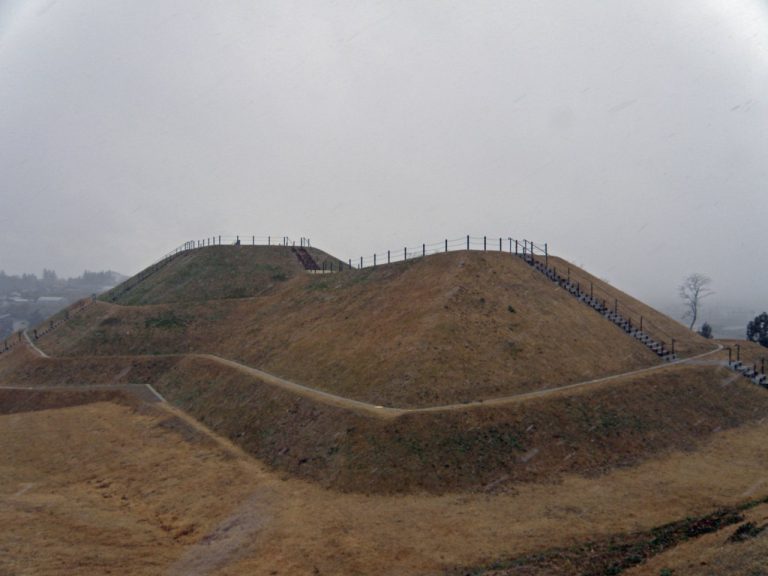
Nihonmatsu Castle occupies a spur of the Adatara Mountains beside the Abukuma River, north of central Nihommatsu. Shirahata Peak rises to 345 metres, and the main enclosure stood at the summit, about 120 metres above the surrounding plain. The castle followed a terraced hilltop layout, with secondary enclosures on the eastern and southern ridges. A dry moat cut across the northwest ridge, the natural route connecting the site with another mountain.
Hilltop fortifications
Main enclosure and stone walls
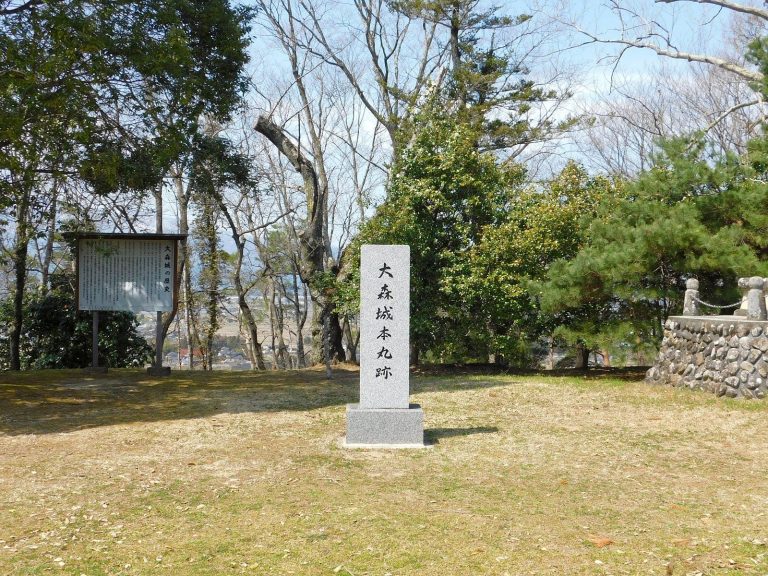
The summit enclosure formed the defensive core of the castle. During the late sixteenth century, Gamō Ujisato expanded the site and gave it a series of terraces. Immediately below the main enclosure, builders constructed a large stone wall using Anō-style masonry, a technique that uses roughly shaped stones laid to form a wall. This work gave the castle the appearance of a fortified stronghold of the Oda and Toyotomi period. Further high stone walls were added around the lower part of the castle after Kato Yoshiakira entered Aizu and the territory came under Kato control.
Niwa Mitsushige’s reconstruction in 1643 added a three-story keep to the main enclosure. The keep and many other buildings were lost during the fighting of 1868, and the remaining structures were demolished in 1872. The keep’s stone foundation platform survives, together with the main enclosure’s stone walls, which were restored during the 1990s. Cut ditches and numerous levelled areas around the summit also remain.
Ridges, terraces, and defensive approaches
The seventeenth-century expansion incorporated Kannon Ridge, which runs east to west south of the castle, into the precinct. The area enclosed by the castle and the ridge became samurai residential land, while a passage was cut through the ridge. Gates at this passage formed an outer defensive line, and the resulting enclosed quarter survives in the place-name Kaku-nai.
The enlarged precinct had a broad horseshoe-like form open to the east. Attackers approaching from outside had to cross the ridge and its cut passage before reaching the castle. The arrangement concealed nearly the entire castle from areas outside the precinct, apart from the main enclosure. A water moat and gates protected the eastern opening. Modern road improvements removed a former zigzag in the moat line. The northeastern ridge was relatively gentle, while the terrace escarpment of the Koigawa River to the north contributed additional defensive strength.
Gates, religious enclosures, and surviving features
Minowa Gate and tea pavilion
The reconstructed Minowa Gate and its attached yagura, a castle turret used for defence, storage, or surveillance, stand among the surviving and reconstructed features. Both were rebuilt in wood in 1982 after the original structures were demolished in 1872. The former castle tea pavilion Senshintei was relocated within the grounds during the Meiji period and survives as a cultural property designated by Fukushima Prefecture.
Religious enclosures and western approach
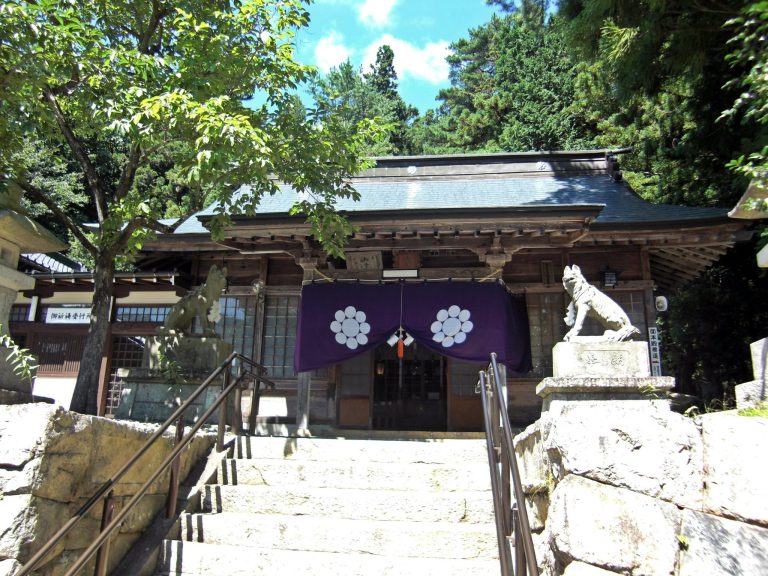
Temples and shrines were concentrated along the southern face of Kannon Ridge and on both sides of the valley extending east from the water moat. Temples placed toward the back of the valley could serve as troop stations and as launching points for attacks. Nihonmatsu Shrine, the largest religious complex in the castle town, occupied a ridge on Kannon Ridge’s southern face and functioned as an independent enclosure. The western rear approach, a topographical weakness, was reinforced by Dairinji and Ryusenji temples.
Inscription and commemorative monuments
A stone monument at the castle entrance bears instructions concerning domain administration and official discipline. Niwa Takahiro, the seventh lord of Nihonmatsu Domain, had the inscription carved into a natural stone overnight after his retainer and Confucian scholar Iwaida Sakuhai proposed it. The monument was designated the former Nihonmatsu Domain admonitory-inscription monument in 1935.
A group of monuments near the reconstructed Minowa Gate commemorates the Nihonmatsu Boy Corps, which was mobilized during the castle’s final battle in 1868.