Abu Sa’id Abu’l-Khayr Mausoleum: A Seljuk Memorial in Turkmenistan


Site at a Glance
- Rating
- 4.8
- Popularity
- Very Low
- Country
- Turkmenistan
- Primary era
- Medieval
- Eras represented
- Medieval
- Civilizations
- Ilkhanate, Seljuk
- Site type
- Religious
- Remains
- Tomb
On this page5 sections
History
The Abu Sa’id Abu’l-Khayr Mausoleum is an eleventh-century Seljuk mausoleum in Turkmenistan, built over the grave of the Sufi Abu Sa’id Abu’l-Khayr. The Seljuks were a Turkic ruling dynasty that dominated much of Central and Western Asia during the eleventh and twelfth centuries, a period associated with major developments in Islamic monumental architecture. Abu Sa’id lived from 968 to 1049 and was regarded as a prominent philosopher and Persian scholar of the fourth and fifth Islamic centuries.
Seljuk foundation
Seljuk sultans ordered the mausoleum’s construction in 1049, shortly after Abu Sa’id’s death. It belonged to the Seljuk architectural tradition of the eleventh century and commemorated a religious figure associated with Sufism, the mystical tradition within Islam. The building originally stood in Mehne, a city that benefited from trade along the Silk Road.
Later remodelling and survival
Mehne was eventually abandoned because of water shortages, leaving the mausoleum as the settlement’s only surviving remnant. During the first half of the fourteenth century, the building underwent partial renovation. Much of its eleventh-century fabric remained, while the entrance was substantially reshaped and given new decoration.
Archaeological investigation has continued since the twentieth century because of the mausoleum’s architectural and historical importance. The government of Turkmenistan registers and protects it as a historical and cultural monument. It remains a pilgrimage site for Turkmen people and other admirers of Abu Sa’id. Local residents maintain the building, which has also been described as requiring restoration.
Remains
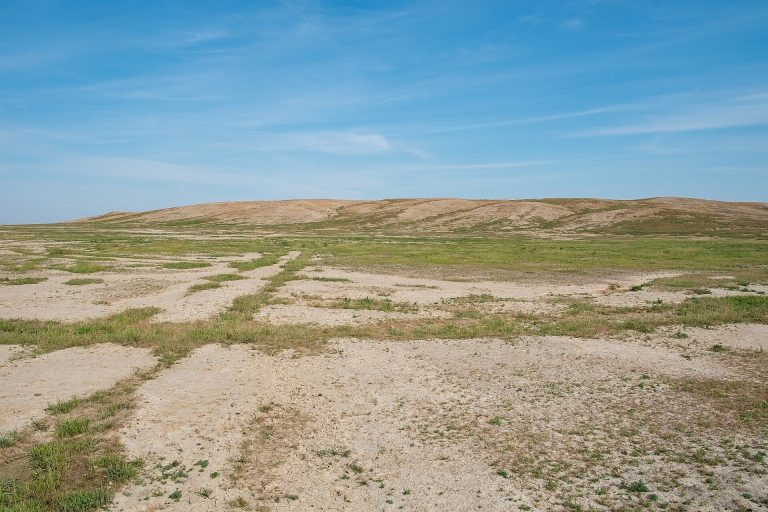
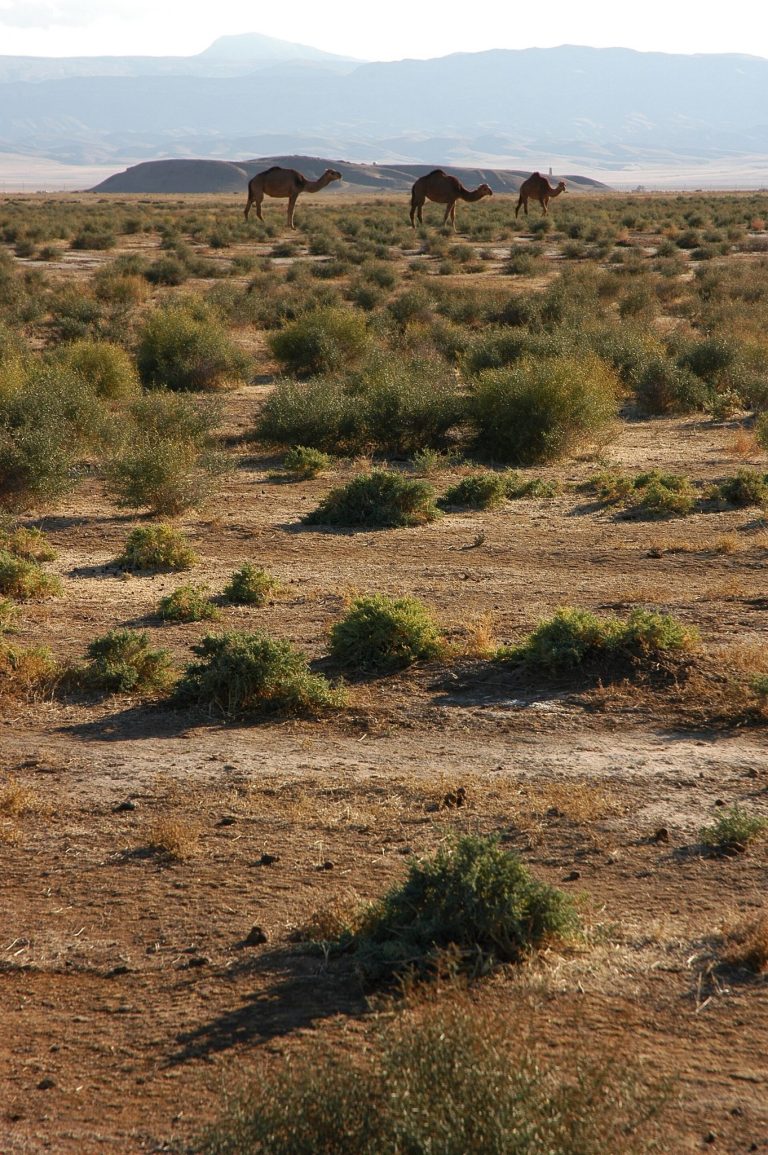
The mausoleum stands near the settlement of Mehne in Ahal Province’s Kaka District, about 5 kilometres northeast of the present settlement and near Dushak. It occupies a largely uninhabited part of the Karakum Desert, where thorn and scrub surround the surviving structure. The site lies about 20 kilometres from the Iranian border.
Mausoleum structure
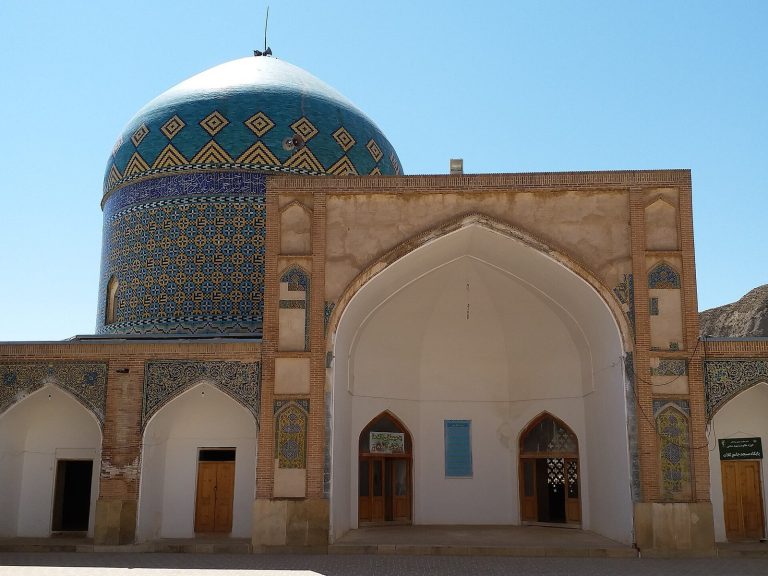
The building has a square plan, with sides measuring approximately 10 metres and a floor area of about 100 square metres. Its roof is formed by two domes. The entrance takes the form of a pishtak, a monumental projecting façade that frames a recessed portal in Islamic architecture. Its present appearance largely reflects the fourteenth-century remodelling, including a multicoloured mosaic of blue, green, and turquoise tiles around the main entrance.
Much of the remaining fabric has changed little since the eleventh-century construction, apart from the later alterations. Several Arabic inscriptions cover the interior walls. An eight-pointed star decorates the inner surface of the dome, while ornamental designs appear across the interior wall surfaces. The exterior is made of mud and has deteriorated, with parts described as collapsing and in need of restoration.