Ulug Depe: An Ancient Bronze Age Settlement in Turkmenistan
Site at a Glance
- Popularity
- Very Low
- Country
- Turkmenistan
- Primary era
- Bronze Age
- Eras represented
- Stone Age, Bronze Age, Iron Age
- Civilizations
- Achaemenid
- Site type
- City
On this page7 sections
History
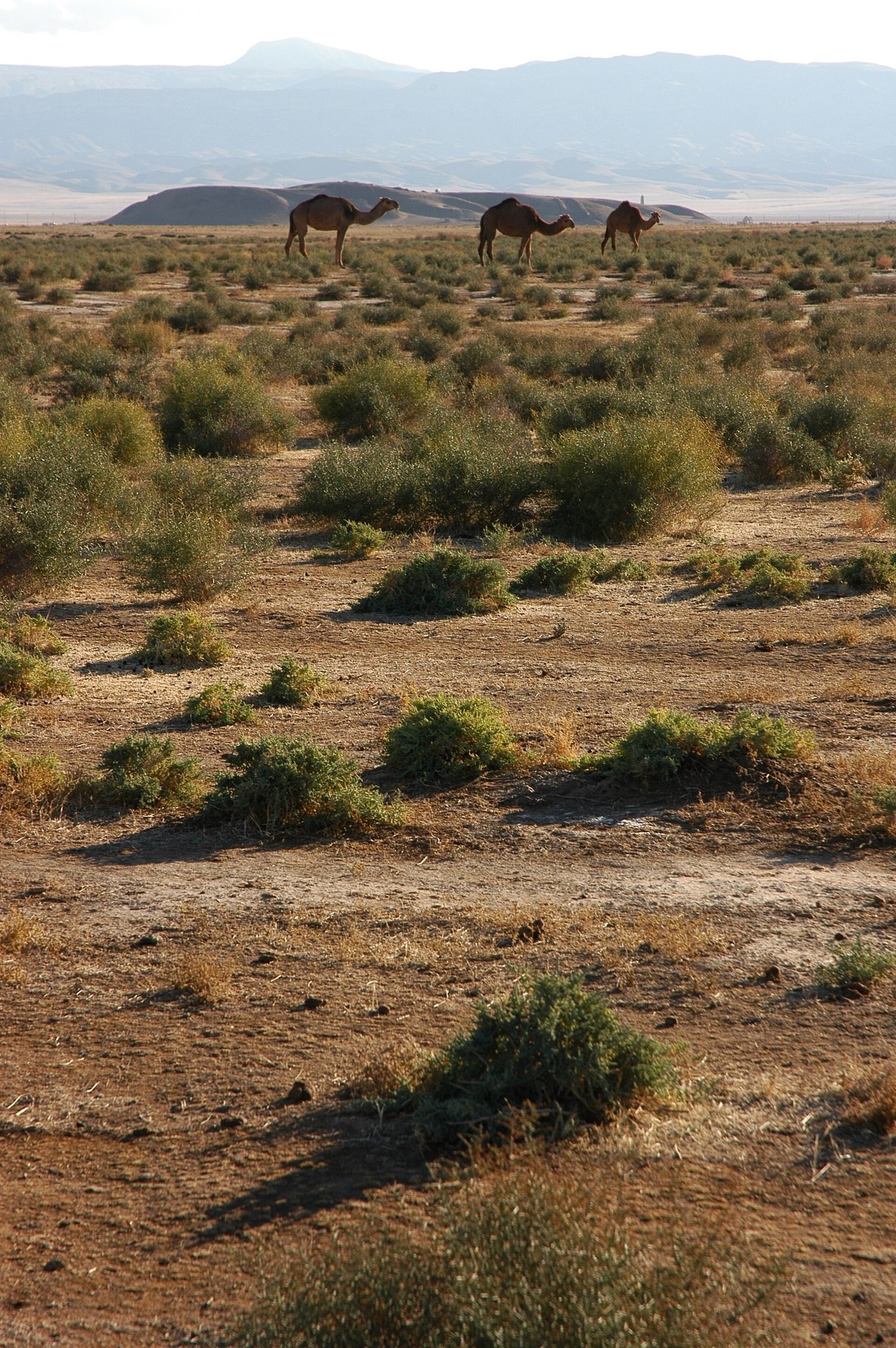
Ulug Depe is an ancient settlement near Dushak in Turkmenistan, developed as an agricultural town during the Early Bronze Age in the fertile foothills north of the Kopet Dag Mountains. Its occupation sequence begins in the Late Neolithic, includes the Jeitun culture of the sixth millennium BCE, and continues through the pre-Achaemenid period. This long sequence places the settlement within the history of the Oxus civilization, also called the Bactria-Margiana Archaeological Complex, a Bronze Age cultural complex centered in parts of Central Asia.
Long occupation and Bronze Age development
The settlement grew in a productive agricultural zone at the foot of the mountains. Its layers preserve successive phases of occupation rather than a single period of use, allowing changes in the community to be studied over several thousand years. Later archaeological work identified pottery associated with the Namazga III and Namazga IV periods, chronological phases used to study Bronze Age cultures in southern Central Asia.
Ulug Depe is also connected with wider questions about the Oxus civilization and its relationships with the Elamite, Mesopotamian, and Indus civilizations. Elam was centered mainly in what is now southwestern Iran, Mesopotamia refers to the region between the Tigris and Euphrates rivers, and the Indus civilization developed in the Indus Valley and neighboring areas. The eventual end of the Oxus civilization remains insufficiently understood. Explanations have emphasized internal political conflict, tensions between social groups, economic disorder, and other upheavals.
Archaeological investigations
Alexander Marushenko discovered Ulug Depe in 1930. Systematic Soviet research began in the 1950s under Viktor Sarianidi, an archaeologist known for investigating Bronze Age sites in Central Asia. By the late 1960s, Sarianidi had established the importance of Ulug Depe and its extended occupation sequence. These investigations helped identify remains associated with the Bactria-Margiana Archaeological Complex and supported the interpretation of a distinct Bronze Age civilization in the region.
Since 2001, extensive work has been carried out by the French Centre for Archaeological Research in the Indus-Balochistan, Central Asian, and Eastern regions in cooperation with Turkmenistan’s national department for the conservation, research, and restoration of historical and cultural monuments. Olivier Lecomte directed the initial French-led research, followed later by Julio Bendezu-Sarmiento. Archaeologists from several countries, specialists connected with the Abiverd State Historical and Cultural Conservation institution, and students from the University of Paris took part in the excavations.
In 2004, an investigation searched for the settlement associated with the citadel. French fieldwork in 2007 identified several principal settlement phases, while the Archaeological Research Laboratory and the Guimet National Museum also participated. The research received support from the French Ministry of Foreign Affairs. Ulug Depe is now included in the Abiverd Archaeological Park, one of Turkmenistan’s eight archaeological parks. Since 2004, restoration work has sought to limit weathering and erosion and to make the remains easier to understand. The program is described as restoration because it aims to re-establish the citadel’s outline before erosion altered it. Objects excavated at the site are displayed at the Ak Bugday Museum in Ashgabat.
Remains
Mound and fortified citadel
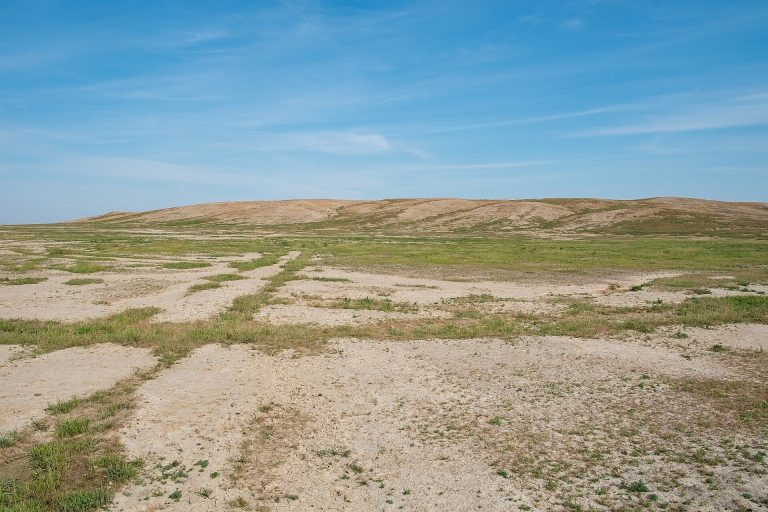
Ulug Depe covers approximately 13 hectares and occupies a mound about 30 metres high. A fortified citadel dominates the lower part of the ancient city. Built in mud brick, which is sun-dried earthen brick, the citadel was reinforced by buttresses, or projecting supports that strengthen walls. It dates to the early Achaemenid period, the era when the Achaemenid Persian Empire ruled much of the Iranian world and adjoining regions during the first millennium BCE.
The citadel’s precise function remains uncertain. It may have contained an important residence, perhaps with an upper storey that later collapsed. Its rooms appear to have served defensive and residential purposes, as well as storage. Restoration workers make bricks measuring 60 by 30 centimetres with methods considered comparable to ancient techniques. These bricks are used to consolidate the citadel walls and restore boundaries eroded over time.
Settlement finds
Excavations in the settlement produced clay figurines and other clay objects, along with geometric ornaments, stone figures, and representations of a fertility goddess. The finds provide material evidence for the activities and visual traditions of the communities that occupied Ulug Depe across its long history. A 2004 investigation connected these discoveries with the settlement surrounding the citadel, while later work recovered additional pottery sherds belonging to the Namazga III and Namazga IV periods.
Agricultural and ritual evidence
Grape pips found at Ulug Depe indicate that the ancient community practiced agriculture in the zone below the Kopet Dag Mountains. The evidence complements the settlement’s position in a fertile area and helps identify the economic foundations of its occupation.
Late Bronze Age layers contained an installation used to prepare soma, also called haoma, a ritual drink known from Indo-Iranian traditions. It consisted of a very large stone mortar and pestle, a pressing stone with a hemispherical projection at its center, and a second similar stone with a hemispherical depression. Together, these objects preserve evidence of a specialized preparation process within the settlement’s later Bronze Age occupation.