Toshhovli Palace: The Khan’s Residence in Khiva


Site at a Glance
- Rating
- 4.8
- Popularity
- Low
- Country
- Uzbekistan
- Primary era
- Modern
- Eras represented
- Modern
- Civilizations
- Khanate of Khiva
- Site type
- Domestic
- Remains
- Palace
On this page9 sections
History
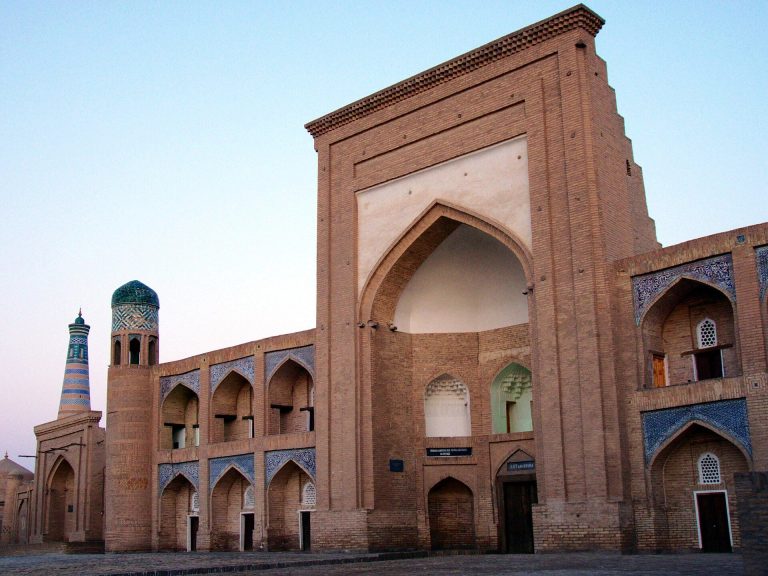
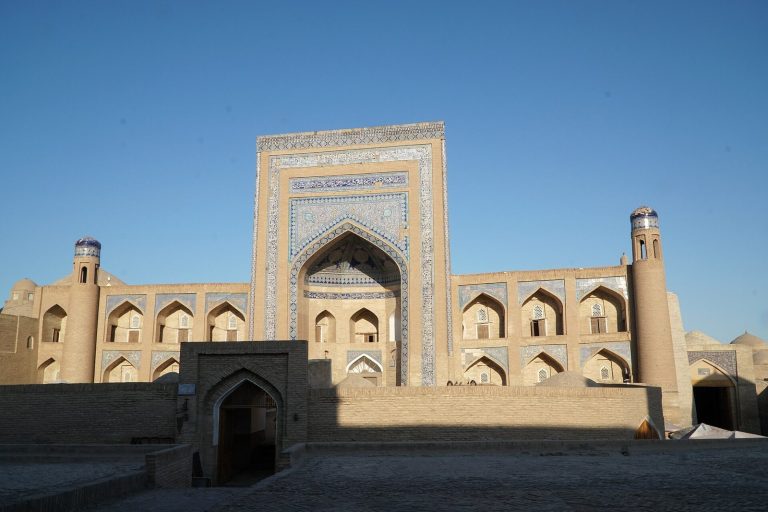
Toshhovli Palace is a royal residence in Khiva, Uzbekistan, built in the 1830s for Allah Kuli Bahadur Khan of the Khiva Khanate and completed in 1841. Its architecture combines the fortress-like exterior and enclosed courtyards of Khorezmian residential traditions with richly decorated iwans, or roofed reception spaces opening onto courtyards. The palace became the main residence of the khan and reflected the renewed prosperity of Khiva during Allah Kuli Khan’s reign.
Construction under Allah Kuli Khan
Allah Kuli Khan ruled the Khiva Khanate, the state governed from Khiva, from 1825 to 1842. His reign was associated with the restoration of central authority, successes in foreign policy, and stronger commercial connections with the Russian Empire. These conditions supported an ambitious building program in the eastern part of Khiva, where the city’s urban center was being extended toward the Palwan-Darwaza gate.
Toshhovli Palace formed part of this expansion alongside the Alla Kuli Khan Madrasa, a caravanserai, and a new passage for merchants. Approximately 1,000 enslaved laborers took part in the palace’s construction. The first architect was reportedly impaled on Allah Kuli Khan’s order after saying that he could not complete the work within two years. Kalandar Khivaghi succeeded him and finished the palace over approximately eight years.
The ceramist Abdullah Djinn contributed to the palace’s ornament, and some framed decorative panels, known as cartouches, are said to preserve his name. The palace’s elaborate ceramic surfaces, carved wood, and painted ceilings expressed the wealth available to the Khiva court during this period.
Royal residence and later use
Toshhovli served as the khan’s residence from 1841 until 1880. In that year, Muhammad Rahim Khan II moved to the Konya Ark, another fortified royal complex in Khiva. Since the twentieth century, Toshhovli has been used as a museum.
The palace stands within Itchan Kala, Khiva’s fortified historic district, which has been recognized as a UNESCO World Heritage site since 1990. UNESCO World Heritage status identifies cultural and natural places considered to have exceptional international importance.
Remains
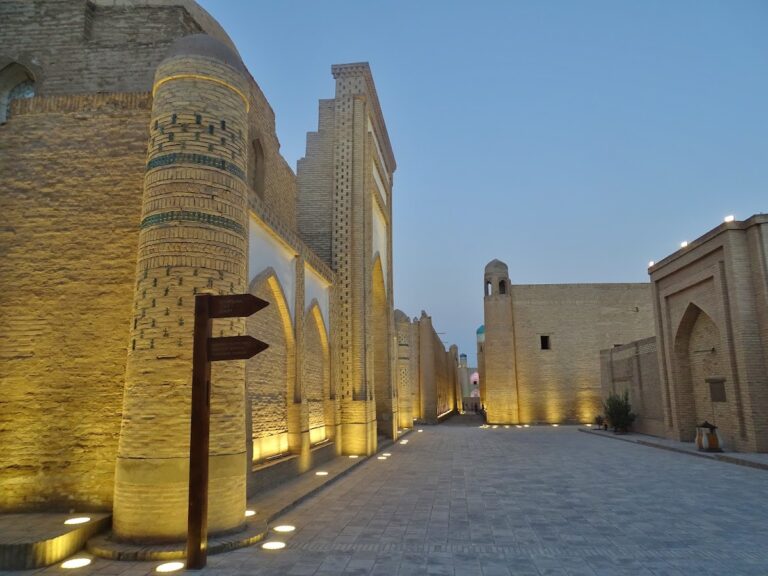
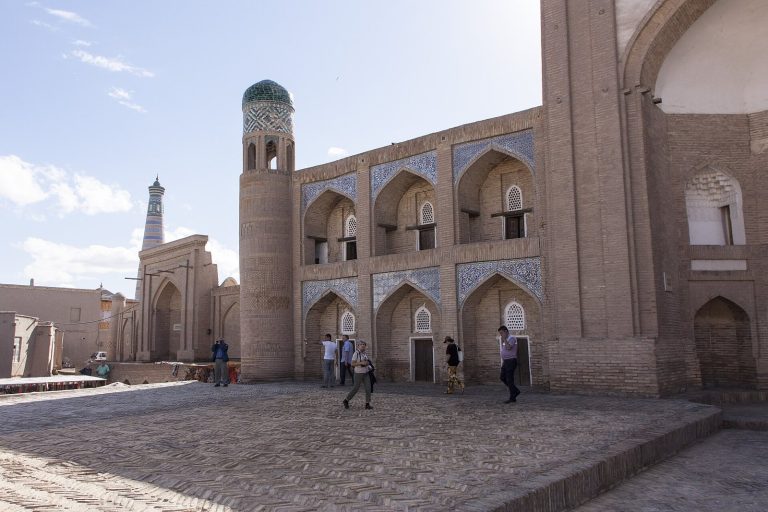
Toshhovli occupies an approximately 80-by-80-meter complex containing more than 260 rooms. The buildings are arranged around three principal courtyards: the Harem in the north, Ichrat Khaouli in the southeast, and Arz Khaouli in the southwest. A labyrinth of rooms and unlit corridors connects these sections. High outer walls, towers, fortified gates, and a crenellated upper edge give the palace the appearance of a stronghold, while its inner spaces follow Khorezmian residential forms with enclosed courtyards, wooden columns, and open loggias.
Residential and ceremonial courtyards
Harem
The Harem was the first section to be built. Its rectangular courtyard measures approximately 49 by 15 meters and is bordered by five lodges, each supported by a carved wooden pillar. Four lodges belonged to the khan’s legitimate wives, while the largest was assigned to the khan. Each apartment followed a repeated arrangement, with a high loggia facing northwest for summer use and an adjoining winter room. In the southern part of the residence, five principal rooms each included an iwan, a living room, and an adjoining room.
A corridor separated the Harem from the palace’s official sections. Additional two-storey rooms accommodated concubines, relatives, and servants. The courtyard also contained a place for a yurt, a portable round dwelling traditionally used by nomadic peoples of Central Asia, and a covered well.
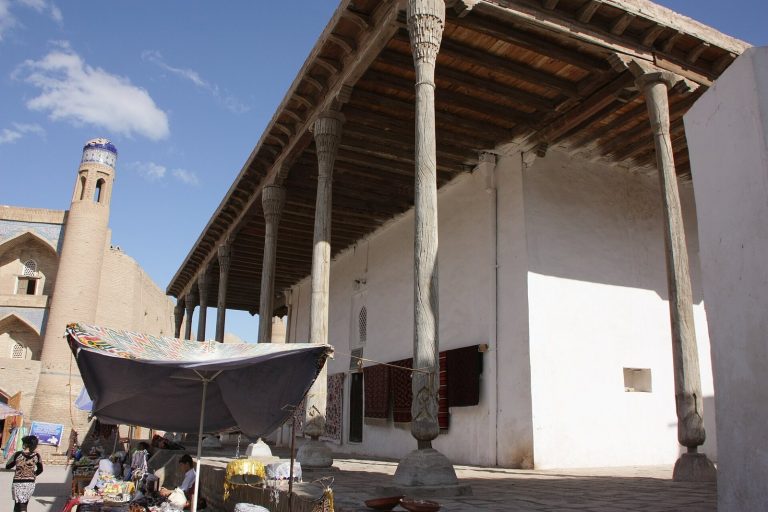
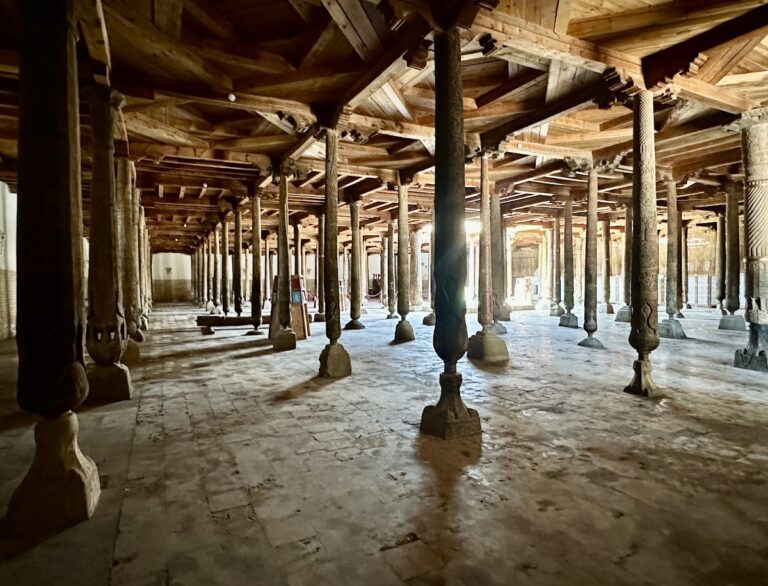
The Harem’s loggias repeat ornamental patterns, while the windows have openwork copper grilles. Blue-and-white maiolica and faience, glazed ceramics used for architectural decoration, cover parts of the surfaces with geometric and floral designs. The ceilings are painted in yellow, red, and warm reddish-brown tones. Marble pillar bases carry cartouches with verses by the Khorezmian poet Muhammad Reza Agachi (1809–1874), including passages about the history of Khiva’s khans. The carved wooden pillars bear plant ornament and bands with Quranic sayings and Islamic blessings. Their decoration was also understood as a protective spiritual amulet.
Ichrat Khaouli
Ichrat Khaouli, the audience hall, was built between 1830 and 1832 and measures approximately 43 by 36.5 meters. Its square courtyard has a southern loggia supported by a carved wooden pillar. This was the place where the khan received guests and ambassadors.
The eastern side of the courtyard provided accommodation for ambassadors and included two circular platforms for erecting tents or yurts. A rounded platform within the courtyard supported the khan’s felt yurt, which served as a formal reception space for distinguished nomadic guests. Blue maiolica forms the principal decorative treatment in this section.
Arz Khaouli
Arz Khaouli, the Court of Justice, was built in 1837 and 1838 in the palace’s southwestern part. Measuring approximately 35 by 40 meters, it served as the setting where the khan mediated disputes and administered justice. Its courtyard is twice the size of Ichrat Khaouli.
Ceramic wall coverings decorate the court. Two side staircases rise to a raised iwan platform, a reception space opening toward the courtyard, and three doors stand at the rear of the iwan. A platform for a yurt is positioned symmetrically with the iwan’s column.
Materials and decoration
Across the palace, carved wooden pillars and doors, painted wooden ceilings, ceramic wall coverings, and blue-and-white maiolica create a unified decorative vocabulary. Some walls contain small jade-green inlaid elements resembling an ancient Zoroastrian symbol. Zoroastrianism was an ancient Iranian religion associated with Ahura Mazda and with symbolism connected to fire and light.