La Joselière dolmen: a Neolithic funerary monument in France
Site at a Glance
- Rating
- 4.4
- Popularity
- Very Low
- Country
- France
- Primary era
- Stone Age
- Eras represented
- Stone Age
- Civilizations
- Unclassified
- Site type
- Burial
- Remains
- Tomb
On this page8 sections
History
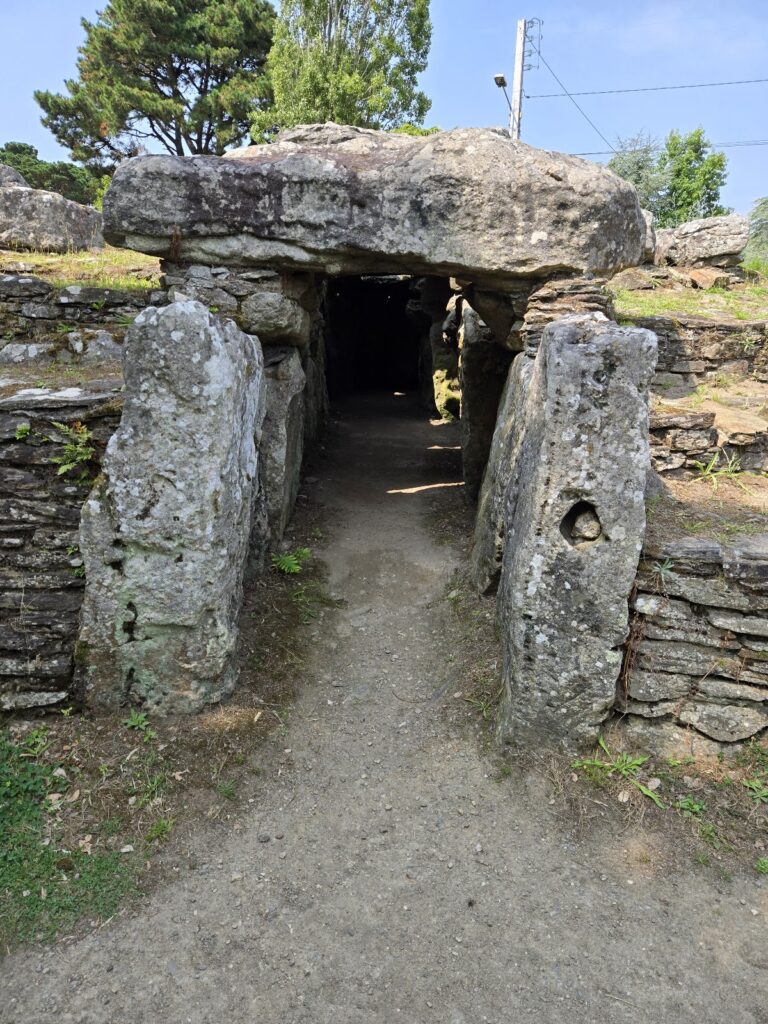
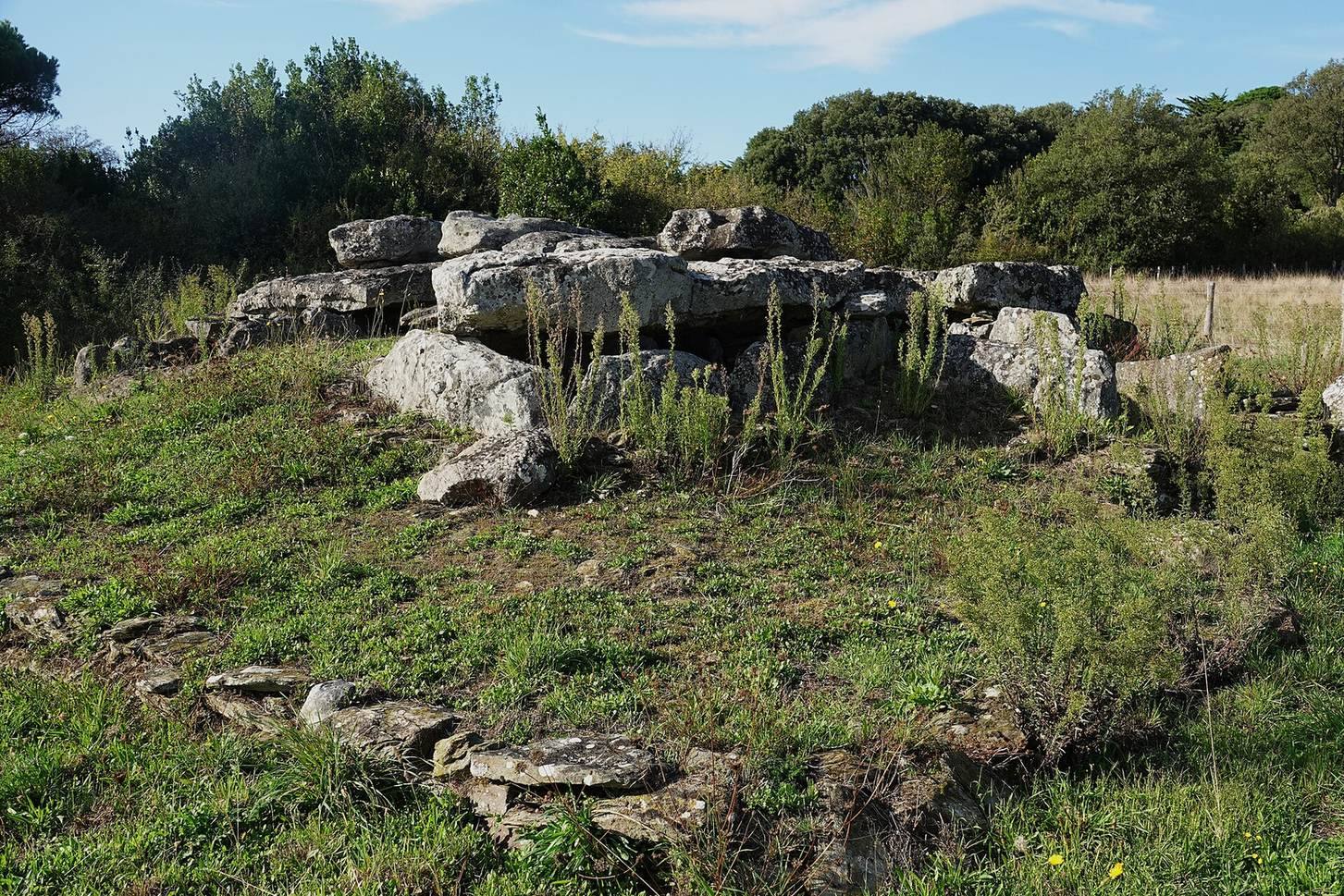
La Joselière dolmen, also called the Pissot dolmen, is a Neolithic funerary monument at Pornic in France, near the Birochère locality and Joselière beach. Built by Neolithic communities during the fourth millennium BC, it is a transepted tomb, a passage grave whose central corridor opens into side chambers, and belongs to the later prehistoric tradition of monumental burial in western Europe.
Neolithic use
Grave goods place the monument in the fourth millennium BC, when farming communities, settled life, pottery, polished stone tools, and large burial monuments spread through much of Europe. Its period of use was contemporary with the Dissignac and Mousseaux burial mounds. A later reuse during the Final Neolithic, the last phase of the Neolithic period, remains possible.
The tomb stands on the coast, about 100 metres from the sea, southeast of Pornic. Its position places it near two other megalithic monuments, the Pré d’Air dolmen and the Boutinardière covered passage, within a wider prehistoric landscape of funerary structures.
Recording and preservation
W. C. Lukis prepared the first known plan of the monument in 1868. Pitre de Lisle du Dreneuc described it in 1882, and the Welsh archaeologist Glyn Daniel referred to it in 1939 as an example of a transepted tomb.
The monument has been protected as a French historic monument since 1978. Modern deposits disturbed parts of the stone mound, leading to a rescue excavation and restoration in 1984 and 1985. J. L’Helgouach directed the restoration, which helped clarify the plan and preserve the surviving structure.
Remains
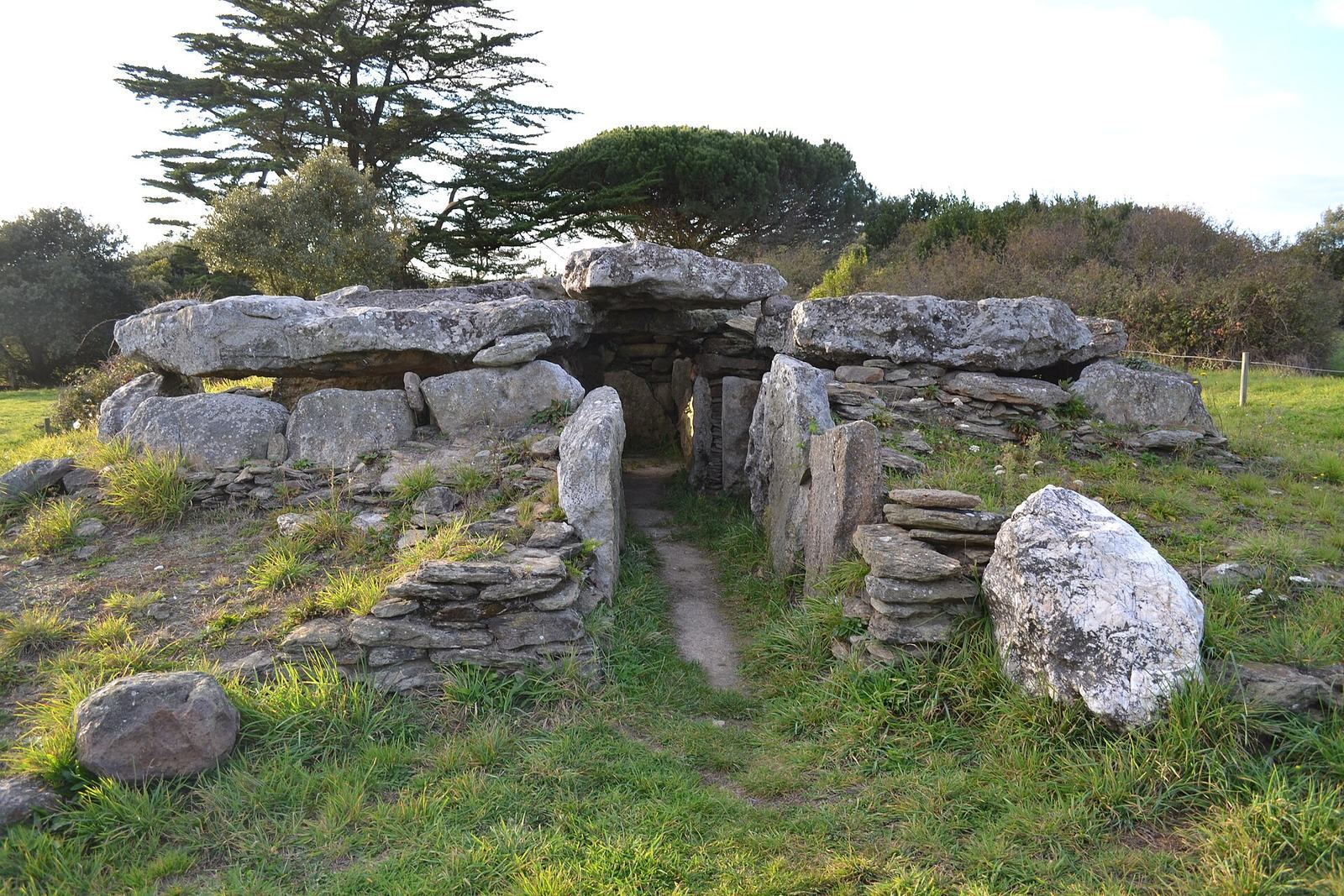
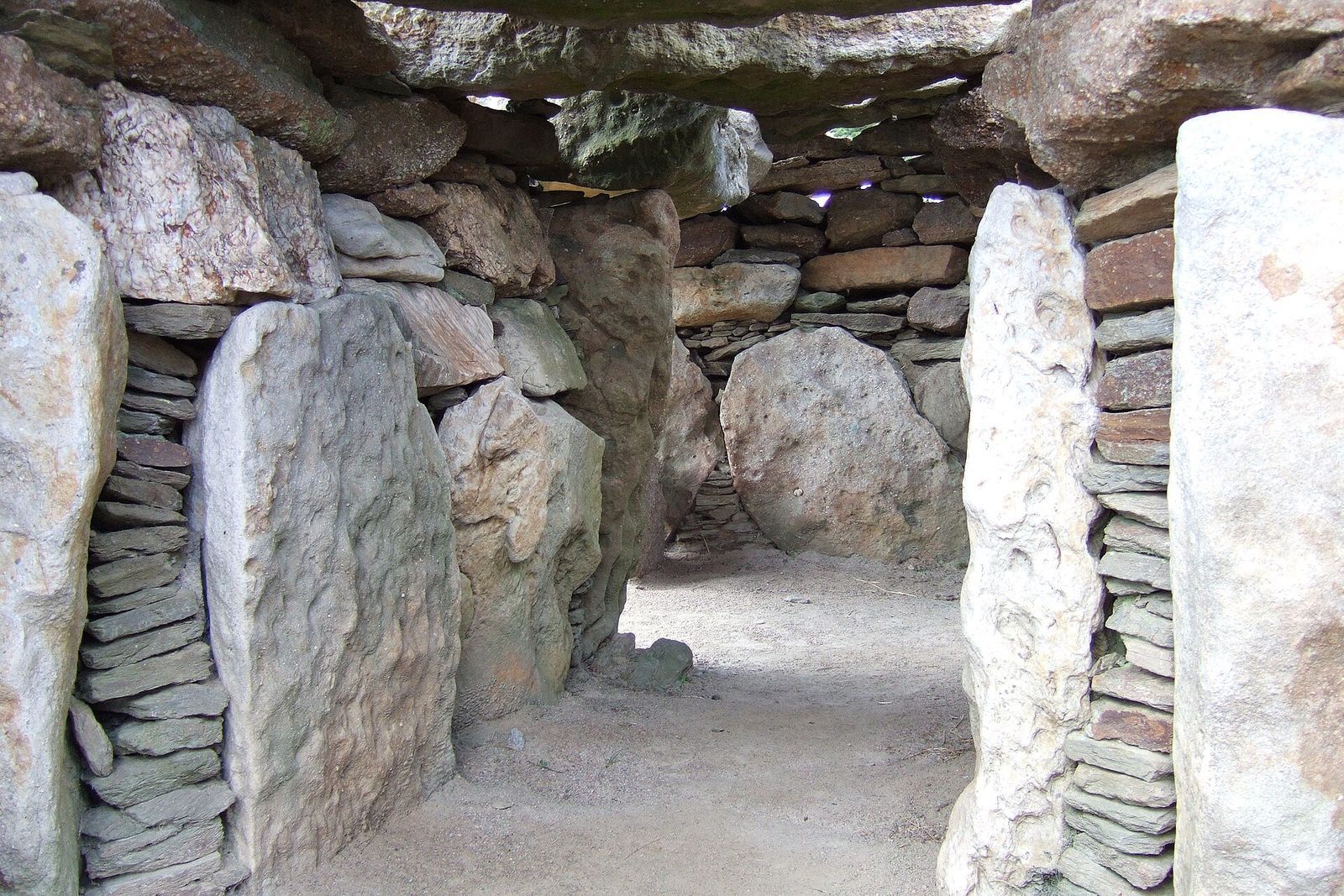
La Joselière is a passage monument enclosed within a roughly square, terraced cairn, or stone mound. The cairn measures about 12 to 14 metres across and rises to approximately 1.5 metres at its centre. Dry-stone masonry, laid without mortar, frames the mound, whose straight facade walls define the approach. The northwestern and northeastern areas, particularly around the entrance, appear to have escaped most of the modern disturbance.
Entrance and passage
The chambers are formed from irregular slabs of Tertiary sandstone, a sandstone dating from the Tertiary geological period. A large white quartz block stands outside the broad entrance on the eastern or southeastern side. From this entrance, oriented toward the southeast, a corridor about 7.5 metres long leads into the burial complex.
The corridor gives access to two rectangular lateral chambers positioned across its line, one on the southern side and one on the eastern side. A stone bearing cupules, deliberately made small hollows, was found in the northeastern corner near the entrance. It had been incorporated into the cairn from the time the monument was constructed.
Burial chambers
Lateral chambers
The two lateral chambers are similar in size, each measuring approximately 2.6 by 1.9 metres, or about 5 square metres. Their associated grave goods included three beads made from variscite and sericite, two mineral materials used for ornament, along with two flint arrowheads. Several blond and grey flint tools, quartzite flakes, and pottery fragments also came from these chambers.
Terminal chambers
At the end of the corridor, the plan can be understood either as one large chamber measuring about 6 by 1.75 metres or as two smaller chambers joined together. The latter interpretation identifies a western chamber and a northern chamber, producing an overall ground plan like a Lorraine cross without its upper arm. Each of the two terminal chambers measures approximately 2.2 by 1.6 metres, or about 3.5 square metres.
The terminal chambers had apparently been emptied before the restoration, but rescue excavation recovered several remains from the western chamber. These included a blond-flint bladelet, a small narrow flint blade, a white-flint flake, and a pottery vessel sherd. Together with the surviving stonework, these finds help define the monument’s prehistoric use and its complex internal arrangement.