Makenyats Vank: A Medieval Armenian Monastery in Armenia


Site at a Glance
- Rating
- 5
- Popularity
- Very Low
- Country
- Armenia
- Primary era
- Medieval
- Eras represented
- Medieval
- Civilizations
- Armenian
- Site type
- Religious
- Remains
- Fortified Monastery
On this page12 sections
History
Makenyats Vank is a medieval monastery of the Armenian Apostolic Church in Armenia, on the edge of Makenis village in Gegharkunik Province. Its foundation is traditionally dated to 851 and attributed to Prince Grigor Supan of Syunik, a historic Armenian region and principality, although a foundation in the late ninth century is considered more likely. The complex developed between the late ninth and thirteenth centuries and became a religious, cultural, and educational center for Gegharkunik.
Early community and destruction
The monastery is associated with an early medieval scholarly tradition. Stepanos Orbelian wrote that Solomon, a vardapet, meaning an Armenian Christian scholar and senior cleric, led Makenyats Vank as its “Father of Fathers.” In 701, Solomon compiled an explanation of the liturgical feasts and a martyrology. During the eighth and ninth centuries, the monastery school was attended by Stepanos Syunetsi, Vahan Goghtnatsi, Catholicos Solomon I of Garnetsi, and Catholicos Mashtots I of Eghivard. A catholicos is the senior bishop who heads an Armenian church.
In 728, raiders led by the Persian Baban invaded Gegharkunik. They reportedly killed 15,000 people, looted Makenyats Vank, and burned and destroyed its buildings. Before the attack, half of the monastic community had moved to Zresk Monastery under Solomon’s leadership, while the other half relocated to the Monastery of the Apostle Eghishe in Artsakh, the historical Armenian name for a region in the eastern South Caucasus. Solomon of Garnetsi restored the abandoned monastery in 788. Catholicos John IV was buried there in 855 after dying during a pastoral visit to Gegharkunik.
Expansion and ecclesiastical authority
At the end of the ninth century, Prince Grigor Supan built the Church of Surb Astvatsatsin beside the monastery’s earlier single-nave basilica and enclosed the complex with a high wall. He endowed the monastery with gardens in Garni, Yerevan, and Yeghegis, five shops in Ani, herds, and other property. As Makenyats Vank grew in influence, it became independent of the Syunik metropolitanate and exercised ecclesiastical authority over Gegharkunik. It accepted the supremacy of Tatev Monastery only in 1513.
The monastery was repaired by Melikbek in the sixteenth century and by its abbot Khachatur of Jugha in 1666. By the eighteenth century, its ecclesiastical jurisdiction included 50 villages and five hermitages. Makenyats Vank also preserved the Holy Sign of Makenyats, a cross containing a relic of the True Cross that had been brought from Edessa, an ancient city in Upper Mesopotamia, in the eleventh century. In 1170, Nerses Shnorhali, a medieval Armenian church leader, theologian, and poet, took from the monastery a set of ecclesiastical regulations developed there for use in other Armenian monasteries.
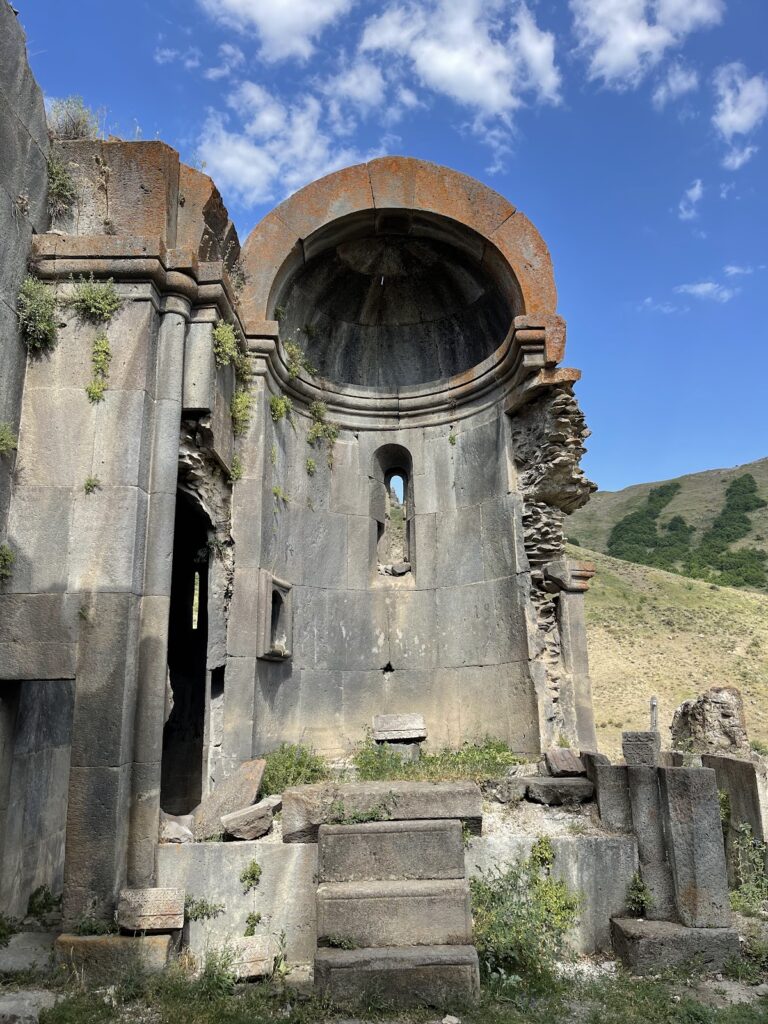
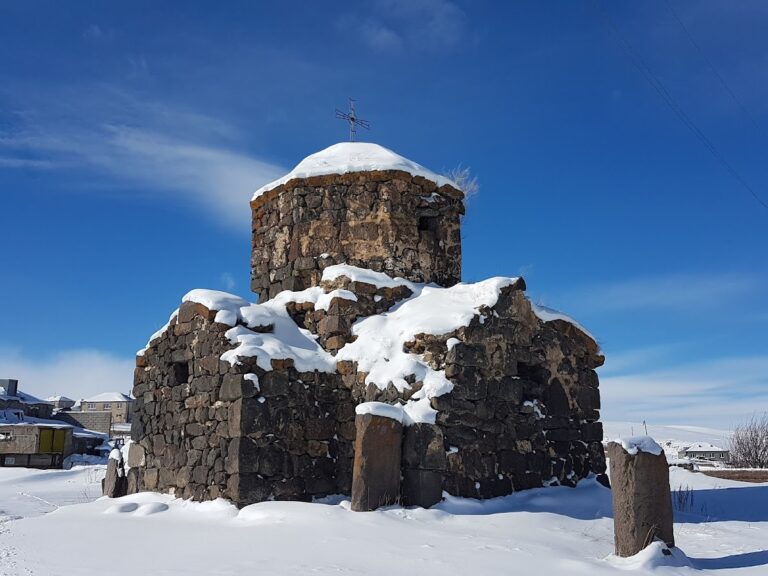
Makenyats Vank is protected as a cultural monument in Armenia. The monastery is now abandoned, with parts of its buildings destroyed and the grounds overgrown.
Remains
Enclosure and churches
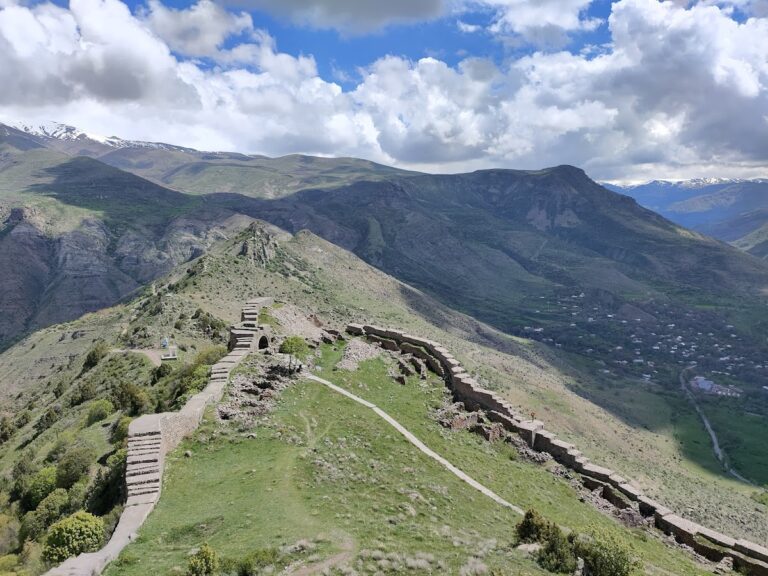
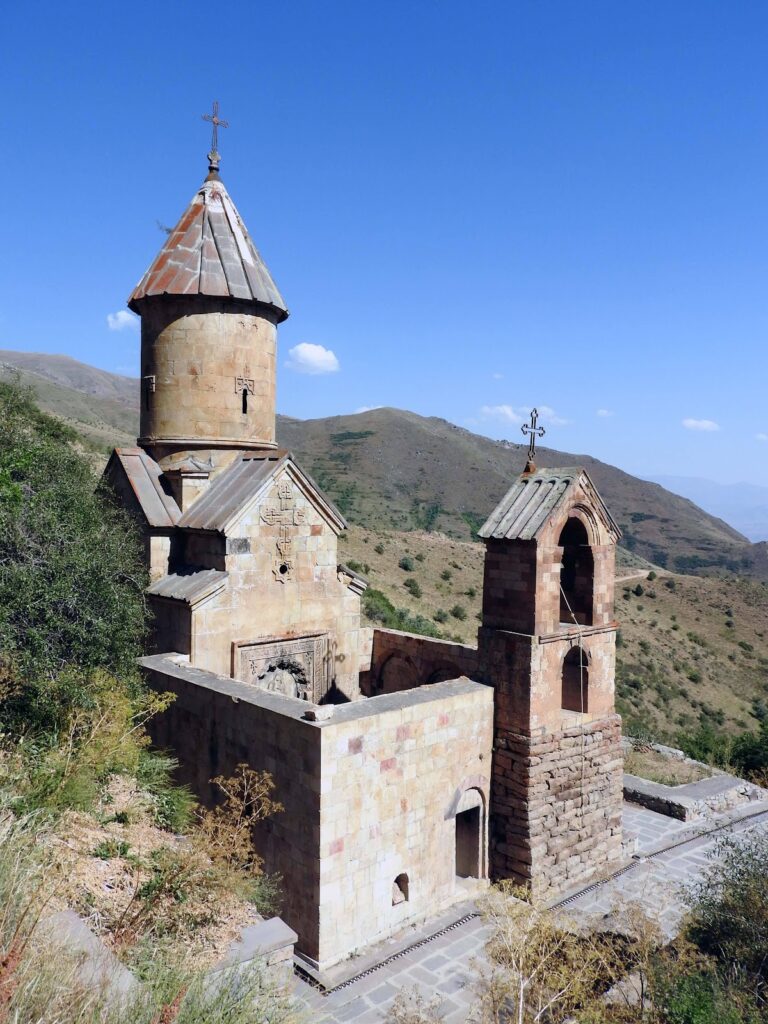
The monastery stands about five kilometres south of Lake Sevan, near Makenis, on a steeply rising rocky site above a gorge beside a river. A perimeter wall encloses the complex, which contains the Church of Surb Astvatsatsin, a gavit, other churches, and a cemetery. A gavit is an Armenian monastic vestibule or hall used for congregational, funerary, and auxiliary religious purposes. The surviving buildings belong to a complex constructed from the late ninth through the thirteenth century.
Church of Surb Astvatsatsin
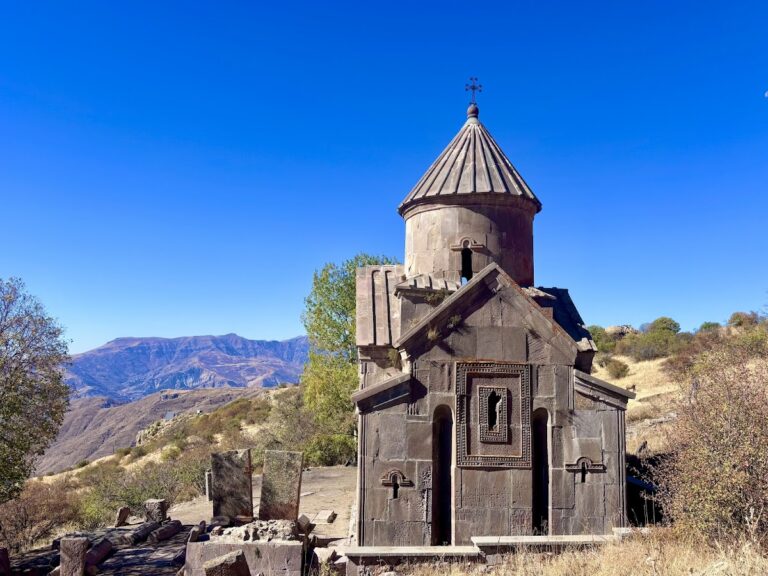
Surb Astvatsatsin is a basalt, cross-domed church with three apses. Its exterior is rectangular, while the interior follows a cruciform plan. Side chambers occupy the eastern side and the northwestern corner. The central conical dome rests on a circular drum pierced by four windows, which illuminate the interior. A smaller dome on a small drum rises above the southwestern entrance.
Two tall additions stand at the western end of the church. Large side chapels flank the altar, and their entrances carry richly decorated reliefs. A bell tower rises above the western gable, while a baptismal font remains visible in the western part of the building. A horse relief appears above the main entrance portal, and another is set at the base of the southwestern column.
Southeastern churches and gavit
Two adjoining barrel-vaulted churches stand on the southeastern side of the monastery. They date to the tenth century. The gavit is largely destroyed, although a chapel on its southwestern side survives.
Cemetery and carved stones
Medieval cemetery
A small cemetery surrounds the church, particularly at its western end. It has been used since the medieval period and contains both medieval and modern graves.
Khachkars
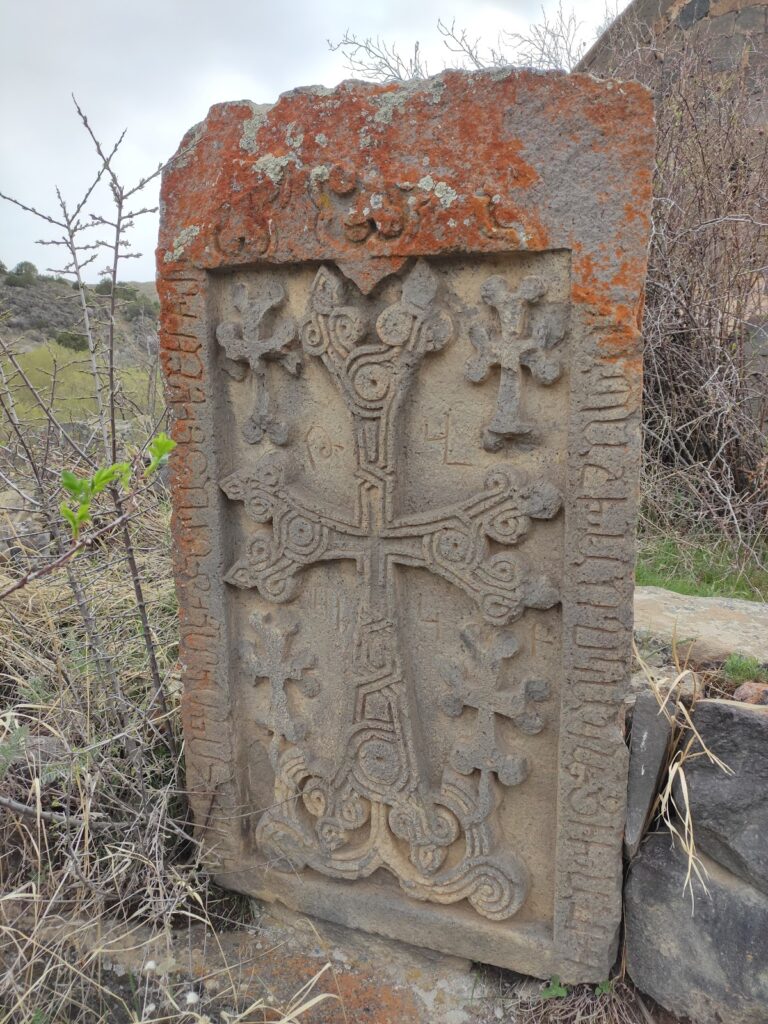
Several khachkars stand on the grounds and inside the church, while many others line the church walls and the outer monastery walls. A khachkar is a carved Armenian memorial stone centered on a cross and commonly surrounded by geometric or vegetal ornament. One large khachkar stands to the left of the church’s main entrance.
Southwestern enclosure
Medieval latrine
A medieval latrine occupies the southwestern corner of the monastery enclosure. It now stands several metres from the riverbank, apparently because the river later changed course.