Santa Maria Assunta: Parish Church and Marian Sanctuary in Serramazzoni


Site at a Glance
- Rating
- 4.5
- Popularity
- Very Low
- Country
- Italy
- Primary era
- Medieval
- External website
- Open
- Eras represented
- Medieval, Early Modern
- Civilizations
- Holy Roman Empire
- Site type
- Religious
- Remains
- Church
On this page8 sections
History
Santa Maria Assunta is a Roman Catholic parish church in Rocca Santa Maria, Serramazzoni, Italy. Its origins are placed in the ninth century, possibly as early as the Carolingian period, the era of the Carolingian dynasty from the eighth to the tenth century. The church is a Romanesque foundation and is regarded as one of the oldest pievi in the Modena mountains. A pieve was an important rural parish church with pastoral and baptismal authority over surrounding communities.
Early Medieval Foundations
A church at the site is recorded in 971. By 1038, it stood near a fortification and a farmstead and was associated with Bonifacio, marquess of Tuscany. Control subsequently passed to his daughter Matilde di Canossa, also known as Matilda of Tuscany, a powerful noblewoman who controlled extensive territories in northern and central Italy. In 1108, Matilde surrendered her rights over the village to Bishop Dodone, transferring them to the Diocese of Modena.
Romanesque Continuity and Later Alterations
The church’s Romanesque structure remained largely unchanged, encouraged by the area’s isolation and limited strategic importance. Around the middle of the eighteenth century, parts of the building were altered in the Baroque taste. The central nave was probably raised, and the bell tower may also have been heightened during this work.
Restoration and Religious Status
Restoration and conservation campaigns took place in 1913 and 1937, followed by further work between 1997 and 2001. In 1974, Santa Maria Assunta was designated a Marian sanctuary, a Catholic shrine dedicated to the Virgin Mary. In 2017, intervention was required on the facade because its sandstone blocks were eroding too rapidly.
Remains
Church Layout and Exterior
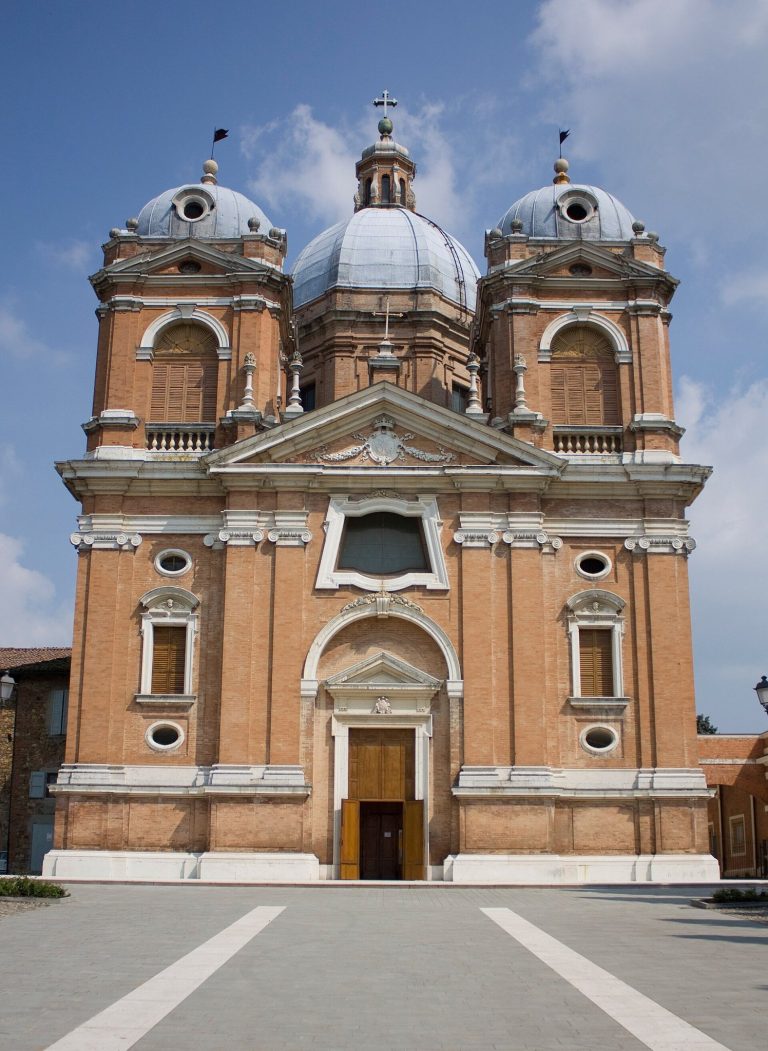
Santa Maria Assunta stands in an isolated, elevated position outside Rocca Santa Maria. Traditionally oriented toward the east, it has a basilican plan with three naves. The large entrance portal has a round arch, while a small two-light window directly above it belongs to the eighteenth-century alterations. A two-storey bell tower rises behind the church on the right, set back over the apse, the area behind the main altar where the church terminates. Exposed stone covers the exterior and interior walls, the facade was rebuilt in stone, and the roof is wooden. The ground floor has few windows.
Interior Carving and Religious Features
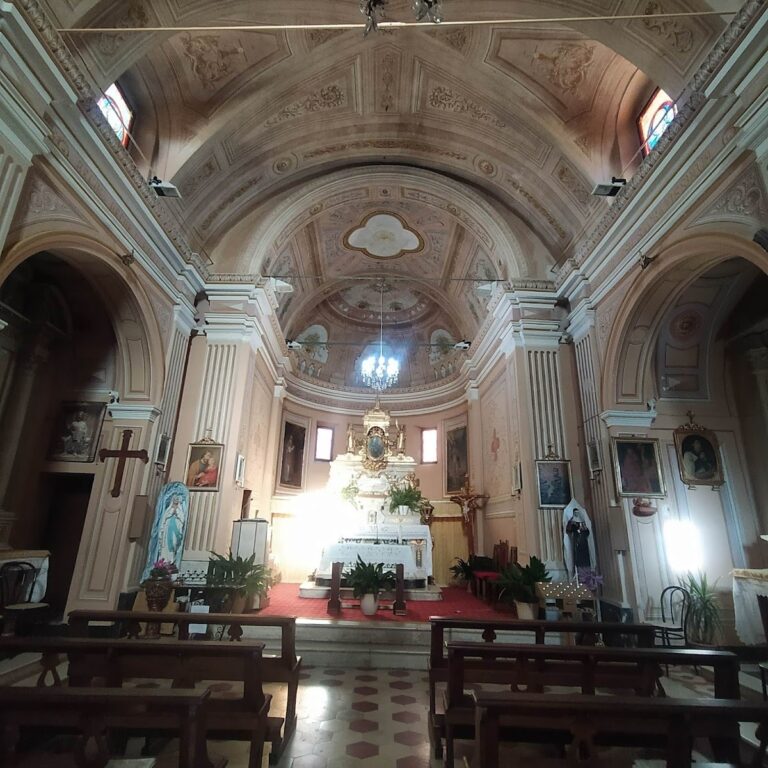
Low, sturdy columns divide the interior into three naves. Their elaborately carved capitals date from the eleventh century and display interlaced vegetation, leaves, flowers, and ribbons in an early Romanesque style. These capitals are regarded as among the finest examples of their kind in northern Italy. In the apse area, a pillar to the left of the high altar carries an ancient tabernacle, a receptacle used in a Catholic church to reserve the Eucharist. Its carving includes a chalice and several ears of grain.
Fresco and Medieval Bell
A fragment of a possibly late-medieval fresco depicting a saint survives in the left nave. Near the church, at the former location of the fortress, stands a bell regarded as one of the oldest in the Province of Modena. It bears the coat of arms of the Da Savignano nobles and the date 1370. Ugolino da Savignano donated it to the village while serving as podestà, a chief civic magistrate, of Parma and Perugia, as well as being a local lord and lord of Monfestino.