Ahmadalilar Mausoleum: A Thirteenth-Century Islamic Shrine in Azerbaijan
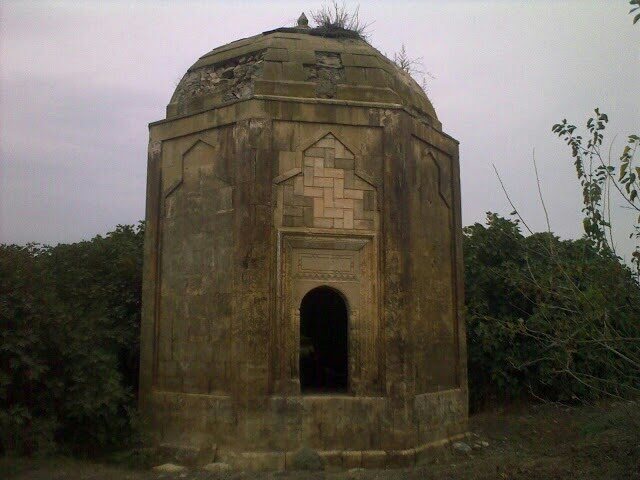
Site at a Glance
- Rating
- 5
- Popularity
- Very Low
- Country
- Azerbaijan
- Primary era
- Medieval
- Eras represented
- Medieval
- Civilizations
- Unclassified
- Site type
- Religious
- Remains
- Tomb
On this page4 sections
History
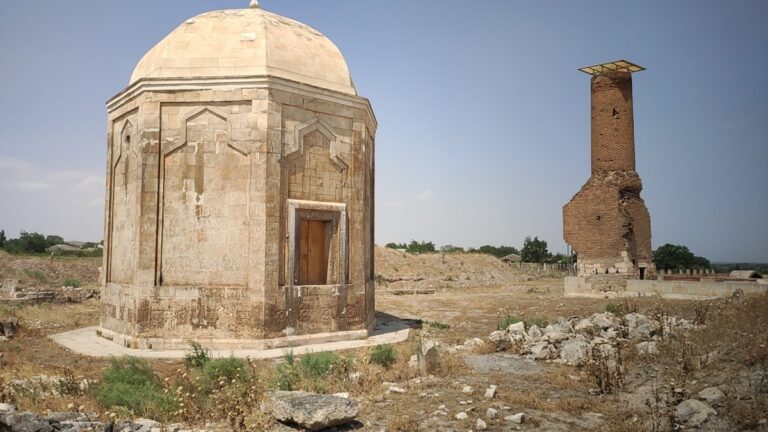
The Ahmadalilar Mausoleum is a 13th-century Islamic monument near Ahmadalilar village in Azerbaijan, built within the medieval Arran architectural tradition of the South Caucasus. Also known as Arğalı türbəsi, it is associated with the Arran architectural school, whose work can be compared with the nearby Sheykh Babi Yagub Mausoleum and other octagonal mausoleums in Azerbaijan.
The mausoleum takes its name from the former settlement of Arğalı, which stood nearby. The person buried inside has not been identified, and the period of that person’s life and the reason for selecting this location remain undetermined. Some researchers assign the building to the 13th century on the basis of its architectural and structural solutions.
On August 2, 2001, the monument was included in Azerbaijan’s list of locally significant immovable historical and cultural monuments through Cabinet of Ministers Decision No. 132. The building is now in a ruined condition.
Remains
Octagonal plan and dome
Standing on flat terrain, the mausoleum has an octagonal plan. Its main body and dome are each organized around eight sides, with an equal number of pointed arches. The building is covered by a closed, or cloistered, vault. Above it, the dome uses two layers, with the space between them filled by stone and a mixture of clay and straw.
Crypt and entrances
The interior is divided between an underground crypt and a spacious upper chamber. The upper chamber has no vestibule. Two doorways open into the structure, one in the northern facade and the other directly opposite it, occupying the position normally associated with a mihrab, a recessed feature that indicates the direction of prayer. Both door frames carry carved geometric decoration.