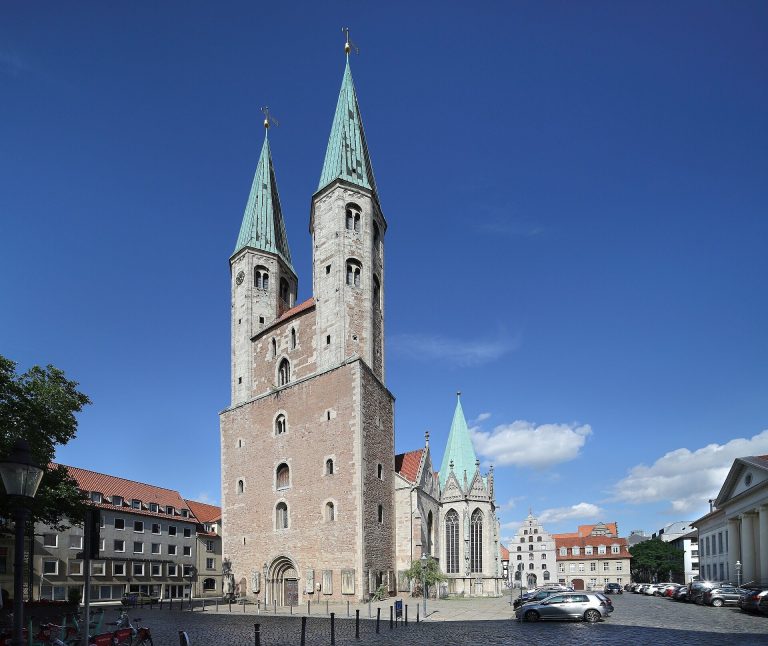
Neustadtrathaus in Braunschweig: Medieval District Town Hall
Site at a Glance
- Rating
- 4.8
- Popularity
- Very Low
- Country
- Germany
- Primary era
- Medieval
- External website
- Open
- Eras represented
- Medieval, Early Modern
- Civilizations
- Holy Roman Empire
- Site type
- Civic
- Remains
- Town Hall
On this page8 sections
History
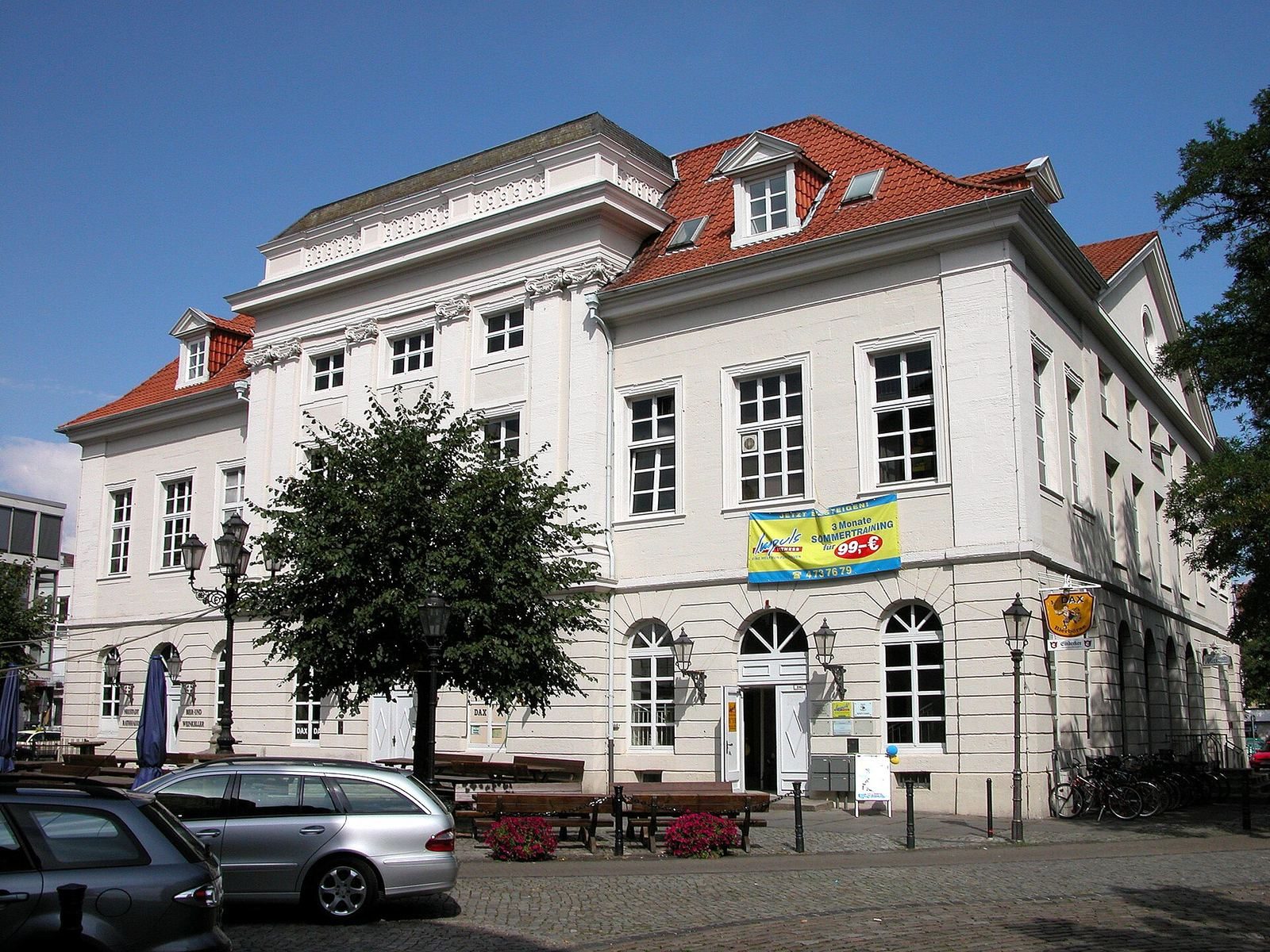
Neustadtrathaus is a historic town hall in Braunschweig, Germany, originating in the thirteenth century as the political center of the Neustadt, a medieval urban district known as a Weichbild. Such districts had their own civic administration and council. The building was first documented in 1294 and later became important to the government of the wider city.
Medieval civic center
In 1299, Duke Albrecht II and Duke Heinrich granted the citizens of Neustadt the right to sell wine, cloth, and other goods in the town hall. The council earned substantial income by renting the cloth stalls on the ground floor. The building’s wine cellar was first mentioned in 1350.
From 1386, the Neustadtrathaus provided a meeting place for the Common Council, Braunschweig’s citywide governing council, and sometimes for the Kitchen Council, another municipal body. Its role extended beyond the Neustadt in 1538, when the Schmalkaldic League assembled there. The league was an alliance of Protestant imperial estates founded in 1531 in opposition to the religious policies of Emperor Charles V.
Ducal administration and remodelling
After the Welf ruler conquered Braunschweig in 1671, the councils of the individual districts were abolished. The citywide council, which became entirely dependent on the duke, continued to meet in the Neustadtrathaus until the city administration moved to the cathedral deanery in 1830. The Welfs were a German princely dynasty whose territories included Braunschweig.
The building also served as an archive from 1717. Between 1773 and 1785, Ernst Wilhelm Horn remodelled it in the Late Baroque and early Neoclassical styles. The archives moved to the cloister of the Brüdernkirche in 1835. On 1 May 1865, an archive, library, and museum opened in the restored town hall under the direction of Ludwig Hänselmann. These municipal collections moved to a new building on Löwenwall in 1906.
School museum, wartime damage, and reconstruction
The vacated building became the Municipal School Museum, which opened on 26 September 1913. It held local-history collections, a chemical and physical laboratory, and a reference library, and supported exhibitions, lectures, and experimental instruction.
On 22 October 1937, the Neustadtrathaus was handed over to the National Socialist Teachers’ League and renamed Hans-Schemm-Haus. Numerous bombing raids during the Second World War partly destroyed the building. On 27 April 1971, the city council transferred the property without charge to the entrepreneur and later honorary citizen Artur Wiswedel, who was required to rebuild it. Reconstruction finished in 1974. From 1974 to 1984, the building housed the Social Welfare Department of the Braunschweig-Wolfenbüttel University of Applied Sciences. Several restaurants now occupy the premises.
Remains
Building form and exterior
Medieval hall and later façades
The medieval building occupied a footprint measuring 32 by 11.3 metres and had a basement with two upper floors. Its core was a two-storey hall building. The basement and ground floor contained the wine cellar, while the large council hall occupied the upper floor.
A Gothic arcade was added to the north side around 1452. The remodelling of the eighteenth century transformed the Late Gothic exterior into clearly articulated Late Baroque façades. Irregularities in the medieval core remained visible within the later design, preserving evidence of the building’s earlier form.
The Dornse
The large Dornse, a heated reception or assembly room in a medieval or early-modern German town house, contained elaborate intarsia panelling made in 1573. Intarsia is a decorative technique that forms patterns by fitting pieces of wood or other materials together. The room and its panelling were destroyed during the Second World War and were not restored. Oil paintings depicting participants in the Schmalkaldic War were formerly kept in the room.