Church of Saint Vitus: A Gothic Former Franciscan Convent Church in Jemnice
Site at a Glance
- Rating
- 4.6
- Popularity
- Very Low
- Country
- Czechia
- Primary era
- Medieval
- Eras represented
- Medieval, Early Modern, Modern
- Civilizations
- Holy Roman Empire
- Site type
- Religious
- Remains
- Church
On this page8 sections
History
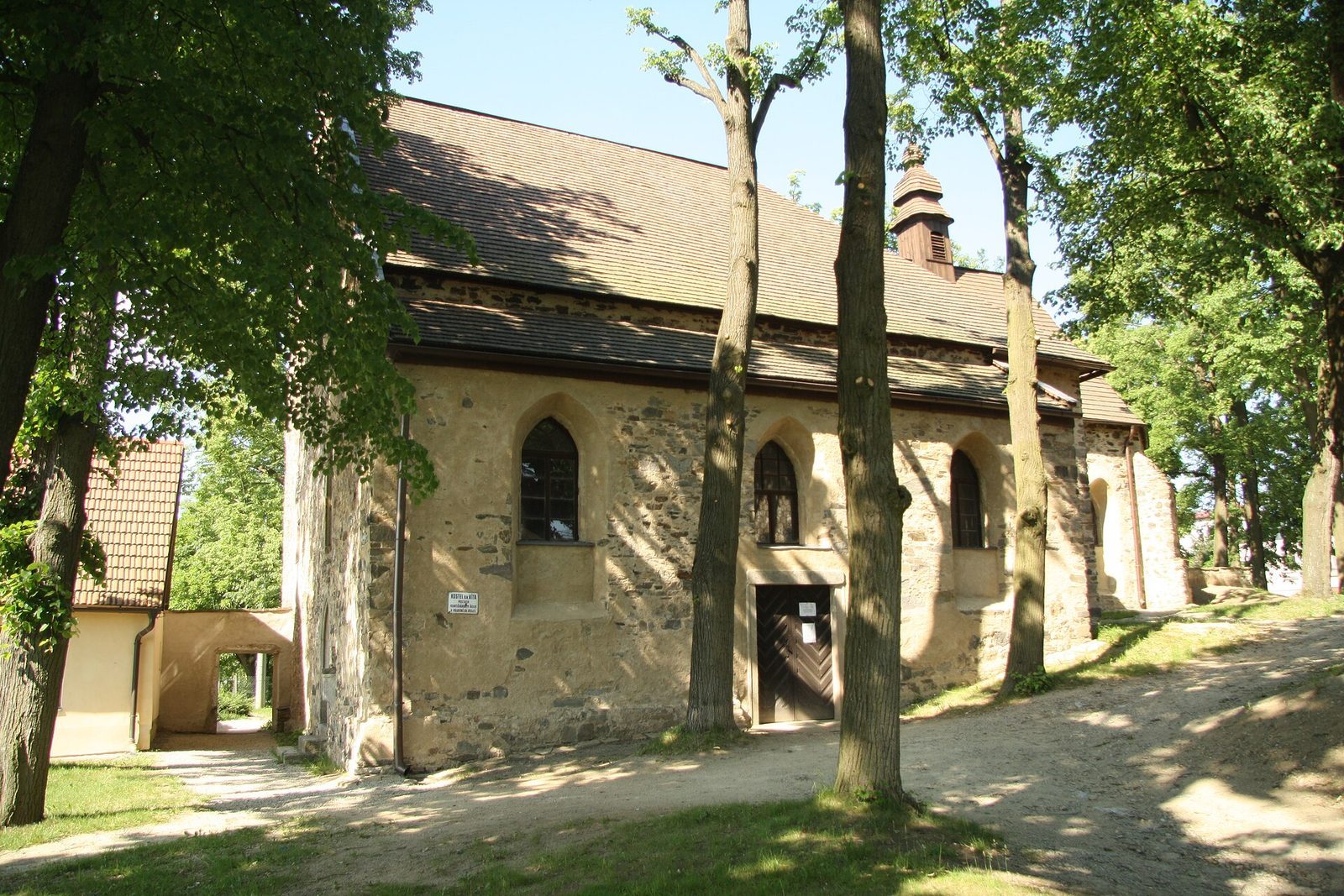
Church of Saint Vitus is a Roman Catholic Gothic church in Jemnice, Czechia, rebuilt in the fifteenth century after serving as the convent church of a Franciscan monastery. The monastery was founded in 1455 by Albrecht, Hynek, and Štěpán of Lichtenburk, members of a noble family from the medieval Czech lands. In October of that year, the Chapel of Saint Vitus was transferred to a vicar, establishing the church’s connection with the local parish community. Půta of Lichtenburk, one of the monastery’s benefactors, was buried there in 1492.
Foundation and Gothic rebuilding
In 1468, forces led by Matthias Corvinus, King of Hungary and Croatia from 1458 to 1490, burned Jemnice and the monastery during his military campaigns in Central Europe. Church of Saint Vitus was subsequently rebuilt in the Gothic style and enlarged with the Chapel of the Passion. The monastery complex was extended at the same time and raised by an additional storey.
Religious changes altered the church’s role during the sixteenth century. After Jemnice came under the control of the Lutheran Henry of Lomnice in 1529, preaching in the monastery church was prohibited. Townspeople attacked the monastery in 1546 and expelled its inhabitants. By 1560, the complex was described as deserted. In 1570, Emperor Maximilian entrusted the monastery buildings to the townspeople on the condition that they maintain them.
Suppression and changing use
Franciscans were active at the monastery again by 1671, and restoration of the complex was decided on in 1673. The revival was short-lived. The monastery was suppressed in 1675, and its documents and property were transferred to the newly established monastery at Dačice. Because Jemnice remained Lutheran, Church of Saint Vitus served the few remaining Catholic townspeople and hosted Catholic Masses only occasionally. The former monastery buildings were put to agricultural use.
A nearby Chapel of Saint Anne was built in the first half of the eighteenth century. During the 1880s it was converted first into a hospital and later into a poorhouse or shelter. Church of Saint Vitus was itself suppressed in 1785 during the Josephinian reforms, the religious and administrative measures introduced under Holy Roman Emperor Joseph II that included closing or reorganizing religious institutions considered nonessential by the state. It was designated a “field church” and sold in 1788 to Countess Antonie Daun. She had the building repaired and donated it to the town of Jemnice in 1790.
Modern history and preservation
In 1921, the town sought to transfer the church for use by the Czechoslovak Hussite Church, a twentieth-century Christian denomination shaped by Hussite and related reform traditions. The local Catholic priest, who continued to hold occasional services there, refused to surrender the keys. Litigation ended in the town’s favour in 1922, when the Supreme Court in Brno ruled on the dispute.
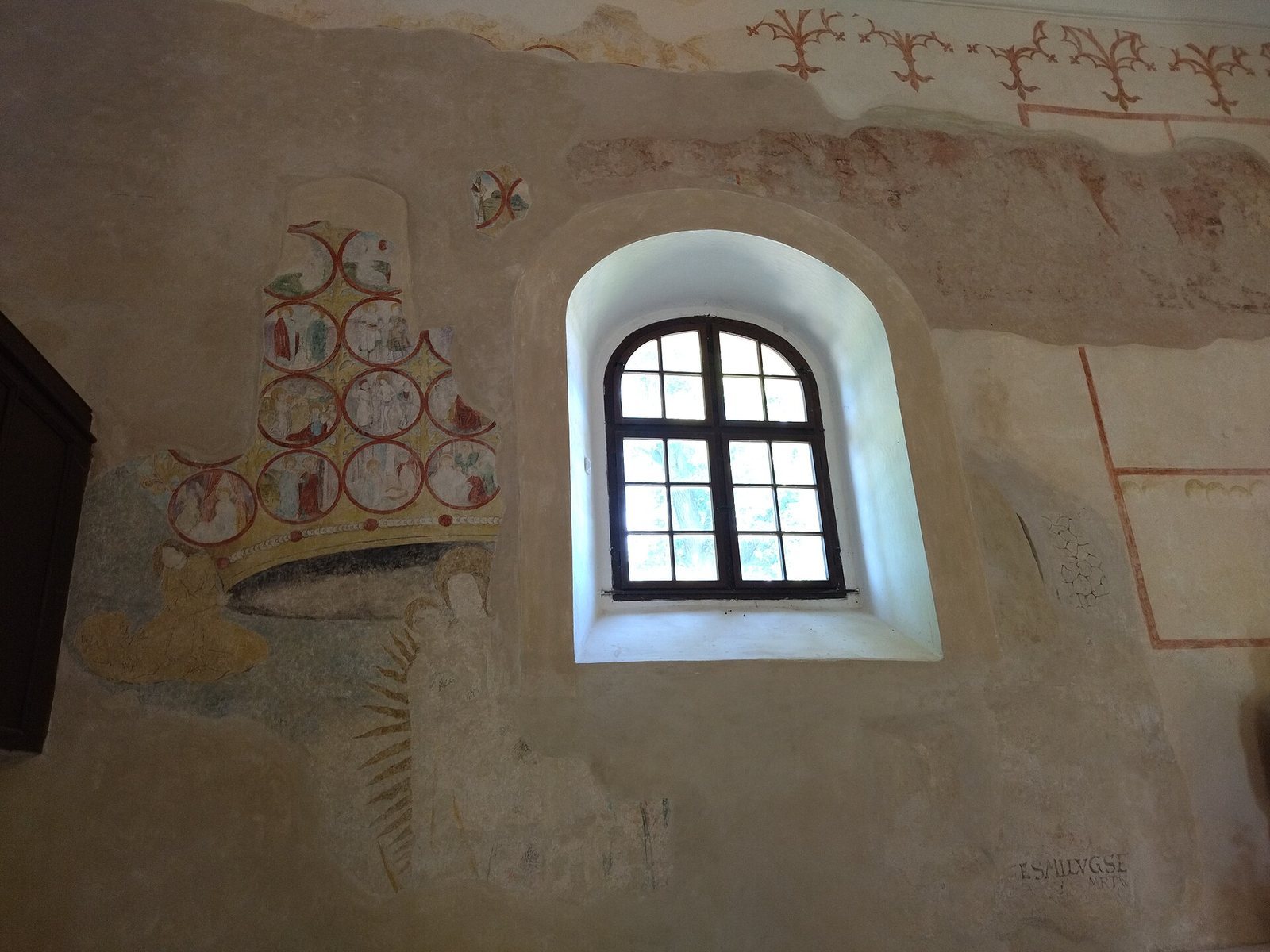
The church was robbed and damaged in 1997. Its roof was repaired in 2004, and archaeological investigations took place in the church and its surroundings in 1993 and again in 2005, when rainwater drainage was being constructed nearby. Restoration in 2011 revealed wall paintings thought to date from after 1485. Church of Saint Vitus is protected as a cultural monument of the Czech Republic. The adjacent Kapistránská linden was placed on the list of designated memorial trees in 1976. Its enclosure dates from 1933, and the tree was conserved in 1992 and 1995.
Remains
Church building and interior
Church of Saint Vitus is a Gothic stone building made from quarry stone, standing within the streets formed by Lípová, Topolová, U Víta, and U kláštera. The interior originally had a vault. Alterations around 1770 removed it and replaced it with a flat ceiling, while three new windows were opened. At the request of the parish priest Josef Šabatka, the interior was remodelled during the same period. Josef Winterhalder the Younger painted an illusionistic main altar, a composition designed to make a painted architectural setting appear three-dimensional. A partition was moved to create a new sacristy, the room used to store liturgical equipment and prepare for worship, and this reduced the size of the presbytery, the part of the church containing the main altar.
The main altar is dedicated to Saint Vitus. An altar dedicated to Saint Francis the Seraphic, meaning Francis of Assisi, stands against the eastern wall, while an altar dedicated to Saint Anne stands against the northern wall. The church also contains the Chapel of Our Lady of Sorrows, a shallow rectangular Gothic chapel. Its altar mensa, the horizontal slab forming the top of an altar, was transferred from the former Chapel of Saint Anne after 1785. Additional interior frescoes, or wall paintings made on fresh plaster, were added around 1898.
Medieval evidence and furnishings
Wall paintings uncovered during the 2011 restoration are thought to date from after 1485 and preserve evidence of the church’s medieval decoration. The tombstone of Půta of Lichtenburk is set into the northern wall; it was embedded there in 1941 and recalls the noble benefactor buried in the church in 1492. An organ dating from 1824 remains part of the church’s furnishings and was reconstructed in 1993.
Former monastery and adjacent features
The former Franciscan complex is represented by the entrance to its underground and by subterranean corridors. These remains belong to the monastery that originally gave Church of Saint Vitus its role as a convent church. Beside the church stands the Kapistránská linden, enclosed by the structure built around it in 1933. The nearby Chapel of Saint Anne, built in the first half of the eighteenth century, retains its place in the history of the church complex through the transfer of its altar mensa after the church’s suppression.