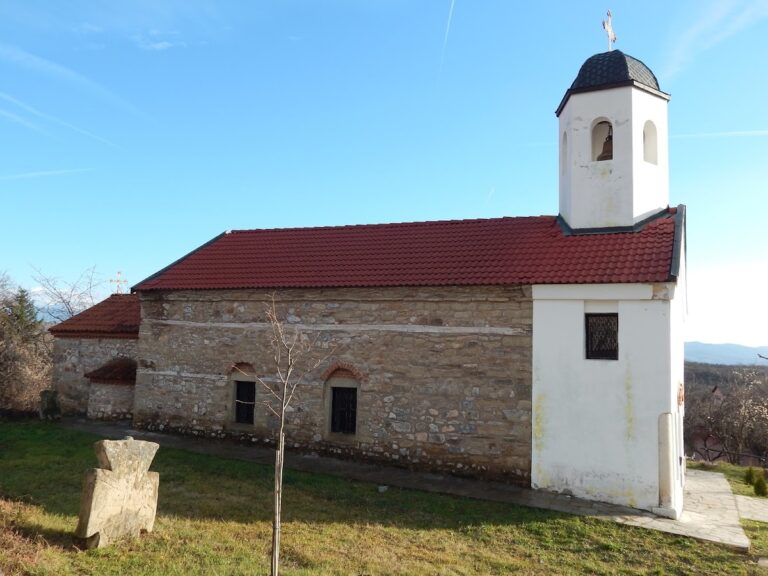
Saint Kliment (Nessebar): A Medieval Church in Drenkovo, Bulgaria


Site at a Glance
- Rating
- 3.4
- Popularity
- Very Low
- Country
- Bulgaria
- Primary era
- Medieval
- Eras represented
- Medieval
- Civilizations
- Bulgarian
- Site type
- Religious
- Remains
- Church
On this page5 sections
History
Saint Kliment (Nessebar) is the listing name for a medieval church in Drenkovo, Bulgaria, formerly known as Drenovo. An inscription dates the building to 1305, placing it within Bulgaria’s medieval Christian architectural tradition.
Medieval foundation and later use
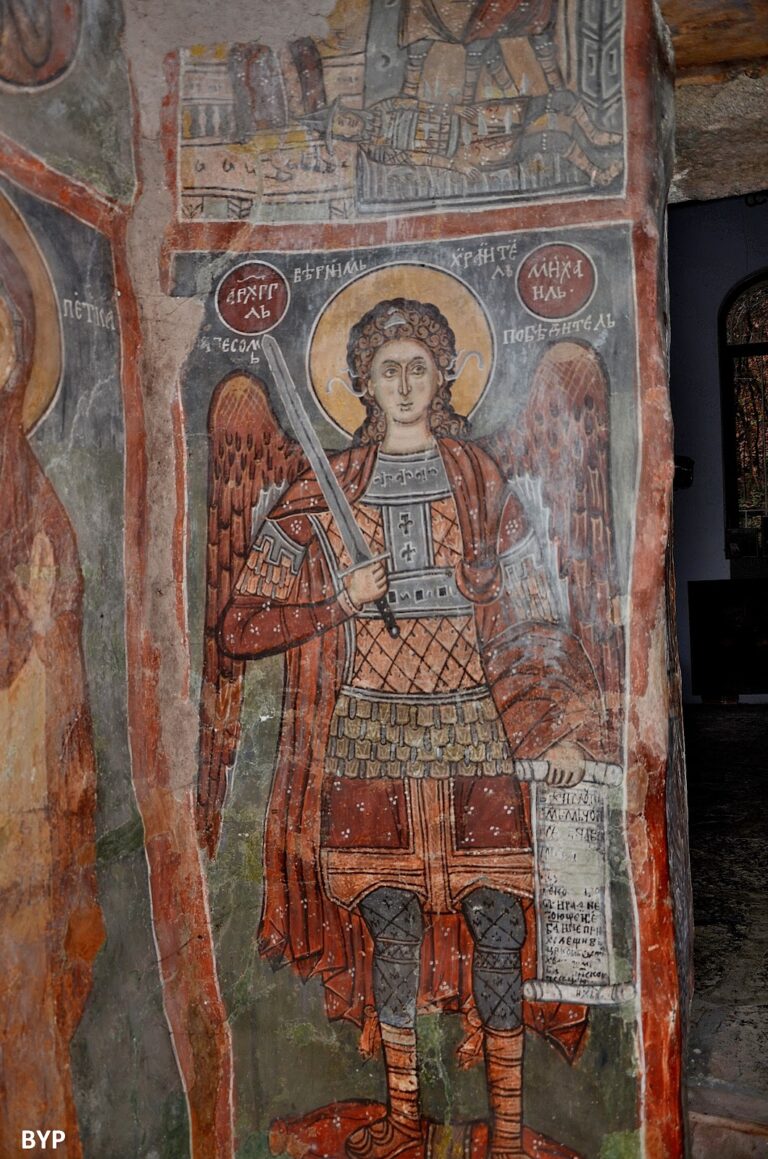
The church’s date was established from an inscription deciphered in 1931 by Konstantin Zakhariev. Its later history includes a graffiti inscription by Pop Marin of Rila Monastery, a major Eastern Orthodox monastic foundation in Bulgaria, dated 1791.
The church was probably abandoned during the second half of the nineteenth century. By the beginning of the twentieth century, it was roofless and stood in ruins. A medieval cemetery with old stone crosses lies beside the building, extending the site’s historical evidence beyond the church itself.
Remains
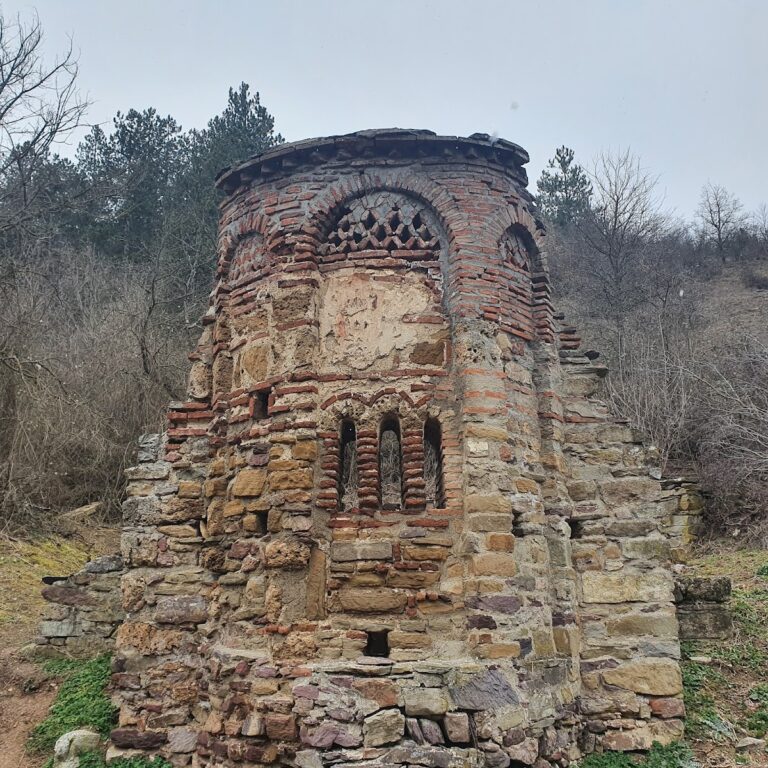
The surviving building is a compact, single-nave church with one main apse and two lateral conches, or apses, forming a strongly marked cross-shaped plan. It has no narthex, an entrance or vestibule area at the west end of a church. The church measures 8 metres in length and 5 metres in width, and its preserved walls reach about 3 metres in height.
Church structure
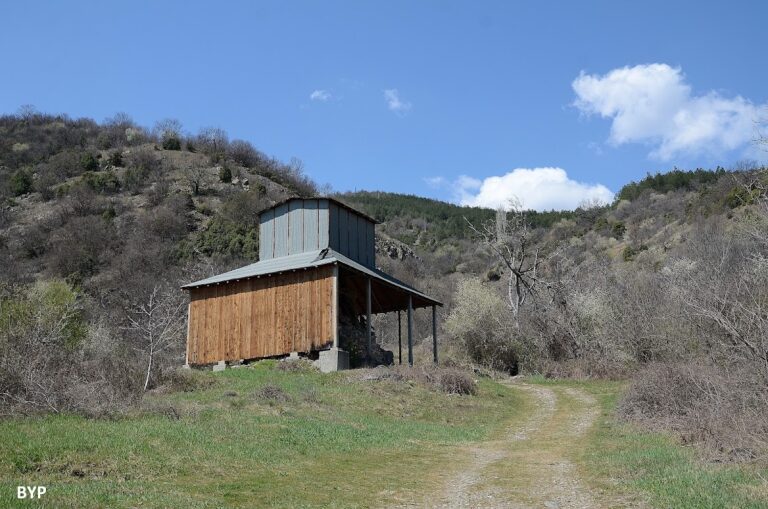
The entrance is positioned on the western side, while the eastern part of the building is partly below ground level. Limestone bonded with white mortar forms the walls, and the vault was constructed from tuff. These surviving materials and the compact plan define the church’s present architectural character.
Exterior decoration and adjacent evidence
The upper part of the west façade contains two pairs of shallow double-arched niches, arranged on either side above the entrance. This exterior decoration is one of the church’s notable surviving features. The nearby medieval cemetery contains old stone crosses, while the 1791 graffiti inscription by Pop Marin provides evidence of later activity connected with the building.