Kadin Most: A Fifteenth-Century Ottoman Road Bridge in Bulgaria



Site at a Glance
- Rating
- 4.7
- Popularity
- Medium
- Country
- Bulgaria
- Primary era
- Medieval
- Eras represented
- Medieval
- Civilizations
- Ottoman
- Site type
- Infrastructure
- Remains
- Bridge
On this page5 sections
History
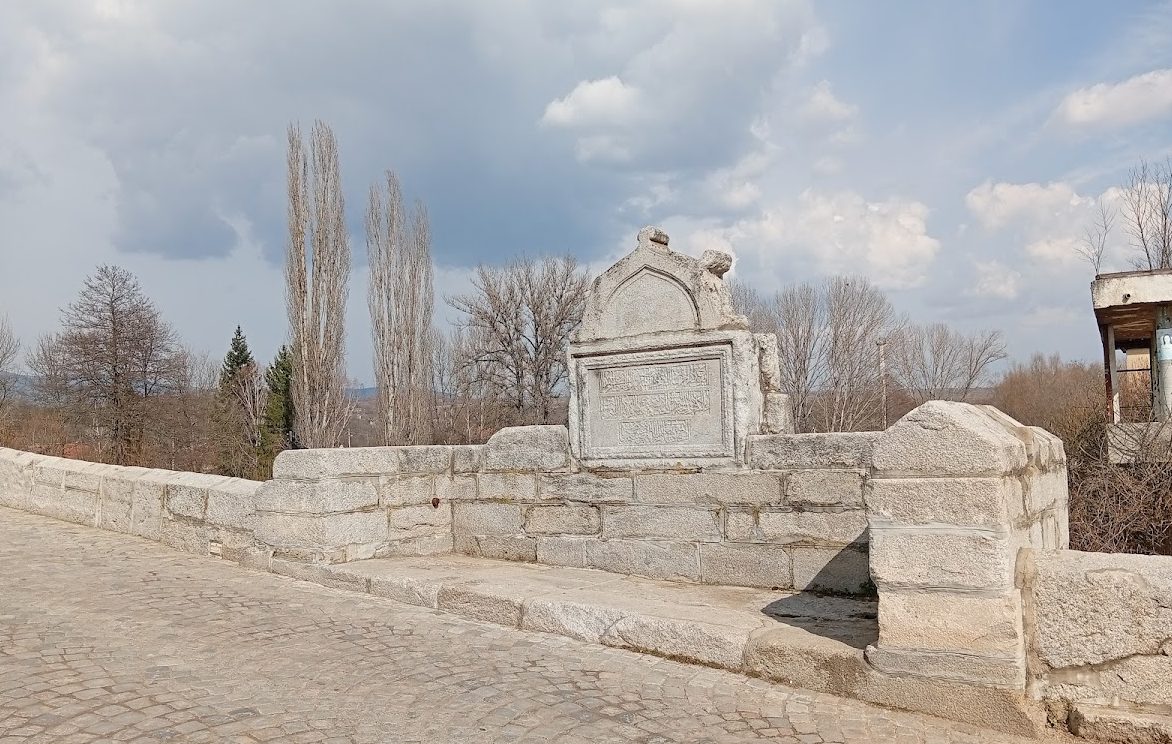
Kadin Most is a fifteenth-century Ottoman stone road bridge in Nevestino, Bulgaria, built during the late-medieval and Renaissance period. It crosses the Struma River and was commissioned by Ishak Pasha, an Ottoman grand vizier, a senior minister and military-administrative official. A granite inscription states that the bridge was completed in 874 AH, corresponding to approximately 1469–1470, during the reign of Sultan Mehmed II, also known as Mehmed the Conqueror.
Ottoman Construction
The bridge is also called Ishak Pasha Bridge because of its association with the official who commissioned it. In 1968, Bulgaria declared Kadin Most an architectural and construction monument of national importance. Its continuing use as a crossing preserves the connection between its Ottoman foundation and the modern settlement of Nevestino.
Names and Foundation Traditions
The names Nevestin Most and Kadin Most are associated with Turkish terms meaning “bride.” Another proposed explanation connects Kadin with the qadi, an Ottoman Islamic judge who also held judicial and administrative authority in the locality where he served. The origin of the name remains uncertain, and a separate tradition attributes the bridge to a local Turkish qadi.
Several legends explain the bridge’s construction. One says that floodwaters repeatedly destroyed the builders’ daytime work, leading them to agree that the first builder’s wife to bring food would be sacrificed. In one local version, the legendary Struma the Bride, wife of the master builder Manol, was walled into the foundations. Another version names three brothers as the builders and says that the youngest brother’s wife, who arrived carrying her infant, was enclosed in one of the columns.
A second tradition tells of an Ottoman sultan who encountered a wedding procession while passing through the area. After the bride showed courage before him, the sultan offered her a gift. She requested a bridge over the river, either for the local community or so that she could visit her mother on the opposite bank. One version identifies the ruler as Murad.
Remains
Stone Arch Structure
Kadin Most is approximately 100 metres long and 5 metres wide. Its five stone arches carry the roadway across the Struma, with the central arch forming the largest and highest opening, spanning approximately 20 metres. Each pier contains an opening designed to increase the flow of water during floods, a feature that responds directly to the river’s destructive force in the foundation legend.
Large dressed granite blocks form the bridge, while the roadway is paved with broad granite slabs and the parapets are also made of granite. The structure combines ancient, medieval, and Renaissance architectural forms and is regarded as an important example of late-medieval and Renaissance bridge architecture in Bulgaria. It continues to carry pedestrians and motor vehicles, including cars and vans, with vehicle speed limited to 30 kilometres per hour.
The bridge stands in the centre of Nevestino over the Struma River. A park beside it contains areas for rest and fishing, while views from the bridge extend toward the Rila Mountains.