Monastery Church in Sighișoara: A Medieval Dominican Church and Evangelical Parish Church


Site at a Glance
- Rating
- 4.4
- Popularity
- Low
- Country
- Romania
- Primary era
- Medieval
- External website
- Open
- Eras represented
- Medieval, Early Modern, Modern
- Civilizations
- Austria-Hungary, Habsburg, Hungarian, Principality of Transylvania
- Site type
- Religious
- Remains
- Church
On this page8 sections
History
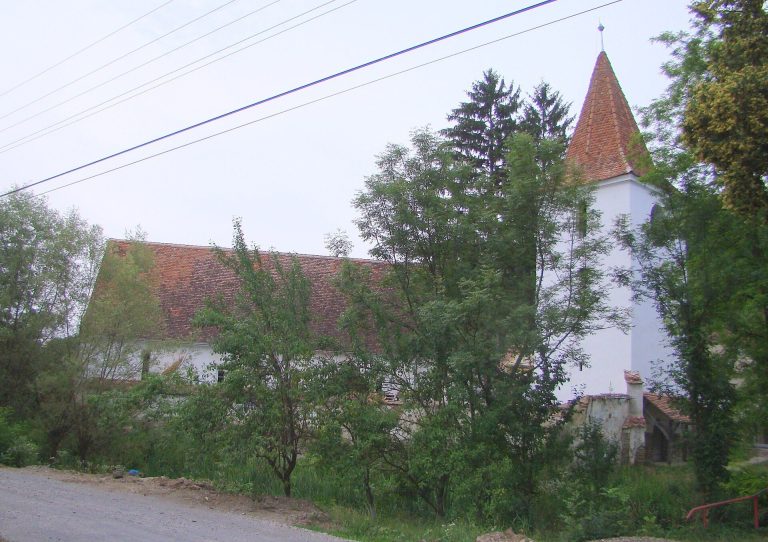
The Monastery Church in Sighișoara, Romania, is the former church of a medieval Dominican monastery and is now the city’s evangelical parish church. The Dominican foundation was established in 1289, while the church’s present Gothic hall-church form developed through rebuilding between 1492 and 1515. Its history reflects the changing religious and political life of Sighișoara’s historic center, which has been part of the UNESCO World Heritage Site listing since 1999.
Dominican foundation
The monastery was first mentioned in 1298, in an indulgence letter issued by Pope Boniface VIII. An indulgence letter granted remission of specified spiritual penalties. A church dedicated to Mary already stood at the foundation by that time. The monastery belonged to a network established across the medieval Kingdom of Hungary through the work of Paulus Hungarus, or Paul the Hungarian, a Dominican organizer associated with the order’s expansion in the kingdom. The Dominicans were a Catholic mendicant order founded in the thirteenth century, with preaching and the defense of Catholic doctrine among its central aims. The Hungarian nobleman Leonard Barlabássy endowed the church.
Gothic rebuilding and secularization
Between 1492 and 1515, the earlier thirteenth-century church was rebuilt as a Gothic three-nave hall church. In a hall church, the nave and side aisles are approximately equal in height, creating a unified interior space. The Dominican monastery was dissolved and its property secularized in 1556. A fire destroyed the church in 1676. Reconstruction followed in 1678 and 1679, when the interior was refitted in the Baroque style and lateral galleries were added.
Franciscan administration and later restoration
In 1723, the Habsburg administration transferred the monastery to the Franciscan Order, another major Catholic mendicant order founded by Francis of Assisi. The monastery was demolished in 1886, and the present prefecture building was erected on its site. The church itself was renovated in 1928 and 1929. A major restoration of its organ was completed before the instrument was rededicated on 2 June 2019, when Bishop Reinhart Guib and city pastor Hans-Bruno Fröhlich returned it to the congregation.
Remains
The surviving church is a 44.5-meter-long Gothic hall church. Its stated widths are 12.6 and 13.2 meters. The choir is oriented toward the northeast, and the axis of the nave deviates by four degrees from the choir axis. The monastery cloister originally adjoined the church on its southeastern side, linking the building to the wider Dominican complex.
Medieval structure and furnishings
Late-Gothic vaults survive in the choir and sacristy. The church also preserves a bronze baptismal font shaped like a chalice and dated to 1411. The choir stalls carry inlaid decoration from the workshop of Birthälm. Together, these elements preserve aspects of the church’s medieval fabric and furnishings within the later interior.
Baroque interior
The interior was refitted after the seventeenth-century fire. Its Baroque altar, installed in 1681, was made by the Hermannstadt painter Jeremias Stranovius, who also produced the pulpit parapet and sounding board. The church contains a collection of Transylvanian carpets dating from the sixteenth and seventeenth centuries.
Organ
The largely original Baroque organ case was made by the Sighișoara master Johannes Fest. Behind it stands a late-Romantic organ built by the Rieger brothers in 1905. The instrument is a cone-chest organ, using windchests in which pipes are controlled by cone-shaped valves. It has 35 stops across three manuals and pedal, with pneumatic stop and playing action. Its couplers are II/I, III/I, Super II/I, Sub III/I, I/P, II/P, and III/P. Playing aids include a free combination, fixed combinations marked p, mf, f, ff, Tutti, and a crescendo.