Fethiye Mosque: An Ottoman-Era Mosque in Krujë, Albania


Site at a Glance
- Rating
- 4.3
- Popularity
- Very Low
- Country
- Albania
- Primary era
- Medieval
- Eras represented
- Medieval
- Civilizations
- Ottoman
- Site type
- Religious
- Remains
- Mosque
On this page5 sections
History
Ottoman Foundation
Fethiye Mosque, officially the Sultan Mehmed Fatih Mosque, is an Ottoman-era mosque in Krujë, Albania, built in Islamic and Ottoman architectural traditions before 1481 and completed around that year. It stands inside Krujë Castle and was named after Mehmed II, known as Mehmed the Conqueror, whose reign included the Ottoman conquest and consolidation of territories in the Balkans.
Rebuilding and Religious Use
Partial destruction in 1831 led to the mosque’s rebuilding for the local Albanian population during the reign of Mahmud II, an Ottoman sultan of the early nineteenth century. The building continued to serve Albanian Muslims as a place of worship until 1937.
Wartime Reuse and Decline
A storm caused the minaret to collapse in 1917. During the Second World War, the mosque was put to non-religious uses, including the storage of weapons and ammunition. It later deteriorated further under Enver Hoxha, Albania’s Communist leader and dictator. The surviving structure is now a partial ruin and is designated a Cultural Monument of Albania.
Remains
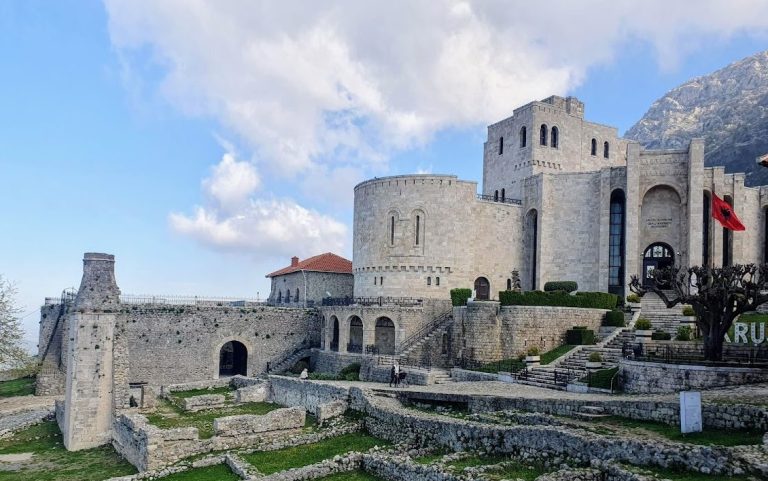
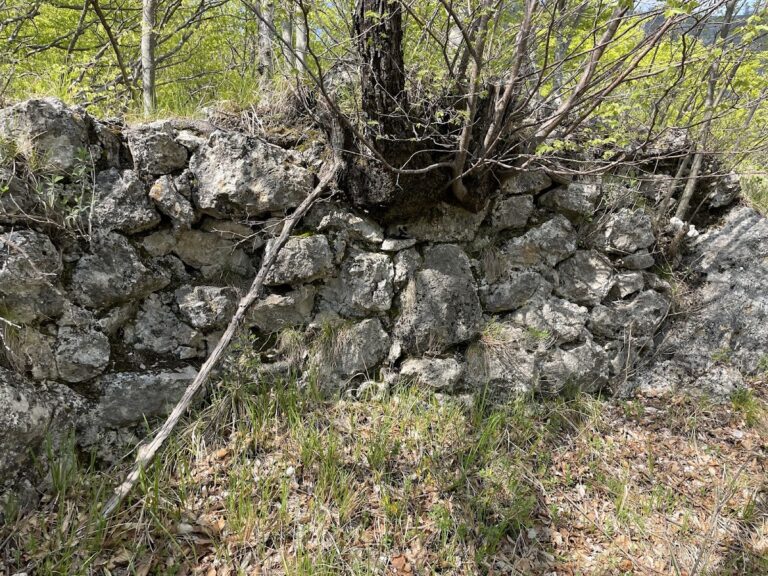
The former mosque stands inside Krujë Castle, near the entrance to the Skanderbeg Museum. Built of stone in Islamic and Ottoman style, it survives mainly as the lower sections of its walls together with the lower part of the minaret. The upper section of the minaret was lost when it collapsed during the storm of 1917, leaving the building as a partial architectural remnant of the Ottoman period in Krujë.