Ubožac Monastery: A Ruined Serbian Orthodox Monastery in Serbia


Site at a Glance
- Rating
- 5
- Popularity
- Very Low
- Country
- Serbia
- Primary era
- Medieval
- Eras represented
- Medieval
- Civilizations
- Serbian
- Site type
- Religious
- Remains
- Monastery
On this page7 sections
History
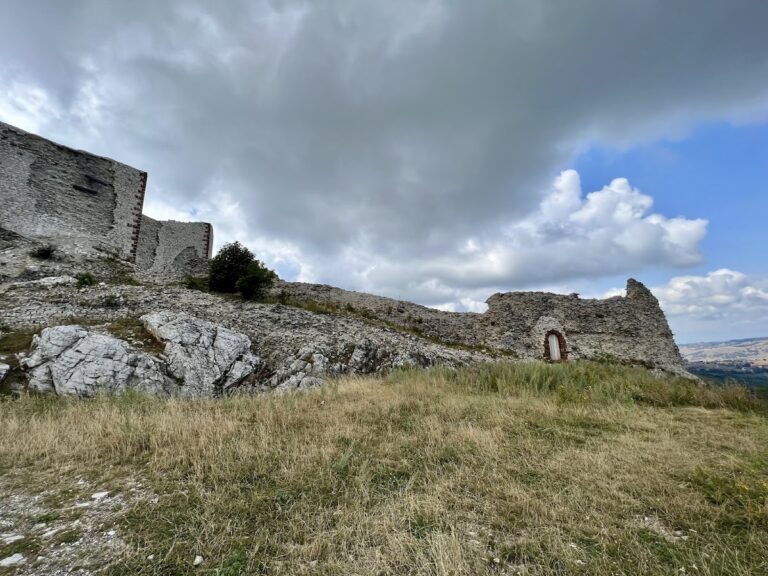
Ubožac Monastery, also known as Rđavac Monastery, is a former Serbian Orthodox monastery in Serbia, near the village of Močare and not far from Kosovska Kamenica. Its church is associated with the Morava School, a late medieval Serbian tradition known for complex church plans and patterned exterior decoration, and probably dates from the last third of the fourteenth century. The monastery is now a ruin.
Foundation and Medieval Development
The date of Ubožac Monastery’s establishment remains uncertain. Interpretations place its foundation either in the middle of the fourteenth century or during the period of Ottoman rule. The form of the church and its exterior treatment have instead been understood as characteristic of the Morava School, supporting a probable date in the last third of the fourteenth century. Tradition names Saint Jelena Dečanska, a medieval Serbian Orthodox saint associated with the Dečani royal house, as the founder.
Ubožac belongs to the Serbian Orthodox Church and is associated with the Eparchy of Ras-Prizren, an administrative diocese of an Orthodox church. The monastery’s historical record is limited, but its religious affiliation and late medieval architectural character place it within the history of Serbian Orthodox monasticism.
The Seventeenth-Century Record
The firm historical reference to the monastery comes from the seventeenth century and concerns Patriarch Paisije I, a Serbian Orthodox patriarch of that period who was born near Ubožac. He assigned manuscript books to the monastery, returned books to it, and later bequeathed others. These actions show that Ubožac remained connected with the preservation and use of religious manuscripts at that time.
Archaeology and Protection
The complex was partly archaeologically investigated and conserved between 1963 and 1966. Since 1990, the Republic of Serbia has protected Ubožac as a cultural monument of exceptional importance. The site remains in a ruinous condition.
Remains
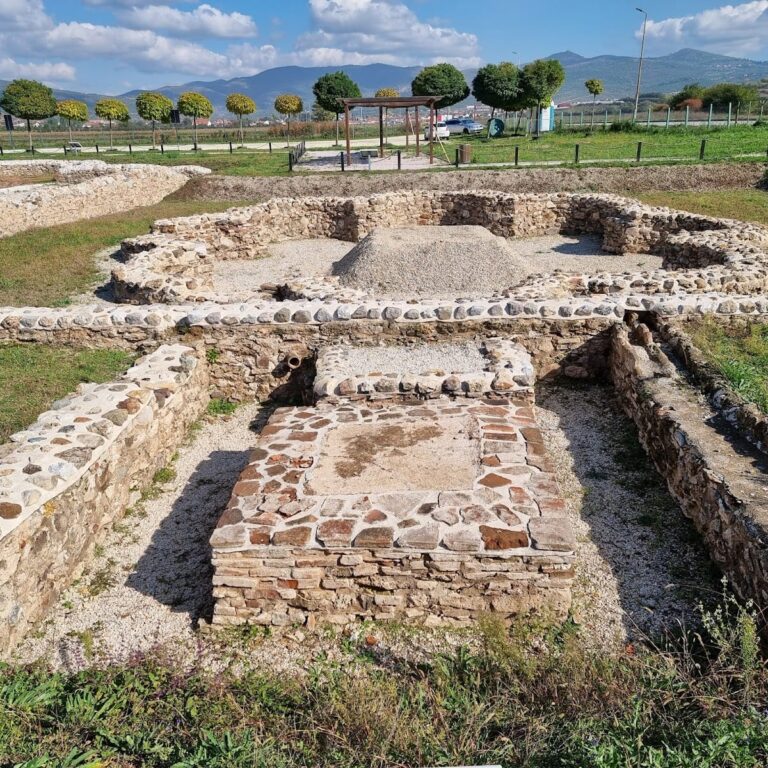
The surviving complex is organized around a stone-built church, with ancillary monastic buildings extending to its west, north, and south. The church combines a triconch plan, a layout centered on three projecting apsidal spaces, with a western narthex, or entrance hall, and a dome. Other remains include a dining hall, residential quarters, and two multi-storey towers.
Monastery Church
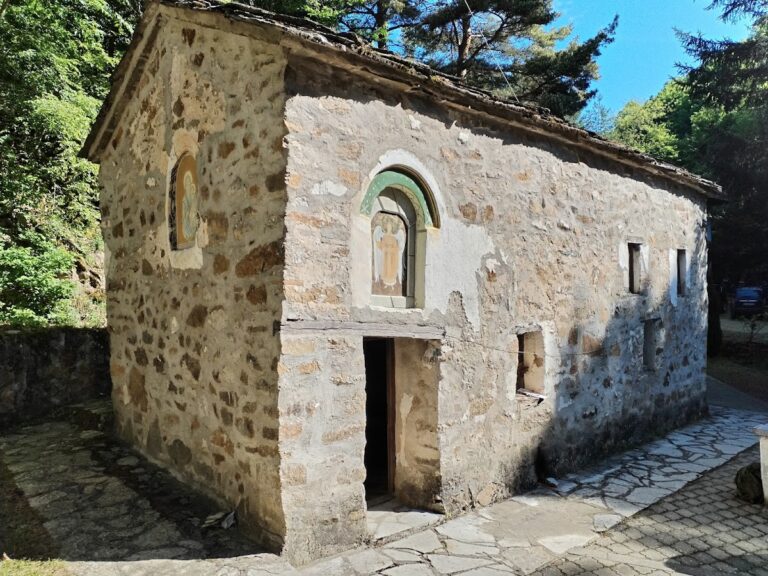
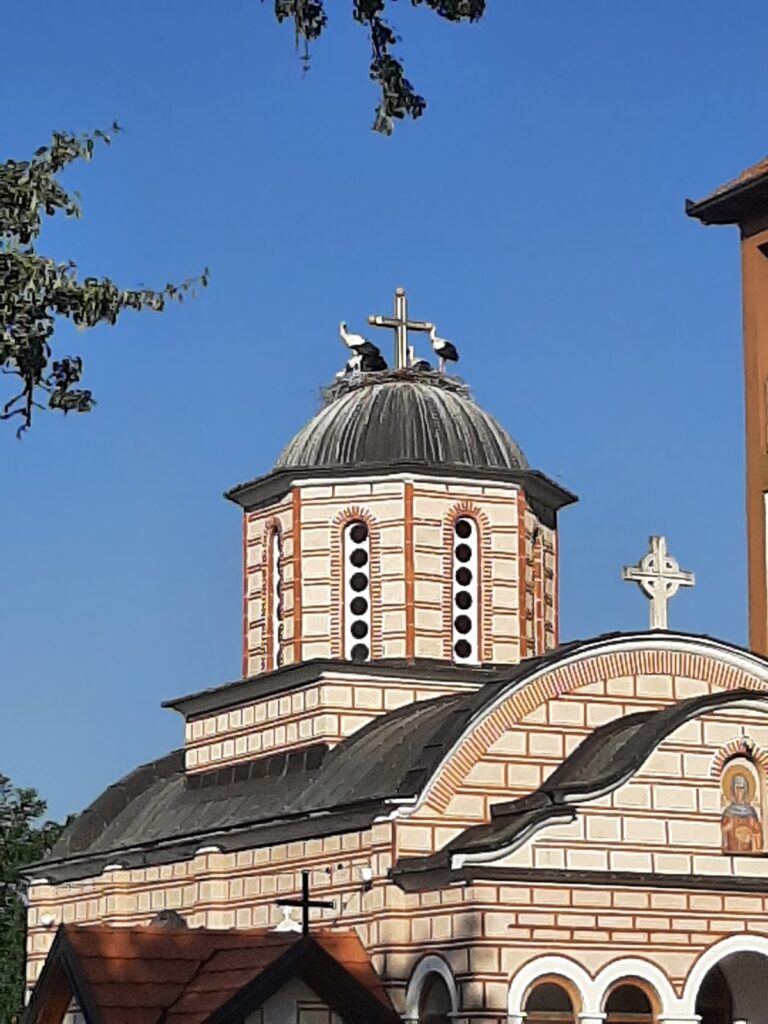
Dedicated to the Presentation of the Blessed Virgin Mary, the church has a triconch plan with regular apses and a narthex at the western end. Its dome originally rested on free-standing supports. The walls were built from regularly cut stone, while the exterior was enriched with decorative brick patterning and stone interlacing formed from non-fluted strips. The church survives as part of the ruined complex.
Ancillary Buildings and Towers
West of the church are the remains of a dining hall with a basement. Residential quarters with a porch stand to the north and south, showing the arrangement of domestic monastic spaces around the central church. The complex also preserves the remains of two multi-storey towers, adding defensive or service structures to the group of surviving monastery buildings.