Monastery of the Svetog Archangel Gabriel in Lopardintsu: Serbian Orthodox Monastery


Site at a Glance
- Rating
- 4.9
- Popularity
- Very Low
- Country
- Serbia
- Primary era
- Early Modern
- External website
- Open
- Eras represented
- Early Modern, Modern
- Civilizations
- Ottoman, Serbian
- Site type
- Religious
- Remains
- Monastery
On this page10 sections
History
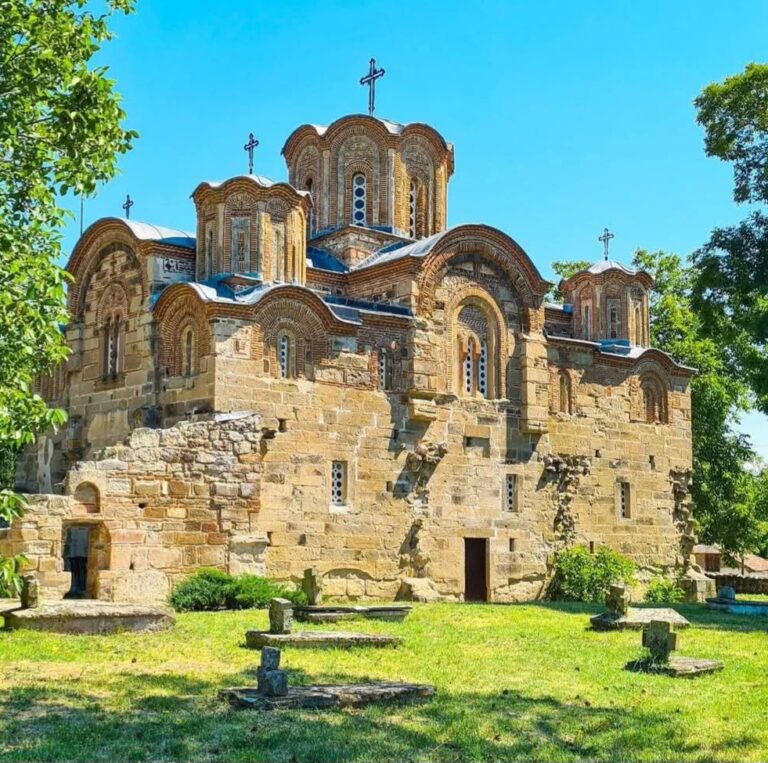
The Monastery of the Holy Archangels Gabriel and Michael is a Serbian Orthodox monastery in Lopardince, Serbia, founded in the fourteenth century and traditionally attributed to the medieval Serbian Dejanović family. The church was built during the sixteenth century on an older cult site and was already known by 1570. Its location and paintings connect the complex with the continuing development of Orthodox religious art in the region.
Foundation and church construction
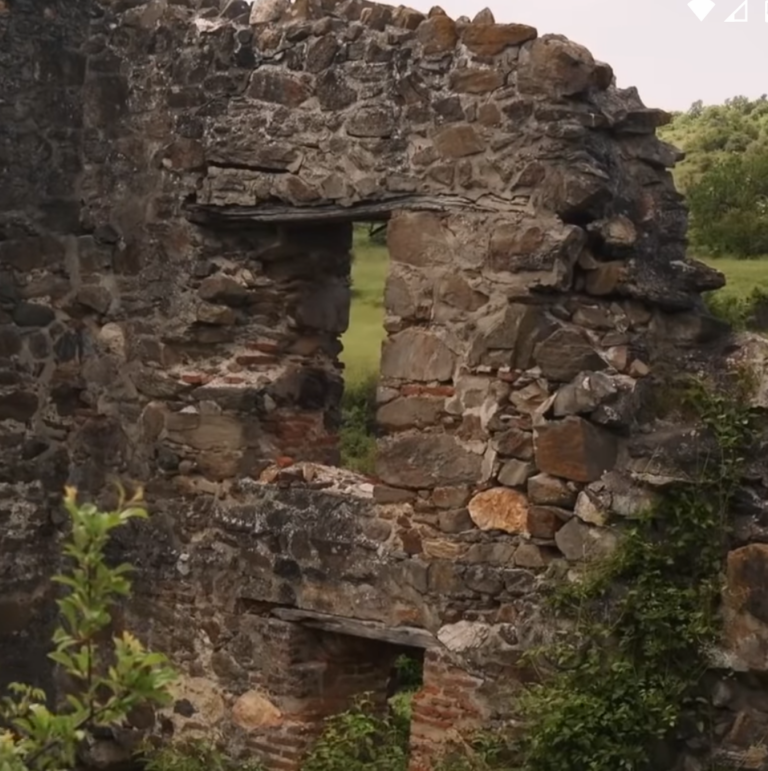
The monastery’s foundation is associated with the Dejanović family, a medieval Serbian noble family linked with the political and cultural history of the region. The present church was erected before 1570 on a pre-existing sacred site. Builders reused architectural materials from an earlier structure, incorporating spolia, meaning elements taken from an older building for use in a later one.
The church was renovated and repainted during the second half of the seventeenth century. Its wall paintings were subsequently extended and overpainted during the nineteenth and twentieth centuries. In the 1980s, a local amateur painter mistakenly treated the church as dedicated to the Archangel Michael alone. Its dedication is instead to both Holy Archangels Gabriel and Michael.
Conservation and continuing traditions
Intermittent conservation and restoration work on the monastery complex has taken place since 1988. The church was renovated in 1996, and the discovery of a substantial earlier stone wall during that work prompted the supposition that a medieval church had previously stood on the site. The same renovation revealed and opened a previously unknown northern doorway. A new monastic lodging building was constructed east of the church in 1996–1997. The monastery is described as inactive and has the status of a cultural monument.
The surrounding landscape retains religious and traditional associations. A procession still begins at the Tarbana shrine on St George’s Day. The nearby Maiden’s Stone is linked with a local tradition that a Serbian girl killed herself rather than allow a Turkish notable to dishonor her.
Remains
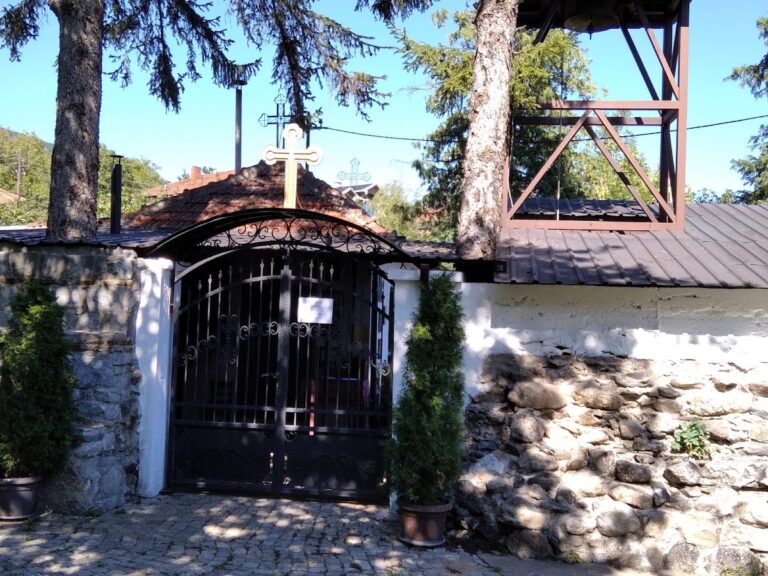
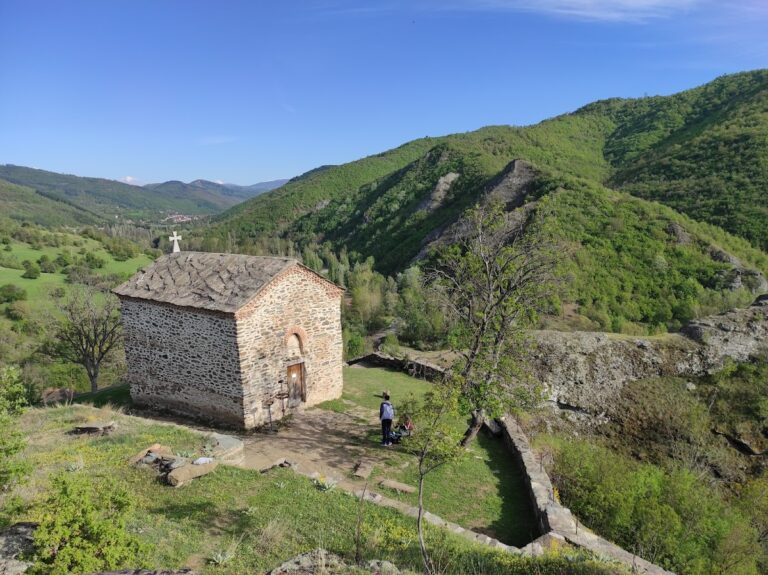
The complex stands about 2 km northwest of Lopardince, on the slope of Kozarnik Hill in the Karpina mountain area, below a distinctive rock known as Great Stone. It is reached by a roughly half-hour walk above the village. The church forms the central building, with an old lodging house to the west and a newer lodging house to the east, across a stream.
Church and wall paintings
Stone church
The church is built of stone and covered with stone slabs. Its steeply sloping site determined an unusual arrangement: the entrance is on the south rather than on the west, the customary position. The interior comprises a nave, the main space for the congregation, an eastern altar area, and a western narthex, an entrance or antechamber adjoining the main church interior. The later opening of the northern entrance damaged the oldest painted decoration in the narthex.
Painted decoration
The nave and altar area were painted at the end of the sixteenth century, while the narthex received its paintings in the second half of the seventeenth century. A fresco of the Archangel Michael occupies the southern wall. The church’s painting is regarded as an important example of Serbian post-Byzantine art, the Orthodox Christian art produced after the Byzantine Empire in regions that continued its artistic traditions.
Monastic buildings and grounds
Lodging buildings
The old monastic lodging building west of the church dates from the nineteenth century. The newer lodging building stands across the stream to the east and was constructed in 1996–1997, forming part of the present arrangement of the complex.
Stream and fountain
Improvements to the monastery grounds during the first decade of the twenty-first century included lining the stream channel with stone, building a small bridge, and constructing a new fountain. The fountain is made of stone, covered with stone slabs, and provided with a stone floor.