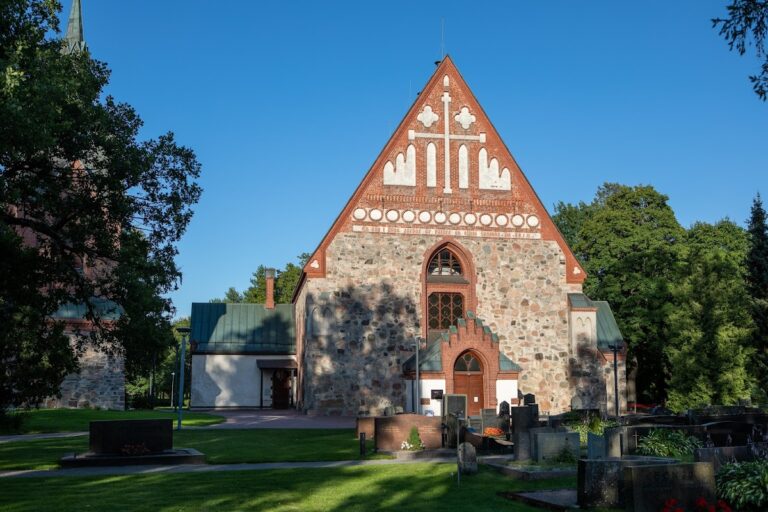
Kirkkonummi Church: A Medieval Gothic Parish Church in Finland


Site at a Glance
- Rating
- 4.3
- Popularity
- Low
- Country
- Finland
- Primary era
- Medieval
- External website
- Open
- Eras represented
- Medieval, Early Modern, Modern
- Civilizations
- Grand Duchy of Finland, Russian, Swedish
- Site type
- Religious
- Remains
- Church
On this page11 sections
History
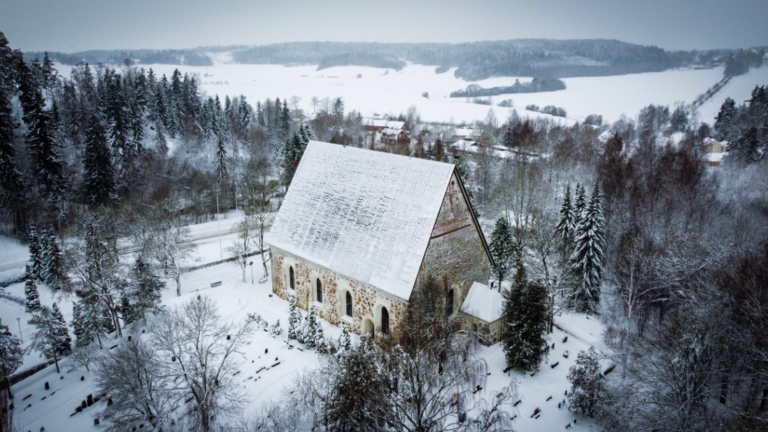
Kirkkonummi Church, also known as St. Michael’s Church, is a Gothic medieval stone church in Kirkkonummi, Finland. Built between 1400 and 1490, with its central section completed by the end of the fifteenth century, it stands on a hill once passed by a safe medieval sea route and occupies a site previously used by several wooden churches.
Medieval origins
The parish apparently lacked the funds to complete the medieval building. Some parts remained wooden, and the planned brick vaults were never built. The church therefore began as an unfinished stone structure whose later form was shaped by repeated enlargement and rebuilding.
Religious and wartime changes
Originally Roman Catholic, the church became Lutheran during the Reformation, the sixteenth-century religious transformation that moved many European churches into Protestant traditions associated with Martin Luther. Dedicated to St. Michael, the archangel regarded in Christian belief as a protector and defender, it is shared by the Swedish-speaking and Finnish-speaking parishes of Kirkkonummi. Its ecclesiastical administration has been associated with the Diocese of Borgå and the Diocese of Espoo, regional divisions of a Christian church generally overseen by a bishop.
Russian soldiers badly damaged the church in the 1570s. Repairs followed, but a lightning strike and fire caused further damage during the same decade and required another repair campaign. A major renovation took place in 1637.
Expansion and twentieth-century history
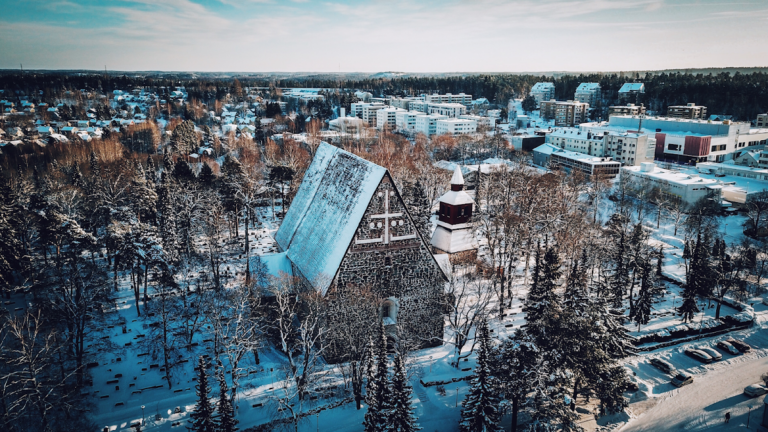
The church was enlarged several times during the eighteenth and nineteenth centuries. In the mid-nineteenth century, these changes converted it into a cruciform plan, with the main body and projecting side sections forming the shape of a cross. In 1847, the medieval sacristy, a room for preparing for worship and storing liturgical furnishings, was demolished and replaced on the same site by a brick-walled sacristy. A bell tower was added in 1824.
From 1944 to 1956, the church lay within the Porkkala Naval Base, a Soviet-leased military area in Finland that required residents of the rented territory to leave. The local population was rapidly evacuated, and Soviet authorities used the church as a cultural house. Parts of its interior were taken to Haapajärvi Church in northern Kirkkonummi during the evacuation.
After the rental period ended, the church was repaired under the direction of architect Olof Hansson and was formally dedicated to religious use again in 1959. Its latest restoration was completed in 1997.
Remains
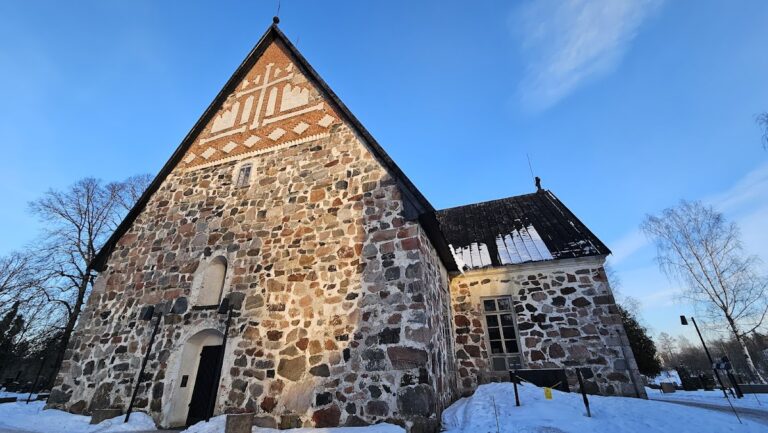
The surviving building is a Gothic stone church in the municipal centre of Kirkkonummi. It developed from an incomplete medieval structure into a cruciform church through later additions, and a graveyard surrounds it. Medieval brickwork remains in parts of the eastern wall, while later construction and rebuilding have altered much of the original fabric.
Exterior and medieval fabric
The church’s medieval construction included both stone and wooden portions and lacked brick vaults. The eastern wall preserves sections of the original medieval brickwork. The later enlargement of the building and its conversion to a cruciform plan define much of the surviving structure, while the bell tower dates from 1824. The brick-walled sacristy occupying the medieval sacristy’s site was built in 1847.
Interior artworks and furnishings
Stained-glass windows
In 1930, Lennart Segerstråle designed four stained-glass windows for the nave. They are known as the Window of Comparison, the Window of Suffering, the Window of Resurrection, and the Window of Praise.
Evacuation drawing
During the 1944 evacuation, Segerstråle left a drawing bearing the message “Jesus Christ, the saviour of all peoples.” Soviet authorities ordered it destroyed, but a Finnish officer hid it in his home. The drawing returned to the church in 1980, was restored, and was hung on the northern wall.
Altar paintings
The main altar no longer has an altar painting. Robert Wilhelm Ekman’s former painting, completed in 1862 and depicting the Transfiguration of Christ, is mounted on the wall of a side aisle. A separate painting by J. Tolker in the chapel depicts the Holy Communion and dates from 1756.
Organ
The church organ was made in Denmark in 1958 and 1959. It has 32 registers, each a separately selectable tonal grouping in the pipe organ.