Fröjel Church: A Medieval Rural Church on Gotland


Site at a Glance
- Rating
- 4.4
- Popularity
- Very Low
- Country
- Sweden
- Primary era
- Medieval
- External website
- Open
- Eras represented
- Medieval
- Civilizations
- Swedish
- Site type
- Religious
- Remains
- Church
On this page15 sections
History
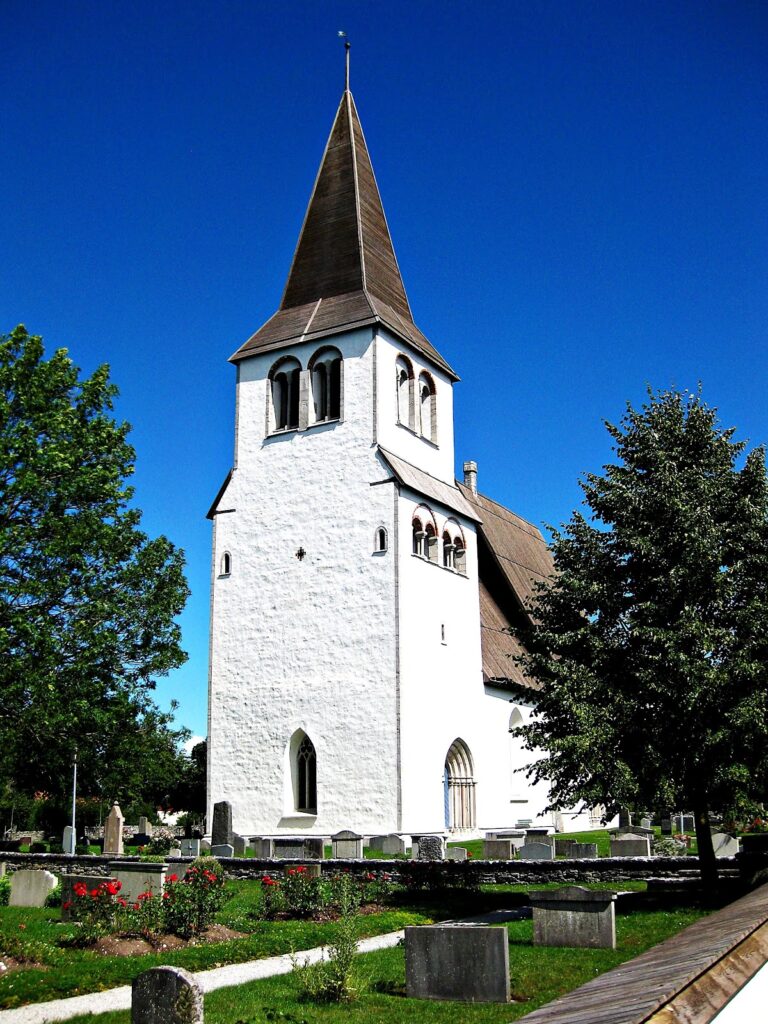
Fröjel Church is a medieval rural church in Sweden, with a late-twelfth-century Romanesque nave that forms its oldest part. It stands in Fröjel on Gotland’s west coast and belongs to Fröjel parish in the Diocese of Visby, the regional ecclesiastical jurisdiction of the Church of Sweden. The church’s elevated position near the sea, together with nearby defensive remains, suggests that it may have served as a refuge during danger or armed conflict as well as a place of worship.
Medieval development
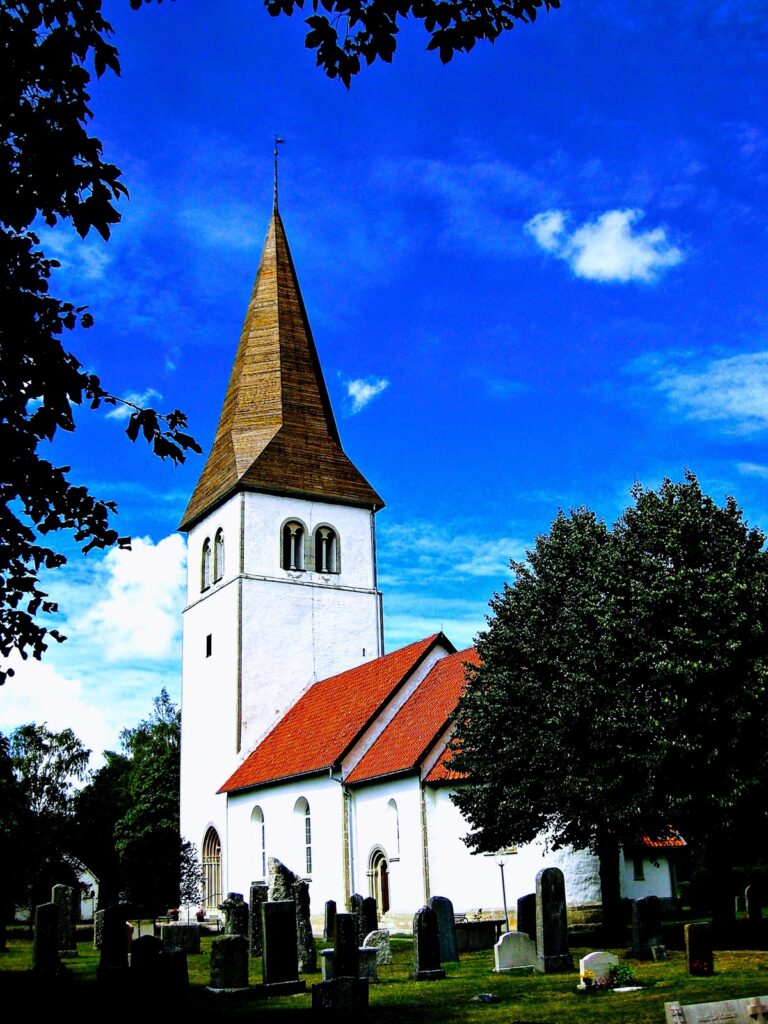
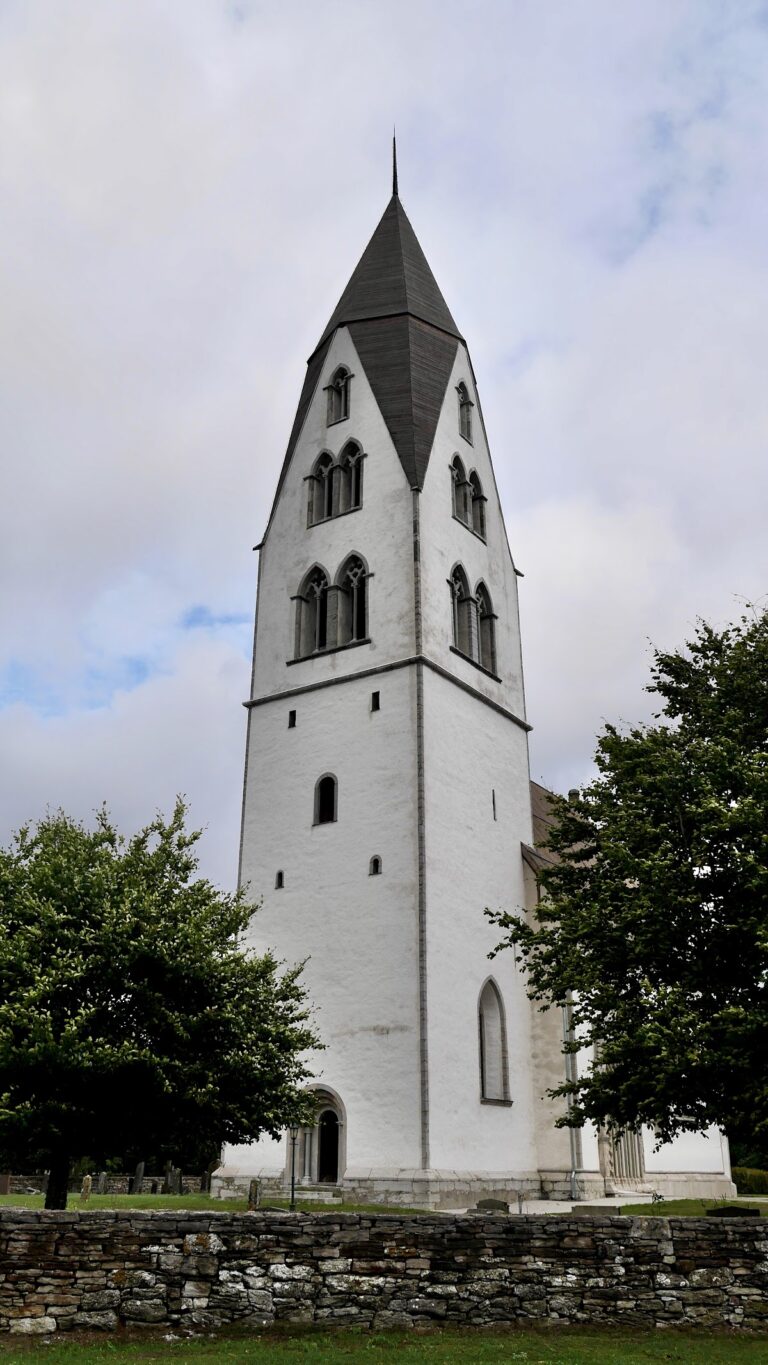
The western tower was added during the first half of the thirteenth century. Around 1300, builders replaced or enlarged the earlier eastern arrangement with a large choir and a north sacristy. These works formed the first phase of an intended Gothic rebuilding, but the wider project was never completed. The choir alone was reconstructed, leaving a church in which the predominantly Romanesque nave and tower contrast with the later Gothic eastern end.
Fröjel’s position was connected to a wider medieval landscape. The settlement had formerly been an important Viking harbor, although the harbor later silted up and its area became meadowland. A medieval defensive tower, or kastal, stood north of the church, while the remains of an older hillfort lie southeast of it. These features, along with the church’s raised position, support the possibility that the building had a defensive role in periods of insecurity.
Earlier landscape and religious associations
The surroundings preserve evidence of activity that began long before the medieval church. A Viking burial ground is associated with the former harbor area, and excavations produced the skeleton of a woman placed face down with her arms crossed behind her back. A pre-Christian labyrinth, known as a Troy Town, lies near the church, while the place name Fröjel is connected with names beginning with Frö- or Frej- and derives from Freya, a goddess of pre-Christian Norse religion associated with love, fertility, prosperity, and magic.
At least two Gotland picture stones are associated with Fröjel. The Härstain, also called Herrstain, Ärestain, or Höjestain, dates from the Germanic Iron Age, the period between the Roman Iron Age and the Viking Age. It is one of the few Gotland picture stones still standing in its original position, although its original inscription is no longer visible. A second stone was found in 1999 during excavations of pre-Christian graves northwest of the church. It had been split into two pieces, with one placed at the head and the other at the foot of a grave. Dating to around 700 or 800 BC, it may have been reused as a grave marker in two parts about a century later.
Modern care
Fröjel Church underwent renovation in 2024. The work forms part of the building’s continuing history of care while the medieval structure and its archaeological surroundings remain together as evidence of the area’s long use.
Remains
Church building
Nave and tower
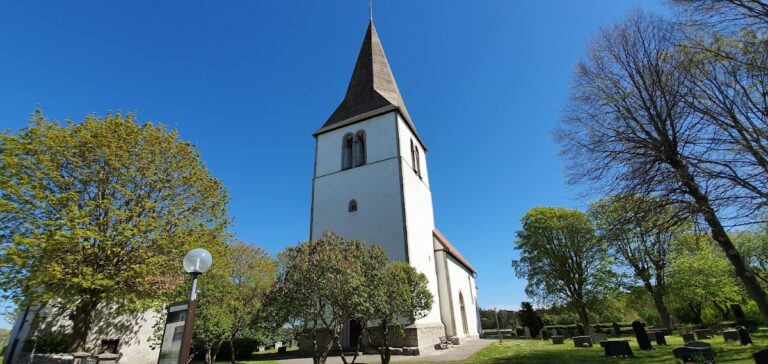
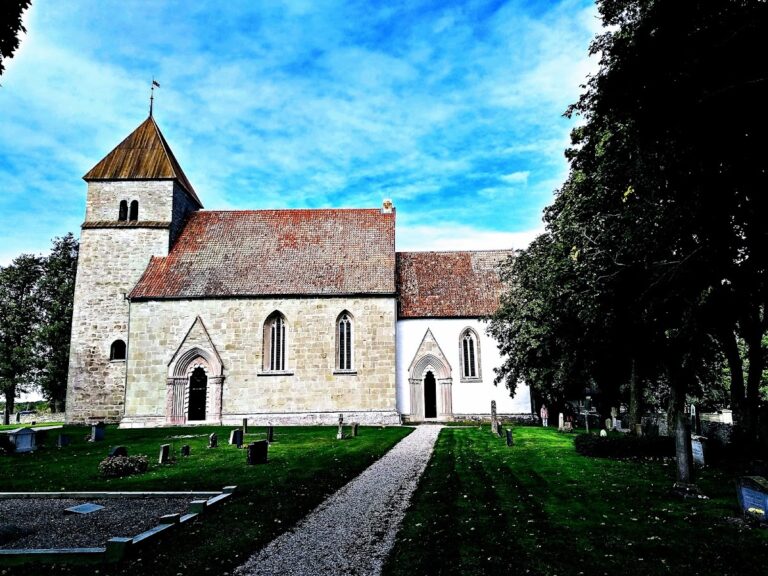
The church is built of limestone, with ashlar masonry, or regularly cut stone blocks laid in even courses, used for the facade and nave. The long nave has the same width as the choir and portals on both its north and south sides. These Romanesque entrances are simply designed. At the west end, the tower is strengthened on its western side by broad buttresses, which block an original entrance into the tower. The part of the tower chamber connected with the church interior has a wooden roof.
Gothic choir and sacristy
The large choir and the north sacristy were built around 1300. The choir has a straight eastern end and a southern portal with elaborate architectural detailing, crowned by a triangular gable. Its southern window and three eastern windows are original. A masonry cross vault covers the choir, giving the eastern end a distinctly Gothic character within the earlier Romanesque building.
Nave roof and churchyard entrances
The nave has a wooden barrel vault formed from segmental arches. Inserted between 1935 and 1938, it replaced a flat interior roof and allowed the masonry framing of the triumphal arch to be exposed. The churchyard has two entrance portals. The western portal and part of the adjoining wall are medieval, dating from the late thirteenth century.
Paintings and furnishings
Choir paintings and cross
Wall paintings from the beginning of the fourteenth century survive in the choir. Their subjects include dragons, deer, lions, griffins, an angel, and a bishop. The choir also contains a wall cupboard with richly decorated doors. Near the boundary between nave and choir stands a richly sculpted triumphal cross dating from about 1300.
Font, pulpit, and altar
The baptismal font combines a twelfth-century base made by the master sculptor Byzantios with a basin decorated with naive figures from the fourteenth century. The pulpit dates from about 1600 and originally carried painted images of the Evangelists, the traditional figures associated with the four canonical Christian Gospels. The high sandstone altar was made in 1634.
Archaeological surroundings
Harbor, burials, and defensive remains
The former harbor area now lies beneath a meadow, and a Viking burial ground is associated with it. The remains of the hillfort southeast of the church and the ruins of the medieval defensive tower north of it extend the archaeological setting beyond the churchyard. Together, these features place the medieval building within a landscape shaped by settlement, burial, maritime activity, and defense.
Labyrinth and picture stones
A labyrinth of unknown age lies inside the churchyard between the eastern entrance portal and the church. The nearby Härstain and the second picture stone from the pre-Christian graves add earlier carved-stone monuments to the setting. The second stone’s division between the head and foot of a grave shows how an older monument could be reused within a later burial context.