Saint Anne Church, Trabzon: A Byzantine Orthodox Church


Site at a Glance
- Rating
- 4.3
- Popularity
- Low
- Country
- Turkey
- Primary era
- Medieval
- External website
- Open
- Eras represented
- Medieval
- Civilizations
- Byzantine
- Site type
- Religious
- Remains
- Basilica
On this page9 sections
History
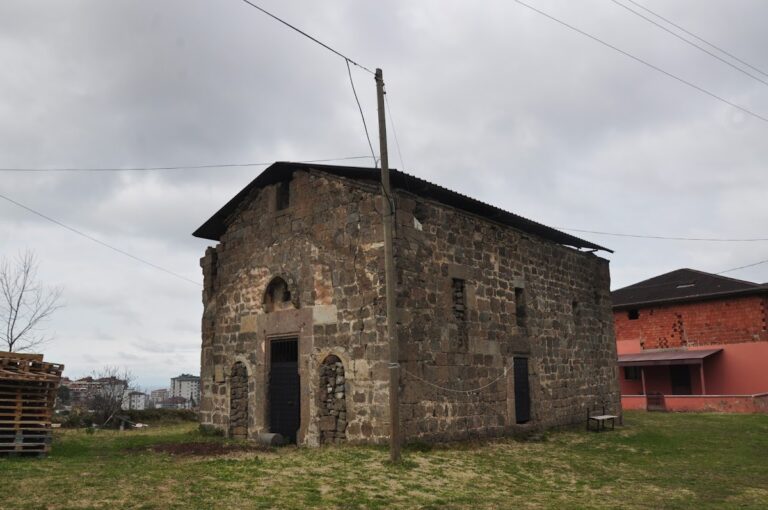
Saint Anne Church is a Byzantine-period Orthodox church in Trabzon, Türkiye, the ancient Trebizond. Built within the Byzantine Empire, the medieval Roman Empire centered on Constantinople and the eastern Mediterranean, it may date from the sixth or seventh century. Its foundation is not securely established, but the building is regarded as the city’s oldest surviving church or one of its oldest churches.
Byzantine Foundations and Restoration
The church’s early history remains uncertain, although its possible sixth- or seventh-century origin places it within the formative period of Byzantine Christian architecture. An inscription above the south entrance records the restoration of the masonry facing in 884–885, during the joint reign of the Byzantine emperors Basil I, Leo VI, and Alexander.
Later Religious History
From at least the thirteenth century, the crypt probably served as a funerary chapel. When the Ottoman sultan Mehmet II captured Trabzon in 1461, Saint Anne Church was not reconsecrated as a mosque.
Modern Restoration and Names
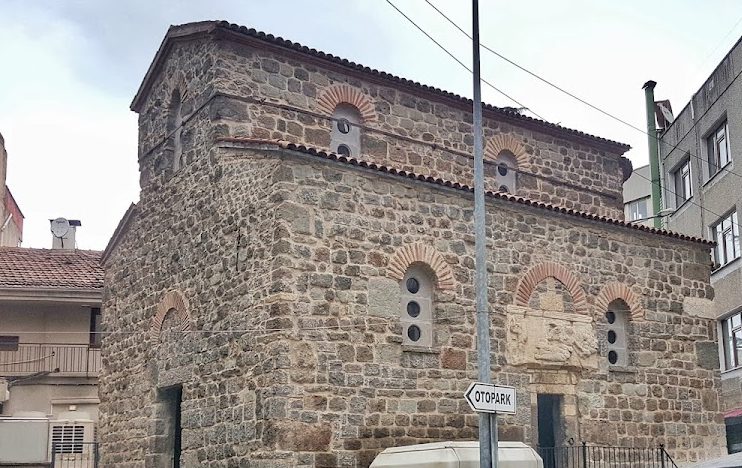
The building underwent restoration during the 1970s and 1980s. It is known in Turkish as Küçük Ayvası Kilise, Küçük Ayvasıl Kilisesi, and Azize Anna Kilisesi, and is also called Hagia Anna. Saint Anne is traditionally regarded in Christianity as the mother of the Virgin Mary. The church stands in a busy commercial district about 200 metres east of Trabzon’s central fortified area.
Remains
Church Building
Basilica and Apses
Saint Anne Church has a Byzantine three-aisled basilica plan, with a central nave flanked by lower side aisles. The nave measures approximately 6.6 metres in width and 7.4 metres in length, and rises above the two side aisles. Reused columns with Ionic capitals, whose spiral volutes distinguish them, support transverse arches in both directions. The central barrel vault reaches about two and a half times the height of the columns, while the narrower side-aisle vaults are only slightly lower.
Three semicircular apses, the eastern terminating spaces of the church, project from the east gable wall. The central apse is slightly larger and has three windows. Each lateral apse has one window.
South Entrance
A staircase on the south side provides access to the church. The south entrance has a two-lintel portal made partly with reused classical material, including an ancient Greek relief. Above the main entrance, a classical sarcophagus forms the tympanum and bears a standing warrior and the winged figure of Nike, the ancient Greek personification of victory.
Crypt and Reused Materials
The church has a crypt, a chamber beneath a church often associated with burial or funerary worship. It is described as unique among Trabzon’s churches. Reused ancient architectural and sculptural material, known as spolia, appears throughout the building, linking the church’s fabric to earlier monuments and structures.