İpek Han: An Ottoman Silk Merchants’ Han in Bursa

Site at a Glance
- Rating
- 4.5
- Popularity
- Low
- Country
- Turkey
- Primary era
- Medieval
- Eras represented
- Medieval
- Civilizations
- Ottoman
- Site type
- Economic
- Remains
- Caravanserai
On this page7 sections
History
İpek Han is a fifteenth-century Ottoman commercial and lodging building in Bursa, Türkiye, built by Sultan Mehmed I to generate income for the Green Complex, an Ottoman religious and charitable complex centered on a mosque and related institutions. The han was created for silk merchants and thread makers, including kazaz artisans who bought, sold, and twisted silk.
Foundation and commercial role
The craftsmen worked in shops on both sides of the building, giving İpek Han the additional name “Great Silk-Twisters’ House.” It was also known as Sultan Han, Silk Han, New Silk Han, Old Silk Han, Carriage Drivers’ Han, and Coachmen’s Han. Although hans in Bursa generally did not provide accommodation, İpek Han was also used for lodging. Its architect is uncertain, but Hacı İvaz Pasha is considered a likely designer because he was also associated with the Green Complex.
Damage, repair, and heritage status
Fires and earthquakes damaged the han repeatedly. Repairs took place in 1557, 1632, 1742, and 1775. The eastern entrance facade was demolished when Mecidiye Street was opened under Governor Ahmed Vefik Pasha, and it was rebuilt after the 1958 Bursa Covered Bazaar fire. Further repairs were carried out in 1980.
İpek Han forms part of the Green Complex, one of the component sites within the UNESCO World Heritage property “Bursa and Cumalıkızık: The Birth of the Ottoman Empire,” inscribed in 2014.
Remains
Courtyard layout and construction
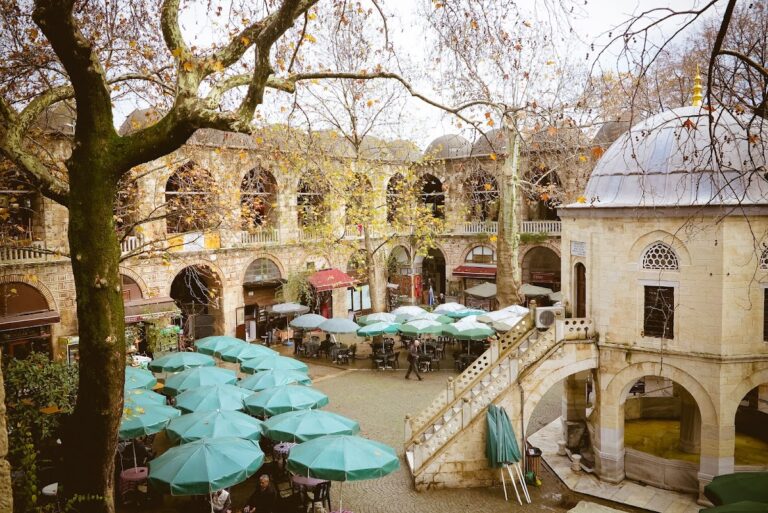
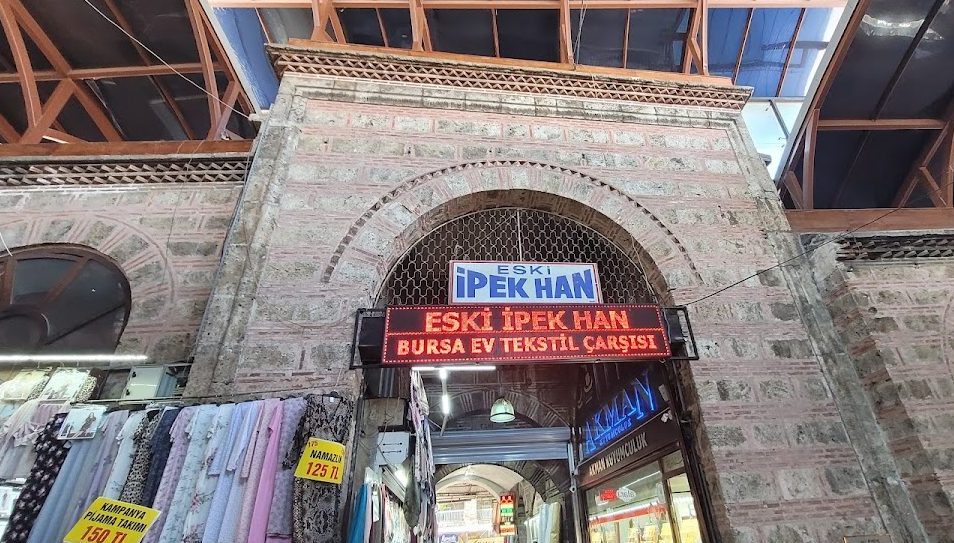
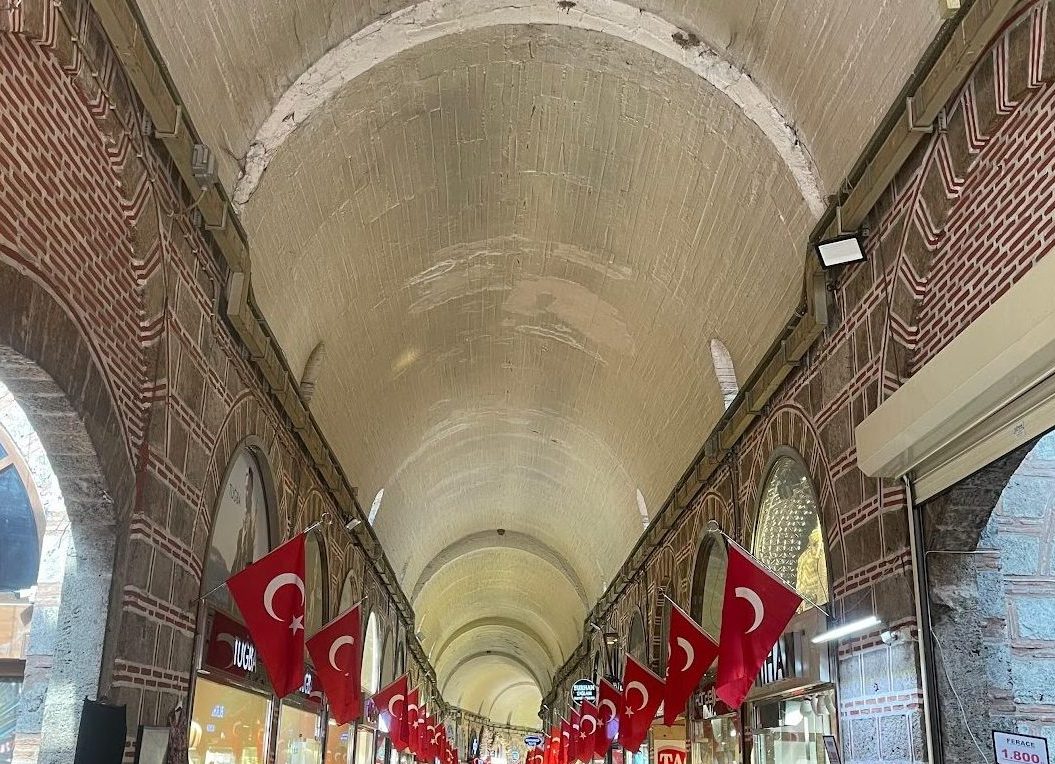
İpek Han is a two-storey building made of cut stone and brick. Its rooms open onto arcades arranged around a central courtyard, following the organization of a han, a commercial trading and lodging building with shops, storage areas, and rooms. The building originally contained 76 rooms, with 38 on each floor. Later conversions of additional spaces increased the total to 81. The han stands in Bursa’s Han District between the Great Mosque of Bursa and Pirinç Han.
Religious and decorative features
An ablution fountain once stood at the center of the han, accompanied by four rooms and a twelve-sided prayer room above them. The prayer room has not survived. A small amount of irregularly arranged tile decoration was applied to the inner face of the original facade, and the tiles resemble those used in the Green Mosque.
Continuing textile use
The building is currently occupied by textile merchants and dressmaking workshops producing bridal and formal evening wear, maintaining its connection with Bursa’s textile commerce.